
An all black tuxedo can feel striking, modern, and quietly formal when each piece is chosen with intention. The monochrome palette puts fit and texture in full view, so the details matter: the jacket’s proportions, the shirt’s finish, and the balance between shine and matte fabric. Before choosing a look, consider the invitation, venue, and role in the event.
What makes an all black tuxedo work?
A successful all-black look is more than a black suit paired with a black shirt. A tuxedo has formal design cues, often including satin or grosgrain-faced lapels, a dress shirt, and a defined waist treatment. Those details distinguish it from a dark business suit. You can explore the different formal elements in this tuxedo style guide.
Because there is little color contrast, the eye notices proportion and surface. A jacket that fits cleanly across the shoulders, a balanced trouser break, and a shirt that stays smooth beneath the jacket create a composed line. Differences in texture give the outfit depth without introducing another color. For example, a matte wool jacket with a subtle satin lapel, a crisp shirt, and a low-sheen bow tie can read as layered rather than flat.
Begin with the event’s dress code. An all-black outfit may be appropriate for a creative black-tie celebration, an evening reception, or a groom’s personal interpretation of formalwear. But a host may expect a traditional black tuxedo with a white shirt. If the invitation specifies a dress code, treat it as the starting point. Personal style should refine the requested level of formality, not undermine it.
It helps to separate three questions that can otherwise blur together: what the invitation requires, what the setting supports, and what feels like you. If the invitation calls for black tie, make sure the outfit still reads as evening formalwear even if you choose a black shirt. If the dress code is optional or creative, you have more room to personalize the combination. If there is no clear dress code, ask the host or couple rather than assuming that an all-black interpretation will be welcome.
Think about how the outfit will be seen, too. A small gathering in a warmly lit room creates a different impression from a large reception with bright lighting and group photographs. Consider whether you will be standing, seated, dancing, or moving between indoor and outdoor spaces. These practical details can influence how structured the jacket should feel, how much shine is comfortable, and whether a black shirt will read as polished in the setting.
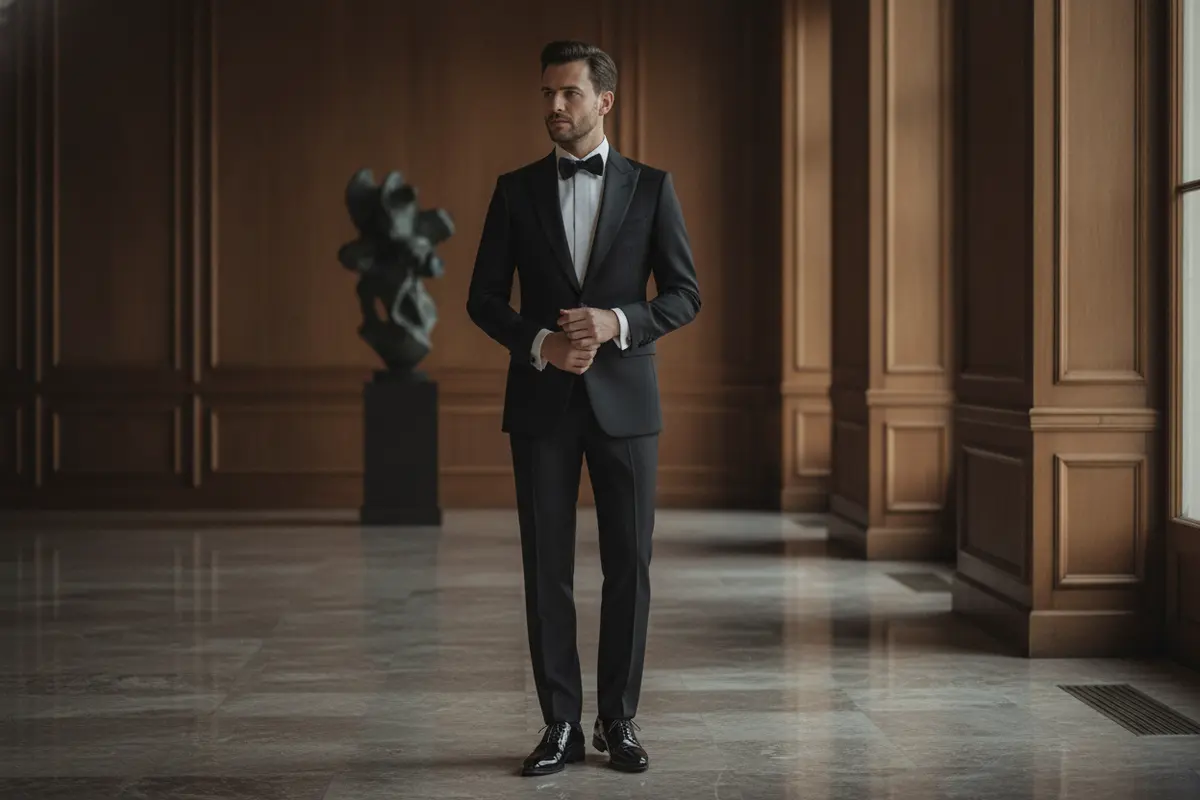
Which black tuxedo details create a polished silhouette?
Fit is the foundation. The shoulder line should sit naturally, the jacket should close without pulling, and the sleeves should allow a small, considered glimpse of shirt cuff. The jacket length and trouser rise affect the overall proportions, so assess them together rather than as isolated details. A close fit is not the same as a tight fit; you should be able to move, sit, and greet people comfortably.
Check the jacket from more than one angle. From the front, the lapels should lie smoothly and the closure should not form obvious strain lines. At the side, check that the hem does not flare away from the body when the jacket is buttoned. From the back, look for excess fabric or pulling across the shoulder blades. These observations are not a reason to chase an extremely close fit; they help identify whether the garment’s proportions suit your frame and whether adjustments or a different cut should be discussed.
Choose a lapel shape that suits the jacket and the formality of the occasion. Peak lapels bring a pronounced, dressy line. A shawl lapel can feel smooth and understated, while a notch lapel is more familiar from business tailoring and may look less explicitly formal. The lapel’s facing adds a useful change of texture in a monochrome outfit. See the differences in notch, peak, and shawl lapel styles before settling on a direction.
Think about the jacket’s construction and details as part of the complete garment. Tuxedo design varies, and a stylist can help you consider the lapel, buttons, vents, pockets, and finishing together. The goal is not to add every available detail. Choose the features that support the formality and mood you want. A clean front and restrained trim often make an all-black outfit feel deliberate.
Small choices work together. A single-button front can make the waist treatment and shirt more visible, while a different front may create another balance. Pocket styling and vents affect the outline when you move or sit. Rather than selecting each feature because it looks appealing on its own, view the jacket as a whole: does its shape complement your proportions, and does each detail support the same degree of formality?
Trousers deserve equal attention. A tuxedo stripe or formal side detail can reinforce the eveningwear character. The waist should sit securely, and the leg should fall cleanly over the shoe without excess pooling. If you are weighing a ready-to-wear option against a more personalized fit, review the range of suit and formalwear options and ask how the pieces can be coordinated.
Try the trousers with the shoes you expect to wear. A hem that looks neat with one shoe may sit differently with another, and trouser length affects the visual line from waist to floor. Check the waist while standing and seated; it should remain secure without needing constant adjustment. If the trousers and jacket are separate purchases, compare the blacks in both natural and indoor light before deciding that they belong together.
How should you choose the shirt and neckwear?
A black dress shirt makes the outfit unmistakably monochrome, but it also removes the bright contrast that a white shirt traditionally provides. The result can be sleek and contemporary, especially in an evening setting. The shirt should be crisp, opaque, and comfortable through the collar and chest. Look for a smooth, formal finish rather than a casual weave or visible branding.
For neckwear, a black bow tie is the clearest formal choice. Match its finish thoughtfully with the lapel rather than assuming every black surface should be identical. Slight variations in texture help separate the elements. A black necktie creates a longer, quieter line and may suit a less traditional interpretation, but consider the event’s dress code before choosing it. Avoid adding a bright tie simply to create contrast unless the occasion welcomes that departure.
Collar shape matters, too. A spread collar can frame a bow tie cleanly, while other collar styles may work better with a long tie. Make sure the collar sits smoothly and remains comfortable when the jacket is buttoned. For a groom, test the full combination with the jacket, waist treatment, and accessories rather than approving each item in isolation. Browse custom shirt options if you want to discuss collar, fit, and finishing choices as part of a coordinated look.
Pay attention to the front of the shirt and the area around the neck. A placket, studs, or other formal details can change the character of the outfit, so make sure they suit the tuxedo rather than looking like an afterthought. Keep the shirt tucked smoothly and check that it stays in place when you lift your arms or sit. The collar should not pinch when fastened, and the bow tie should sit level rather than tilt or crowd the collar points.
If you are uncertain about the black shirt, compare the complete outfit with a white shirt before you decide. Keep the jacket, trousers, shoes, and lighting consistent so you can judge the difference clearly. White creates a stronger focal point at the face and emphasizes classic formal contrast. Black makes the silhouette more continuous and can feel more fashion-forward. Neither option should be selected in isolation from the invitation and the rest of the ensemble.
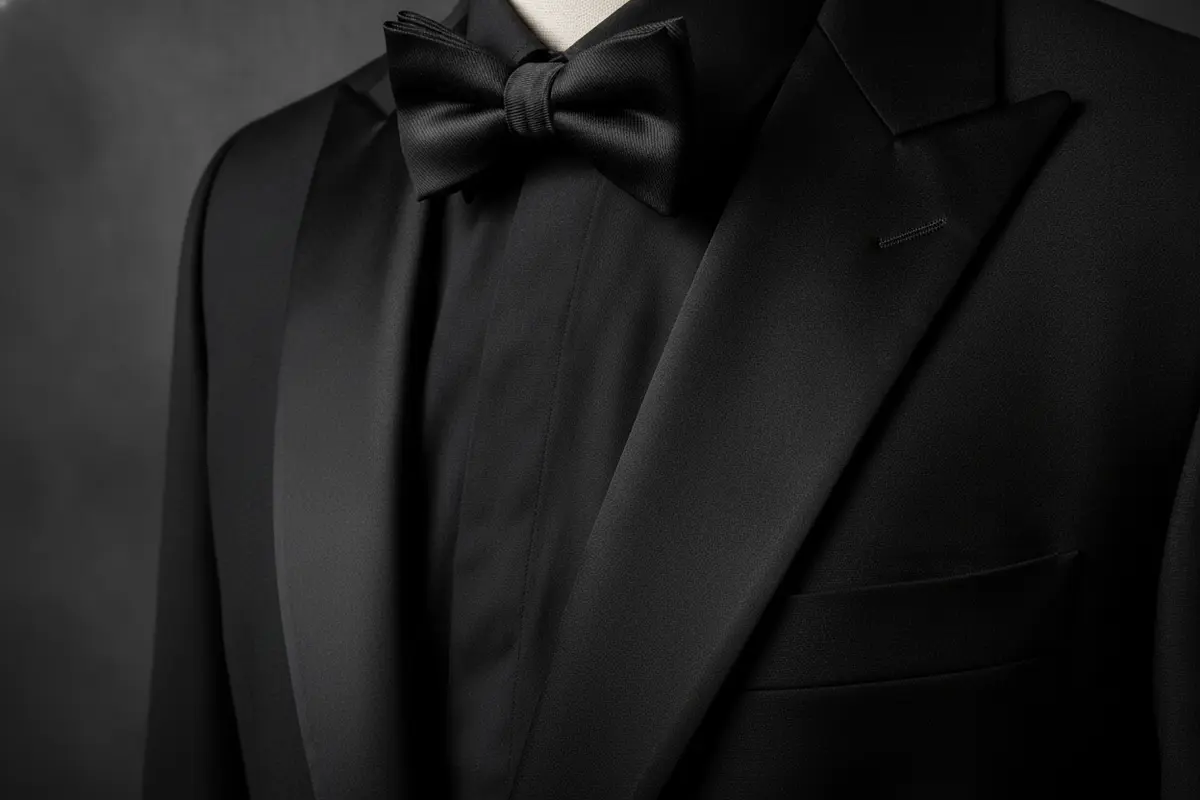
How can you add depth without adding color?
Texture is the easiest way to keep an all-black tuxedo from looking one-dimensional. Combine surfaces with different levels of sheen: a formal lapel facing against a matte jacket body, a subtly textured shirt, or a bow tie that is not overly glossy. The differences should be visible up close but harmonious from across the room.
Keep the number of finishes limited. A glossy lapel, glossy bow tie, shiny shirt, and highly polished accessories can compete with one another. Instead, select one or two elements to catch the light and let the rest stay quiet. This is especially important in photographs, where strong reflections can make black fabric appear uneven.
Accessories should feel purposeful. A black pocket square or a neatly folded white one can work depending on the dress code and the look you want. A white pocket square introduces a small point of contrast without changing the monochrome foundation. Cuff links, a watch, and formal shoes should be restrained. If you prefer a more personal touch, consider one meaningful accessory rather than several attention-grabbing pieces.
Use a simple editing test before adding anything: lay out the jacket, shirt, neckwear, pocket square, and accessories together. Remove one item at a time and ask whether its absence makes the outfit feel incomplete. If it does not contribute to proportion, texture, or personal meaning, it may not need to be there. An all-black palette already has a clear point of view, so careful editing usually makes the result stronger.
A pocket square is most effective when it appears intentional rather than precisely matched to the bow tie. If you use white, keep the fold neat and let it provide a small, clean contrast. If you choose black, texture can distinguish it from the jacket. A metal accessory can also add a quiet highlight, but repeated shiny details may draw attention away from the fit and lapel. Think of accessories as punctuation, not the main subject.
Shoes complete the line from trouser to floor. A polished black dress shoe is a reliable companion; the formality and finish should complement the tuxedo. Explore dress shoes and formal footwear with the trousers in mind. Check the look in full-length light so the shoe does not appear disconnected from the hem.
Comfort matters as much as appearance when choosing footwear. Walk on a firm surface and try sitting and standing in the shoes before the event. The shoe should feel secure and appropriate for the amount of time you will be wearing it. A dramatic shine can suit a very formal setting, while a quieter finish may harmonize better with a matte outfit. Keep the socks understated so there is no unexpected band of color when you sit.
How do fabric and lighting affect an all-black look?
Black fabrics can look different under daylight, warm indoor lighting, flash photography, and video. Some read as deep and matte; others reflect more light or show a blue-toned cast. If the outfit is for an evening event, try it in lighting similar to the venue when possible. Look at the lapel, shirt, and trousers together, because a slight mismatch between black shades can be more noticeable than expected.
Fabric choice also affects comfort and drape. Consider the season, the amount of time you will wear the outfit, and whether the event involves indoor and outdoor transitions. A breathable choice may be welcome for a warm-weather celebration, while a denser cloth can support a more structured appearance in cooler conditions. There is no single fabric that suits every wearer or event; weight, hand, and finish should be considered in context.
When comparing options, use the following questions to guide the decision rather than relying on the word “black” alone:
| Choice | What it contributes | What to check |
|---|---|---|
| Matte jacket cloth | A quiet foundation with limited reflection | Whether it contrasts cleanly with the lapel facing |
| Satin or grosgrain lapel facing | A formal point of texture and light | That the sheen feels balanced, not overly bright |
| Black dress shirt | A continuous monochrome effect | Collar comfort, opacity, and a crisp finish |
| Black bow tie | A classic formal accent | Scale, texture, and compatibility with the lapel |
| Polished black shoes | A clean finish at the trouser hem | Proportion, comfort, and the event’s formality |
Use the fitting as a practical test. Sit down, raise your arms, walk, and button the jacket. Notice whether the shirt shifts, the collar pulls, or the trousers catch at the shoe. Those checks help reveal comfort and movement issues before the event. For a custom garment, the options and price depend on selected fabric and customization, so discuss priorities during a consultation rather than assuming one fixed specification.
To compare fabrics, start by naming what matters most for this particular occasion. If the event is long, comfort and ease of movement may be the priority. If photographs are central, examine how each cloth responds to light. If you want to wear the tuxedo again, consider whether the fabric’s finish and weight suit the types of formal events you attend. Then compare a small number of options side by side instead of trying to choose from a large selection without a clear purpose.
Ask to see the jacket, trousers, shirt, and lapel facing together when possible. A swatch can give you a useful idea of color and surface, but the full garment shows how the fabric hangs and how multiple finishes interact. Move the material under different light and look at it from a few steps away as well as close up. The objective is not to find perfectly identical blacks. It is to create a deliberate relationship among the shades and textures.
Is an all-black tuxedo right for a groom?
For a groom, an all-black tuxedo can establish a strong evening look while allowing the wedding’s setting to shape the details. Consider ceremony time, venue, season, photography, and the overall palette. A city ballroom may support a more traditional tuxedo treatment. A modern venue may invite a restrained interpretation with a black shirt. In either case, the groom should feel distinct without making coordination difficult for the wedding party.
Decide what the wedding party needs to echo and what should remain individual. The groom might wear a tuxedo while attendants wear suits, or everyone might share a dark palette with differences in lapel, shirt, or accessory. Agree on the level of formality and a small set of colors early. Avoid asking each person to interpret “black” independently; fabrics and finishes can vary, and those differences show in group photographs.
Make a short coordination brief before asking attendants to choose clothing. Include the dress code, the shade family, the formality of the shoes, and any details that should be consistent. Decide whether the groom’s bow tie, lapel, or waist treatment will distinguish his look. Leave room for individual fit and comfort, but give the group enough direction to avoid a mix of unrelated black suits, shiny shirts, and casual shoes.
Consider the partner’s attire as part of the visual balance, not as a reason to match every detail. Talk through how formal each look should feel, whether the wedding palette includes another accent, and how the two outfits will appear together in photographs. If the partner’s attire has a particular texture, trim, or level of formality, the groom can complement it through finish and silhouette without copying it. A coordinated result is more considered than a perfectly identical one.
Begin planning four to five months before the wedding. That gives time to discuss the setting and timeline, select the look, take measurements, and allow for fitting and final adjustments. Trevor Furbay Bespoke’s wedding process moves through discovery and planning, styling and selection, measurements and fitting, then final fitting and delivery. Learn more about custom wedding attire and the planning process, or consider custom tuxedos for grooms and wedding parties when comparing options.
At discovery and planning, bring the invitation details, venue information, and a sense of the wedding palette. In styling and selection, compare the jacket shape, cloth, shirt, and accessories as a complete outfit. Measurements and fittings give you a chance to assess the silhouette and mobility, rather than relying on a photograph or size label. The final fitting and delivery stage is the time to make sure the finished combination feels comfortable and ready for the day.
A fitting appointment is also a good time to see the outfit as a whole. Bring or describe the venue, wedding palette, and any dress-code guidance. Discuss how the groom’s look relates to the partner’s attire and attendants, then settle the shirt and accessories after the core silhouette is established. For other formalwear considerations, this groom and partner coordination guide can help frame those decisions.
Keep a record of the decisions made for the group. A clear note about shirt color, bow-tie style, and shoe formality can prevent last-minute uncertainty, particularly when attendants are selecting their outfits separately. If the wedding includes more than one event, decide whether the tuxedo should carry through each one or whether another outfit is appropriate for a different setting. These choices are easier to coordinate when the core look is settled early.
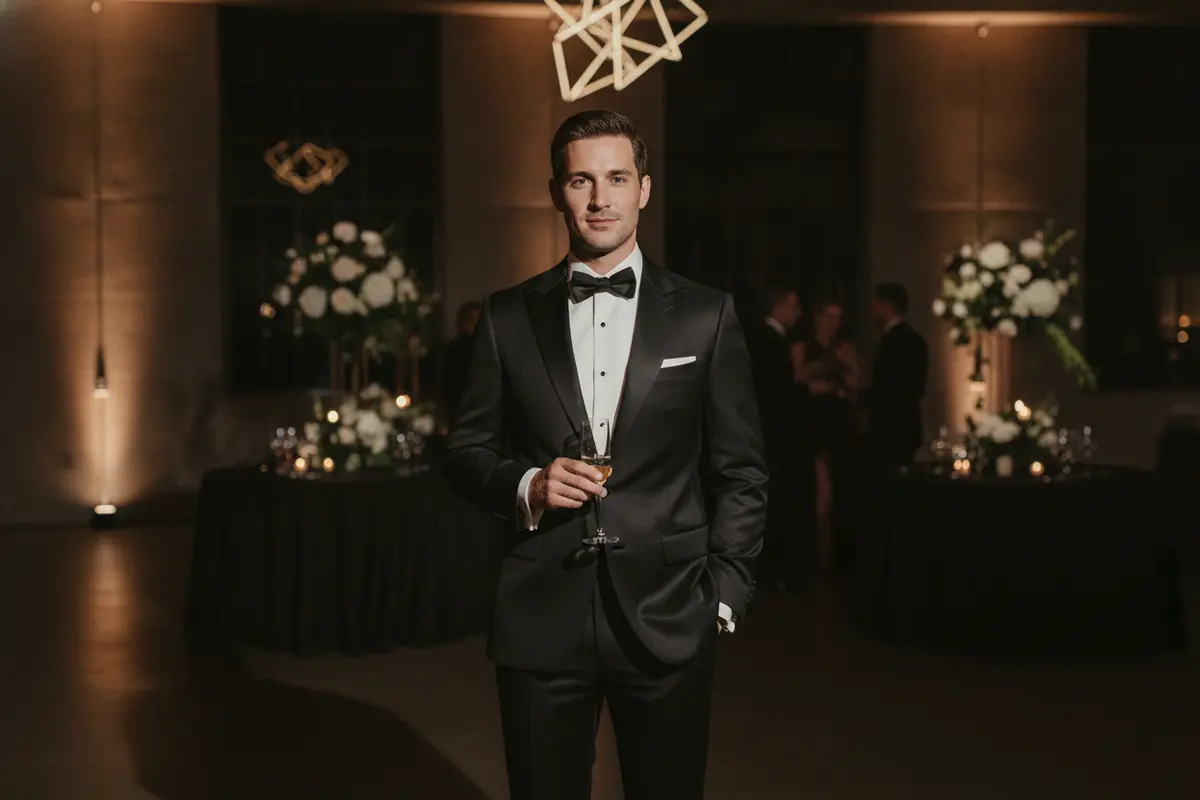
How can you decide between a custom and ready-to-wear look?
Start with the occasion and how often you expect to wear the tuxedo. A ready-to-wear garment may be a practical starting point when the timing and available fit work for you. A custom approach gives you a chance to discuss proportions, fabric, and design details with a clothier. The right path depends on your needs, preferred level of personalization, and schedule.
Try to evaluate more than the size label. Check the shoulder, jacket closure, sleeve length, waist position, trouser line, and comfort when moving. A garment that looks sharp while standing still should also feel at ease through dinner and conversation. If you have questions about tailored options, explore custom styling and tailoring or the broader jacket and sport coat selection to understand how fit and design can be approached.
Think about use beyond one event, too. An all-black tuxedo is intentionally formal and may not serve the same role as a versatile dark suit. If you expect to attend black-tie events regularly, a well-considered tuxedo can earn a place in your wardrobe. If this is a one-time occasion, talk through the level of investment and customization that makes sense before choosing details.
A useful decision is not simply “custom or ready-to-wear?” but “what needs to be right for me?” If the shoulders and overall proportions work in an available garment, a few finishing adjustments may be sufficient. If you are seeking a particular silhouette, fabric, shirt pairing, or set of details, a consultation can help you understand how personalization fits your needs. The choice should reflect both the garment and your timeline, not an assumption that one route is always better.
Plan backward from the event date. Leave space for selection, measurements, fittings, and any final refinement if you choose a personalized garment. If the date is close, be candid about the schedule at the outset and ask which options are realistic. For a ready-to-wear choice, allow time to try on the full outfit with its shoes and shirt, not just the jacket. Rushing a decision often means discovering a mismatch or comfort issue when there is little time to address it.
Custom tailoring is consultation-based, and the price depends on fabric and customization. It is helpful to identify priorities before the conversation: perhaps shoulder fit, a particular lapel, comfortable trousers, or a shirt designed for the chosen collar and neckwear. Discuss those priorities, along with the intended use and timing, so the recommendations can be considered in context. You do not need to settle every accessory before the first discussion; the core silhouette and purpose can guide the later choices.
How should you prepare for the final fitting?
Bring the pieces that will be part of the actual outfit whenever possible: the shirt, shoes, neckwear, and any waist treatment or accessories you have selected. This makes it easier to assess the whole line and catch differences in shade or proportion. If a piece is not available yet, bring a clear description or image and confirm the exact item before the event. A fitting in the jacket alone cannot show how the complete look will behave.
Use the appointment to repeat the movements you expect during the event. Walk, sit, stand, reach forward, and raise your arms naturally. Notice whether the jacket rides up, the collar shifts, or the trousers feel restrictive. Check the outfit both buttoned and open if you plan to wear it both ways. The goal is ease and a clean outline, not a pose that only works while standing still.
Review the outfit in a full-length mirror and, if helpful, take a photograph from the front and side. A photograph can reveal visual imbalance that is easy to miss when you focus on one detail at a time. Look for an intentional relationship between shirt and lapel, a smooth trouser line, and shoes that suit the hem. Make notes about any questions so you can discuss them clearly with your clothier.
Before the event, confirm that every piece is clean, pressed as appropriate, and ready to wear. Check that the bow tie, pocket square, cuff links, and shoes are together in one place. Avoid making last-minute additions simply because a detail seems empty; the monochrome look is meant to be restrained. A final, calm review helps ensure that the outfit reflects the choices you made rather than a collection of hurried substitutions.
Frequently Asked Questions
Can you wear a black dress shirt with a tuxedo?
Yes, a black dress shirt can create a modern monochrome look. Check the invitation first, because some formal dress codes or hosts may expect a white shirt. Make sure the shirt is crisp and formal enough to complement the tuxedo.
Should the bow tie match the tuxedo exactly?
It should coordinate, but every black surface does not need to have the same sheen or texture. A subtle difference between the bow tie, lapel, and jacket can add depth. Keep the finishes balanced and appropriate to the event.
Can a groom wear an all-black tuxedo at a daytime wedding?
That depends on the dress code, venue, and wedding style. An all-black tuxedo can feel very formal, so consider whether that level of formality suits a daytime celebration. Discuss the look with your partner and wedding stylist before committing.
When should a groom start planning a custom tuxedo?
Begin four to five months before the wedding. Early planning leaves room to discuss the event, select fabrics and details, take measurements, and schedule fitting steps before the wedding day.
With a thoughtful fit, considered textures, and details that suit the occasion, an all black tuxedo can feel personal and polished rather than plain. Give yourself time to try the complete outfit and make sure it feels as good in motion as it looks in photographs.