
The best fabric for a custom suit is the one that suits how and where you will wear it. For many wardrobes, a fine wool in a versatile weave is a strong starting point because it can move between work, events, and travel. But climate, season, desired formality, texture, and the rest of your closet all matter. A thoughtful choice begins with the job you need the suit to do, then narrows the cloth options with a stylist.
What makes one suit fabric a better choice than another?
A swatch can look appealing on a table yet behave differently as a full garment. Think about the cloth as a combination of fiber, weave, weight, finish, and color. Each affects how the suit feels, hangs, handles warmth, and fits into your routine.
- Fiber describes what the cloth is made from, such as wool, linen, cotton, or a blend.
- Weave describes how the yarns cross. A more open weave can feel airier, while a compact weave may have a smoother, more formal appearance.
- Weight and finish affect the cloth’s structure, warmth, and surface. Heavier does not automatically mean better; the right choice depends on season and use.
- Color and pattern determine how readily the suit pairs with shirts, shoes, and other pieces you already own.
When you compare swatches, handle them and view them in more than one kind of light. Ask to see a larger piece if available. A small square can hide the scale of a pattern and the way a texture reads from a few feet away. The cloth should also make sense for the jacket and trousers you plan to order together.
Is wool the best fabric for a custom suit?
Wool is a practical first cloth to consider for a suit you want to wear often. It can be woven in smooth, textured, light, or substantial finishes, so the word “wool” alone does not tell you how a particular suit will feel or look. A fine worsted wool, for example, often has a clean surface and a polished appearance. A flannel has a softer, brushed surface and a more relaxed visual character.
For a first custom suit, begin with the occasions you expect it to cover. A dark navy or charcoal wool in a restrained pattern or solid finish is generally easy to coordinate for professional settings and formal occasions. If you already own those basics, a textured weave or a less conventional shade may add useful variety. The final choice should reflect your dress code rather than a rule that every wardrobe needs the same suit.
Wool also offers plenty of room to personalize without making the suit difficult to wear. A subtle weave can add depth while remaining versatile. A more pronounced texture makes a stronger statement and may work best when the suit has a clear role in your closet. Explore the range of custom suits and tailoring with your intended use in mind, not just the swatch that catches your eye first.
How should season and climate shape your fabric choice?
Consider the weather where you will wear the suit, the indoor settings you spend time in, and whether you need it for one season or much of the year. A warm-climate wedding outdoors and a winter business wardrobe call for different cloth priorities. The weave and finish can be as important as the fiber label.
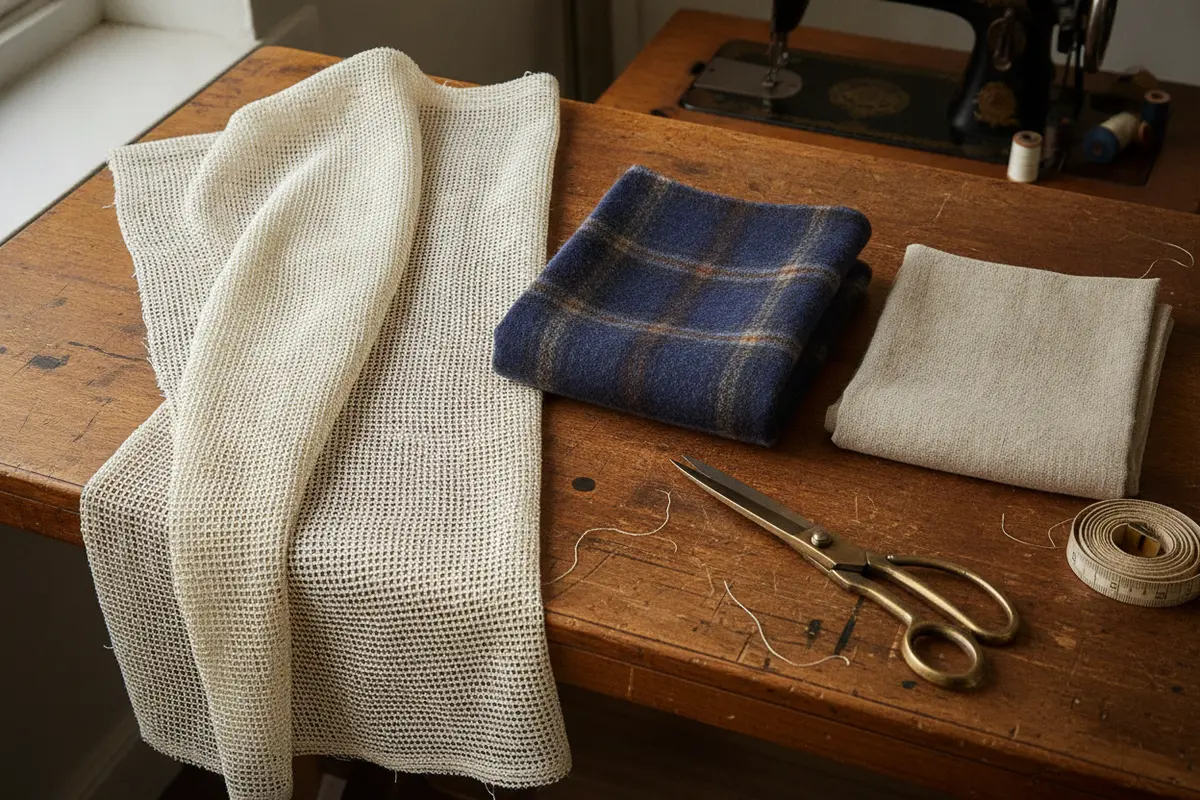
- For warm weather: Ask about lightweight wool and more open weaves that allow greater airflow. Linen and linen blends bring a distinct relaxed texture and may show natural creasing more readily. Choose them when that character suits the setting.
- For cool weather: Consider a denser wool or a brushed flannel. These can look and feel more substantial, with a softer, less glossy surface than a smooth worsted.
- For a suit worn across seasons: A middle-ground wool with a balanced weave may be more useful than a cloth chosen only for a short seasonal window. Discuss your local climate and how often you travel between outdoors and heated or air-conditioned spaces.
“Lightweight” does not always mean comfortable in every setting, and “all-season” does not mean ideal in every climate. Tell your clothier whether you tend to feel warm, whether you commute on foot, and if you expect to wear the jacket without the trousers. Those details help make the recommendation more specific. For a suit intended for warmer months, see the guide to summer suits and lightweight tailoring.
When should you consider linen, cotton, or a blend?
Alternative fibers and blends can be excellent when their texture and care fit the way you dress. They are not automatically better or worse than wool; they simply create a different look and wearing experience.
| Cloth direction | What it can offer | Good fit when | Consider before choosing |
|---|---|---|---|
| Worsted wool | Smooth, polished appearance with broad styling range | You need a versatile professional or occasion suit | Choose a color and weave that work with your existing wardrobe |
| Flannel wool | Soft surface and more visible texture | You want a cooler-weather suit with a relaxed, rich look | Its brushed character may feel less suited to the most formal settings |
| Linen or linen blend | Distinctive texture and an easygoing seasonal feel | You are dressing for warm weather or a less rigid setting | Natural creasing is part of the look; decide if you enjoy it |
| Cotton or cotton blend | A more casual surface and a different kind of structure | You want a suit that feels less formal than smooth worsted wool | Discuss how the chosen cloth drapes and how you will care for it |
| Wool blend | A mix of qualities that depends on the fibers and weave | A particular performance, texture, or appearance matters to you | Ask what each fiber contributes rather than choosing by label alone |
The table is a starting point, not a guarantee of how every cloth performs. Two fabrics with the same fiber name can feel quite different because their yarns, weave, weight, and finish differ. Ask to compare actual swatches and explain what you value most: crispness, softness, a matte surface, texture, or easy coordination.
How do weave, texture, and pattern change the look?
Weave can make a suit feel quiet or expressive even when its color stays conservative. A smooth, close surface tends to read as polished. A subtle birdseye, twill, or other small-scale texture can add interest without competing with a shirt or tie. A larger check or prominent pattern makes the suit more noticeable and gives it a clearer role in the wardrobe.
Use the distance test: look at the swatch close up, then step back. If the pattern nearly disappears from across the room, it may function like a solid in many outfits. If it remains bold at a distance, plan how you will pair it. A patterned suit often works best with simpler shirts and accessories. To consider how jacket details and silhouette work together, browse custom jackets and sport coats.
Think about whether the cloth needs to coordinate with separate trousers, too. A suit ordered as a matching set has one purpose; a jacket you expect to wear with other trousers has another. If you want more flexibility, ask whether the cloth and design are suitable for separates. A dedicated custom trouser discussion can help clarify how the rest of the outfit will work.
What color will earn the most wear?
Start with the clothes and occasions already in your life. Navy and charcoal are common starting points because many shirts and shoes coordinate with them, but they are not compulsory. A dark, restrained color may serve a professional wardrobe well. A lighter neutral, brown, or muted pattern can be a smart next choice if it complements your complexion and the colors you already wear.
Before settling on a swatch, name three realistic outfits you would wear with the suit. Consider shirt color, footwear, and whether a tie is part of the look. If you cannot picture the suit in your calendar, it may be an exciting fabric without being a useful purchase. For a wedding, also account for the venue, season, formality, and how the groom’s attire will relate to the wedding party. See wedding attire and planning for a consultation-led approach.
What should you ask at a custom fabric consultation?
A consultation helps connect the visual choice to a garment you can wear with confidence. Bring a clear idea of the suit’s purpose, along with any pieces you want it to coordinate with. These questions can make the conversation more productive:
- Which occasions and seasons should this suit cover?
- How does this cloth compare in feel, drape, texture, and formality with the alternatives?
- Will the jacket and trousers work well together, and can either piece be worn separately?
- How might the cloth’s finish or pattern affect the suit’s versatility?
- What care should I expect for this specific fabric?
- Which design choices complement the cloth instead of distracting from it?
Custom tailoring is consultation-based, and the investment depends on the fabric and customization selected. You do not need to arrive with every detail decided. A stylist can help you compare options, understand trade-offs, and choose a direction that feels personal without losing sight of how often you will wear it.
The fabric is only one part of the result. Fit, proportion, construction choices, and finishing all shape how the suit comes together. At a fitting, the cloth can be assessed as a garment rather than only as a swatch. If you are new to the process, the guide to what to wear to a custom suit fitting can help you prepare. You can also learn more about the Atelier Munro custom suit experience.

How do you make the choice for your wardrobe?
Use this short sequence to move from broad preference to a specific cloth:
- Set the purpose. Decide whether the suit is for regular work, a wedding, travel, formal events, or a particular season.
- Choose your comfort priorities. Describe how warm or cool you tend to feel and whether you prefer a crisp or softer hand.
- Pick a level of versatility. Decide whether you want a dependable foundation or a distinctive suit that adds a new color or texture.
- Compare real swatches. View the cloth in different light and at different distances, and compare it beside shirts or ties you already own.
- Talk through the whole garment. Consider fit, jacket details, trousers, and care as one decision rather than treating the fabric as an isolated choice.
Someone choosing a first work suit might favor a dark, quietly textured wool that works with several shirts. A client refreshing a fall wardrobe may prefer a flannel with more visible depth. For an outdoor summer event, a breathable-feeling weave or linen blend may be appealing, provided a more relaxed texture fits the occasion. These are starting points, not rules: your schedule and preferences should guide the final selection.
If you are building beyond one suit, coordinate the next purchase with what you own instead of repeating the same role. Separate trousers, a sport coat, or custom shirts may help create more combinations. Explore custom styling and tailoring or custom shirts as part of a broader wardrobe plan. The right cloth is the one that fits your real life and makes getting dressed easier.
How can you compare two appealing swatches?
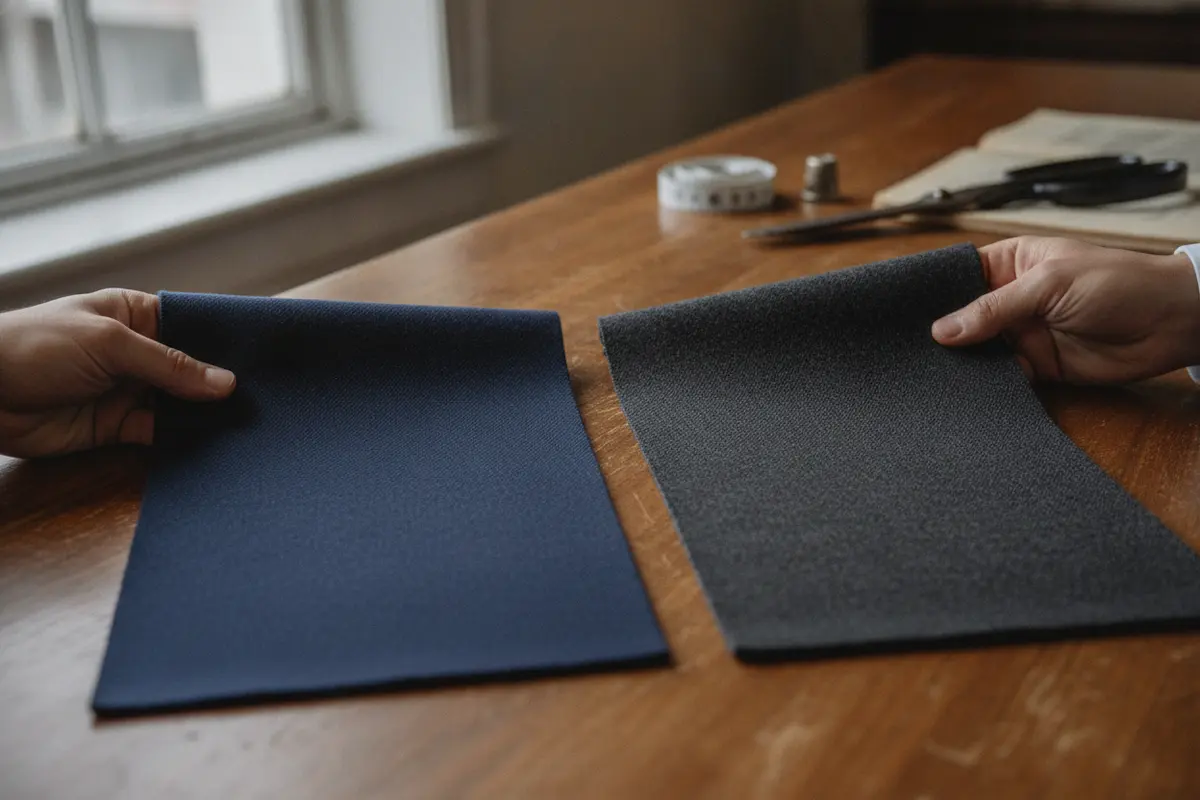
When several fabrics seem promising, compare them against the same criteria rather than relying on first impressions. Lay them side by side and describe what you notice: one may look smoother, another more textured; one may feel lighter in the hand, while another appears to hold a sharper line. Those observations are most useful when connected to how you will wear the suit.
- Check the color in context. Place a shirt or tie you own beside each swatch. A color that looks handsome alone may be harder to combine with your usual wardrobe.
- Check pattern scale. Look close up and from a few steps away. Decide whether you want the cloth to read as a quiet neutral or a clear pattern.
- Check how it feels. Ask whether the hand is crisp, soft, smooth, or textured, and whether that sensation suits your comfort preference.
- Check the occasion. Imagine the fabric in the rooms and settings where you will actually wear the suit. A striking cloth can be right for a celebration but less useful for daily business, or the reverse.
It also helps to separate preference from purpose. You may love the look of a bold check and still need a dependable navy suit first. Or you may already own a reliable foundation and want a more expressive choice. Neither approach is inherently right; the useful question is which choice fills a real place in your wardrobe. If you have photos of outfits you enjoy wearing, bring them to the consultation as a practical reference.
Why should fabric and fit be considered together?
Cloth does not exist apart from the garment. The same fabric can create a different impression depending on the cut, the amount of structure, and the way the jacket and trousers are designed. A cloth with a soft, relaxed character may suit a less formal silhouette, while a smoother surface may support a sharper, more traditional look. These are design considerations, not fixed rules, and construction methods can vary from garment to garment.
Tell your stylist how you want the suit to feel when you move and what you tend to wear underneath it. Discuss the jacket’s intended use, the trousers’ role, and whether the suit should look crisp or more relaxed. Then consider the fabric and design together. An in-person comparison and fitting can help you talk through the relationship between cloth, proportion, and your preferences before finalizing your choices.
Frequently Asked Questions
What is the most versatile fabric for a first custom suit?
A smooth or subtly textured wool in a color that coordinates with your shirts and shoes is a practical place to begin. The best option still depends on your climate, dress code, and how often you expect to wear the suit.
Is a higher-weight fabric always more durable?
No single measure tells the whole story. Durability depends on the specific cloth, its construction and finish, how the suit fits, how often it is worn, and how it is cared for. Ask your clothier to compare the fabrics you are considering for your intended use.
Should I choose wool or linen for a summer wedding?
Both can be appropriate. A lightweight wool may provide a more polished appearance, while linen or a linen blend brings a more relaxed texture and visible creasing. Consider the venue, dress code, weather, and the look you want in photographs.
Can one custom suit work for every season?
A versatile wool may work across many settings, but no single cloth is ideal for every climate and occasion. If you spend time in distinct seasons or have varied dress codes, choose a fabric for your most frequent need and build from there.
With a clear purpose, a few considered comparisons, and guidance on the complete garment, you can choose custom suit fabric that feels distinctive and earns a place in your wardrobe.