
A bride groom tuxedo plan works best when it creates a visual connection without turning the couple into matching versions of one another. The groom’s formalwear can echo the bride’s attire, the wedding palette, the venue, and the dress code through thoughtful choices in tone, texture, and formality. Begin with the overall impression you want the day to have, then make a few deliberate choices that let each person’s style remain individual.
What should the couple coordinate first?
Start with the shared vision for the wedding, rather than choosing a tuxedo detail in isolation. Talk about the setting, time of day, guest dress code, overall palette, and the feeling you want in photographs. A formal evening celebration calls for a different level of polish from a relaxed daytime gathering. The bride’s attire can be an important reference point, but it should not be the only one.
It helps to compare the major elements side by side. Consider the bride’s dress color and finish, the tuxedo’s shade and lapel, the wedding party’s clothing, and the venue’s atmosphere. The goal is not to make every item the same color. Instead, look for a few compatible notes that make the looks feel considered together.
- Agree on formality. Decide whether the event is black tie, formal, or a more relaxed celebration before settling on specific details.
- Choose a shared color direction. Identify the main wedding colors and decide which should appear in the groom’s look, if any.
- Keep personal style in the conversation. Each person should feel comfortable and recognizable in their own attire.
- Check the whole picture. Consider the ceremony and reception spaces, not just a single inspiration image.
To make the conversation concrete, each person can identify one or two details that matter most. The bride might care about the tone of the dress beside the groom’s jacket, while the groom may want a traditional silhouette or a particular level of formality. Put those priorities beside the practical requirements in the invitation and venue. If preferences conflict, decide which detail is essential and which can be adjusted. For example, preserve the groom’s preferred dark foundation and use an accessory to pick up a wedding color, rather than changing the entire outfit to match the décor.
A consultation can help translate a shared idea into garment choices. If the groom is considering a custom look, explore the options for custom wedding tuxedos and discuss how the overall design can fit the event.
How can the tuxedo complement the bride’s attire?
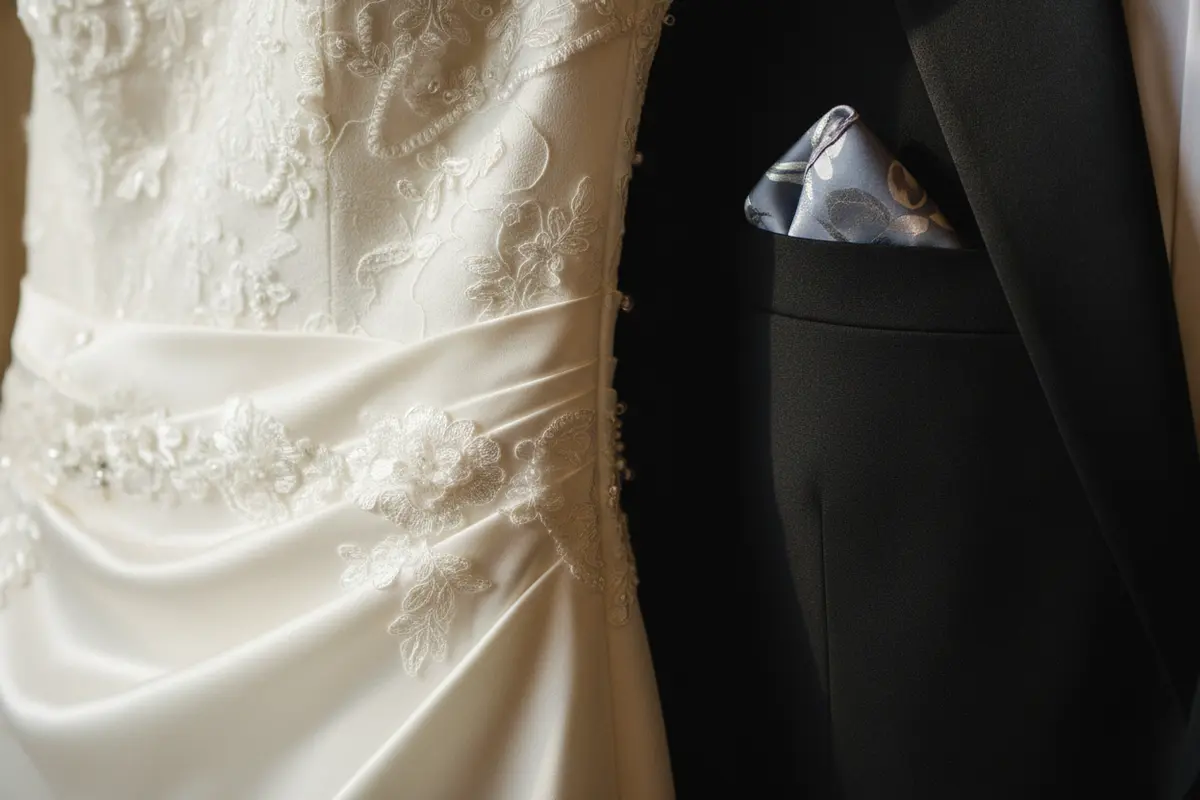
Complementary does not mean identical. A tuxedo can relate to the bride’s outfit through the formality of its finish, a compatible color temperature, or a restrained accent. For example, a clean, classic tuxedo can sit comfortably beside an ornate dress, while a more textured or distinctive jacket may feel at home with a less traditional bridal look. These are starting points, not rules. The specific garments and the couple’s taste should guide the final decisions.
Think about the visual weight of each outfit. If the bride’s attire includes noticeable texture, embellishment, or a strong silhouette, the groom can choose a polished foundation and keep accessories simple. If the bride’s look is understated, a considered lapel, shirt, or accessory can add interest without competing for attention. The desired balance is a couple who look connected, with neither outfit overpowering the other.
Use color with a light touch
White, ivory, and cream can appear different under daylight, warm indoor lighting, and photography. Rather than trying to match a small fabric swatch exactly, compare the overall effect of the garments in similar light when possible. A dark tuxedo can provide a composed contrast; a lighter or more relaxed palette may suit a daytime or outdoor setting. If a wedding color is important to the couple, it can appear in a subtle accessory rather than across the full outfit.
For a more traditional formal look, a black or midnight-toned tuxedo offers a strong, classic foundation. Other dark shades or a dinner jacket can be considered when they fit the event’s formality and the couple’s preferred style. The right choice depends on the full wedding context, not on a color trend alone. For more on silhouette and formalwear details, review this tuxedo style guide.
When you review color, compare the colors in combination rather than judging them in isolation. A cool ivory dress, a warm cream shirt, and a jewel-toned accent may each look appealing separately but feel mismatched together under the venue’s lighting. Bring a photograph or fabric reference for the bride’s attire when possible, and view the tuxedo cloth and accessories beside it. A phone image is useful for communicating direction, but screens can shift color. Treat it as a starting reference, not as proof that two shades will match perfectly in person.
How should venue and wedding palette influence the look?
The venue gives useful clues about the atmosphere and practical setting. A grand ballroom, a historic space, a garden, and a waterfront celebration each create a different backdrop. Consider the architecture, lighting, season, and whether much of the event takes place indoors or outdoors. A tuxedo should feel at ease in that environment while still honoring the dress code.
Use the palette as a supporting element. A groom does not need to repeat the exact color of the flowers or bridesmaids’ clothing. A coordinated accent, such as a pocket square or another considered accessory, may be enough. Keep the number of competing colors limited, and check how the accent works with both the bride’s attire and the wedding party’s clothing. A cohesive palette often comes from relationships between colors, not from exact matches.
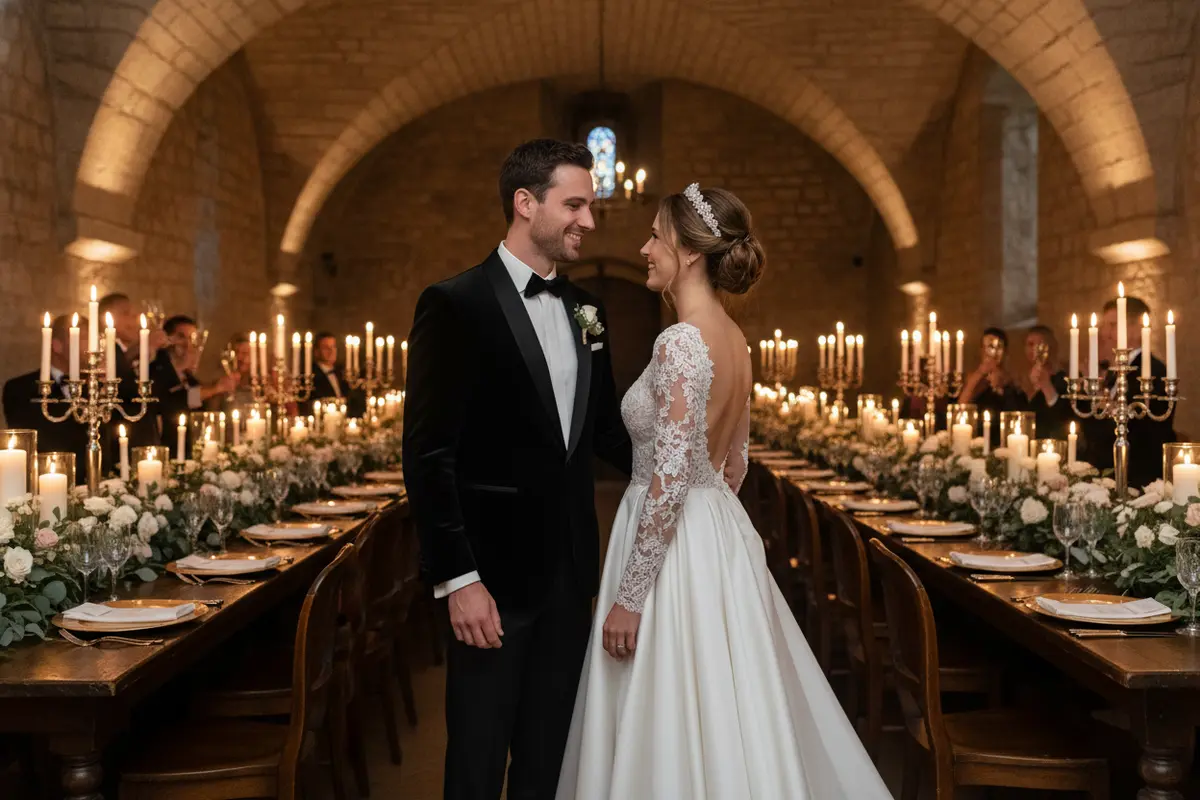
Think through the day in sequence. The ceremony may take place outside in direct sunlight, followed by portraits in a shaded garden and a reception under warm lights. The tuxedo and its details will be seen in all of those environments, so consider how the overall contrast and finish read in each. A dramatic accent that is striking in a dark room may draw more attention in bright daylight. Choosing a versatile foundation and limiting strong accents can keep the look composed from one setting to the next.
Also consider what the venue contributes visually. Stone, wood, greenery, and candlelight create different backgrounds, but the groom does not need to dress as an extension of the room. Instead, use the setting to judge whether a look feels appropriately formal and whether a color choice will remain legible against the surroundings. If most photographs will be taken against greenery, for instance, review whether the chosen accent stands apart clearly without becoming the dominant feature.
| Wedding setting or direction | Tuxedo coordination approach | Details to review |
|---|---|---|
| Formal evening celebration | Choose a polished, classic foundation that respects the dress code. | Confirm the invitation’s formality, lapel choice, and accessory restraint. |
| Garden or daytime wedding | Consider how the overall look sits with natural light and the setting. | Review fabric appearance, season, and whether the event calls for a tuxedo. |
| Distinctive venue or decor | Let the venue inform tone and texture without copying its colors literally. | Think about lighting, surroundings, and the visual impression in photographs. |
| Strong wedding palette | Use one restrained accent to connect the tuxedo to the broader palette. | Check that the accent works with the bride’s attire and wedding-party looks. |
This table is a starting point, not a substitute for the stated dress code or the couple’s preferences. For more ideas about selecting formalwear for the event, see the guide to wedding tuxedos for the groom and the overview of semi-formal wedding attire.
How can you coordinate without matching?
Choose a shared element, then let the remaining choices differ. The shared element might be the degree of formality, a color family, a finish, or one small accessory. The bride’s attire and the groom’s tuxedo can each have their own silhouette and character. A related accent is often more natural than repeating the same shade from head to toe.
Before deciding, ask what should be most noticeable in the couple’s overall look. If the bride’s dress has a distinctive feature, the groom’s accessories can stay quiet. If both outfits are relatively simple, a thoughtfully selected texture or accent may give the pair more definition. Keep the wedding party in view, too, so the groom remains easy to distinguish without looking disconnected from the group.
- Coordinate the level of formality, not necessarily every garment detail.
- Repeat one visual cue such as a restrained palette note or a similar degree of polish.
- Give each outfit room to express the wearer’s taste and comfort.
- Review the full wedding party so the groom’s choices work within the larger composition.
One useful test is to look at the couple’s outfits together from a few steps away. If the first impression is that the pair belong at the same event, the coordination is probably working. Then look more closely: the garments should still have individual character, and no accessory should seem like a forced attempt to duplicate a detail from the other outfit. This simple distance-and-detail check helps keep the goal clear.
The wedding party adds another layer. The groom should be visually distinct enough to read as one of the central figures, while still sitting comfortably beside attendants. That distinction can come from a different level of formality, a unique but compatible accessory, or a deliberate difference in jacket and shirt details. Avoid solving the problem by giving the groom every accent color at once. Decide what is shared with the party and what is reserved for the couple, then use those choices consistently in photographs and throughout the event.
Couples comparing suit and tuxedo formality can also read how formal tuxedo styling works. That decision should follow the event’s dress code and the couple’s vision, rather than an assumption that every wedding requires the same outfit.
Which details deserve the most attention?
After the main direction is clear, focus on the elements guests will see together: jacket shape, lapel, shirt, bow tie or neckwear, pocket square, and footwear. Not every element needs a special flourish. A limited set of well-considered choices tends to look more composed than several competing statements.
Jacket and lapel
The jacket anchors the look. Consider its formality, proportion, and relationship to the bride’s outfit. A shawl or peak lapel can convey a more distinctly formal impression, while other lapel treatments may suit a different design direction. The choice should work with the garment and the event, not simply follow a trend. The guide to notch, peak, and shawl lapels can help you compare the visual differences.
Shirt and accessories
The shirt and accessories can connect the outfit to the wedding palette without turning the look into a costume. Start with the dress code, then decide whether an accent is appropriate. If the wedding already includes several strong colors and details, a restrained approach may create a cleaner result. Shoes should feel consistent with the formality and finish of the rest of the outfit. Explore formal shoe options when considering the final combination.
Make accessories a final layer, not the starting point. First settle the jacket, shirt, and overall formality. Then compare a bow tie or other neckwear, pocket square, and any additional detail as a group. If two items compete for attention, keep the one that best supports the couple’s shared direction and simplify the other. A small echo of the bridal palette can be effective, but it should not require the groom to wear an exact copy of a flower or fabric color.
Fit and proportion
Fit influences how polished the tuxedo looks in person and in photographs. A jacket, shirt, trousers, and formal accessories need to work together as a complete outfit. Avoid treating a single measurement or isolated detail as the whole answer. A professional fitting lets the clothier assess the garment as worn and discuss any appropriate tailoring adjustments. Learn more about custom styling and tailoring or browse custom suit options if the couple is still deciding between a tuxedo and a suit.
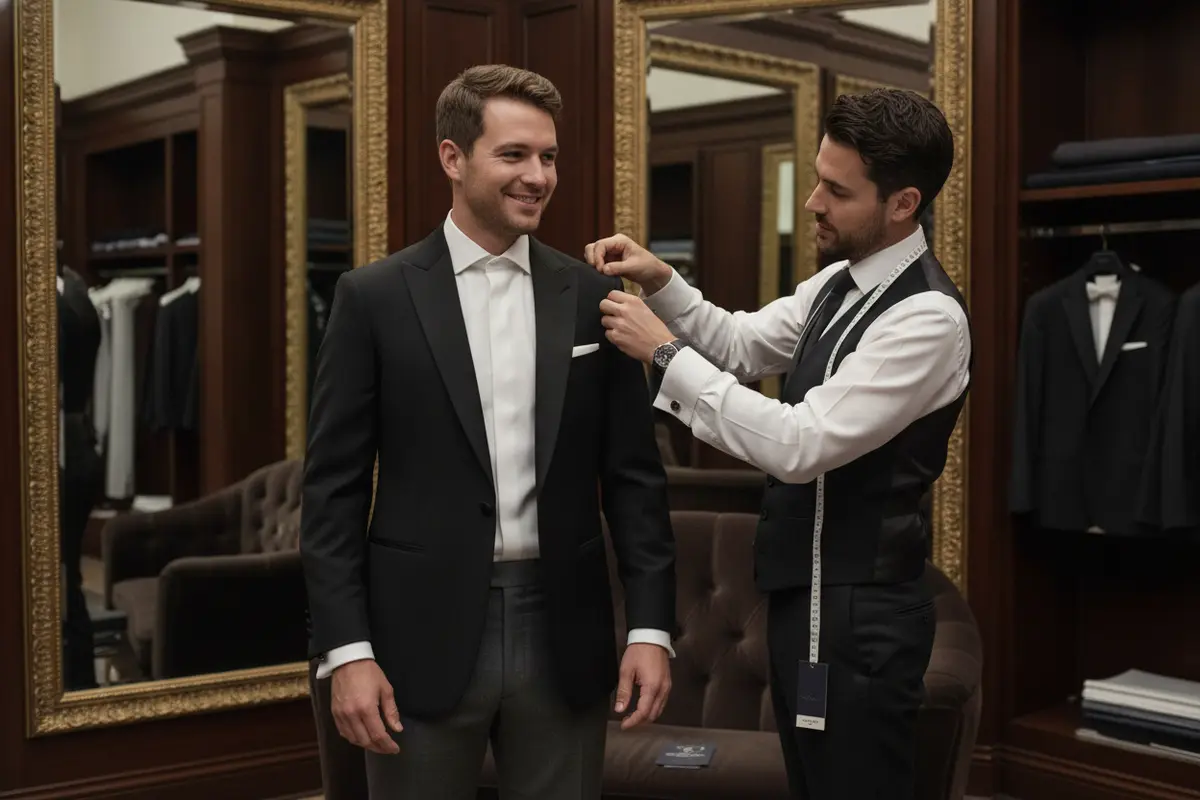
When reviewing fit, assess the entire look in the clothes the groom expects to wear on the day. The shirt collar, jacket, trousers, and shoes all affect the finished impression. Bring the relevant accessories to a fitting when available, and mention whether the groom will be standing, sitting, or moving between locations for long periods. Comfort matters because a wedding outfit is worn through a full day, not just for a posed portrait. A professional can review proportions as a whole and identify any adjustments that may be appropriate.
When should the groom plan the tuxedo?
Begin four to five months before the wedding. That gives the couple time to discuss the overall direction, consider fabrics and design details, and plan for measurements and fittings. Starting early also leaves room to coordinate with the bride’s attire and the wedding-party look instead of making those decisions at the last minute.
A custom tailoring process is consultation-based, and timing can depend on garment choices and the fitting process. The customer’s custom tailoring offering through the Atelier Munro partnership has a stated delivery timeline of three to five weeks, but this should not replace advance planning for a wedding or a discussion of the specific garment and schedule. Use an appointment to confirm the appropriate timeline and next steps. The Atelier Munro suit guide provides additional context on custom options.
- Set the direction. Align on venue, dress code, palette, and the mood the couple wants to create.
- Discuss the garment. Review tuxedo style, fabric, and details with a clothier, taking the bride’s attire into account.
- Arrange measurements and fitting. Assess the garment on the wearer and discuss professional adjustments as needed.
- Confirm the complete look. Review accessories and overall coordination before the wedding day.
Use the time between those steps to resolve decisions in a sensible order. First confirm the event’s formality and the groom’s general style direction. Next, compare the tuxedo choice with the bride’s attire, venue, and palette. Once the main garment is selected, review accessory options and arrange the fitting. This sequence prevents a small detail, such as a pocket square, from driving larger decisions before the couple knows what the full outfit needs.
Build a small reference packet before an appointment. It can include the invitation or dress-code wording, the wedding date and venue, a palette image, and a photo or fabric reference for the bride’s attire. Add a short note about what each person likes and what they want to avoid. This is more useful than collecting dozens of inspiration images with conflicting styles. A few clear references let the consultation focus on workable choices rather than trying to reproduce a photograph exactly.
How can a consultation make coordination easier?
A hands-on consultation helps turn inspiration into a practical plan. Bring the invitation or dress-code wording, venue details, palette references, and any available information about the bride’s attire. If there are fabric or accessory references, share them as points of direction rather than demanding an exact match. The conversation can then focus on the tuxedo’s formality, color, details, fit, and timing.
It can help to arrive with questions in addition to images. Ask which choices have the greatest effect on formality, how a fabric or finish may appear in the venue’s lighting, and what the fitting schedule should include. If the couple is still unsure whether to choose a tuxedo or a suit, discuss the invitation and setting before selecting the garment. A consultation is a place to weigh those decisions together, not a requirement to settle on every accessory immediately.
Trevor Furbay Bespoke combines custom tailoring with personal styling and an in-person consultation experience. For custom garments, pricing depends on the fabric and customization and is discussed during consultation; there is no one fixed custom-suit price to assume. A stylist can help the groom consider the options and how they relate to the event. Couples looking for a broader wedding wardrobe process can also explore the custom wedding tuxedo service and learn about the company’s clothiers and personal stylists.
Frequently Asked Questions
Does the groom’s tuxedo need to match the bride’s dress?
No. The tuxedo should complement the bride’s attire and the wedding as a whole, but exact color matching is not necessary. Coordinating through formality, tone, texture, or one restrained accent can create a connected look while keeping each person’s style distinct.
Can the groom wear a tuxedo for a daytime wedding?
That depends on the invitation, the formality of the event, the setting, and the couple’s preferences. Consider those factors together before choosing a tuxedo. If the dress code is unclear, discuss the options with the couple or a clothier before making a final selection.
When should the groom start planning a tuxedo?
Begin four to five months before the wedding. Early planning gives time for a consultation, garment decisions, measurements, fittings, and coordination with the bride’s attire and wedding palette.
How can the groom include wedding colors without overdoing them?
Choose one subtle point of connection, such as an accessory in a compatible color, and keep the rest of the look balanced. Check the accent against the bride’s attire and wedding-party clothing, and avoid adding several competing colors just to reproduce the entire palette.
What should the groom bring to a tuxedo consultation?
Bring the dress-code wording, wedding date, venue information, and palette references. Photos or fabric references for the bride’s attire can help communicate the desired relationship between the outfits, even when the goal is not an exact match.
A thoughtful bride groom tuxedo choice reflects the couple’s shared vision while allowing both people to feel like themselves on the wedding day.