
Choosing clothes for mens wedding celebrations starts with the invitation, not the closet. The dress code, venue, time of day, and your role all shape an outfit that looks appropriate and feels comfortable. Use this checklist to make decisions in order, from formality and color to fit, accessories, and timing.
What should you check on the invitation first?
Look for a stated dress code such as black tie, formal, cocktail, or dressy casual. If the invitation does not name one, check the couple’s wedding website, schedule, and any direct guidance. Do not treat a scenic or outdoor venue as permission to dress casually; the couple may want formal attire even in a garden or by the water.
Your role matters just as much. A groom may choose the central look and coordinate the wedding party, while a groomsman should follow the couple’s instructions. Parents may want to coordinate without wearing an exact copy of the wedding party’s outfit. Guests should dress respectfully and avoid looking as if they are part of the coordinated group.
- Black tie: A tuxedo is the clearest choice. Follow the invitation’s directions on color and accessories.
- Formal or black-tie optional: A dark, well-fitted suit or tuxedo can work, depending on the event and couple’s preference.
- Cocktail: A tailored suit is a dependable starting point. Use the venue and time to decide on the shirt and neckwear.
- Dressy casual: A blazer and tailored trousers can look polished when the setting is relaxed and the dress code allows separates.
When wording is unclear, ask before purchasing. A short message to the couple or planner can clarify whether a tie, tuxedo, or specific palette is expected. This is especially useful for a destination wedding or a celebration with multiple events and different dress codes.

How do venue and timing change the outfit?
The setting gives practical clues, but it does not replace the dress code. A ballroom or formal indoor venue usually pairs naturally with structured clothing and polished shoes. At an outdoor event, consider whether the ground is grass, sand, or gravel before choosing footwear. For a ceremony and reception in different locations, select an outfit that can handle both comfortably.
Time of day can also shape the impression. Evening celebrations often feel more formal, while daytime events may allow a softer color or less formal separates if the invitation supports them. Season matters for comfort: breathable cloth and lighter layers can be appealing in warm weather, while a thoughtful layer and richer texture may suit cooler months. Avoid making season the only deciding factor.
Think through the whole schedule. Will you travel between venues? Will the ceremony be outdoors and the reception indoors? Will you be standing for photographs or dancing later? These details can guide choices such as a breathable shirt, a jacket that is easy to keep on, and shoes that remain comfortable through the event.
Which suit or formalwear option makes sense?
A dark suit is versatile for many formal and cocktail weddings. Navy and charcoal are useful foundations because they pair well with a range of shirts and accessories. Black tie calls for a tuxedo rather than an ordinary business suit. For a less formal celebration, a blazer with tailored trousers may work, provided it fits the stated dress code.
Decide whether a coordinated suit or separates best serves the occasion. A matching suit creates a classic, unified line and may offer more future use if the jacket and trousers can also be worn separately. A blazer with distinct trousers feels less formal and can be easier to reuse in everyday settings. Explore custom suits or sport coats and jackets to consider the difference with a clothier.
| Option | Often suits | Decision point |
|---|---|---|
| Tuxedo | Black tie and especially formal evening weddings | Follow the invitation and keep accessories in step with the formality. |
| Dark matching suit | Formal, cocktail, and many evening celebrations | Choose a clean fit and coordinate shirt and accessories. |
| Blazer and tailored trousers | Dressy casual or some daytime weddings | Confirm that separates suit both venue and dress code. |
| Custom wedding attire | Grooms, wedding parties, or anyone seeking considered fit | Allow time for consultation, measurements, and fittings. |
For a groom, the choice can start with the overall wedding vision. A tuxedo may anchor a formal evening celebration; a dark suit may be more versatile for a range of settings. Wedding party clothing can echo that choice through coordinated color or accessories without requiring every person to have identical proportions or preferences. Guests should choose a look that respects the occasion rather than drawing attention away from the couple.
There is no single best garment for every wedding. Compare the invitation, your role, and how you want to wear the pieces afterward. If you are uncertain, bring those details to a styling appointment instead of buying an outfit based on one isolated image or trend.
How should the clothes fit?
Fit has more impact than a label or trend. A jacket should sit smoothly at the shoulders, close without pulling, and allow comfortable movement. Sleeves should show a considered amount of shirt cuff when your arms rest naturally. Jacket length and trouser break should look balanced on your frame.
Try the entire outfit, not just the jacket. Sit down, stand, reach forward, and move your arms. Check that the trousers remain comfortable when seated and that the jacket fastens without strain. Wear the shirt and shoes you expect to use on the day, because both affect the finished proportions. If an adjustment is needed, have a professional handle it rather than attempting a repair yourself.
For custom tailoring, the process is consultation-based, and choices depend on fabric and customization. A conversation can help you consider proportion, cloth, and design details together. Learn about custom styling and tailoring and the bespoke tailoring process.
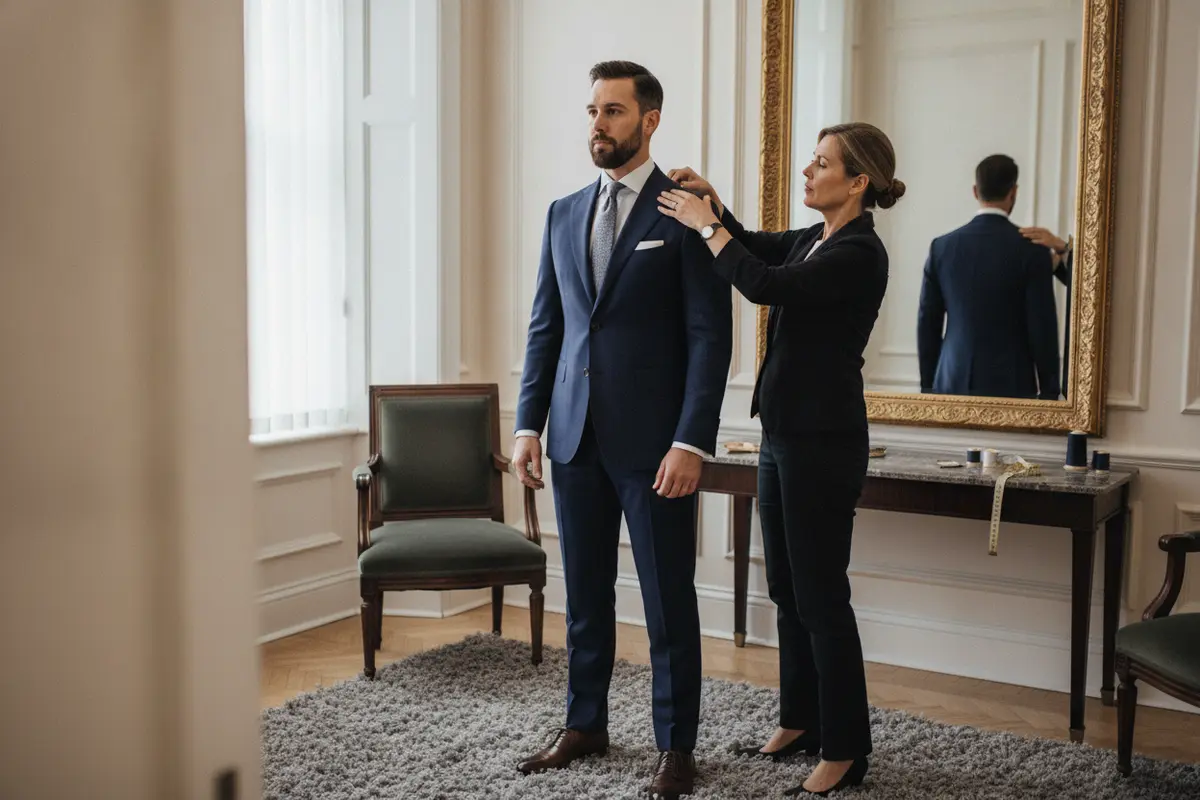
How can you coordinate with the wedding party?
Coordination does not mean every person must wear an identical outfit. Start with the couple’s preferred palette and formality, then agree on where the group should match and where individuals can choose. The suit color might be shared while ties, pocket squares, or fits vary. Clear direction helps avoid last-minute differences in shade or formality.
If you are a groom or organizing the group, share the essential details early: event date, dress code, color direction, who is selecting attire, and when everyone needs to be fitted. Confirm whether the group will wear matching garments or complementary choices. A useful plan accounts for different body types and comfort needs while still making the photographs feel cohesive.
Guests can use a restrained accessory to echo the event palette without appearing to be part of the wedding party. Avoid asking the couple to approve every detail; clarify the broad guidance and make a considerate choice within it. Trevor Furbay Bespoke’s wedding attire consultation process follows discovery and planning, styling and selection, measurements and fitting, and a final fitting and delivery.
Which accessories finish the look?
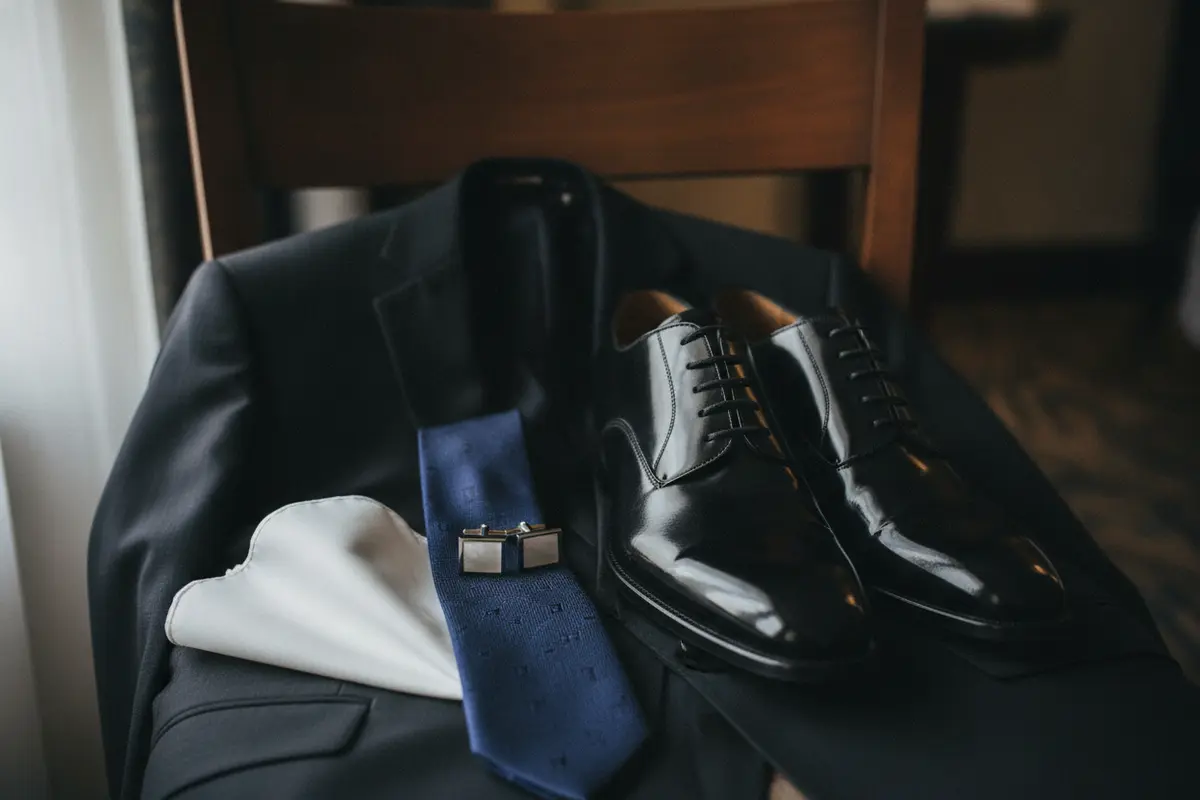
Accessories should suit the clothes’ level of formality. A crisp shirt, appropriate neckwear, polished shoes, and a simple pocket square can complete a suit. A tuxedo calls for formal details that belong with that garment. Keep focal points limited; one distinctive detail can have more impact than several competing choices.
Comfort matters, too. Wear dress shoes before the event so they are familiar, and check that your belt or braces work with the trousers. Keep jewelry and watches understated for a formal occasion. For an outdoor wedding, consider the ground and weather when selecting footwear and layers. If you are unsure whether an accessory belongs, use the invitation and couple’s guidance as your reference.
How do you plan the outfit without a last-minute rush?
Give yourself time to decide, source the clothing, and complete professional fittings or alterations. Grooms should begin four to five months before the wedding. This allows time for discovery, selection, measurements, a fitting, and a final check. Wedding party members should follow the schedule shared by the couple.
- Confirm the essentials. Record the date, venue, dress code, your role, and any palette guidance.
- Choose a formality level. Decide whether a tuxedo, matching suit, or separates are appropriate.
- Set a direction. Consider color, shirt, neckwear, shoes, and how the outfit relates to other attendees.
- Try the complete look. Wear all the pieces together and test sitting, walking, and reaching.
- Schedule professional help early. Allow time for a custom consultation or needed tailoring, rather than relying on a rushed final adjustment.
- Make a final check. Confirm each garment and accessory is ready well before the event and keep the pieces together.
For a groom, the sequence can be organized around four practical stages: first discuss the wedding theme, venue, and timeline; next consider fabrics, styles, and accessories; then take measurements and review the fit; finally complete the last fitting and delivery. Planning the outfit as a process makes it easier to spot unanswered questions before they become urgent. Explore wedding tuxedo styles or read advice on choosing a suit as a wedding guest as you narrow your direction.
How should you choose between custom and ready-to-wear?
Ready-to-wear may be a practical fit when you already have a suitable garment that meets the dress code and feels comfortable. Try it with the shirt and shoes you plan to wear, and assess how it looks both standing and seated. Do not assume that a garment is event-ready simply because it is new or has been worn to work.
Custom tailoring can be useful when you want to consider fit, fabric, and design details as a whole, or when coordinating a groom’s outfit with a broader wedding plan. It is not necessary for every wedding. A consultation can help you compare possibilities without presuming that one route is right for everyone. The custom tuxedo options page is relevant when the dress code points toward black tie.
Think about repeat wear, too. A dark suit may return for professional or formal occasions, while a highly specific tuxedo or accessory may be reserved for special events. Choose the outfit that meets the event’s needs first, then consider versatility as a useful secondary factor rather than a reason to ignore the invitation.
When is a styling appointment useful?
A hands-on appointment can help when dress code, fit, fabric, and personal preference seem difficult to balance. Bring the invitation details, venue information, event date, and any color guidance. A stylist can help you review the overall plan and consider custom options alongside curated ready-to-wear, depending on your needs.
For a groom or wedding party, early planning can turn broad ideas into a schedule for discovery, styling, measurements, and final fitting. For a guest, a focused discussion can help refine an outfit without overcomplicating the decision. The appointment page is where you can arrange a conversation, and the clothier team information provides more context about the available styling support.
What should you decide before shopping?
Turn the broad advice into a short brief you can use when comparing garments. Write down the dress code exactly as stated, the ceremony and reception locations, the time, and any instructions from the couple. Add your role and whether you are expected to match a group. This simple note prevents a common mistake: choosing an outfit that looks excellent on its own but misses the event’s requested level of formality.
Next, separate fixed requirements from preferences. A black-tie dress code is a requirement; a preference for navy is a preference. A request that groomsmen wear coordinated dark suits is a requirement for that group; a particular pocket square may be optional. Marking the difference makes decisions faster and helps avoid spending time on details that are not yet settled.
Make a checklist of the pieces you already own. Include jacket, trousers, shirt, shoes, belt or braces, tie or bow tie, and any outer layer. Inspect the garment’s fit and condition, then try it on as a complete outfit. If a key piece is missing or the outfit does not feel comfortable, identify that early rather than assuming it can be solved the week of the wedding.
How can you make color and pattern feel considered?
Start with the suit or tuxedo color, then build the rest of the outfit around it. Navy and charcoal offer room for different shirt and tie combinations. A light or patterned shirt can shift the mood, so consider the event’s formality before adding contrast. If the wedding party has a defined palette, a guest can choose a quieter complementary color rather than repeating the exact combination.
Patterns work best when their scale and number are deliberate. If the suit has a visible pattern, a simpler shirt and tie can keep the full look balanced. If the suit is solid, a patterned tie or pocket square may provide interest without taking over. Avoid selecting several bold patterns at once unless you are confident they work together and the invitation allows a more expressive look.
Color should also relate to the season and setting without becoming a costume. Lighter tones may feel natural at a daytime garden event; deeper colors often feel at home for an evening celebration. But the couple’s stated direction comes first. When coordinating a group, view fabrics together under ordinary light if possible, since two shades that seem similar online can look different in person.
What should you check during a complete outfit test?
Set aside time to wear every component at once, not just to stand in front of a mirror. Button the jacket as you expect to wear it, check the collar against the shirt, and look at the trouser length with the actual shoes. Walk, sit, reach for something, and raise your arms as you might during photographs or conversation. Clothing should allow natural movement without pulling or sliding out of place.
Check practical details as well. Confirm that pockets hold the items you plan to carry without distorting the line of the jacket. Make sure the shirt stays neatly tucked when you move. Test that the shoes feel manageable after several minutes on your feet. If you will wear a tie, practice tying it before the event and check that its length looks balanced with the waistband.
Take a few photographs from the front, side, and back in lighting similar to the venue if possible. Photos can reveal proportions that are easy to miss in a quick mirror check. If the jacket collar lifts, a sleeve looks uneven, or the trousers bunch, note the concern and ask a professional about it. Do not attempt a home alteration or repair. A fitting appointment is the appropriate place to assess adjustments.
How should a wedding party organize its clothing?
Group coordination works best when one person communicates the essentials clearly. Share the chosen suit or tuxedo direction, color, shirt and neckwear expectations, footwear guidance, and the date by which everyone should be ready. Include a reference image only as inspiration, and state which details are mandatory and which may vary. This avoids a group interpreting the same photograph in several different ways.
Allow for individual fit and comfort while keeping the shared elements visible. A uniform suit color with slightly different fits can look coherent. If the wedding party is wearing matching ties, people can still use different shirt sizes and jacket proportions. For a larger group, clarify who will arrange appointments and who should confirm completion, so no one assumes another person has handled it.
Plan a contingency for someone who cannot find the exact item or needs more time. Decide whether a close alternative is acceptable and who can approve it. For the groom, it is useful to settle this before the final weeks, when small differences can create unnecessary stress. A shared schedule can include an initial selection deadline, fitting dates, and a final check well before the ceremony.
How can you prepare for different wedding-day conditions?
Consider the day as a sequence rather than a single photograph. A warm outdoor ceremony followed by an air-conditioned reception may call for a shirt and jacket that feel comfortable across both settings. A winter event may involve a coat outdoors but no outer layer indoors. Choose pieces that work together and consider where you can safely leave an extra layer when you arrive.
For outdoor venues, footwear needs special thought. Narrow heels or delicate soles may be awkward on grass or gravel, and polished shoes can be less comfortable on uneven ground. Select footwear that looks appropriate and allows you to walk steadily. If the celebration moves from a lawn to a formal indoor space, a clean, versatile shoe can help bridge both parts of the day.
Travel and storage also matter. If you are driving or flying, keep the suit protected and plan when you will unpack and check it. Pack accessories together in a small case and keep essential items easy to find. If you are staying overnight, bring a spare shirt and consider a simple backup plan for a missing tie or damaged button. The aim is not to overpack but to avoid a small oversight becoming a major distraction.
When is custom wedding attire worth exploring?
Custom attire can be worth discussing when the groom wants a look shaped around the wedding, when the group needs a clear coordinated direction, or when ready-to-wear options do not produce the desired fit. It also offers a chance to consider fabric, color, and design details together. The choice remains personal; a well-fitting ready-to-wear outfit may be entirely suitable when it meets the dress code and feels right.
At a consultation, bring the date, venue, dress code, inspiration, and practical concerns. Talk about how formal the event will be, how many people need attire, and whether each person will wear the same garment or a coordinated option. Ask what decisions must be made first and what can wait. Custom pricing is consultation-based and depends on fabric and customization, so discuss the specific choices rather than assuming a fixed amount.
The wedding process follows four stages: Discovery and Planning to discuss theme, venue, and timing; Styling and Selection to review fabrics, styles, and accessories; Measurements and Fitting for fit assessment and tailoring; and Final Fitting and Delivery to check that everything is ready before the day. Beginning four to five months ahead gives the groom and wedding party time to move through those steps without making the final days carry the whole burden. For related reading, compare men’s wedding guest attire, groom and partner tuxedo coordination, and the tuxedo style guide.
Frequently Asked Questions
Can I wear a navy suit to a wedding?
Often, yes. A navy suit can suit many formal and cocktail weddings, but follow the stated dress code and any guidance from the couple.
Should guests wear the same colors as the wedding party?
No. Guests can choose complementary colors without matching the wedding party. Avoid copying a distinctive coordinated look unless the couple invites you to do so.
How far ahead should a groom plan wedding clothes?
Begin four to five months before the wedding. That gives time to discuss the vision, select attire, take measurements, and complete a final fitting.
Is custom clothing necessary for a wedding?
No. Ready-to-wear can be appropriate when it fits well and matches the dress code. Custom tailoring is one option when you want to consider personalized fit, fabric, or design details.
The best wedding outfit respects the occasion, fits comfortably, and lets you take part in the celebration with confidence.