
Custom suit button styles may seem like a small detail, but they influence a jacket’s formality, balance, and personality. The best choice is not simply the most noticeable button. It is the combination of front layout, material, color, and sleeve finish that works with how you plan to wear the suit.
Start with the jacket’s purpose. A versatile business suit often benefits from quiet buttons and a familiar front closure. A dinner jacket or a sport coat can support a more distinctive finish. Then consider the fabric, your existing wardrobe, and how much contrast you want. A custom consultation gives you the chance to compare choices against the actual cloth rather than deciding from a description alone.
What are the main custom suit button styles?
Button style covers several decisions that work together. The front-button configuration affects the jacket’s outline and how it closes. The button itself contributes color, texture, and formality. Sleeve buttons are a finishing detail that can either blend in or draw the eye. Thinking about these parts separately helps you make a deliberate choice without making every detail compete for attention.
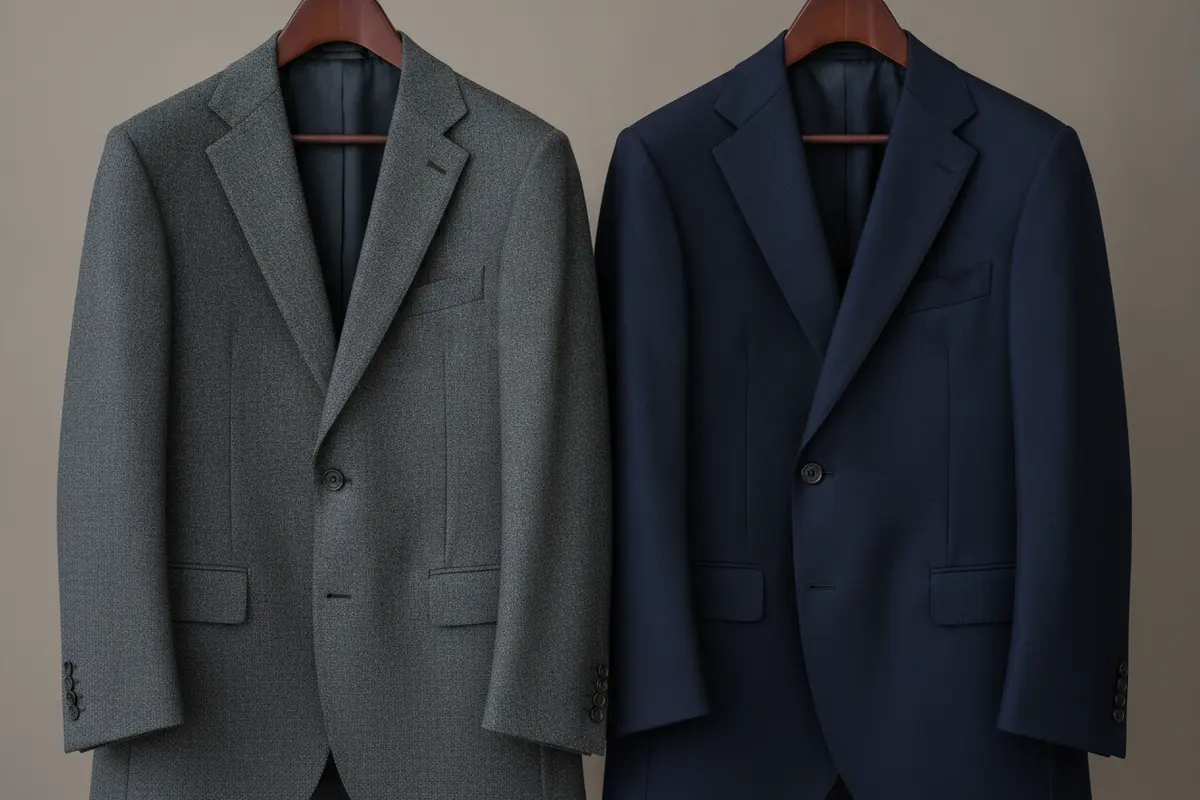
For many two-piece suits, the main choice is a single-breasted jacket with two buttons or a three-button design that may be worn in a three-roll-two arrangement. Double-breasted jackets use two parallel rows of buttons and create a more pronounced front. These are design choices, not a ranking from best to worst. Your proportions, preferred silhouette, and intended use matter more than a rule about which option is always right.
How do two-button and three-button fronts differ?
A two-button front is a familiar, adaptable choice. It leaves a clean opening at the chest and works across many business and social settings. The lower button is generally left undone when the jacket is worn. The arrangement also gives the lapels room to form a clear line toward the fastening point. If you want one jacket to move easily between work, dinners, and events, this is often a practical starting point.
A traditional three-button jacket has a higher, more closed appearance. In a three-roll-two design, the lapel rolls over the top button, so the jacket is fastened at the middle button in a way that visually resembles a two-button front. That softer roll can be an appealing option when you want a slightly different shape without a conspicuous extra button. The details of the pattern and construction affect how the lapel sits, so discuss the exact look you have in mind.
Double-breasted jackets have a wider overlap and more visible buttons. They can feel especially intentional with a defined shoulder and clean, tailored lines. Consider whether you expect to wear the jacket buttoned for much of the day, because that is part of the visual character of this front. If you are exploring a more formal direction, compare the options with the silhouettes in our tuxedo style guide and the custom jacket and sport coat collection.
Which front closure suits the way you will wear the suit?
Use the table as a starting point, not a rigid dress code. The fabric, lapel, fit, and occasion can shift the impression of any button arrangement.
| Front style | Visual effect | Useful for | Decision to consider |
|---|---|---|---|
| Single-breasted, two-button | Balanced and familiar | Business, events, and versatile wardrobes | Whether you want a dependable, easy-to-coordinate jacket |
| Three-button | Higher and more traditional | Those who prefer a more closed front | How the button stance complements your proportions |
| Three-roll-two | Soft lapel roll with a two-button appearance | A distinctive but restrained alternative | How the lapel roll looks on the chosen cloth |
| Double-breasted | Structured, with a wider overlapping front | Statement suits and dressier wardrobes | Whether you enjoy wearing the jacket buttoned |
If your wardrobe is mostly classic business clothing, a two-button front usually coordinates with more existing shirts and trousers. If you already own several simple suits, a three-roll-two or double-breasted jacket can bring variety while still feeling considered. A custom suit or separate custom tailoring appointment is an opportunity to try on different proportions and see how the lapels and closure work with your frame.
How do button stance and scale affect the look?
The number of buttons is only part of the front’s appearance. Their placement, spacing, and size also shape the jacket visually. A higher fastening point can make the front feel more closed, while a lower one can create a longer opening beneath the lapels. The pattern and the wearer’s proportions influence how those lines read, so judge the jacket while wearing it rather than relying on a hanger or a diagram.
Button scale should feel proportional to the garment. A button that looks substantial on a heavy sport coat may seem too prominent on a fine, lightweight suit. Conversely, a very small button can disappear against a bold cloth or a wide lapel. Compare actual samples on the chosen fabric and step back to see the full jacket. Close inspection reveals texture; a few feet of distance reveals whether the buttons dominate.
When comparing samples, look at the jacket both open and fastened. An open jacket shows how the button sits against the cloth and lapel; a fastened jacket shows how the closure completes the front. If the design is double-breasted, check whether the visible rows feel balanced with the lapel width. These simple checks make it easier to distinguish a detail you enjoy in isolation from one that works on the finished garment.
What button material should you choose?
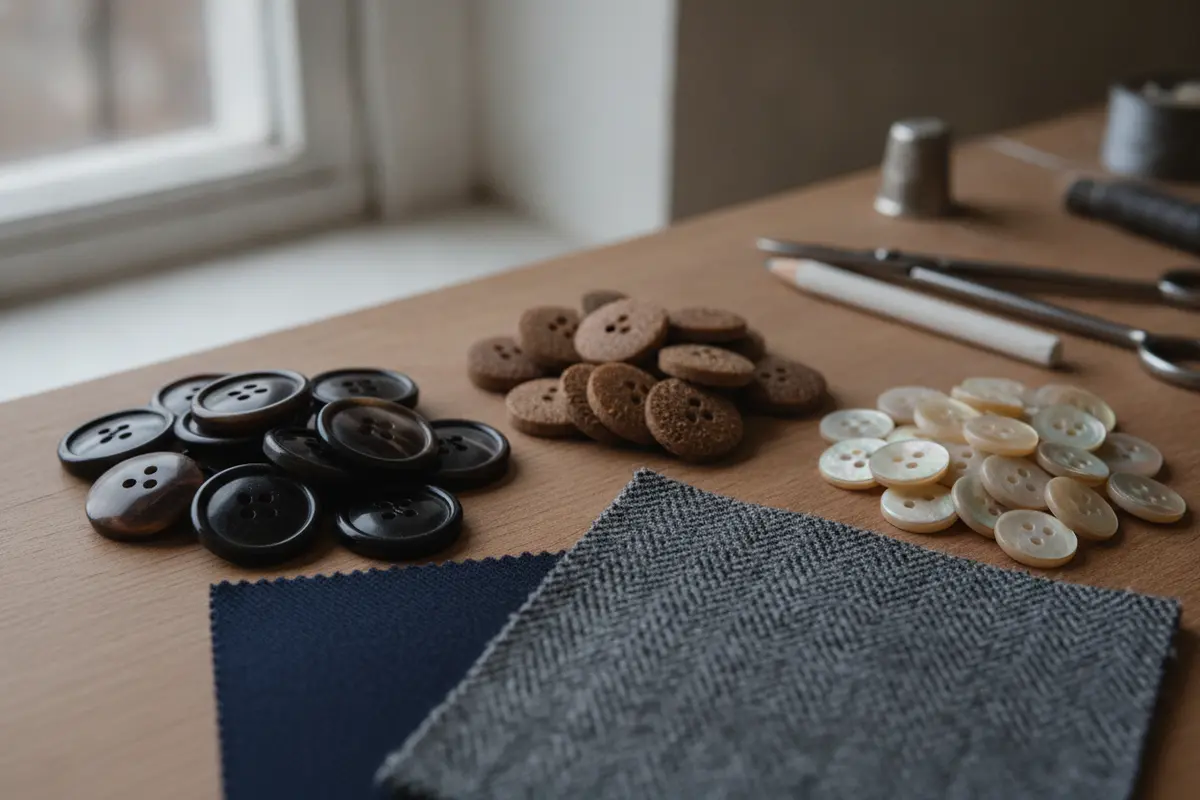
Button material changes the surface, weight, and overall impression of a jacket. Natural materials such as horn can have subtle variation in tone and pattern. Corozo, a plant-based button material, can offer a smooth finish and a range of understated colors. Mother-of-pearl has a luminous surface that can read as more decorative, while metal buttons make a clear statement and are often associated with blazers rather than a conservative business suit. The exact options available depend on the garment and the cloth.
Think about the button as part of the whole outfit. A dark, low-contrast button keeps attention on the jacket’s cut and fabric. A lighter or patterned button creates a more visible accent. Neither approach is automatically more formal; the finish, color, and setting all matter. For a suit you will wear often, restraint can make it easier to combine the jacket with different shirts and ties. For a sport coat, a contrasting button may be an intentional feature.
How should color and contrast work?
Match the button to the fabric when you want a quiet, streamlined effect. A navy suit with dark navy or nearly black buttons is easy to wear in professional settings. Charcoal cloth paired with charcoal or dark horn buttons keeps the front understated. A brown or mottled button can warm up blue, olive, or earth-toned cloth, especially on a sport coat. These are starting points, not fixed formulas.
High contrast is useful when you want a button to read as a design feature. It can also make the front closure more noticeable, so check whether that emphasis feels balanced with the lapel, pocket details, and any pattern in the cloth. Avoid choosing buttons in isolation from the suit. Place the samples directly against the fabric and view them in natural light, since the apparent color can change under store lighting.
How can you compare button samples with your wardrobe?
Bring the clothes you expect to wear with the suit into the decision. A favorite shirt or tie can reveal whether the button color harmonizes with the palette you use most. If you are commissioning a suit to wear with several shirts, prioritize a button that does not limit those combinations. A button that looks excellent beside one particular tie may be less useful if that tie is rarely worn.
Consider the cloth’s pattern as well. With a solid fabric, the button can carry a little more texture or contrast without competing with another focal point. With a check, stripe, or visible weave, the cloth already contributes visual information. A quieter button can keep the jacket composed. Lay the samples beside the cloth and compare not only color but also pattern scale and shine. The goal is a deliberate relationship, not an exact match at all costs.
For example, imagine a charcoal suit intended for frequent office wear and evening events. A dark, subtly textured button keeps the jacket adaptable with white and pale-blue shirts, while a bright button may make the front feel more specific to one styling direction. On a separate navy sport coat worn with tailored trousers, a warmer button can provide a point of contrast that distinguishes it from a matching suit jacket. The same button does not have to serve both roles.
What should you know about sleeve buttons?
Sleeve buttons are smaller than the front buttons, but they are visible when you move, sit, or greet someone. A row of closely matched buttons creates a traditional, polished finish. A subtle contrast can give a custom jacket a personal touch without changing its overall character. The number and spacing of sleeve buttons are details to confirm with the clothier, because the desired look and the garment’s construction should guide the final arrangement.
Some tailored jackets are made with functioning sleeve openings, while others have non-functioning sleeve buttons. Whether a sleeve opening can be adjusted after construction depends on the jacket’s design and construction. Do not assume that a button detail can be changed later or that every garment can support the same treatment. If you have a preference, raise it before the jacket is made and ask how it affects fitting and any future adjustment options.

Buttonholes may also be finished in a color that blends in or offers a restrained accent. A contrast buttonhole can be expressive, but it draws attention to the cuff. If you want a flexible suit, keep decorative contrast limited to one area. You can also compare the cuff against a planned shirt, since a visible cuff and sleeve finish work together. Explore custom shirts if you are building a coordinated outfit around a new jacket.
Should sleeve buttons match the front buttons?
They often look cohesive when the sleeve buttons repeat the front-button material and color. That does not mean every detail must be identical. A small variation can work when it feels intentional and does not compete with a contrasting front button or buttonhole. Consider the cuff as part of the whole sleeve: the shirt cuff, jacket length, button spacing, and finish are seen together when you move.
If the jacket is a versatile work suit, matching or closely related sleeve buttons generally keep the finish understated. If it is a sport coat or a special-occasion garment, a little more distinction may suit the purpose. Ask to view the proposed cuff detail beside the front buttons. This quick comparison makes it easier to judge whether the variation looks subtle or reads like an unrelated accent.
How do you make button details feel personal, not overdone?
Choose one focal detail and let the others support it. For example, pair a distinctive front button material with understated sleeve buttons and a standard buttonhole. Or keep all the buttons low contrast and add personality through a textured cloth or a considered shirt and tie. A coherent suit does not need every option to be unusual.
- For a core work suit: Start with a single-breasted two-button front and buttons close in tone to the fabric.
- For a more relaxed sport coat: Consider a warmer or more visible button that complements the cloth and trousers.
- For a formal evening jacket: Keep the button choice aligned with the jacket’s intended dress level and other formal details.
- For a suit with a pattern: Use buttons that do not compete with the pattern’s scale or contrast.
- For a special personal accent: Add one controlled point of contrast rather than several unrelated ones.
These choices work best when they make sense with pieces you already own. Bring a favorite shirt, tie, or pair of trousers to your fitting if you want to see how the complete combination reads. You can also consider the jacket’s role in your wardrobe: a matching suit usually needs to coordinate as a set, while a sport coat may be worn with separate trousers. Our custom trousers and custom casual clothing options can help you think through the full outfit.
How do you keep a suit flexible across occasions?
Begin with the occasions you actually expect, not every possible dress code. If the suit must serve as a regular office option and a dinner outfit, choose a front layout and button finish that feel natural in both settings. Then add personality through a detail that remains quiet at a glance, such as a subtle surface variation or a buttonhole close to the cloth’s color.
If the jacket has a narrower purpose, use that as permission to be more specific. A wedding suit can reflect the groom’s personal style while still respecting the event’s dress code and the wedding’s overall palette. An occasional sport coat can carry more contrast than a jacket intended to anchor a work wardrobe. Thinking in terms of use helps prevent overdesign: every choice has a reason, and the result feels like you rather than a list of options.
One practical test is to describe the outfit without mentioning the buttons. If the suit’s cloth, fit, and silhouette already create a strong impression, buttons may be most effective as a supporting detail. If the fabric and cut are intentionally restrained, one distinct button choice may add character. Either way, the jacket should still feel coherent when paired with the shirts and trousers you wear most often.
What should you decide at a custom tailoring consultation?
You do not need to arrive with every button choice settled. A useful consultation begins with how and where you plan to wear the garment. From there, you can look at cloth, jacket shape, and button samples together. Custom tailoring is consultation-based, and the investment depends on fabric and customization; it is better to discuss the specific design than assume a fixed price from one detail.
- Describe the use. Explain whether the jacket is primarily for work, weddings, travel, or evening occasions, and how often you expect to wear it.
- Talk through the front. Compare a two-button, three-button, three-roll-two, or double-breasted silhouette against your preferred fit and proportions.
- View buttons on the cloth. Check material, color, and contrast next to the actual fabric, not only in a separate sample.
- Review the sleeves. State your preference for sleeve-button color and finish, and ask what the garment’s construction allows.
- Check the whole outfit. Consider shirts, ties, shoes, and trousers you plan to wear with the jacket so the details have a clear purpose.
You can make the meeting more productive by bringing a short list of priorities. Note which suits you already reach for, what you like about them, and what you would change. If you prefer a more distinctive look, bring a reference image or describe the effect in plain terms, such as “quiet and classic” or “noticeable but not flashy.” Clear language gives the clothier a useful starting point without requiring you to know technical tailoring terms.
Ask to see button samples directly against the selected cloth, and take time to compare the jacket’s overall balance. You can consider front closure, button surface, color, sleeve finish, and buttonhole together, but you do not have to decide each one at once. First settle the silhouette and intended use. Then refine the details that support those decisions. This order keeps a small accent from driving the design of the whole garment.
For a wedding, coordinate the groom’s choices with the dress code, venue, and the overall plan for the wedding party without assuming everyone needs identical details. Trevor Furbay’s wedding wardrobe process begins with discovery and planning, followed by styling and selection, measurements and fitting, and a final fitting and delivery. Starting four to five months before the wedding gives time to discuss the plan and fittings. See the custom wedding tuxedo options and groom tuxedo style ideas for additional formalwear considerations.
When you are ready to compare fabrics and details in person, review what to wear to a custom suit fitting and bring any outfit pieces you would like to coordinate. A hands-on fitting can help clarify how the closure and button scale look once the jacket is on.
Frequently Asked Questions
Are two-button suits still a good choice?
Yes. A two-button front remains a versatile option for business and many social settings. Choose it when you want a familiar silhouette that coordinates readily with the rest of your wardrobe, then select the cloth and buttons to set the tone.
Can I choose different buttons for a custom suit?
Button selection is one of the design details to discuss during a custom tailoring consultation. Available choices depend on the garment and materials. Review the options against the suit fabric and ask how the buttons will work with the jacket’s intended use.
Should suit buttons match the fabric exactly?
They do not have to match exactly. A close color match creates a quieter finish, while a controlled contrast makes the buttons more noticeable. Consider the cloth, the occasion, and other details before choosing how much contrast to use.
Can sleeve buttons be changed after the suit is made?
That depends on the jacket’s construction and the specific alteration. Functioning sleeve openings can limit changes, so discuss your preference before the garment is made and ask a professional clothier about the finished jacket rather than assuming a later change is possible.
What button style is best for a wedding suit?
There is no single best style for every wedding. The venue, dress code, time of day, and groom’s preferred silhouette all matter. Choose buttons that complement the suit and broader look, and allow time to discuss the details during wedding planning.
The right button details make a jacket feel considered while keeping it comfortable to wear across the occasions it was made for.