
Choosing custom suit fabric patterns is not just a matter of picking stripes or checks you like. The right design should suit the occasions you dress for, work with the rest of your wardrobe, and feel comfortable at the distance where people will see you. Start with how often you will wear the suit, then weigh pattern scale, contrast, and color together. That simple order makes a large selection easier to navigate.
What should a suit pattern do for you?
A pattern changes a suit’s character before anyone notices a small design detail. A solid or nearly solid cloth can move easily between meetings and events. A visible check or stripe makes a stronger statement and can help a suit feel more individual. Neither choice is automatically more formal or more versatile. The best option depends on your wardrobe and the settings where you plan to wear it.
Think of a pattern as one part of the whole outfit. Consider your usual shirts, ties, shoes, and jackets. If most of your wardrobe is already patterned, a quieter suit may create more combinations. If you reach for solid shirts and understated accessories, a restrained pattern can add interest without making dressing complicated. A consultation for custom suits and tailoring lets you compare swatches against the clothing and use cases that matter to you.
How do the main custom suit fabric patterns differ?
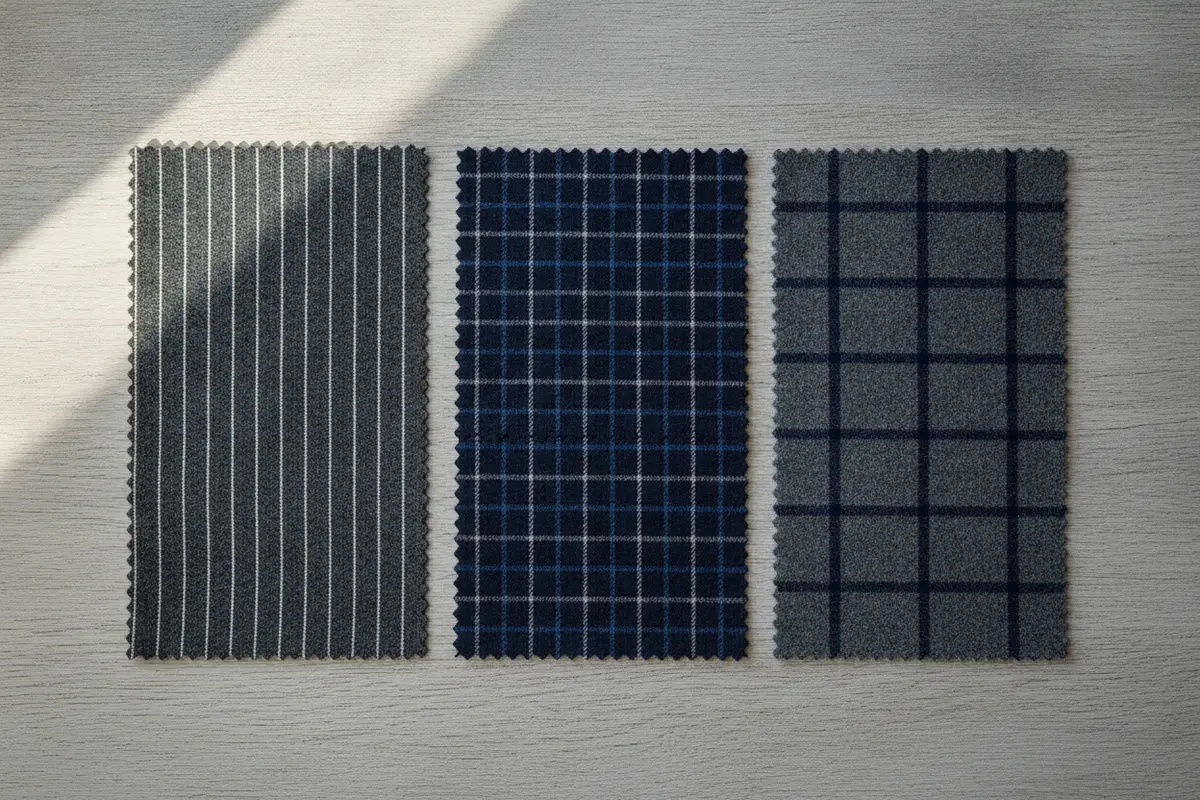
Pattern names describe different visual effects. A pinstripe creates a vertical line, while a windowpane forms a larger grid. Herringbone and birdseye are woven textures that often read as subtle from a few steps away. Glen plaid combines a more involved check effect. The same pattern can look quiet or pronounced depending on its scale, color, and contrast.
| Pattern | How it reads | Works well when | What to consider |
|---|---|---|---|
| Solid or near-solid | Clean and restrained | You want frequent wear and broad outfit options | Look closely at the weave so the cloth still has visual depth |
| Pinstripe | Defined vertical lines, from subtle to assertive | You want a traditional business look with a little structure | Check the stripe spacing and contrast with your shirt and tie choices |
| Windowpane | Open, box-shaped lines across the cloth | You want a visible pattern that can still feel composed | Large checks attract attention; choose scale with your frame and use in mind |
| Glen plaid or check | A layered, often traditional check effect | You want texture and character for work or social occasions | Small differences in contrast can make the pattern look much bolder in person |
| Herringbone or birdseye | Textured at close range, often quieter from a distance | You want interest without a strong graphic pattern | View it at both arm’s length and across the room |
Use this table as a starting point, not a set of rules. A discreet pinstripe may be easier to wear than a high-contrast solid, and a small check may behave like a neutral in your closet. Compare the actual cloth rather than relying on a pattern name alone. The custom suit collection is a useful place to explore the broader tailoring options before narrowing your fabric choice.
How does pattern scale affect the result?
Scale is the size of the repeat: the distance between stripes, the width of a windowpane, or the size of a check. A small repeat tends to blend into the cloth from a distance. A larger repeat remains visible and gives the suit more presence. Neither is inherently better. The question is whether the pattern looks balanced on you and appropriate for the room.
- For a quieter effect: Look at fine stripes, small checks, or textured weaves. They can add dimension without competing with a shirt or tie.
- For a noticeable effect: Compare larger checks or more widely spaced stripes. Keep other outfit elements relatively simple so the suit remains the focal point.
- For a versatile middle ground: Choose a pattern that is visible close up but settles into a mostly uniform impression from several steps away.
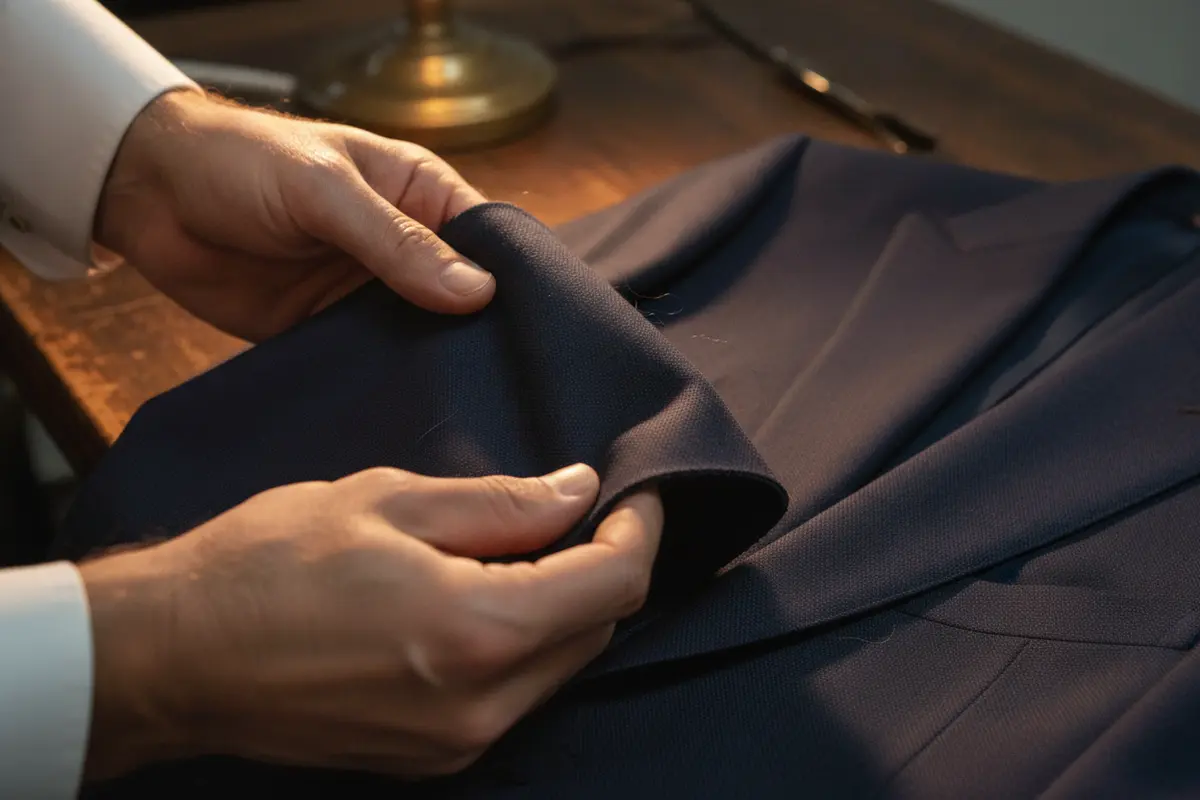
Try not to make the decision from a phone photo or a small screen image alone. Screen color and scale can be misleading. Hold the fabric at a natural viewing distance, then step back. If a pattern feels dominant at that distance, decide whether that is the effect you want for your main suit or whether it belongs in a less frequent rotation.
What role does contrast play?
Contrast is the difference between the pattern and the ground color. A navy cloth with a slightly lighter blue line has lower contrast than navy with a bright white stripe. High contrast makes the design easier to notice. Low contrast gives the fabric a quieter appearance and can make texture more apparent than the pattern itself.
Consider where you will wear the suit. In a conservative work setting, low-contrast patterns are often an easy starting point. For an evening event or a social wardrobe, more contrast may feel appropriate if it fits your style. For weddings, coordinate the suit with the formality, venue, and overall palette rather than selecting a pattern in isolation. The wedding attire consultation can help connect the groom’s clothing choices to the event plan.
Lighting matters, too. A fabric viewed under bright showroom light may look different in daylight or indoors. Ask to assess the swatch in more than one kind of light when possible. This is especially helpful for subtle checks, where the lines may appear or recede as the light changes.

Which pattern suits the way you will wear it?
Start by naming the suit’s main job. Is it your most-used work suit, a second suit for client meetings, a social option, or a garment for a particular event? A clear answer makes it easier to judge how much visual character is useful.
For frequent business wear
If this will be a regular part of your work wardrobe, prioritize combinations. A solid, subtle texture, fine stripe, or quiet check can pair with a range of shirts and ties. Look at the clothing you already wear during the week. If you favor patterned shirts, choose a suit pattern with enough space and contrast to avoid visual competition. If your shirts are mostly solid, you have more room to choose a visible suit design.
For a special event or wedding
A distinctive pattern can give an event suit a personal feel, but it should support the occasion rather than distract from it. Think about the venue, season, dress code, and how the suit will appear in photographs. A groom choosing a patterned suit should also consider the wedding party’s colors and the level of formality. For wedding attire, it is helpful to begin planning four to five months before the date. Explore custom tuxedo and formalwear options when a tuxedo may suit the event better.
For a flexible wardrobe
If you want the suit to work across professional and social settings, lean toward a pattern that does not dictate every other choice. A fine texture or low-contrast check can add personality while leaving room for different shirts, ties, and accessories. A versatile wardrobe plan can help you identify the colors and outfit combinations that will get regular use.
How can you coordinate patterns without overdoing them?
You can wear patterns together when they have enough difference in scale and visual weight. For example, a suit with a broad check may work with a fine, quiet shirt stripe, while a narrow pinstripe suit often pairs more easily with a solid shirt or a larger-scale tie design. Keep a clear hierarchy: one pattern should lead, and the others should play a supporting role.
- Pair a pronounced suit pattern with a solid or subtly textured shirt as a reliable starting point.
- If you combine patterns, vary their scale so they do not appear to merge into one busy surface.
- Keep colors related, but avoid making every pattern and accessory match exactly.
- Check the complete outfit in a mirror from a few steps away. The overall impression matters more than each item viewed separately.
There is no need to build the outfit around a tie if you rarely wear one. Consider your actual routine, including whether the suit is usually worn with an open-collar shirt, knitwear, or formal accessories. A custom sport coat can also be a useful alternative when you want pattern and texture without committing to a patterned full suit.
What should you compare during a fabric consultation?
Bring a short list of real situations in which you expect to wear the suit. Mention the shirts and shoes you reach for most, whether you already own suits in similar colors, and whether you prefer a quiet or more expressive look. This gives a stylist practical context for presenting options. Custom tailoring is consultation-based, with the investment depending on fabric and customization, so ask questions about the choices in front of you rather than assuming one pattern determines the whole cost.
- Start with color. Decide which base colors make sense alongside your current wardrobe and the suit’s intended use.
- Narrow the visual effect. Choose between a solid or textured cloth, a fine linear pattern, or a more visible check.
- Compare scale and contrast. Hold a few options together, then view each from both close range and several steps away.
- Test outfit combinations. Picture the fabric with shirts and accessories you actually own, not only with a sample outfit.
- Discuss the garment as a whole. A stylist can help connect the cloth to the suit’s intended use and other customization choices.
Personal preferences are often easier to identify through comparison than by describing them in the abstract. If you are unsure whether a check feels too strong, place it beside a quieter alternative. If you are deciding among several blue fabrics, compare their appearance against your complexion and favorite shirts. You can also browse custom shirt options when coordinating a suit with a shirt that is made for your wardrobe.
What common fabric-pattern mistakes can you avoid?
- Choosing from a swatch held too close. Small patterns can blur together when viewed from a distance, while large patterns may look more imposing than expected.
- Choosing for novelty alone. A striking cloth can be appealing, but consider how often you will wear it and what you can pair with it.
- Ignoring the rest of your closet. A pattern that works with your everyday shirts may be more useful than one that only works with a single accessory.
- Assuming a pattern has one fixed level of formality. Scale, contrast, color, cloth, and the event all affect the finished impression.
- Rushing the decision. Take time to compare options and ask questions about how they will look in the settings where you plan to wear the suit.
If your wardrobe already includes a suit you enjoy wearing, use it as a point of comparison. Notice its color, pattern, and versatility. If you want a change, decide what you would like the next suit to do differently: add texture, work for more occasions, or bring a little more personality. The goal is not simply to own a different pattern. It is to choose one that fills a useful place in your wardrobe.
How can you make the final choice?
When two or three fabrics remain, compare them against the same checklist instead of switching criteria with each swatch. First, ask whether the color earns a place in your wardrobe. Next, decide whether the pattern is visible at the distance where people usually see you. Then picture the fabric with the shirts, shoes, and accessories you will actually use. If one option only works with a narrowly specific outfit, be sure that limitation is intentional.
It can help to describe the impression you want in a few plain words: understated, traditional, textured, or more expressive. A stylist can then help you identify which swatches meet that brief and explain the differences you may not notice at first glance. If you have a particular event in mind, share its date and dress expectations. If the suit is for regular professional wear, talk about the range of settings you need it to cover. These details make the conversation more useful than trying to select a pattern by name alone.
There is also value in testing your first reaction. Set your preferred swatch beside a quieter alternative and a more assertive one. Ask what each choice adds to your wardrobe, not just which looks most striking on the table. If your favorite remains the best balance of personal taste and practical use after that comparison, you have a strong direction for the custom suit.
Frequently Asked Questions
Are solid fabrics the most versatile choice?
Not always. A near-solid or low-contrast pattern can be just as flexible, depending on your shirts, accessories, and the settings where you wear the suit. Compare options with your real wardrobe in mind.
Can I wear a patterned suit to a wedding?
Yes, when the pattern suits the dress code and the overall event. Consider the venue, formality, wedding palette, and how the design will look in photographs. Coordinate with the couple or wedding party when there is a specific dress direction.
Should my tie have the same pattern as my suit?
It does not need to match. A solid tie is an easy partner for a pronounced suit pattern. If you combine patterns, vary their scale and keep the overall outfit balanced.
Can I choose a pattern from an online image?
An image can help you identify designs you like, but it may not show the true color, scale, or texture. Whenever possible, assess the fabric itself at more than one distance and under different lighting.
How do I know whether to choose a subtle or bold pattern?
Think about how often you will wear the suit and how much attention you want its design to draw. A quieter pattern can be a sound starting point for frequent wear, while a bolder option may suit a more expressive or specific-purpose wardrobe.
The strongest fabric choice is one that feels like you, fits the occasions ahead, and gives you satisfying ways to wear the suit. Comparing scale, contrast, and real wardrobe combinations with a stylist can turn a wide selection into a confident decision.