
A well-made suit begins before the first cut of cloth. The measurement appointment is a conversation about how you stand, move, work, and want to feel in your clothes, followed by careful observation and precise measurements.
The custom suit measurement process for men combines a consultation, body measurements, posture and proportion assessment, fit planning, and later fitting feedback. A professional tailor considers more than a single chest or waist number, including shoulder angle, back arch, overall proportions, lifestyle, and wardrobe goals. The result is a clearer plan for a suit that feels personal rather than merely sized.
At Trevor Furbay Bespoke, the experience is designed to feel relaxed and collaborative, with expert guidance on fit and fabric alongside hospitality. Understanding what happens at each stage can help you arrive prepared and communicate the fit you want with confidence.
What Happens in the Custom Suit Measurement Process for Men?
The appointment is more than a tape measure and a list of numbers. In the custom suit measurement process for men, a stylist first learns how you dress, where you will wear the suit, and what you want your wardrobe to do. That conversation gives the fitting a purpose before measurements begin. At Trevor Furbay Bespoke, consultation includes your lifestyle, preferences, and wardrobe goals, followed by guidance on fit and fabric. The experience is designed to feel relaxed and collaborative rather than transactional. Explore the custom tailoring services to see how that approach fits into the broader offering.
Next, the professional measures the body and observes how the garment should sit on it. General tailoring references identify the neck, shoulders, torso, arms, and legs as relevant measurement areas, but the figures are not interpreted in isolation. The stylist also considers shoulder angle, back arch, and overall proportions because those details affect how the garment falls. Your natural stance and the way you move can provide useful context that a measurement taken without observation cannot capture. The goal is a fit plan that reflects your build and intended use, not an arbitrary set of ideal numbers.
Finally, the appointment connects those observations to the garment you are planning. You discuss the desired look, make informed fit and fabric decisions, and establish the next fitting stage. The exact process can vary with the garment and the choices involved, so a professional measurement appointment is best understood as consultation, measurement, and fit planning working together. Trevor Furbay brings more than 25 years of fashion-industry experience to that personal process. Learn more about the custom tailoring process before your appointment.
How Should You Prepare for a Suit Measurement Appointment?
Arrive ready to have a conversation as well as a measurement. The most useful appointment reflects how you stand, move, dress, and live, so there is no need to pose rigidly or arrive with a list of numbers. Wear a comfortable, relatively close-fitting base layer that lets your tailor observe your natural proportions without adding unnecessary bulk.
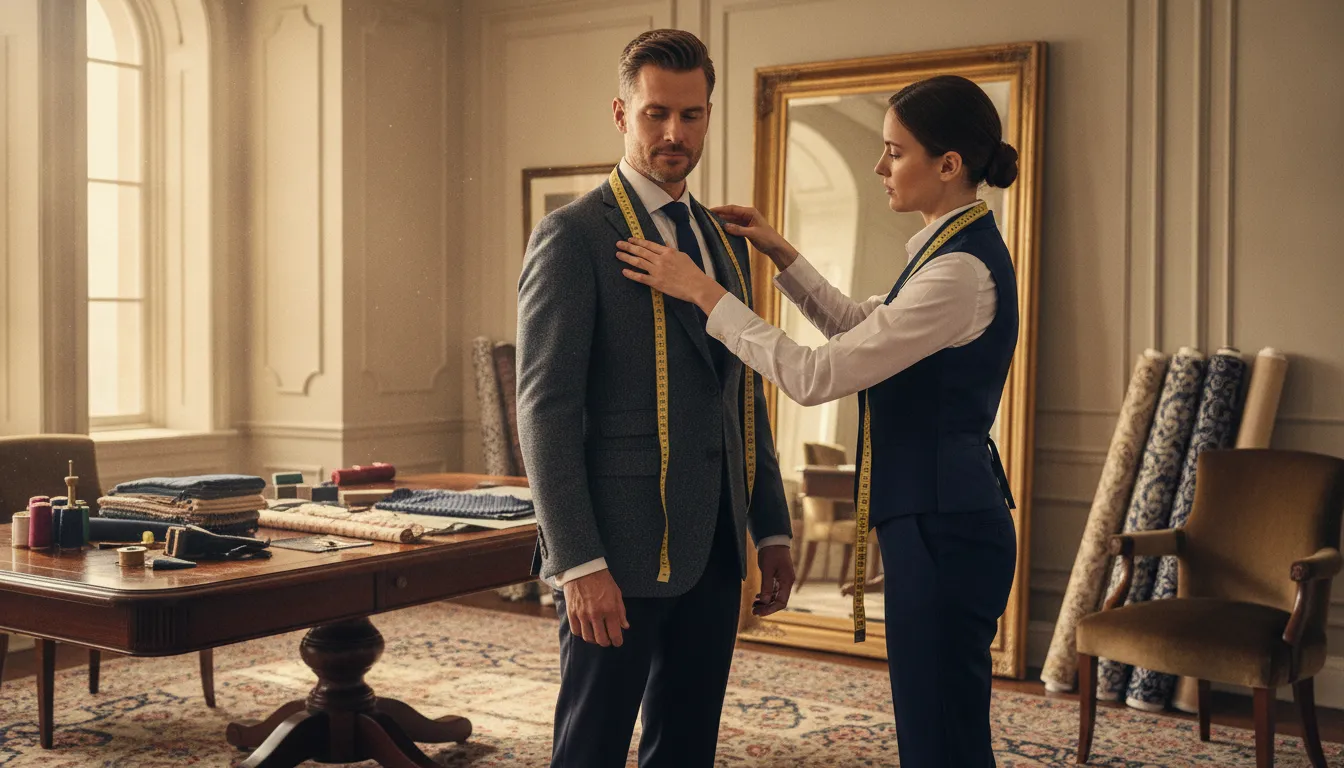
A thoughtful preparation routine keeps the appointment relaxed and gives your tailor better information about the fit you want. Use these steps as preparation, not as a substitute for professional measurement.
- Wear a useful base layer. Choose a shirt and trousers that sit close to the body and represent the way you usually dress. Avoid bulky layers that can distort the fit assessment. If you regularly wear a particular shirt collar, dress shoe, or trouser rise, mention that context during the appointment.
- Stand naturally and breathe normally. Keep your usual posture rather than pulling your shoulders back, tightening your stomach, or holding your breath. Natural breathing and a relaxed stance help the tailor assess how a garment should sit when you are actually wearing it.
- Bring your fit preferences. Be ready to describe what you like and dislike in your current clothing. You might prefer a closer jacket, more room through the seat, a particular sleeve break, or a less structured shoulder. Specific feedback is more useful than simply saying that a previous suit felt wrong.
- Explain your lifestyle and wardrobe needs. Share whether the suit is for daily work, travel, formal events, or a flexible wardrobe. Your movement, schedule, and styling habits can guide decisions about fabric, ease, and the finished silhouette.
- Let the professional take the final measurements. A tape reading is only one part of the custom suit measurement process for men. A skilled professional considers posture, proportions, and how the measurements work together, then accounts for wearing ease and the intended garment. Avoid adding extra room or trying to correct a measurement yourself; discuss comfort directly so the fit can be planned intentionally.
Which Measurements Shape a Men’s Custom Suit?
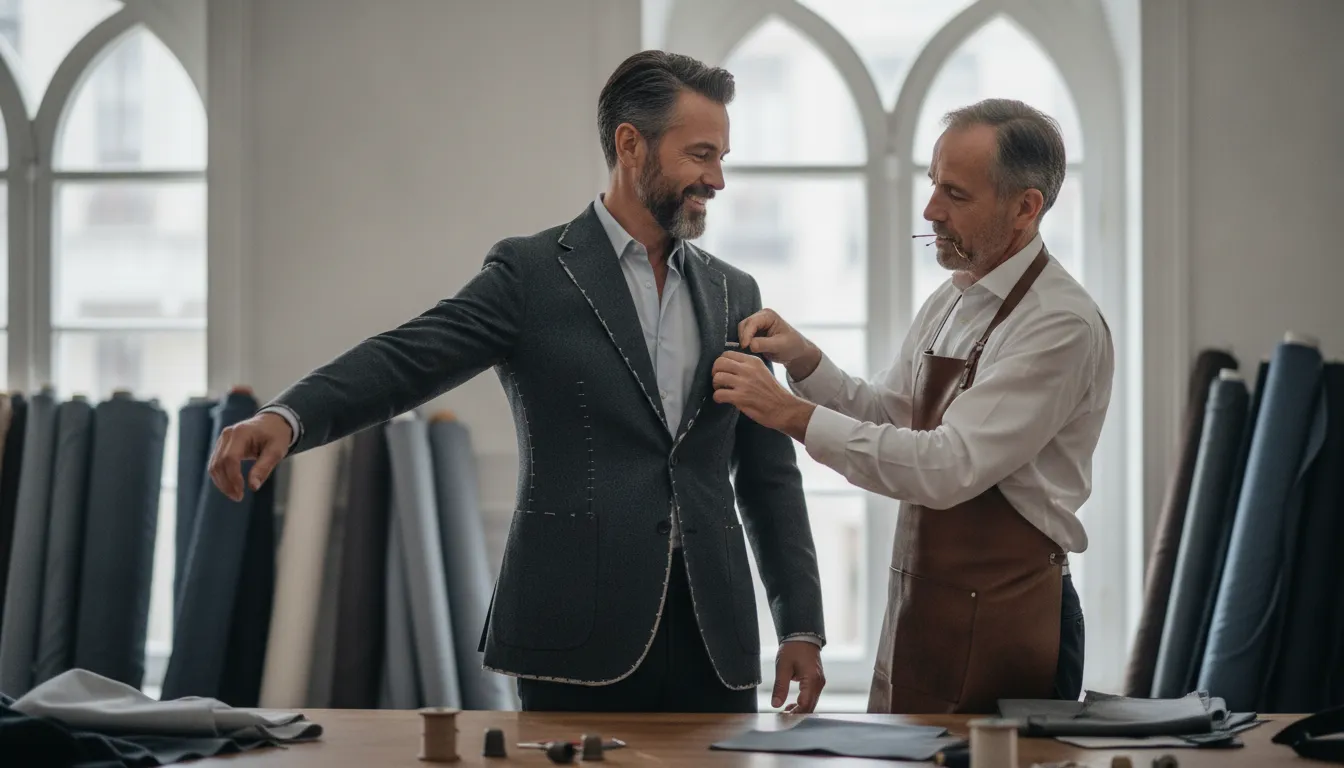
A professional measurement appointment looks at the body as a connected set of proportions, not a single chest number. The neck measurement helps establish where a shirt collar sits, while shoulder width, chest, torso, and arm measurements help determine how a jacket rests and moves. A tailor also considers the way you stand, your preferred ease, and the garments you want to wear most often.
For orientation, the neck is generally measured at the base where a collar would sit, and the chest at its widest point. Shoulder width runs from one shoulder end to the other. Sleeve length may be assessed from the top of the shoulder toward the thumb knuckle, but these landmarks are not an invitation to alter a garment yourself. They help explain the conversation you will have with a professional. An academic discussion of tailoring notes that the craft uses measurements across the neck, shoulders, torso, arms, and legs. It also emphasizes the care and precision of the person taking them: read the PMC source on tailoring and body measurement.
| Measurement area. | What it influences. |
|---|---|
| Neck and shoulders. | Collar placement, shoulder balance, and the jacket’s foundation. |
| Chest and torso. | Jacket ease, button position, and how the front falls over the body. |
| Arms. | Sleeve length and room for comfortable movement. |
| Waist and hips. | Jacket shaping and the way trousers sit through the seat. |
| Jacket length. | Overall proportion from the neck and shoulders through the hem. |
| Trousers and legs. | Waist placement, rise, leg balance, and finished trouser length. |
For trousers, the waist is assessed at the level where you normally wear a belt, while the hips account for the fullest part of the seat. Jacket length and trouser length are considered together so the outfit reads as one balanced silhouette. Trouser length may be evaluated along the outside leg from the waistband toward the ankle, but the final result depends on the garment, shoes, and intended break.
The measurements are useful only when interpreted in context. A skilled clothier may compare them with your posture, preferred stance, and wardrobe goals before recommending a shape. If you want to understand how measurement connects with broader custom suit design choices, review that guide. You can also learn how the made-to-measure suit process uses a personal profile. Those decisions belong in a consultation rather than a home alteration project.
Why Do Posture and Proportion Matter More Than One Number?
A measurement is useful only when it is interpreted in relation to the person wearing the garment. Two men may share the same chest measurement yet need different fit decisions because their shoulder angles, back arches, stance, and torso proportions are not identical.
That is why a professional does more than record a series of numbers. The fitter observes how you naturally stand, whether one shoulder sits higher, how your back carries itself, and how a jacket falls across the body. These details help guide the balance of the garment so the result looks intentional when you are standing, walking, or sitting. Trevor Furbay’s custom process specifically considers shoulder angle, back arch, and overall proportions in assessing fit and fall. Explore the custom tailoring process.
Posture should be observed in a natural stance rather than forced into a rigid pose. Holding your shoulders unusually straight or pulling in your stomach can produce information that does not reflect how you actually move through the day. A relaxed consultation gives the professional better context for interpreting the measurements and deciding where the garment may need shaping or ease.
Construction and fit interpretation can also vary by garment. A suit jacket, sport coat, and trouser may call for different considerations depending on the fabric, intended silhouette, and how the piece will be worn. The measurement itself is not a universal formula, and a number should not be treated as a promise of identical results across every garment. Precision requires attention to both the material and the person, as described in this academic discussion of tailoring and precision.
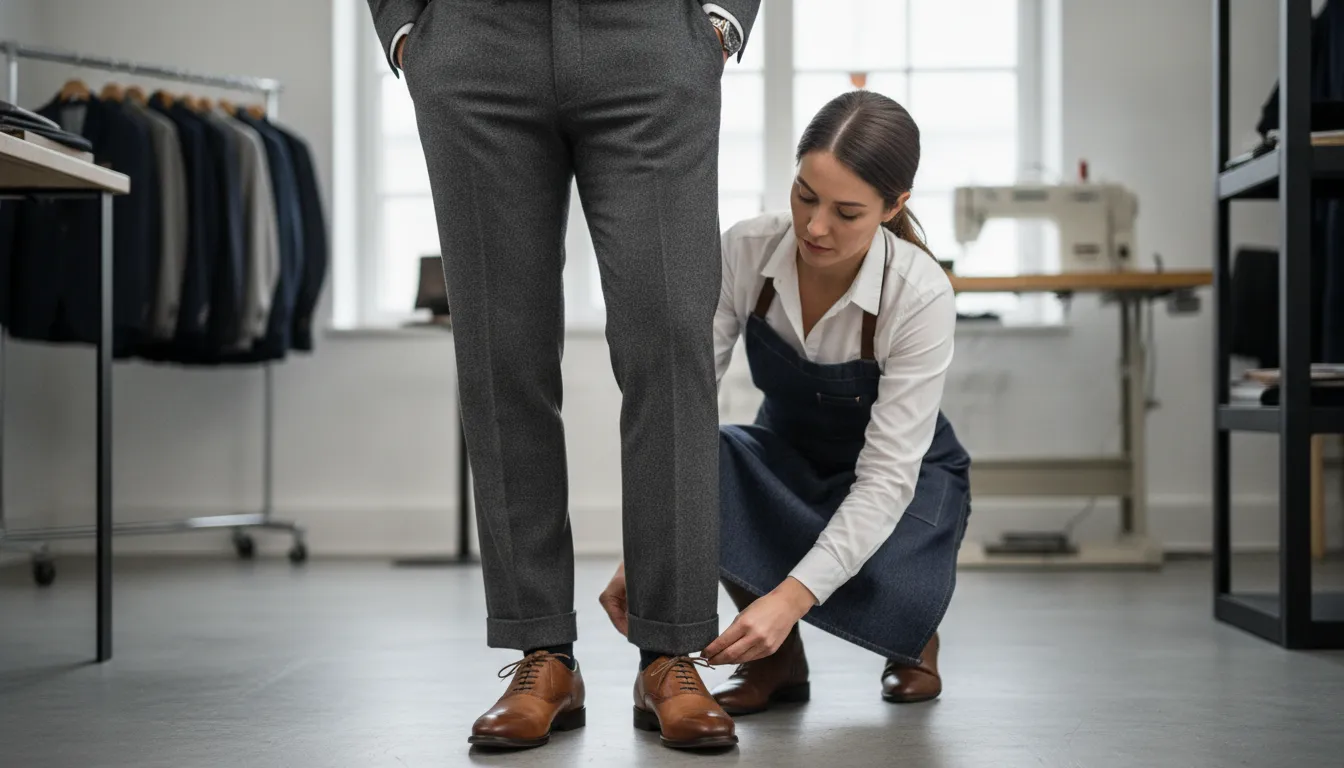
In a thoughtful custom suit measurement process for men, your lifestyle and fit preferences complete the picture. A professional uses the measurements as a foundation. The tailor then applies experience and observation to create a garment that works with your proportions. That approach avoids forcing your body to fit one standard template.
What Happens at the First and Final Fittings?
The first fitting turns measurements into a practical conversation about how the garment should feel and move. Your stylist reviews the initial fit, observes how the jacket and trousers sit on your body, and considers your posture, proportions, lifestyle, and wardrobe goals. This is not simply a pass-or-fail inspection. It is a chance to explain what feels natural, what feels restrictive, and how you expect to wear the suit.
Useful feedback is specific and honest. Tell your fitter if you regularly reach forward, sit for long periods, prefer a closer or easier silhouette, or notice pulling in a particular area. You can also describe how a sleeve, trouser rise, collar, or jacket length feels as you stand and move. These observations help the team interpret the measurements rather than treating any single number as a complete definition of fit.
The custom process then moves from fit decisions to personalization. Depending on the garment and selected design, you may refine details such as fabric, lining, buttons, and monogramming. The goal is a garment that reflects both your body and the way you live. Construction and adjustments are handled according to the specific order rather than a universal formula.
After production, the garment is reviewed at the final fitting. The team checks the finished fit in context and identifies whether any refinements are appropriate before delivery. Trevor Furbay’s stated process describes custom-made items arriving in approximately 3 to 5 weeks before this final fitting. Timing can vary by garment, fabric, and order, so treat that range as a process example rather than a guarantee.
For a closer look at the checkpoint itself, read the broader custom suit fitting guide. If you are still evaluating the service relationship and expertise behind the appointment, our guide to choosing a bespoke suit maker can help you ask better questions.
How Do Custom Details Complete the Measurement Process?
Measurements establish the framework, but the finished garment also depends on the decisions made around that framework. During a custom consultation, your tailor considers your lifestyle, preferences, and wardrobe goals alongside fit and fabric. That conversation helps determine whether the project calls for a suit, sport coat, trousers, or shirt, and how each piece should serve the way you dress.
Fabric is not simply a color choice. Its weight, texture, drape, and intended use can influence how a garment feels and wears. A fabric selected for frequent business travel may call for different priorities than one chosen for occasional celebrations. The same principle applies to the lining. It contributes to the garment’s interior character and can be selected as part of the overall design rather than treated as an afterthought.
Buttons and monogramming add another layer of personal expression. They can be subtle, distinctive, or deliberately understated, depending on your taste. These details should support the garment’s purpose and your broader wardrobe instead of competing with it. A useful consultation connects the visual choices to what you already own, what you need next, and how you expect to wear the piece.
The process is therefore collaborative, not a transactional tape-measure stop. Trevor Furbay’s custom tailoring process brings together measurement, fit assessment, personalization, and a final fitting. You can also review custom suit design choices before an appointment to clarify your preferences. Custom pricing remains consultation-based and depends on the fabric and customization selected, so the right details are discussed in context rather than reduced to a fixed formula.
When Should You Choose Professional Measurements Over DIY?
Choose professional measurements when fit matters more than convenience, your body does not match standard proportions, or you want the finished garment to support a specific lifestyle. Self-measurement can provide a useful starting point for a remote order, especially when an experienced person helps hold the tape level. It cannot fully replace a trained eye assessing how you stand and move.
A professional reads measurements in context. Shoulder angle, back arch, and overall proportions can affect how a jacket sits and falls, even when two people share the same chest or sleeve measurement. Tailoring also calls for precision, care, and attention to both the material and the person wearing it, not simply a list of numbers. The academic discussion of tailoring and body measurement supports that broader view of the craft.
Use DIY measurements for orientation when an in-person appointment is not practical. Keep them as accurate body information rather than trying to add room, correct posture, or prescribe your own ease. A professional can interpret those details alongside your preferences, wardrobe goals, and the way you want the garment to feel. At Trevor Furbay, the consultation is designed to be relaxed and collaborative, with guidance on fit and fabric rather than a rushed tape-measure stop. The founder brings more than 25 years of fashion-industry experience to that process.
If you are still deciding where that expertise matters most, read our guide to choosing a bespoke suit maker. You can also meet the team before scheduling. Professional measurement is the better choice when you want observation, interpretation, and fit feedback working together.
Frequently Asked Questions
How do you get measurements for a custom suit?
A professional begins with a conversation about your wardrobe, lifestyle, preferences, and intended use for the suit. Measurements then cover key areas such as the shoulders, chest, torso, waist, hips, sleeves, jacket length, and trousers. The clothier also observes posture, shoulder angle, back shape, and overall proportions so the fit reflects how you naturally stand and move.
Can I measure myself for a custom suit?
You can take general measurements for orientation, but self-measurement is not a reliable substitute for an in-person appointment. Small changes in tape placement, posture, breathing, or measuring technique can affect the result. Professional guidance is especially valuable when your body proportions or previous fit experiences do not align neatly with standard size charts.
Should I add extra inches to my suit measurements?
No. Provide your actual body measurements rather than adding ease yourself. A professional considers wearing comfort, movement, posture, garment design, and the intended silhouette when translating body measurements into a jacket or pair of trousers. Adding extra inches independently can create excess volume or make the finished proportions harder to control.
Can I use measurements from another tailor for a custom suit?
You can bring previous measurements as useful background, but they should not automatically replace a fresh consultation. Tailors and clothing systems may measure different landmarks or interpret fit preferences differently. Reviewing your existing information alongside your current posture, wardrobe goals, and desired fit helps the clothier make a more appropriate plan for the new garment.