
A well-planned wardrobe does more than fill a closet. It helps you move through workdays, celebrations, and important transitions with clothes that fit your life, your proportions, and the impression you want to make. The challenge is knowing what to keep, what to add, and when a garment needs a better fit rather than a replacement.
A fashion stylist helps translate your lifestyle, wardrobe goals, fit concerns, preferred fabrics, colors, and upcoming occasions into cohesive clothing choices. The right guidance can simplify shopping, clarify what belongs in your wardrobe, and connect ready-to-wear pieces with professional tailoring or custom garments when greater personalization is needed.
This kind of support is especially valuable when your schedule is full, your wardrobe feels inconsistent, or an event calls for more thought than a quick purchase. Understanding the role begins with the practical decisions an expert helps you make and the questions they ask along the way.
What Does a Fashion Stylist Do?
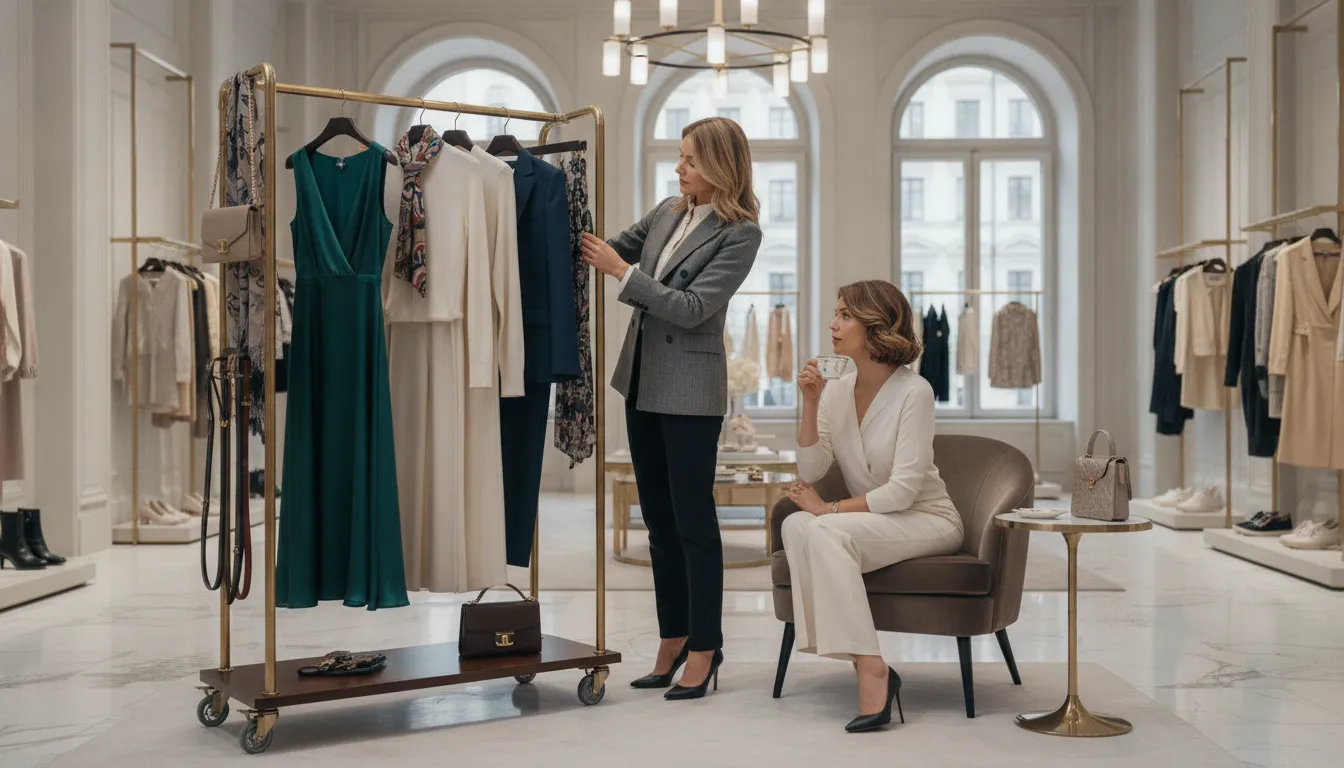
A fashion stylist helps translate a person’s goals, lifestyle, fit needs, and occasion into clothing choices that feel considered and coherent. The work is not limited to selecting an attractive outfit. It can involve understanding how someone wants to present themselves, identifying what is missing from a wardrobe, coordinating garments and accessories, and explaining why a particular proportion, color, fabric, or silhouette works.
The role can look different depending on the setting. In editorial, advertising, or brand work, a stylist may build a visual direction for a photo shoot or campaign. That work is shaped by a creative brief, a photographer, a model, or a brand identity. Client-facing personal styling is more individual. The focus is the client’s real life: the meetings they attend, the events they have coming up, the clothes they already own, and the level of guidance they want.
From visual direction to everyday wardrobe decisions
For a personal client, a stylist can help make decisions such as:
- What to wear for a particular dress code, professional role, or special event.
- Which colors, fabrics, and proportions support the desired impression.
- How to build useful combinations instead of buying disconnected pieces.
- Whether a garment needs a better fit, a different size, or professional tailoring.
- Which accessories complete an outfit without making it feel overworked.
That guidance is especially useful when a wardrobe feels inconsistent, shopping takes too much time, or fit and fabric choices are difficult to evaluate alone. A good stylist listens first, then narrows the options to choices that suit the client rather than imposing a rigid set of rules.
What personal styling can include
At Trevor Furbay, the client-facing version of this work may include wardrobe consulting, closet cleaning, personalized shopping, custom tailoring, and curated ready-to-wear. Initial conversations can cover lifestyle, preferences, wardrobe goals, fit, fabric, and current style direction. The goal is a practical, personal plan supported by hands-on expertise, not a formal editorial production or a one-size-fits-all makeover.
Trevor Furbay’s personal styling and wardrobe consulting brings those decisions together in a relaxed consultation environment. With more than 25 years of fashion-industry experience, the team can help a client understand available options and make confident choices while keeping craftsmanship, comfort, and personal expression in view.
When Is a Fashion Stylist Worth Considering?
Expert styling becomes especially useful when getting dressed feels harder than it should. You may have quality pieces but no clear way to combine them, or you may be buying clothing that looks appealing in isolation and rarely earns a place in your regular rotation. A thoughtful fashion stylist helps turn those frustrations into practical wardrobe decisions.
Your wardrobe has gaps or lacks direction
If your closet is full but your dependable options are limited, the issue may be planning rather than quantity. A stylist can identify missing foundations, clarify which pieces work together, and help you build around your actual schedule. This is useful when you need a polished work wardrobe, more versatile business-casual options, or clothing for frequent travel and professional events. Personal shopping guidance can make those choices more efficient without reducing the experience to a rushed shopping trip.
Your schedule leaves little time for shopping
Busy executives, attorneys, financial professionals, and other leaders often know how they want to present themselves but do not have the hours required to research fabrics, compare fits, and visit multiple stores. A styling consultation can narrow the field according to your lifestyle, preferences, existing wardrobe, and priorities. The result is not simply fewer decisions. It is a clearer process for making better ones.
Your role or personal image is changing
A promotion, new leadership position, career transition, or more visible public role can change the expectations around your wardrobe. The right guidance helps you evolve without abandoning your personality. That may mean refining proportions, introducing more sophisticated fabrics, or creating a consistent color and accessory strategy across work and travel. The goal is a cohesive image that feels natural, not a costume borrowed from someone else.
Fit uncertainty is affecting your confidence
When jackets pull, trousers sit poorly, or shirts feel wrong through the shoulders, it is difficult to judge style accurately. Professional guidance separates a fit problem from a style preference and directs alterations or tailoring where appropriate. This is particularly valuable when ready-to-wear garments rarely accommodate your proportions or when you are considering a more personalized approach.
You are preparing for an important event
Weddings, milestone celebrations, formal dinners, and other occasions often involve details that are easy to overlook: dress code, venue, palette, timing, and coordination with others. A stylist can help you create an outfit that suits the event and remains consistent with how you want to be remembered. Expert input is also worthwhile when you want a wardrobe that feels cohesive across the ceremony, reception, rehearsal dinner, and future occasions.
In each situation, the value lies in translating your goals into clothing that fits your life. The best guidance is collaborative, specific, and grounded in your comfort as well as your appearance.
How Can a Fashion Stylist Improve Fit and Personalization?
Fit is more than choosing the right jacket size. A knowledgeable fashion stylist looks at how a garment works with your proportions, posture, lifestyle, and intended use. That perspective can reveal why a ready-to-wear piece feels almost right but still pulls across the back, collapses at the collar, or sits unevenly at the shoulders.
During a consultation, the discussion can include your wardrobe goals, preferences, fit concerns, fabrics, and the level of formality you need. The goal is not to impose a rigid set of rules. It is to identify clothing that feels natural, supports your daily life, and presents a coherent personal image.
Fit starts with proportion, not a number on a label
Professional custom tailoring considers details such as shoulder angle, back arch, and overall proportions. These measurements help explain why two people wearing the same nominal size may need very different adjustments. They also create a more useful starting point than relying on a familiar label, since sizing and ease vary between brands and garments. Accurate measurements are essential when evaluating fit, while the final assessment should happen with a trained professional rather than through guesswork.
That does not mean every wardrobe requires custom clothing. A stylist may identify a well-fitting ready-to-wear garment and recommend professional tailoring where appropriate. If the proportions are difficult to accommodate or the occasion calls for a particularly personal result, custom construction can offer a more precise path. Alterations and fit corrections should be handled by a professional tailor, not attempted at home.
Personalization extends beyond the silhouette
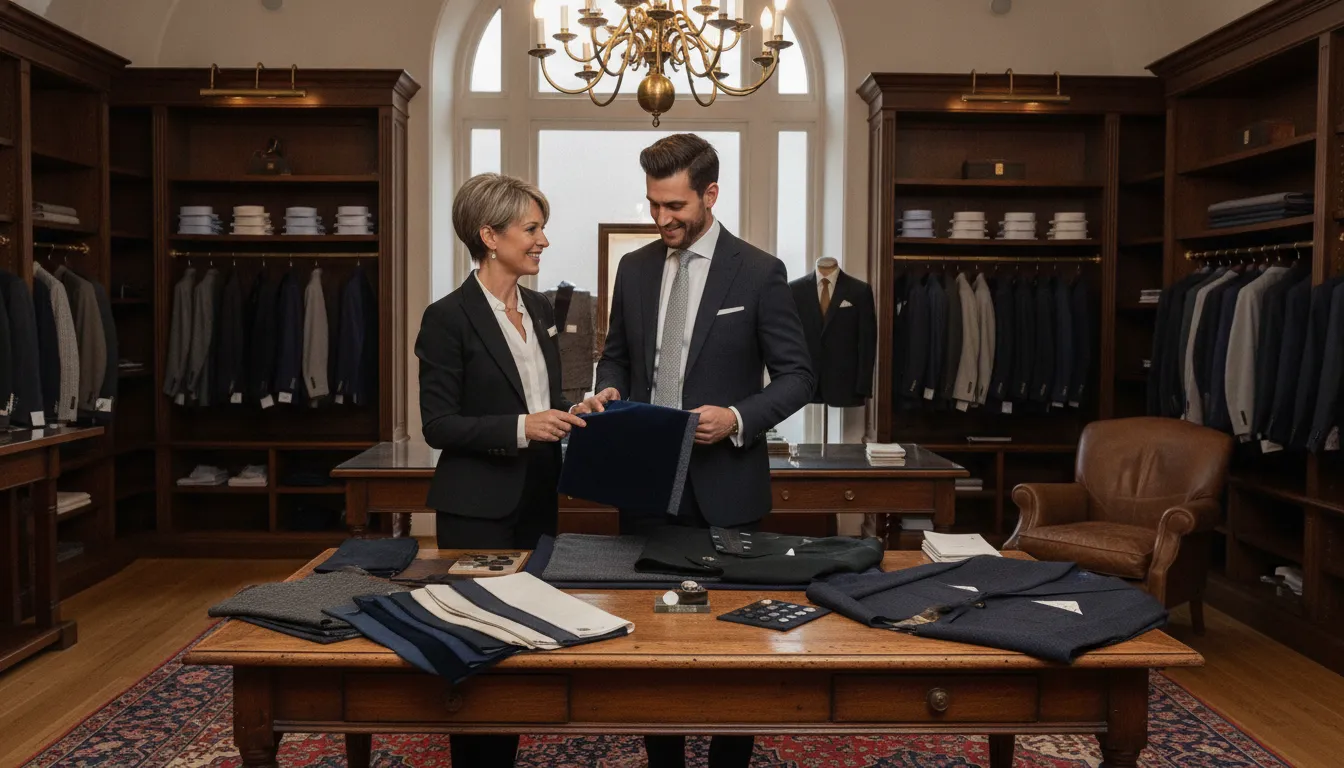
Once the fit direction is clear, fabric and details shape how the garment looks and performs. Custom options can include fabric, lining, buttons, and monogramming. These choices can reflect your work environment, climate, preferred level of formality, and the way you want a garment to coordinate with the rest of your wardrobe. A stylist can explain the practical difference between options, helping you choose details with intention instead of selecting them in isolation.
Trevor Furbay’s custom process brings together choosing a look, finding the fit, customizing details, and completing a made-for-you garment. Explore the custom suit styling service to see how that consultation-led approach works. Custom pricing depends on the fabric, customization, and consultation, so it is discussed as part of the individual process rather than presented as a fixed price.

Can a Fashion Stylist Help With Wedding Attire?
Wedding attire has to feel personal while also fitting the setting, the season, and the expectations of the day. A fashion stylist can help translate those moving parts into a coordinated wardrobe, so the groom, wedding party, and immediate family look connected without appearing identical. The conversation may begin with the venue and level of formality, then move into the color palette, the bride’s dress, the rehearsal dinner, and the wedding-day look.
That guidance is especially useful when the event includes several different dress codes or when the groom wants more than a standard suit. Fabric, proportion, accessories, and finishing details should support the overall atmosphere while still reflecting the wearer’s personality. Trevor Furbay’s wedding suit consultation brings those decisions together through a personal, hands-on process.
Planning the wedding wardrobe as a whole
A thoughtful stylist looks beyond the ceremony outfit. The rehearsal dinner may call for a relaxed jacket, while the wedding-day look may require a more formal tuxedo or custom suit. The palette can guide shirt, tie, pocket square, and shoe choices, while the bride’s dress and the venue provide useful context for texture and formality. Groomsmen coordination is part of the same exercise. Their attire can complement the groom and wedding design without requiring every person to wear precisely the same details.
Begin this conversation four to five months before the wedding. That timing gives the couple room to discuss the vision, select fabrics and details, complete measurements and fittings, and address adjustments before the final appointment.
The four-step wedding styling process
- Discovery and planning: Discuss the venue, wedding theme, formality, palette, timeline, and the roles of the people being dressed.
- Styling and selection: Review fabrics, silhouettes, accessories, and attire for the ceremony, rehearsal dinner, groom, and groomsmen.
- Measurements and fitting: Take precise measurements and refine the fit so the garments support the wearer’s proportions and movement.
- Final fitting and delivery: Confirm the finished look, make any necessary professional adjustments, and ensure each garment is ready for the wedding.
The result is not simply a matching set of clothes. It is a considered wardrobe that respects the occasion, photographs well, and allows everyone to feel comfortable and unmistakably themselves.
What Does Personal Styling Look Like in Practice?
Personal styling can be highly focused or ongoing, depending on what you want your wardrobe to accomplish. A session might solve one event, clarify the gaps in a closet, refine a custom garment, or make it easier to discover well-chosen ready-to-wear pieces. The common thread is a conversation about your lifestyle, preferences, fit, and goals before recommendations are made.
The right format is less about choosing a label and more about choosing the kind of support you need. This comparison shows how several styling experiences can work in practice.
| Styling experience | Best for | What it may include |
|---|---|---|
| One-time occasion styling | A wedding, formal event, presentation, or other specific dress code | Clarifying the setting, formality, colors, proportions, accessories, and complete look for the occasion |
| Wardrobe edit | Someone with a crowded, inconsistent, or underused closet | Reviewing what works, identifying useful gaps, and creating a cohesive wardrobe plan around real routines |
| Custom tailoring | Clients who want a highly personalized garment or need a more precise approach to fit | Selecting a look, considering proportions, choosing fabric and details, taking measurements, and completing a final fitting. Pricing depends on fabric, customization, and consultation. |
| Ready-to-wear curation | Busy professionals who want efficient, thoughtful shopping guidance | Choosing clothing that supports the client’s existing wardrobe, preferred fit, lifestyle, and occasions without sorting through every option alone |
| StyleBox | Clients who prefer curated selections and the convenience of trying pieces at home | A style profile, personal phone consultation, expert curation, home try-on, and complimentary delivery and pickup in Cincinnati. There is no styling fee, and customers pay only for the items they keep. Learn more about personalized wardrobe styling. |
These formats can also complement one another. For example, a wardrobe edit may reveal that one foundational piece deserves custom tailoring, while ready-to-wear curation can fill in the surrounding outfits. The experience should feel collaborative, with recommendations explained in the context of how you dress and where you need your wardrobe to perform.
How Do You Choose the Right Fashion Stylist?
Choosing a fashion stylist is less about finding the most dramatic point of view and more about finding an expert who can understand your life. Start with the conversation. A strong consultation should make room for your work, travel, social calendar, comfort preferences, existing wardrobe, and the occasions you are preparing for.
Look for listening and practical expertise
Ask how the stylist approaches fit, fabric, proportion, and wardrobe gaps. The right person should be able to explain recommendations in clear language and distinguish a true fit concern from a personal preference. If custom clothing or professional alterations are relevant, ask how measurement and fitting are handled. Custom pricing should be explained through the fabric, customization, and consultation rather than reduced to an unsupported fixed figure.
Consider the scope of support
Some clients need help with one event. Others want a wardrobe edit, ready-to-wear curation, personal shopping, or a custom garment. Clarify whether the process can meet your immediate need and still support the larger wardrobe goal. Location and format matter too. Trevor Furbay serves Cincinnati as its flagship, offers Columbus and Dublin appointments, and serves Harbor Springs seasonally.
Choose a process that feels comfortable
Style decisions are personal. You should feel comfortable explaining what you already wear, what you avoid, and what you want to change. A relaxed, hands-on process can make it easier to evaluate fabrics, try proportions, and decide which pieces genuinely belong in your wardrobe. When the guidance is collaborative, the result feels like an informed version of your own style rather than a costume.
With more than 25 years of fashion-industry experience, Trevor Furbay combines personalized styling with custom tailoring, curated ready-to-wear, and hospitality-driven consultations. That combination can be useful when you want both a sharper point of view and a practical way to put it into your wardrobe.
Frequently Asked Questions
What does a fashion stylist do?
A fashion stylist translates your lifestyle, preferences, wardrobe goals, fit needs, and occasions into thoughtful clothing choices. The work can include outfit coordination, fabric and color guidance, personal shopping, wardrobe planning, and recommendations for completing a look.
What is the difference between a fashion stylist and a personal stylist?
The terms overlap, but fashion stylist can describe a broader role that includes styling for people, brands, events, or visual projects. A personal stylist focuses specifically on an individual’s wardrobe, daily life, proportions, preferences, and confidence. For many clients, the most useful service is a collaborative blend of both perspectives.
When should you hire a fashion stylist for wardrobe planning?
Consider expert guidance when your wardrobe has gaps, your role or lifestyle is changing, shopping takes too much time, or you feel uncertain about fit, color, dress codes, or proportions. A consultation can clarify priorities before you buy and may include wardrobe consulting, closet cleaning, or personalized shopping.
Can a fashion stylist help with fit and custom tailoring?
Yes. A styling consultation can identify where ready-to-wear garments are not serving you and determine whether professional tailoring or custom clothing is the better solution. Custom tailoring can account for shoulder angle, back arch, and overall proportions, then personalize fabric and details. Pricing depends on the fabric, customization, and consultation.
Can a fashion stylist help choose clothing for a wedding?
Yes. Wedding styling can coordinate attire with the venue, formality, color scheme, the bride’s dress, rehearsal dinner, and wedding party. At Trevor Furbay, wedding consultations are encouraged four to five months before the event so there is time for styling, measurements, fittings, and final delivery.
Book Your Style Consultation
Whether you are refining a professional wardrobe, preparing for a wedding, or seeking a more personal approach to fit and clothing choices, a focused consultation can help turn ideas into a clear plan. Bring your questions, priorities, and upcoming occasions, and discuss the next step with a stylist who can guide the process.