
The season can suggest a direction for your wedding suit, but it should not make the decision for you. A summer ceremony in a bright garden calls for a different conversation than an evening celebration in a formal ballroom. That distinction matters even when both weddings take place in the same calendar season.
When choosing groom suit colors by season, begin with the venue, ceremony timing, level of formality, and the couple’s color story. Then consider how your fabric, accessories, and wedding-party coordination support that setting while still feeling like you.
The strongest choice comes from balancing the visual character of the day with your own preferences and the practical details of a well-fitted garment. Before comparing seasonal palettes, clarify the elements that will shape your decision and make the tailoring process more precise.
What should a groom decide before choosing a seasonal suit color?
Start with the wedding you and your partner are creating, rather than with a color chart. The season can suggest a direction, but it should not make the decision for you. Seasonal ideas are general styling guidance; the venue, ceremony timing, formality, personal preference, and overall coordination all matter.
Begin with the couple’s vision
Identify the feeling you want your attire to support. Is the celebration polished and formal, relaxed and outdoors, or somewhere between the two? Consider the venue’s architecture, surfaces, and surroundings, then look at the colors already present in the wedding palette. Your partner’s attire is part of this conversation as well. A wedding consultation can account for the setting, formality, color scheme, and the bride’s dress when shaping the groom’s look and the wedding party’s coordination. You can bring those references to a wedding attire consultation.
Consider timing, light, and formality
A color that feels balanced in afternoon daylight may read differently at an evening ceremony or in a dim reception space. Note whether the ceremony and reception share a setting, and whether the suit needs to move comfortably between outdoor photographs and an indoor celebration. Then decide how formal the groom’s look should feel. A deeper, quieter shade may support an evening or highly formal setting, while a lighter or more textured direction may suit a daytime environment. These are starting points rather than rules.
Decide whether the suit should be reused
Wedding photographs matter, but so does the life of the garment afterward. If you expect to wear the suit for work, celebrations, or future events, favor a color and level of pattern you will genuinely reach for again. If the suit is intended primarily for the wedding, you can let the venue and couple’s palette play a stronger role. The best choice is the one that feels intentional on the wedding day and still feels like you when the season has passed.
How should groom suit colors by season guide the palette?
Season can provide a useful first direction, but it should never make the decision for you. The venue, ceremony timing, formality, personal preference, and wedding-party palette may all point you toward a different shade. Use the families below to begin a conversation, then test the actual fabric in the light where you will be married.
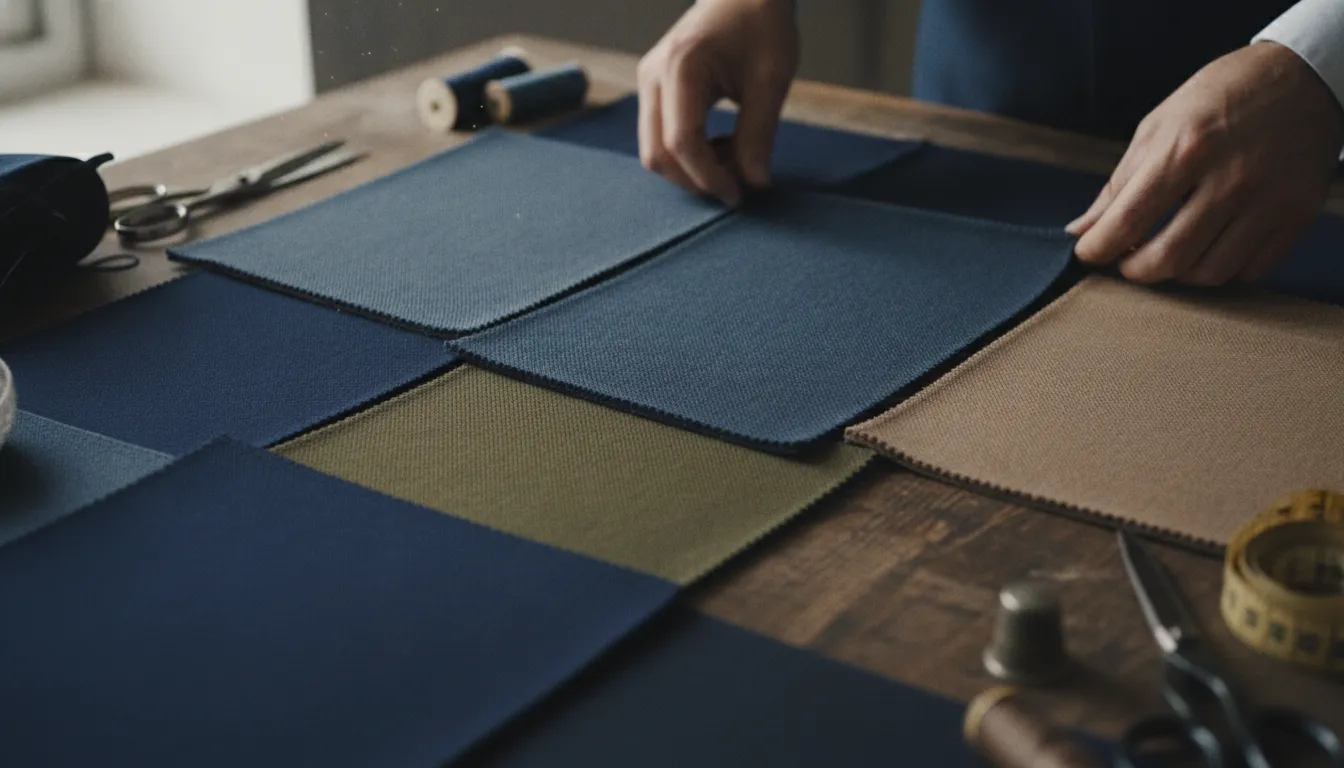
Flexible seasonal color guidance for a groom’s wedding suit
| Season | Color direction | When it tends to work | What to coordinate |
|---|---|---|---|
| Spring | Soft blue, medium gray, blue-gray, or a restrained taupe | Daytime celebrations, gardens, airy venues, and palettes with fresh or softened tones | Florals, pocket square or tie colors, the partner’s attire, and the overall level of formality |
| Summer | Light gray, blue, muted tan, or another breathable-looking neutral | Bright outdoor ceremonies, relaxed venues, and celebrations where the setting feels open and informal | Sunlight, ceremony timing, shirt contrast, accessories, and whether the reception becomes more formal |
| Fall | Charcoal, deep blue, brown, olive, or a warm gray | Wooded settings, evening events, textured surroundings, and richer wedding-party palettes | Metallic accents, seasonal flowers, the groomsmen’s contrast, and the venue’s interior colors |
| Winter | Black, charcoal, midnight blue, or a deep jewel-toned accent | Formal evening ceremonies, candlelit rooms, city venues, and celebrations with a crisp, tailored mood | Black-tie expectations, lighting, the wedding party’s accessories, and the distinction between a suit and tuxedo |
These are starting points rather than rules. A summer evening in a grand ballroom may suit midnight blue, while a winter daytime ceremony could feel right in a softer gray or blue. Your couple’s vision and the venue’s formality should carry at least as much weight as the calendar.
Light also deserves attention. One clothing-color study found a substantial surface-temperature difference between dark and white shirts in strong summer sunlight. However, it examined matching polo shirts outdoors, not tailored wedding suits in every setting. Treat that finding as context, not a promise about comfort or performance. During a wedding attire consultation, compare swatches with the wedding-party colors and the expected ceremony light before committing.
How do venue, ceremony timing, and light change the right shade?
Season is a useful starting point, but the setting often gives you the more practical answer. A light, open garden ceremony can make a soft neutral or blue-gray feel natural, while a formal city venue may support a deeper navy, charcoal, or evening-appropriate shade. A destination wedding deserves the same question: what will look intentional in the ceremony setting and still feel like you at the reception?
Consider the light you will actually see. Daylight reveals undertones and can make a color appear brighter than it did indoors. A late-afternoon ceremony may move from warm sun to softer shadow, so a shade that looks balanced in both conditions can carry you through portraits and dinner. For an evening event, deeper tones often establish the desired formality, particularly under interior lighting.
Outdoor summer conditions also make comfort part of the color conversation. One academic study found a substantial surface-temperature difference between dark and white shirts in calm, sunny conditions. However, it examined same-material polo shirts outdoors, not tailored suits in every climate. Treat that research as useful context rather than a universal suit-performance rule. Wind, shade, fabric, and construction all change the experience. Read the clothing-color study for its specific conditions.
When the ceremony and reception have different atmospheres, choose a shade with enough flexibility to transition rather than planning two unrelated looks by default. Your venue, formality, color scheme, and the couple’s vision should be considered together in a consultation to coordinate the wedding palette. Trevor Furbay’s wedding service supports custom suits and tuxedos, professional fittings, and coordinated planning for the groom and wedding party.
How can the groom coordinate with the wedding party without matching everyone?
The groom should read as the visual anchor, not simply another member of the group. Start with one shared palette drawn from the couple’s vision, the venue, and the partner’s attire, then decide where contrast will make the groom distinct. A navy or charcoal suit, for example, can remain connected to the wedding colors through a tie, pocket square, boutonniere, or subtle lining, without requiring every groomsman to wear the same complete look.
Use the partner’s attire as a point of harmony rather than a color-matching assignment. A warm ivory dress, botanical setting, or jewel-toned floral design can guide the temperature and depth of the groom’s accessories. The goal is a composed relationship in photographs, not identical shades. The wedding consultation process considers the setting, formality, color scheme, and the bride’s dress when shaping attire decisions for the groom and wedding party. Learn how to coordinate the wedding palette while keeping the groom’s personal style visible.
Groomsmen can support that central look with coordinated, not copied, details. Keep a common tie family, shirt color, or boutonniere, then vary the groom’s jacket, vest, texture, or accessory combination. If the party wears matching suits, the groom might distinguish his outfit with a different lapel treatment or a more dimensional fabric. If the party wears complementary shades, keep the contrast intentional enough that the groom remains easy to identify at a glance.
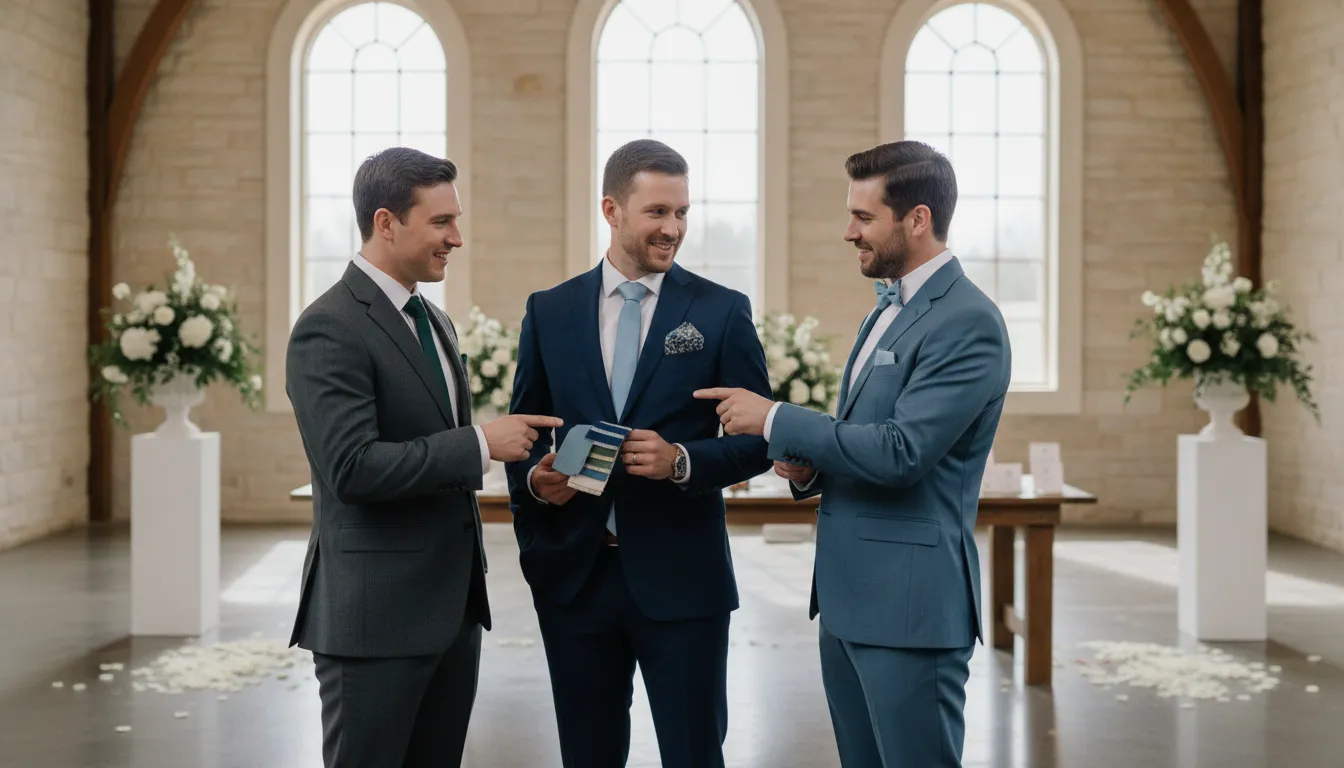
Before finalizing the palette, view fabric and accessories together in the ceremony’s likely light as well as indoor reception lighting. Strong daylight, greenery, colored walls, and flash can change how close shades appear in photographs. Professional fittings and groomsmen attire coordination can help the group look cohesive while preserving the groom’s focal role.
Which fabric and tailoring details make seasonal color work?
Seasonal color is only the starting point. The same navy, olive, tan, or charcoal can look entirely different once you consider the cloth’s texture, weight, and finish, along with the lighting at your venue. A groom’s fabric choice should support the setting and the couple’s vision without turning a seasonal palette into a rigid rule. Our guide to how to choose a suit fabric for the season can help you compare those decisions more intentionally.
Texture affects how much visual presence a color has. A subtle pattern or tactile surface may make a quiet shade feel more distinctive, while a smoother cloth can create a cleaner, more formal impression. The lining and buttons then add another layer of personalization. They can echo the wedding palette, introduce a private detail, or keep the overall look restrained when the fabric already has character. Explore examples of custom suit color and pattern choices before deciding which direction feels right for your ceremony.
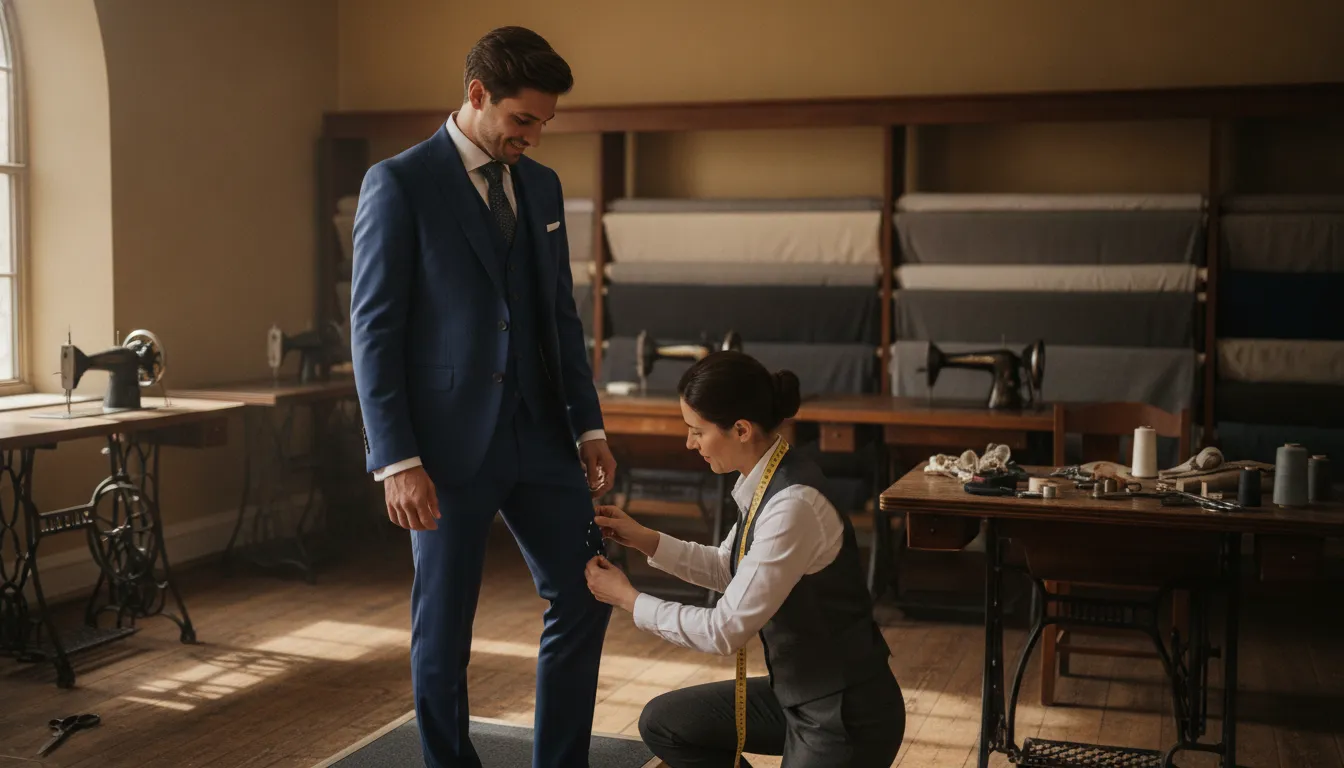
Silhouette and fit matter just as much as the swatch. Your proportions, the intended level of formality, and the way the jacket sits on your shoulders all influence the final impression. Custom tailoring begins with selecting the fabric and personal details, then uses precise measurements and a final fitting to refine the garment. Construction methods can vary by jacket and cloth, so the goal is not to force one method on every suit. It is to build a considered result around you.
Bring the venue, ceremony timing, wedding-party colors, and any rehearsal-dinner plans into that conversation. Seeing fabric options in person and discussing how they respond to the setting gives you a more reliable decision than choosing a color name alone. The finished look should feel connected to the day, comfortable in its formality, and unmistakably yours.
How can a groom test a color before committing?
Before choosing a final fabric, treat the color as part of the entire wedding look rather than an isolated swatch. Hold several options beside the shirt, shoes, and accessories you expect to wear, then view them in natural daylight and the indoor light of the venue when possible. A shade that feels rich under showroom lighting may read differently outdoors or during an evening ceremony.
Take photographs of the full palette from a few angles. Include the actual shirt and accessories, not just a fabric card. Reviewing those images later can reveal whether the suit color supports the couple’s vision, works with the setting, and still feels like you. Color-temperature research is useful context, but it is not a universal suit rule: one study measured same-material, same-design polo shirts outdoors, rather than tailored wedding garments. Its findings should be treated as context, not a guarantee.
Next, ask whether you would wear the suit after the wedding. A versatile shade and restrained details may serve professional events, dinners, or other formal occasions. A more distinctive color can be worthwhile when it reflects your personal style. Consider that choice alongside fabric weight, texture, and the comfort you want during the ceremony and celebration.
Bring your shortlist to a consultation and ask how each fabric will affect the finished silhouette. Custom tailoring involves fabric selection, precise measurements, personalized details, and a final fitting, so the swatch is only the beginning. Prepare questions about fabric, design, fittings, and future wardrobe use with this guide to custom tailoring consultation.
When should you begin planning the groom’s custom wedding suit?
Begin the conversation about four to five months before the wedding. That window gives you room to make thoughtful choices about the ceremony, reception, and rehearsal dinner without treating a seasonal palette as a rigid rule. Your venue, ceremony timing, formality, personal style, and the couple’s shared vision should shape the final color and fabric decisions. Trevor Furbay’s wedding styling process can help you organize those decisions with the wedding party in mind.
- Discovery and planning: Start by discussing the venue, wedding-day atmosphere, formality, color direction, and timeline. Bring any details that may influence your choices, including the setting and the overall vision you share with your partner. This is also the right time to decide whether you want one coordinated wardrobe for the wedding day and a distinct look for the rehearsal dinner.
- Styling and selection: Review fabric, suit or tuxedo options, lining, buttons, and accessories. Instead of choosing a color simply because it is associated with a season, consider how it works with the light, location, and wedding-party palette. You can create cohesion without making every person look identical.
- Measurements and fitting: Once the direction is established, precise measurements and fitting appointments help shape the garment to you. Allow enough planning time to consider comfort, movement, and the way the suit will look in both still photographs and real movement.
- Final fitting and delivery: The last fitting is an opportunity to review the complete look and confirm that the details work together before the celebration. Bring the shoes or accessories you expect to wear when useful, so the finished outfit can be assessed as a whole.
Starting early keeps the process collaborative rather than rushed. A consultation can also help you test how a seasonal color reads in person before committing to the final custom details.
Frequently Asked Questions
What color suit is best for a wedding groom?
Begin with the wedding’s setting, formality, lighting, and shared color palette rather than treating the season as a strict rule. A groom may choose a lighter or softer family for a bright outdoor celebration, or a deeper, more formal shade for an evening or traditional venue. Your personal style and whether you want to wear the suit again matter, too.
How should a groom coordinate his suit color with the wedding party?
Use the wedding palette as a point of connection without making every person look identical. Your suit can establish the main tone, while the wedding party echoes it through accessories, complementary shades, or coordinated details. Keep enough contrast for your role to feel distinct in photographs and in person.
Does the venue or ceremony time change the right suit color?
Yes. Natural daylight, indoor lighting, the venue’s materials, and the transition from ceremony to reception can all change how a color appears. View fabric swatches in the actual types of light you expect, and consider a versatile shade if the wedding moves from an outdoor ceremony to an evening celebration.
How do fabric and tailoring affect a seasonal suit color?
Color does not stand alone. Fabric texture, lining, buttons, and the way the jacket fits influence the finished impression. A custom process lets you select the fabric and personal details, then refine the garment through precise measurements and a final fitting.
When should a groom begin planning a custom wedding suit?
Trevor Furbay Bespoke recommends beginning a wedding consultation four to five months before the wedding. That gives you time to discuss the setting and palette, select fabrics and details, coordinate the wedding party, complete fittings, and plan attire for related events such as the rehearsal dinner. Wedding consultations can be scheduled in Cincinnati or Columbus.
Book Your Style Consultation
Starting 4 to 5 months before the wedding gives you time to explore seasonal color, coordinate the wedding palette, and complete the fitting process with care.