
If you are wondering how many groomsmen can you have, the short answer is as many as make sense for your wedding. There is no universal number that every couple must follow. The right group size depends on the people you want beside you, the ceremony space, the schedule, and how you want the wedding party to look and feel.
Is there a limit to how many groomsmen you can have?
No standard rule sets a maximum number of groomsmen. A groom might choose one attendant, a handful of close friends, or a larger group that reflects a wide circle of family and friends. The choice is personal, and it does not need to match another wedding party you have seen.
There can be practical limits. A narrow ceremony aisle, a small altar, a tight photo schedule, or a limited attire budget may make a very large party harder to coordinate. Those are planning considerations, not rules that disqualify someone from being included.
Start with the people whose support you value, then plan the logistics around that list. If the group feels too large for the ceremony lineup, some friends can take other meaningful roles, such as giving a reading, welcoming guests, helping with preparations, or joining the celebration without standing at the front. These roles should feel like genuine invitations, not consolation prizes.
It is also useful to separate the headcount from the ceremony format. Depending on the venue and the couple’s preferences, attendants might stand at the front, enter in pairs, or take their seats after the processional. Ask the officiant, planner, or venue contact how the space is used. A simple diagram of the altar area and aisle can help you picture the group before you finalize the lineup.
How many groomsmen are typical for a wedding?
There is no required average that should determine your choice. Many couples have a small group, while others include a larger circle. The useful question is not whether your number is typical. Ask whether you can give each person clear information and whether the group can move through the day comfortably.
A smaller party can be easier to coordinate and can create a quiet, close-knit feel. A larger party can honor a broad group of relationships and bring more energy to getting ready and celebrating. Neither choice is automatically more formal, more personal, or more appropriate.
Think about the size of your guest list and the role you want the wedding party to play. A compact ceremony does not require a compact guest list, and a large wedding does not require a large attendant group. Choose the people first; let the count follow from those relationships.
For example, a couple planning an intimate ceremony may prefer two attendants each because that suits the tone and keeps the gathering close. Another couple may have siblings, longtime friends, and relatives they want to include, and a bigger lineup may feel like a more honest reflection of their lives. Neither example is a benchmark to copy. The number should make sense when you imagine the actual people standing with you.
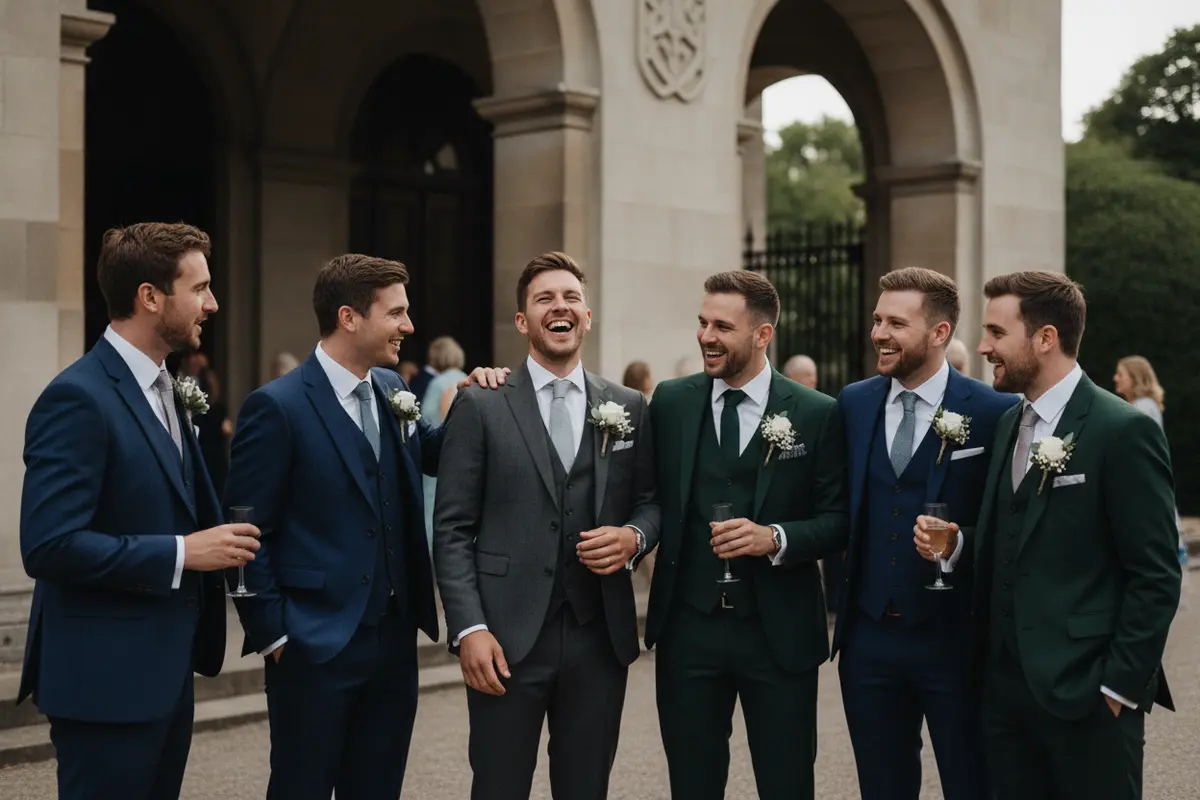
How should you choose the right number for your wedding?
Use a few practical questions to turn a vague number into a confident decision:
- Who do you genuinely want beside you? Make a first list based on relationships rather than symmetry, family expectations, or pressure to return an old invitation.
- What will the ceremony space accommodate? Picture the group standing near the couple and moving in and out of the ceremony. Ask your venue or planner about aisle width and the available standing area.
- How much coordination can you manage? Each person needs clear details about timing, attire, fittings if needed, and where to be. Consider who will send updates and answer questions.
- What is the attire plan? Decide whether everyone will wear the same look or follow a coordinated palette. Be realistic about how much choice the group needs and who is handling selections.
- How will photographs and transitions work? A larger group may need more time for formal portraits and movement between locations. Build that time into the schedule instead of squeezing it in.
There is no magic formula, but a simple planning exercise helps. Write down the people you would miss having there, then review the list with your partner. If the number feels workable for your venue and schedule, it is a reasonable number for your wedding. If not, consider giving some loved ones other visible roles or inviting them to be part of the celebration in a different way.
Before you make the invitations, try a quick logistics check. Put the ceremony start time, portrait window, travel between locations, and any planned group entrances on one page. Then list what each attendant will need to do and when. If the plan has no breathing room, simplify a transition, adjust the photo plan, or ask someone to help coordinate messages. This exercise can reveal whether the challenge is truly the number of people or simply a schedule that needs more space.
It may help to decide in two rounds. First, agree on who you want to include without negotiating over a target number. Then review the complete list together against the space, schedule, and responsibilities. This keeps practical concerns in view without turning the decision into a contest over whose friends matter more. If you do need to change the plan, make that choice together and communicate it with care.
Does the number of groomsmen need to match the bridesmaids?
No. The two sides of a wedding party do not have to have the same number of attendants. Couples often choose people according to their own relationships, so an uneven count is a normal planning choice. You do not need to add or remove a close friend solely to make the lineup symmetrical.
If you want balanced photographs, your photographer can arrange people in a way that looks intentional. Some attendants can stand in a different configuration, join a group photo with their partner, or be photographed in smaller combinations. A thoughtful plan matters more than identical headcounts.
Talk through the choice early with your partner. If either of you has a family tradition or a strong preference about the ceremony lineup, it is easier to find a solution before invitations and attire plans are underway. The wedding party should reflect the couple, not a mathematical requirement.
For portraits, tell the photographer about any uneven numbers before the wedding day. The group does not have to form two rigid rows. A couple-centered arrangement, a staggered lineup, or a mix of full-party and smaller portraits can keep images relaxed. You can also plan a few combinations that matter to you, such as siblings together or longtime friends in one frame, so the session records relationships rather than only headcount.
How do you decide whom to include?
It can help to separate the decision from the question of an exact number. Think about the relationships you want represented in the day, then consider whether each person is available and comfortable with the responsibilities. A close friend who cannot travel or take time away from work may still be an important part of the celebration without standing in the ceremony.
Be careful about choosing attendants only to avoid a difficult conversation. Adding someone out of obligation can create pressure around an already busy event, while leaving a loved one out without explanation can cause hurt. There is no perfect formula, but honest, kind communication helps. If a friend asks about the decision, you can explain that you kept the wedding party small or chose a different arrangement without comparing their importance to someone else’s.
You may also want to distinguish the wedding-party role from other forms of support. Ask friends to help welcome guests, host a gathering, share a reading, or be present for a special part of the day. Offer a role because it is meaningful and suited to the person, not as a way to disguise a ranking.
Make the invitation clear about what the role involves. Some people may be excited to stand with you but have limited time for multiple events; others may prefer to attend without additional responsibilities. A direct conversation lets you explain the date, expected schedule, attire decisions, and any related commitments before someone says yes. It also gives them room to ask questions or decline without awkwardness.
If you choose not to ask someone, keep the explanation kind and brief. You do not need to give a detailed comparison of the people who were selected. You might say that you are keeping the formal party small while still looking forward to celebrating together. Then follow through by including them naturally as a guest or offering another role only if it genuinely fits.
What changes when you have a larger wedding party?
A larger group can be wonderful, but it calls for a little more structure. Make one person the point of contact for schedule updates, share the same written details with everyone, and set a clear deadline for attire decisions. Avoid relying on a chain of messages where an important change may not reach every attendant.
Give the day schedule enough breathing room. Account for travel, group photos, getting ready, and any planned entrances. If people are changing at different locations, make the meeting point and arrival time especially clear. A few extra minutes can make transitions feel calmer.
Consider how the group will choose clothing. A shared color direction can create a unified look without requiring every person to wear an identical outfit. If the wedding calls for formal coordinated attire, establish the formality, palette, and any key details before people begin shopping. For options that suit a groom’s vision, explore custom tuxedos for grooms and wedding parties or the broader wedding attire process.
There are practical ways to reduce confusion as the group grows. Send one shared note with the date, venue, attire direction, and next decision deadline. Use a checklist to track who has received the information and whether anyone needs to discuss fit or timing. For a group that includes people in different cities, ask each person to confirm their plan instead of assuming a message has been read. Small steps like these make follow-up easier and keep everyone working from the same details.
Also decide which choices are fixed and which are flexible. For example, you might set the overall formality and color family, while allowing a choice among a few outfit options. When people know where they have freedom, they can make decisions confidently without unintentionally creating a mismatched look. State any deadline for those choices so there is time to address questions before the wedding week.
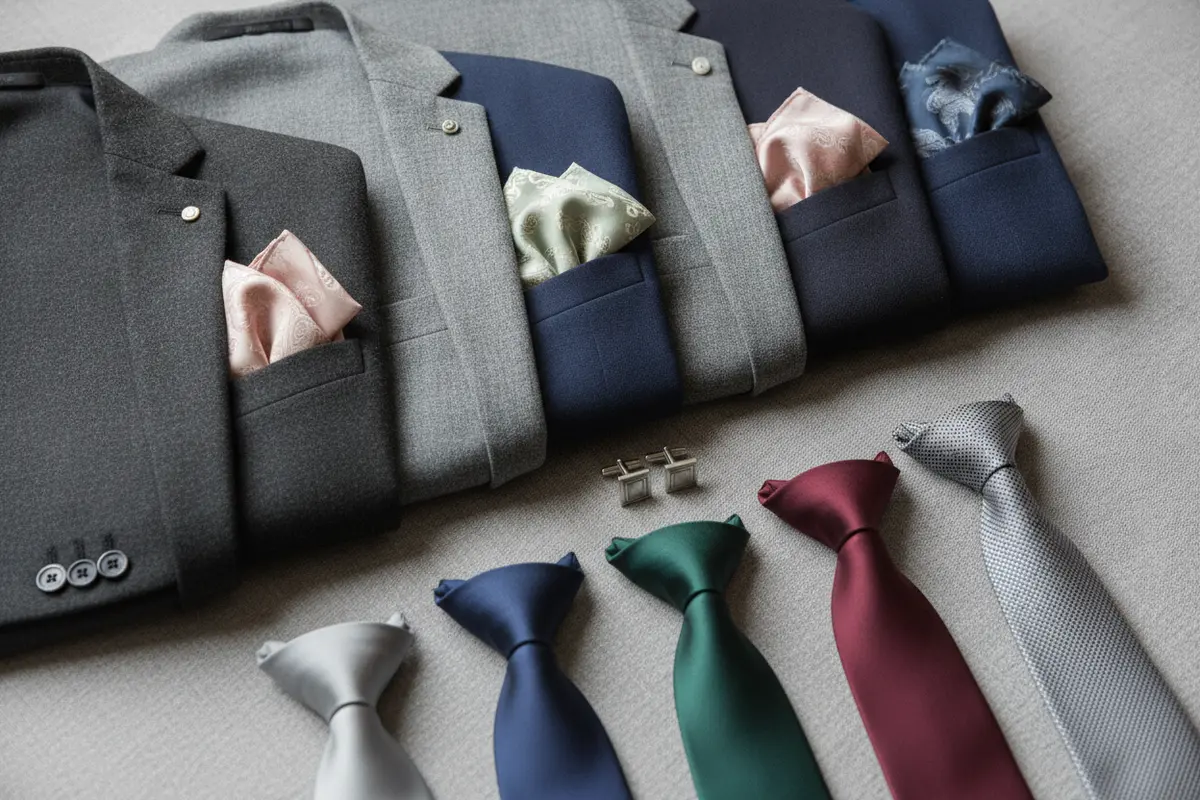
How can you coordinate attire for a group of any size?
Set the visual direction before asking attendants to select their outfits. Begin with the time of day, venue, season, and formality. Then decide which elements should match and which can vary. You might coordinate jacket color while allowing different shirts or accessories, or keep the palette consistent while letting each person choose a suitable suit.
Consider the photographs as well as comfort. A group will look connected when the clothing shares a clear level of formality and a few intentional details. It does not need to look like a uniform. Coordinate with the groom’s outfit so he feels distinct without appearing disconnected from the party.
Fit and timing deserve attention, especially when the group includes people with different body types, schedules, or locations. Share the attire plan in writing. Make clear what is required, what is optional, and when each person needs to be ready. For a coordinated custom look, review custom styling and tailoring, custom suits, and custom jackets and sport coats.
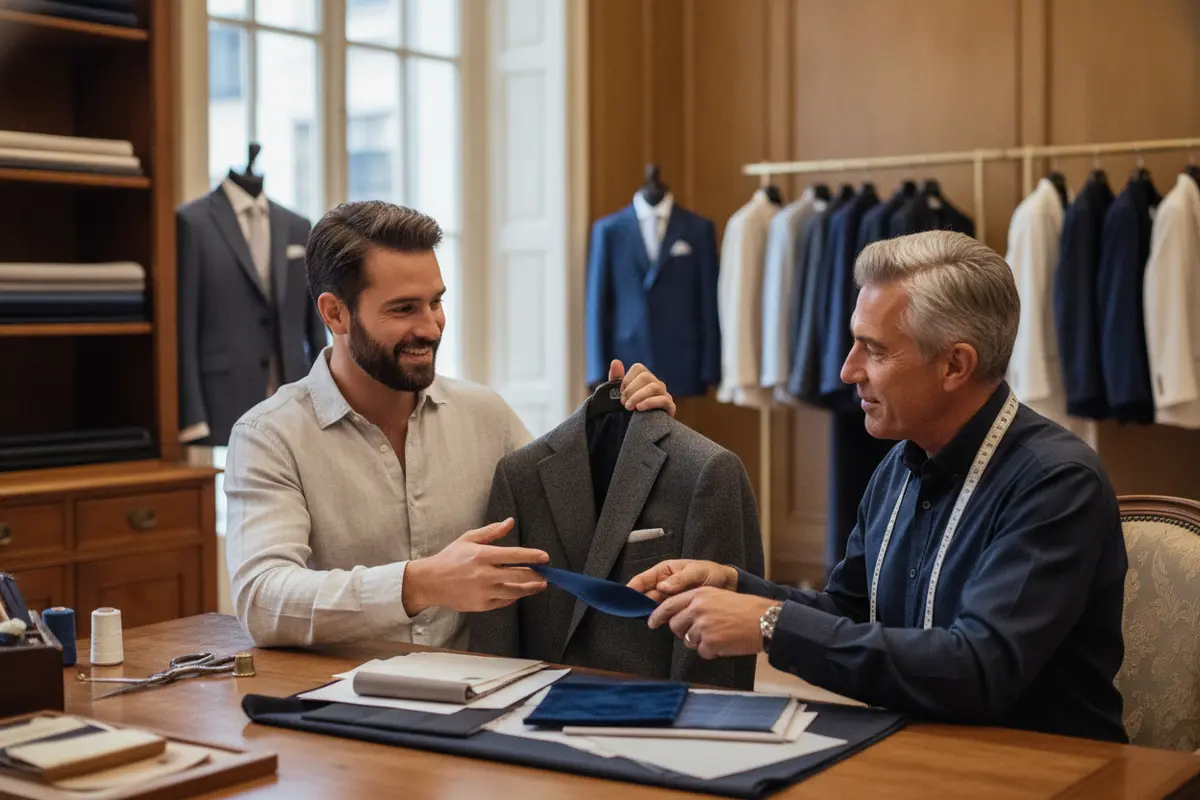
Custom tailoring is consultation-based, with cost depending on fabric and customization. If the wedding is approaching, discuss the timeline and available choices early rather than assuming every option will work on a compressed schedule. A style appointment gives the groom a chance to talk through the event and attire direction.
When you are deciding how much coordination to ask for, begin with the groom’s look and work outward. Identify the details that need to connect in photographs, such as the level of formality or a shared color direction. Then decide which items can vary without changing the overall impression. This avoids the two common extremes: asking every attendant to guess at the look, or giving so many detailed instructions that no one knows which choices matter most.
Think through the day from the perspective of the person getting dressed. Are shoes, shirts, ties, and accessories part of the plan, or is each person choosing those details? Is the group expected to arrive already dressed, or will there be time and space to change? Answering these practical questions in advance can prevent last-minute confusion. If attire is being tailored, make room for measurements and fittings based on the actual group and service arrangement.
What are the trade-offs of a small or large wedding party?
| Wedding-party size | What can work well | What to plan for |
|---|---|---|
| Small group | Closer, simpler coordination and a compact ceremony lineup. | Some loved ones may need another meaningful way to take part. |
| Medium group | A balance between including close friends and keeping logistics manageable. | Set expectations for attire, timing, and communication early. |
| Large group | Recognizes a broad circle of family and friends and can create a lively group atmosphere. | Allow more time for fittings or outfit coordination, photographs, travel, and announcements. |
This comparison is a planning aid, not a ranking. Your venue, ceremony format, and relationships matter more than a category. A larger party does not have to mean identical clothing or a complicated process, but it benefits from clear decisions and a reliable schedule.
Use the table as a prompt for discussion rather than a scorecard. If you are leaning toward a small party, ask how you will include other important people in the day. If you are leaning toward a large party, identify who will coordinate attire updates and how much time the ceremony and portraits need. A plan that answers those questions can work at either size.
When should you start planning groomsmen attire?
Begin as soon as the wedding date and general formality are taking shape. For wedding attire, Trevor Furbay Bespoke recommends starting four to five months before the wedding. That gives time to discuss the vision, select fabrics and details, coordinate measurements and fittings, and complete a final fitting before the day.
The wedding wardrobe process can be organized into four steps:
- Discovery and planning. Discuss the wedding theme, venue, timeline, and the groom’s priorities.
- Styling and selection. Explore suitable fabrics, styles, and accessories, then clarify how the wedding party will coordinate.
- Measurements and fitting. Take measurements and make tailoring adjustments as needed.
- Final fitting and delivery. Check the finished attire and confirm that everything is ready before the wedding.
For more on the sequence, see the groomsmen suit ideas guide and the wedding tuxedo style guide. If the wedding is closer than four months away, do not assume planning is impossible. Contact a clothier promptly to discuss what can be arranged for your date.
The timeline is also a good reason to make decisions in the right order. First confirm the date, venue, and level of formality. Next, choose whether the groom and attendants will wear matching or coordinated outfits. Once that direction is settled, share it with the group and clarify who needs an appointment, who is selecting from existing clothing, and what dates will work for measurements or fittings. Waiting to define the plan can make even a small group harder to coordinate.
Build a little room for follow-up. A person may need to reschedule, ask about a particular fit concern, or confirm a detail after trying on an outfit. A final check well before the event is more useful than discovering a mismatch during the wedding-week rush. The exact sequence depends on the attire plan, so discuss timing during the consultation rather than treating any one schedule as universal.
How do you keep the group organized?
A straightforward plan keeps the wedding party from having to guess. Share one concise message with the event date, attire direction, deadlines, appointment details, and the person to contact with questions. Follow up when choices or timing change, rather than expecting everyone to track updates across several conversations.
- Choose a lead contact for wedding-party attire and schedule questions.
- State the required formality, color direction, and any specific clothing details.
- Confirm whether each person is responsible for obtaining or arranging an outfit.
- Set realistic dates for selections, measurements, fittings, and final checks.
- Keep a little flexibility for travel, work commitments, and last-minute schedule changes.
Some friends may live elsewhere or have limited time to visit. Explain the plan early so everyone can understand what is expected. A coordinated approach can work for a group with different schedules, but it should be based on the actual service and timeline available to the wedding party.
A useful message can be short and still specific. Include the event date and location, when people should arrive, what level of formality to expect, the current attire direction, and the next date by which they should respond. If details are not final, say what is settled and when you expect to share the remaining choices. This prevents a vague early announcement from being mistaken for the full plan.
Keep a single current version of the schedule and attire notes. If a time or location changes, update the same source and send a clear notice to everyone. Before the wedding week, confirm who is attending, where each person needs to be, and whether they have any unresolved attire questions. This last check is especially helpful when the party includes people who are traveling or coordinating separate arrangements.
Frequently Asked Questions
Can you have just one groomsman?
Yes. You can choose one person to stand beside you, or you can have no formal attendants. The wedding-party structure is yours to shape.
Can you have more groomsmen than bridesmaids?
Yes. There is no rule requiring equal numbers. A photographer or planner can help arrange the processional and photographs so the group feels balanced.
Can a family member or friend take another role instead?
Yes. A loved one might give a reading, welcome guests, help with preparations, or participate in another way that suits the ceremony. Ask them directly and explain why their role matters to you.
How far in advance should groomsmen attire be planned?
For wedding attire, aim to begin four to five months before the wedding. Earlier planning gives more room for selections, measurements, fittings, and final checks. If the date is closer, ask about the options and timeline promptly.
Do all groomsmen have to wear the same outfit?
No. The group can wear matching outfits or coordinated looks. Decide on the formality and shared visual details first, then choose how much variation fits the wedding.
Choose the people who matter to you, then shape the attire and schedule around the wedding you want to celebrate.