
Knowing how to choose a suit fabric starts with the way you will wear the suit, not with a swatch that looks appealing on its own. Consider your climate, schedule, comfort preferences, and how often the suit needs to move between work and more formal occasions. Those answers help narrow the choices to a cloth that looks right and feels useful.
A suit’s fabric influences its drape, texture, warmth, breathability, and how it responds to regular wear. It cannot compensate for a poor fit, but the right cloth and a considered cut work together. This guide compares common options and shows you what to ask when you explore custom suit styling and tailoring.
What should you consider before choosing a suit fabric?
Start by picturing a typical day in the suit. A two-piece worn for client meetings throughout the year has different needs from a lighter suit reserved for summer celebrations. Think about where you will wear it, how warm you tend to feel, and whether the suit will be worn weekly or occasionally.
- Climate and setting: Indoor offices, heated rooms, outdoor events, and travel all affect how much warmth or air movement feels comfortable.
- Frequency: A frequently worn suit benefits from a cloth suited to repeated use and a versatile color. A special-occasion suit can prioritize a distinctive surface or seasonal character.
- Feel: Some people prefer a smooth, crisp hand; others like a soft, brushed texture. Handle the swatch if possible instead of deciding from a photo.
- Care: Ask what cleaning and storage the cloth calls for. A suit should be professionally cared for; avoid attempting home repairs or alterations.
- Wardrobe role: Consider whether the fabric needs to work with shirts, ties, and shoes you already own, or whether it fills a specific gap.
Bring those priorities to a fitting. A stylist can help you compare fabric alongside the suit’s intended use, and a consultation can clarify how the available cloth and customization choices affect the overall investment. There is no single fabric that is best for every wearer.
How do wool, linen, and cotton compare?
Fiber content is a useful starting point, but it does not tell the whole story. Weave, yarn, finishing, and cloth weight also influence how a suit wears. Two wool fabrics can feel and behave quite differently, so look at the specific cloth rather than relying only on its label.
| Fabric | How it tends to feel and look | Consider it for | Keep in mind |
|---|---|---|---|
| Worsted wool | Smooth surface with a clean, tailored appearance | Business wear and versatile year-round suiting | Weight and weave determine warmth and airflow; inspect the individual cloth |
| Flannel wool | Soft, brushed surface with a more relaxed visual texture | Cooler weather and outfits where a softer finish feels right | Its brushed character may feel too warm for hot conditions |
| Linen | Dry hand, visible natural texture, and a relaxed look | Warm-weather occasions and less formal settings | Creasing is part of its character and should be expected |
| Cotton | Often matte and casual, with a familiar hand | Daytime events and relaxed business-casual wardrobes | It can crease; structure and finish vary by cloth |
| Wool blend | Varies according to the fibers and their proportions | When you want a particular balance of feel, appearance, or performance | Ask what each fiber contributes rather than assuming all blends act alike |
Wool is a broad category, not a promise of one season or level of formality. A smooth, tightly finished worsted can look sharp in a boardroom, while a brushed flannel reads softer and is often more comfortable in cool weather. Learn more about custom suits and tailored clothing if you are comparing cloth for a suit you expect to wear often.
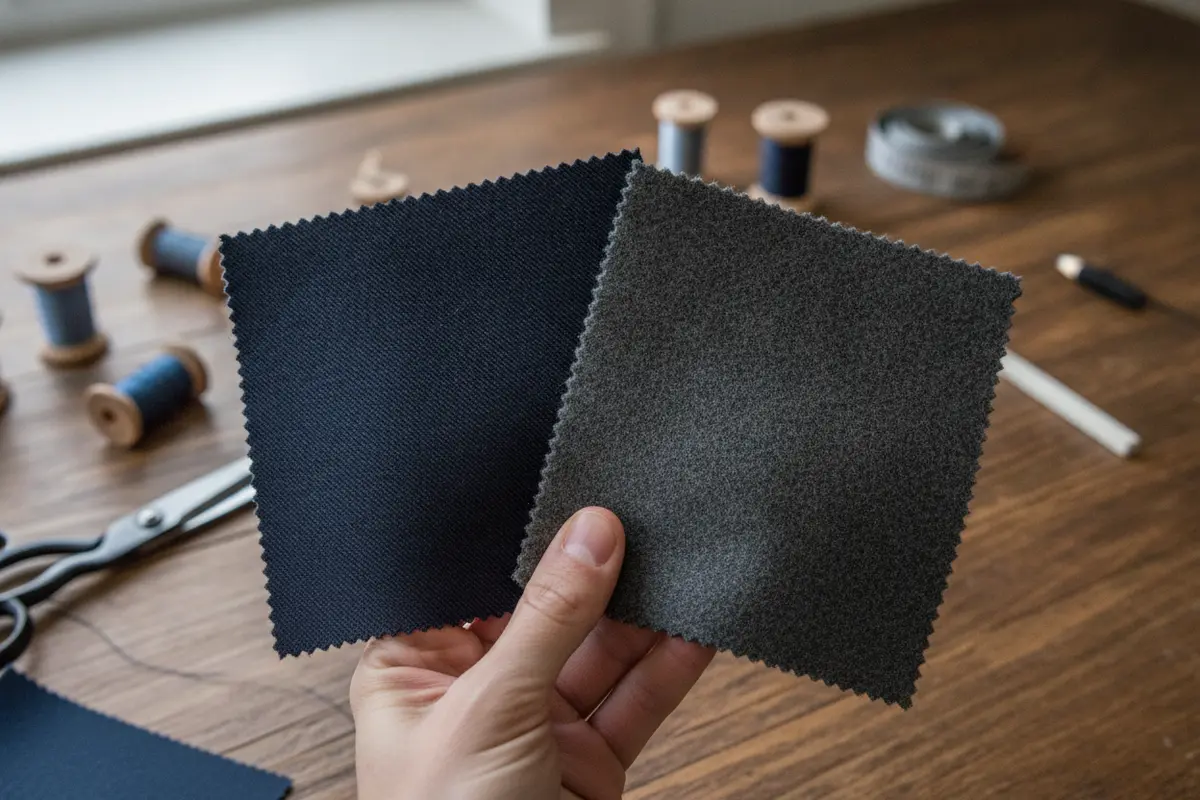
Linen and cotton can be appealing when you want a less formal look or have warm-weather plans. Linen’s characteristic creases are not a flaw to eliminate; they are part of its relaxed appearance. Cotton can offer a casual alternative, though it may crease as well. If you need one suit to cover formal business settings, weddings, and frequent wear, compare these options with wool before settling on a fabric.
How does fabric weight and weave affect comfort?
Weight provides a clue to a cloth’s substance, but it should not be treated as a season label by itself. A lighter cloth may feel easier in warm conditions, while a heavier one can feel reassuring in cool weather. Yet weave, lining, fit, and the temperature of the places you spend time in all matter. Ask to handle the actual swatch and consider trying the finished garment in the kind of outfit you expect to wear underneath.
Weave affects how open or compact the surface is. An open weave may allow more air to pass through than a dense one, but it can also have a different drape and feel. A smooth, compact weave often gives a clean appearance; a textured weave can make a plain color more visually interesting. If you commute between outdoors and climate-controlled rooms, a balanced midweight cloth may be more practical than choosing solely for the hottest or coldest day.
There is no universal weight threshold that makes a suit a summer or winter suit. Ask the clothier to compare two or three specific swatches and explain the difference in hand, drape, and intended use. For more focused warm-weather ideas, see the guide to lightweight summer suits.
Which suit fabrics work best in different seasons?
What should you look for in a warm-weather suit?
For a hot day, start with a lighter-feeling cloth and a weave that seems comfortable against your skin. Linen and some cottons lend themselves to a relaxed summer look. Lightweight wool can also be worth considering when you want a more polished appearance, especially if the weave and construction suit your needs. A pale tan, light gray, or soft blue can reinforce a seasonal mood, while navy and mid-gray remain versatile choices.
Think beyond the ceremony or meeting. If the suit will be worn outdoors, ask how its texture and color will look in natural light. If you expect to wear it in a formal office afterward, consider whether a less seasonal shade and a smoother surface will work more often. A fabric that meets both needs may be a better investment than one chosen for a single photograph.
What makes a fabric comfortable in cooler weather?
Flannel and other fuller-feeling wool cloths can make sense when temperatures drop. Their texture gives an outfit visual depth, too. For a more formal appearance, a smooth wool in a suitable weight may work well across several months. You can also create warmth with layers, so do not choose a heavy cloth without considering how heated interiors feel during your day.
Season is a helpful guide rather than a strict rule. A suit for a winter wedding may need to feel comfortable in a warm reception space as well as outside. If the garment will be worn across seasons, ask about a versatile cloth and use shirts, knitwear, and outerwear to adjust the rest of the outfit.
How can you evaluate a swatch before choosing?
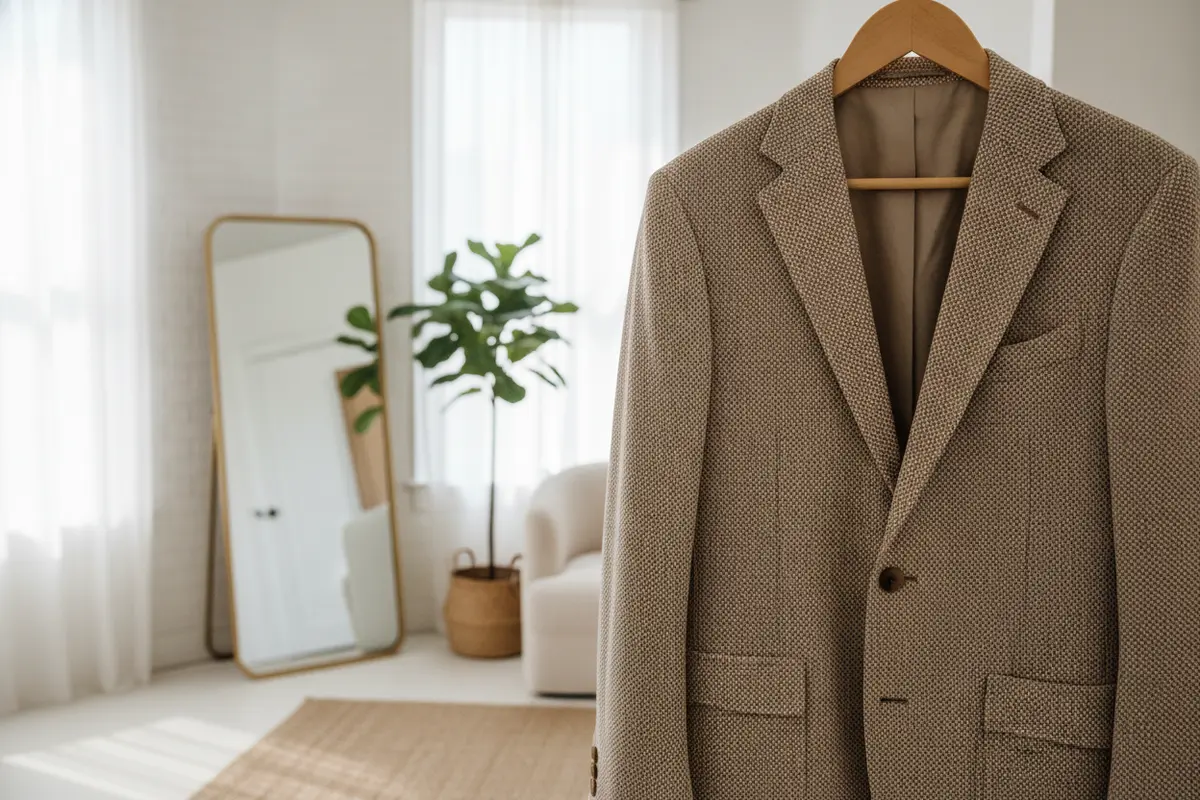
Use the swatch to notice a few things, not to predict every quality of the finished suit. First, look at the color in ordinary daylight and under indoor lighting. Next, feel the face of the cloth and compare it with another option. Then gently let the swatch fall over your hand to see whether it appears fluid or more structured. These simple observations give you specific points to discuss with your stylist.
Ask whether the displayed sample represents the cloth that would be used for your garment and whether its pattern or texture will look different at full scale. A tiny check or stripe can seem subtle in a book and more prominent across a jacket. Solid colors have their own nuances, too: a smooth surface may appear more formal, while a textured one can soften the effect. If you are unsure, compare the swatch beside a shirt, tie, or shoe color you already wear.
Do not choose by touch alone. Some people enjoy a crisp, cool-feeling cloth in the hand but prefer a softer drape once dressed, while others have the opposite preference. Share what you like and ask how the fabric is expected to feel as a completed suit. The result depends on more than a loose sample, including the garment’s cut and construction. A conversation about the whole outfit helps turn a first impression into a practical decision.
How should your lifestyle shape the fabric choice?
For regular business wear, versatility and resilience often matter more than novelty. A smooth wool in navy or charcoal can coordinate with a range of shirts and ties and can move from the office to dinner. If you rotate between several suits, you have more room to choose a distinctive texture or seasonal cloth for one of them.
For travel, think about what happens during a full day of sitting, walking, and moving between settings. Ask how the specific cloth handles creasing and whether its weight feels appropriate for your destination. Keep expectations realistic: any garment can wrinkle during travel, and no fabric is immune to wear. Choose for comfort and the impression you want rather than assuming a cloth will remain perfectly smooth.
For a wedding or other formal occasion, coordinate the cloth with the dress code, venue, time of year, and how formal the event will feel. A groom may want a fabric that stands apart from everyday office clothing, while still feeling natural to wear. Begin planning early enough to discuss cloth and fittings; Trevor Furbay’s wedding process is consultation-focused, and the recommended starting point is four to five months before the wedding. Explore wedding attire and planning or compare custom tuxedo options when the event calls for formalwear.
If your wardrobe needs span work and weekends, a suit may not be the only answer. A more textured jacket with separate trousers can feel less formal and offer different combinations. Compare the role of custom sport coats and jackets with your existing wardrobe before deciding that every need calls for a matching suit.
How do color and texture change the way fabric looks?
Color and surface can make the same basic fiber feel very different. A deep navy worsted reads polished and dependable; the same color in a visibly textured cloth can feel more relaxed. Charcoal is a useful option for business and formal settings, while lighter neutrals often feel more at home in daytime or warm-weather outfits. Choose a shade that works with your shoes, shirts, and the occasions you attend.
Texture adds interest without relying on a bold pattern. Flannel, hopsack-like open textures, and subtle weaves can change how a solid color catches the light. If you want a suit that pairs easily with patterned shirts and ties, a quieter cloth may be simplest. If most of your shirts are plain, a restrained texture can add character without making the outfit difficult to coordinate.
View swatches in more than one kind of light when you can. Store lighting can shift how a color appears, and small samples may not show the full effect of a pattern or weave. Ask to see the cloth against a shirt or accessory you plan to wear. The right choice should make sense both on the swatch and as part of a complete outfit.
What should you ask at a fabric consultation?
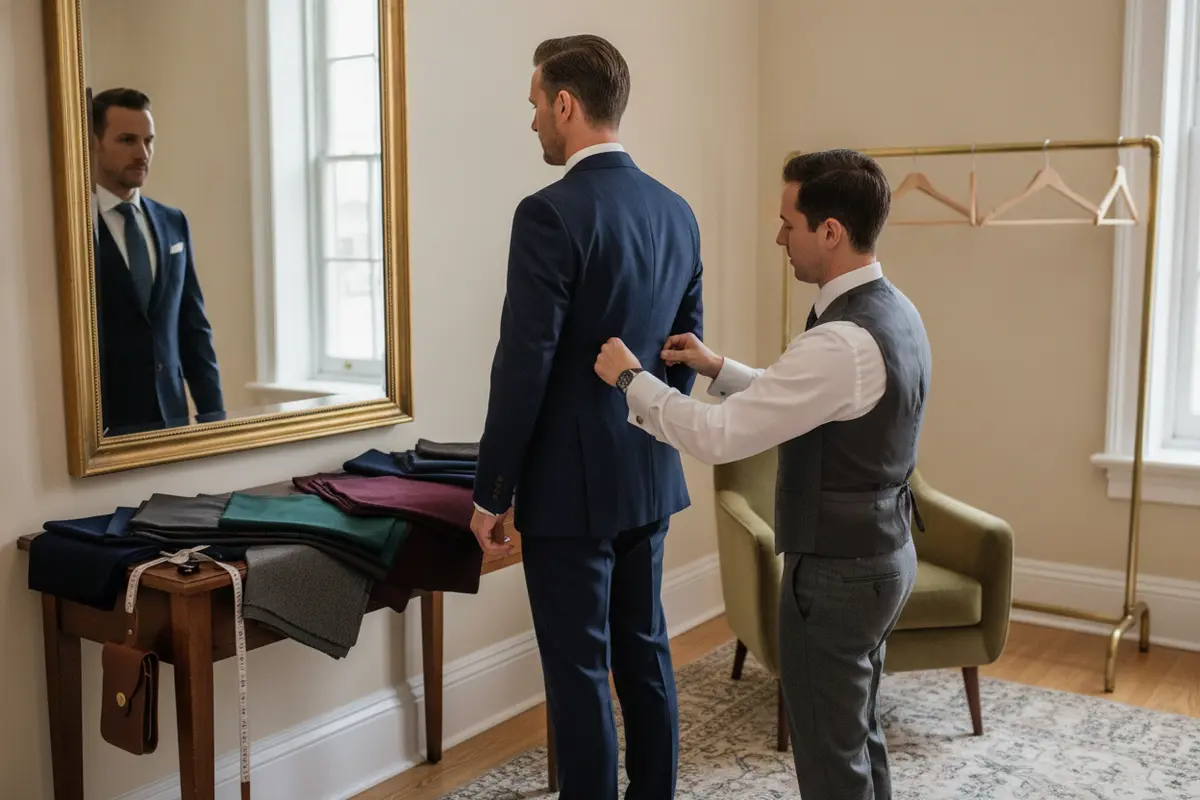
A focused conversation makes it easier to compare options without getting lost in technical terms. Bring a clear idea of how often you will wear the suit, what occasions it needs to cover, and any comfort preferences. A hands-on consultation can connect the fabric choice to fit, styling, and the details of the finished garment.
- What makes this cloth a good match for the occasions I described?
- How does it compare with this other swatch in weight, texture, drape, and expected comfort?
- How might the fabric look with the jacket structure and fit I have in mind?
- What care does this cloth need, and what should I expect from normal wear?
- Would a different cloth make more sense if I plan to wear the suit frequently or across seasons?
- How do fabric and customization choices affect the consultation-based investment?
The answers should help you understand the trade-offs, not just identify a fashionable option. Custom suit pricing depends on fabric and customization, so it is best discussed in a consultation rather than assumed from a generic price. To prepare, review what to wear to a custom suit fitting and bring any reference garments or accessories that help explain your preferences.
How can you make a confident final choice?
Reduce the decision to three questions: Does the cloth suit the setting? Will it feel comfortable when and where you plan to wear it? Can you combine it with the rest of your wardrobe? If a fabric answers those questions well, its choice is more likely to serve you beyond the fitting room.
Compare a versatile option with one that expresses more personality. Notice the difference in texture and drape, and ask how each aligns with your schedule. If your aim is a suit for frequent professional wear, versatility may win. If you already have reliable business suits, a seasonal or more distinctive cloth could add something new.
Take time to consider the complete garment. Fabric, fit, color, and construction details work together, and jacket construction can vary from one garment to another. A knowledgeable clothier can explain the choices available for the specific suit rather than making blanket promises about every design. You can also review how an Atelier Munro suit brings custom fit and details together and browse custom shirts if you are building a coordinated wardrobe.
Trevor Furbay Bespoke offers custom tailoring alongside curated clothing and personal styling. If you are still deciding whether your wardrobe needs a suit, a separate jacket, or a different combination, a stylist can help you think through the options. The goal is a considered choice that suits your life, not a fabric selected by a label alone.
What does a fabric blend tell you?
A blend combines fibers, but the word alone does not explain how the finished cloth will feel. The proportions, yarn, weave, and finishing all play a part. Rather than assuming that a blend is automatically cooler, stronger, or easier to care for, ask what the particular combination is intended to do. Then compare the swatch with a cloth made from a different fiber or construction.
Pay attention to the surface and drape as well as the label. Does the fabric feel smooth or nubby? Does it fall softly, or hold a more defined shape? Those observations help you discuss what you actually want, even if you do not know the technical name for a weave. A clothier can explain how the available options relate to your priorities and to the design of the garment.
Blends can also be chosen for appearance and hand, not only for practical performance. A small change in fiber content may not be obvious from a tiny swatch, so ask to see the full fabric book or a larger sample when available. If the finished garment is meant for frequent use, talk through how the cloth may age and what professional care it needs before committing to it.
How should you balance durability with appearance?
Durability does not belong to fiber content alone. How often a suit is worn, whether it has time to rest between wears, how it is stored, and how it is cleaned all affect its useful life. A fine-feeling fabric is not automatically unsuitable for regular use, and a heavier hand does not guarantee that a suit will last longer. Ask the stylist to help you compare the actual candidate cloths for your expected routine.
If you plan to wear a suit several days a week, consider owning more than one and rotating them when possible. Rotation gives each garment a chance to air between wears and helps you avoid relying on a single suit for every setting. If you are choosing one suit now, a restrained color and texture may give you more outfit combinations. If you already own those basics, a second fabric can offer a different mood without duplicating what is in your closet.
Care is part of the decision, too. Follow professional advice for cleaning and storage, and do not try to fix fit problems or damage at home. A qualified tailoring professional can assess alterations, while a professional cleaner can advise on cleaning. Before you select a cloth, be honest about how much upkeep you are comfortable arranging, especially if the suit will be worn often or for travel.
Should you match the fabric to the suit’s construction?
Yes, consider the whole garment rather than treating the fabric as a separate decision. A softly textured cloth can complement a relaxed jacket, while a crisp, smooth surface may support a more formal look. These are useful starting points, not fixed rules: the cut, lining, details, and way the jacket is made can change the effect. Construction methods vary by garment, so ask how the proposed design works with the cloth you like.
Fit should remain part of the conversation. A fabric that looks beautiful folded on a table may drape differently when made into a jacket and trousers. During the consultation, describe how you want to move and sit in the suit, then discuss how the fit and fabric work together. If you are exploring details beyond the cloth, the guide to suit lapel styles can help you think about how the jacket’s lines contribute to its overall character.
Frequently Asked Questions
Is wool a good choice for a suit you will wear often?
Wool is a versatile starting point, but the specific weave, weight, finish, and your schedule matter. Compare the actual cloth and ask how it suits the settings where you plan to wear the suit.
Is linen too casual for a suit?
Linen has a naturally relaxed texture and visible creasing, so it generally feels less formal than a smooth worsted wool. It can be a strong option for warm-weather occasions when that relaxed character fits the setting.
Should I choose a lighter fabric for summer?
A lighter-feeling cloth may be comfortable in warm conditions, but weight alone does not determine comfort. Weave, lining, fit, and the time you spend indoors or outside also matter, so ask to compare the specific fabrics.
Does a fabric blend always make a suit more durable?
No. A blend’s behavior depends on which fibers are used, their proportions, the weave, and the cloth’s construction. Ask what each fiber contributes and judge the fabric for the use you have in mind.
How far ahead should I choose fabric for a wedding suit?
For wedding attire, begin planning four to five months before the wedding. That gives you time to discuss the event, select cloth, and work through measurements and fittings with a stylist.
With your occasions, comfort preferences, and wardrobe in mind, you can choose a suit fabric for more than its first impression and feel confident wearing it well beyond the fitting.