
Choosing a male marriage dress is easier when you start with the invitation, the setting, and your role in the wedding. A groom’s outfit should suit the dress code and feel comfortable through the ceremony, photographs, and celebration. This guide helps you compare suits, tuxedos, and coordinated separates, then turn those broad choices into a complete look.
What should you learn from the invitation first?
Look for a stated dress code, such as black tie, formal, or cocktail attire. Treat that language as the clearest starting point. If the invitation does not specify a dress code, ask the couple or wedding planner rather than guessing from the venue alone. A grand building may host a relaxed celebration, while a smaller venue can still call for formal attire.
The time of day and the overall tone offer useful clues, but they are not rules. A ballroom evening celebration may call for more formality than a daytime garden event, yet the couple’s preference should guide the final decision. As the groom, discuss the level of formality with your partner, including any traditions or family expectations that matter. If you are attending as a guest, avoid dressing more formally or conspicuously than the invitation suggests. Our guide to choosing a suit for a wedding guest covers that distinct decision.
Before you shop or book a fitting, write down what the invitation actually says. Note the ceremony and reception locations, approximate schedule, and any guidance about colors. If details are missing, send a short question: “Would you prefer a suit or tuxedo, and is there a color palette we should follow?” A concrete answer prevents you from buying an outfit that looks right in isolation but misses the couple’s intention.
Should you choose a suit, tuxedo, or separates?
A suit is versatile for many weddings. In a classic color and restrained pattern, it can also serve for professional events and other occasions. A tuxedo is a strong option when the dress code calls for black tie or the couple wants a distinctly formal evening look. Separates can work for a relaxed celebration if the jacket and trousers look intentional together and suit the requested formality.
| Option | Works well when | Consider |
|---|---|---|
| Suit | Formal, cocktail, or semi-formal event | Color, cut, and future wear |
| Tuxedo | Black tie or an explicitly formal evening | Shirt, bow tie, shoes, and accessories as a whole |
| Separates | Relaxed celebration or requested nontraditional look | Keep proportions and formality balanced |
Think about the whole outfit rather than comparing jackets alone. A tuxedo’s formal character comes from its combination of garment details and accessories. A suit can look formal with a crisp shirt, a considered tie, and polished shoes, or more relaxed with choices allowed by the dress code. Separates need extra care: the jacket and trousers should relate in color, texture, and level of formality. A dressy jacket paired with casual trousers can make the outfit feel unsettled.
Ask how often you expect to wear the garment afterward. A classic suit may serve for work events and celebrations, while a tuxedo may be the right choice when the ceremony calls for a specific level of formality. Future versatility should inform the decision, but it should not override the wedding’s dress code. Compare our tuxedo style guide, men’s suit guide, and explanation of dinner jackets and tuxedos to refine the direction.
How should you choose color and fabric?
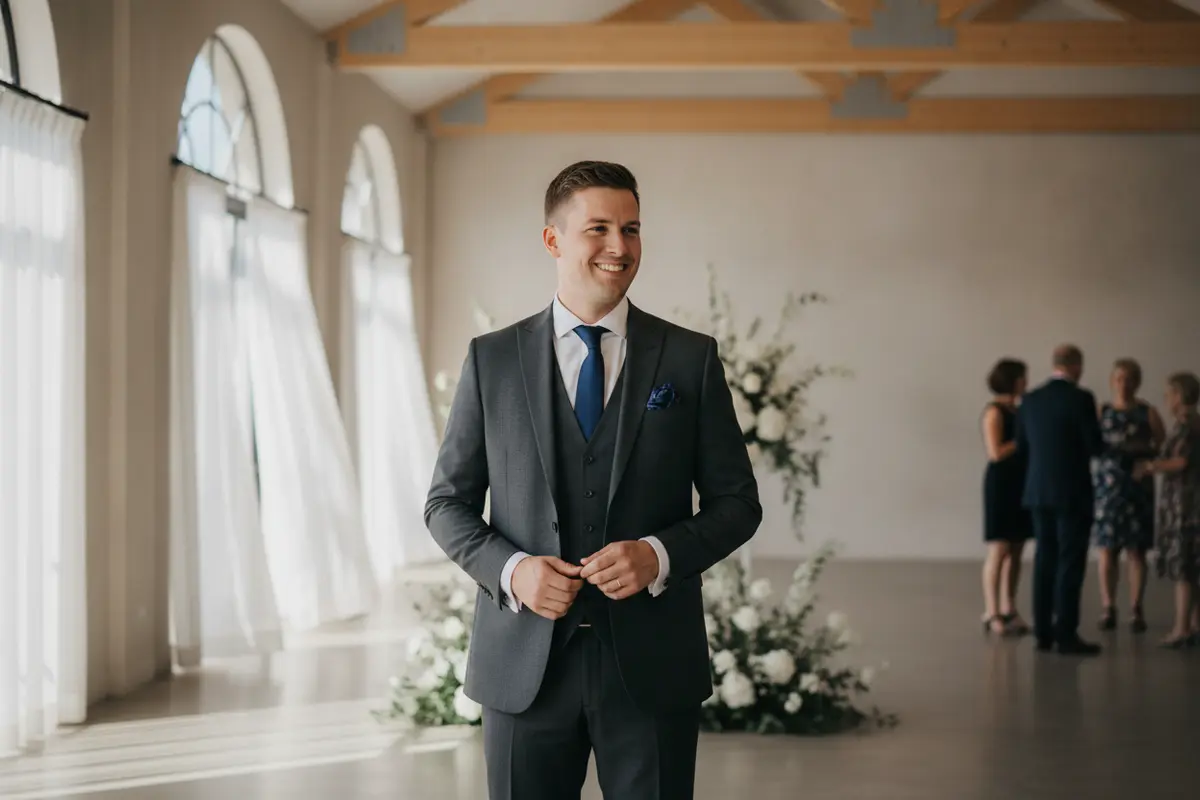
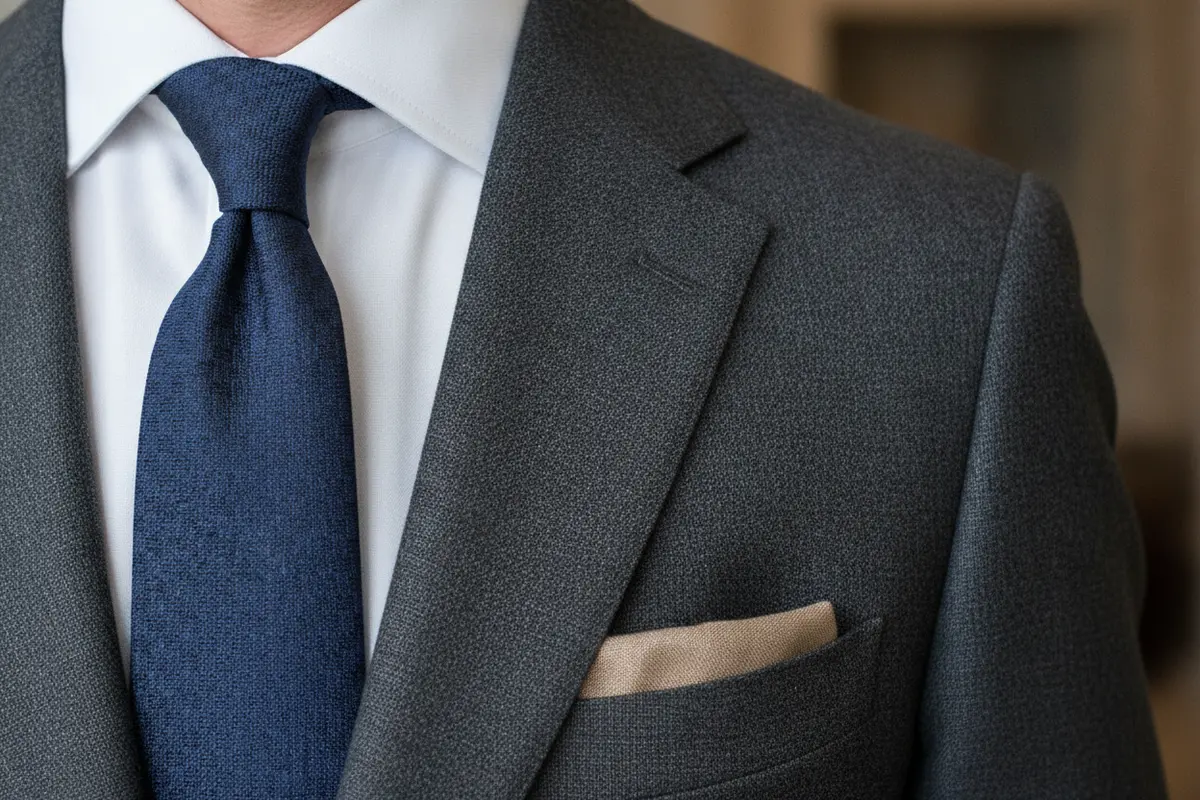
Begin with the season, venue, and wedding palette. Navy and charcoal are adaptable for many suit occasions. Black is familiar for evening formality. Lighter colors and textured fabrics may feel at home at a daytime or warm-weather celebration, depending on the dress code. Treat these as starting points, not rules. The invitation and couple’s preference remain central.
Consider how the outfit will look in natural and indoor light, and whether the fabric will feel comfortable in expected conditions. A cloth that looks one way in a showroom can read differently outdoors or under reception lighting. If possible, view swatches in more than one light source and compare them with the wedding palette. Do not choose a color only from a small screen image. Reference images can help describe a mood, but the actual fabric and its texture matter.
Weather and schedule influence comfort. Layers may help in cool weather, while a lighter cloth can feel easier at an outdoor event. Ask how the garment will be used across the day: standing outdoors, sitting through a ceremony, moving between venues, and dancing all place different demands on clothing. The goal is not to predict every condition perfectly; it is to select a fabric and combination that work for the likely setting without sacrificing the requested formality.
Coordinate with the wedding palette without treating exact color matching as a requirement. The groom’s suit, attendants’ outfits, flowers, and decor do not need to be identical shades. A related tone or texture can connect the look while preserving distinction. Our wedding tuxedo ideas offer another way to compare formal looks.
Which fit details matter most?
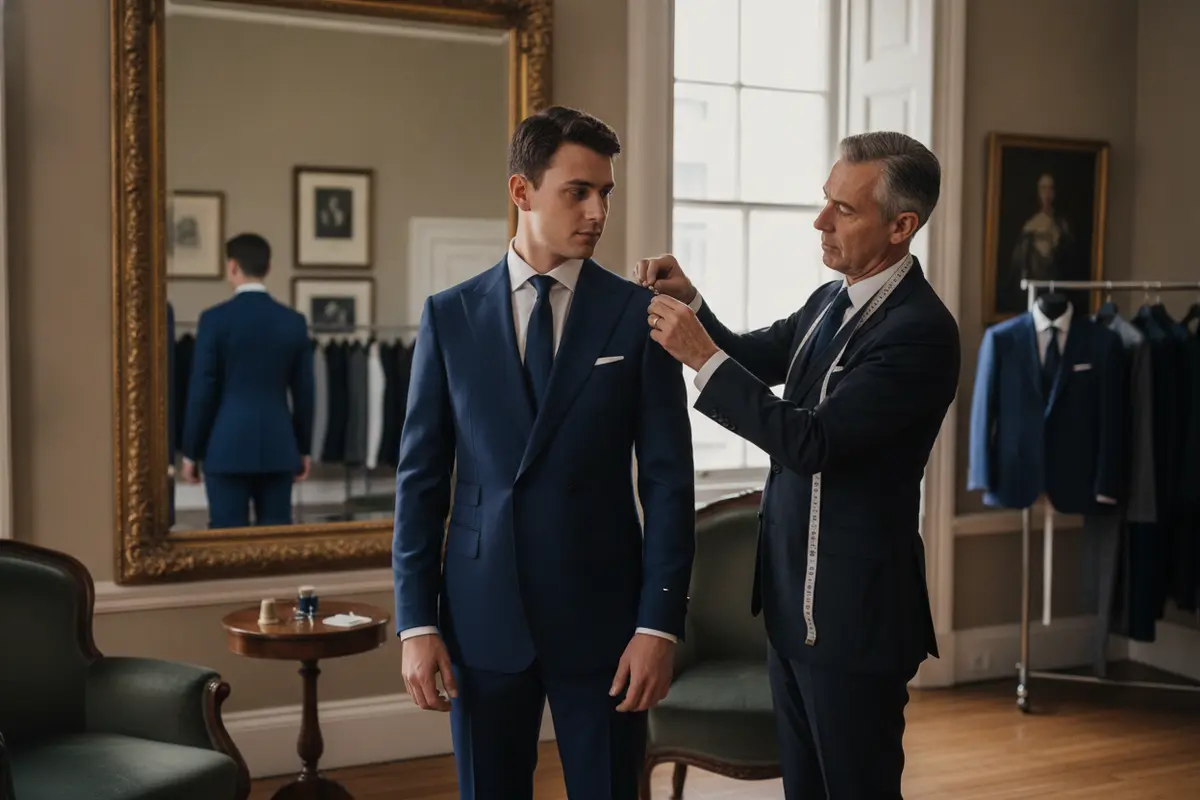
A jacket should sit cleanly across the shoulders, close comfortably when buttoned, and allow movement without pulling. The collar should rest neatly against the shirt. Sleeves should show an appropriate amount of cuff for the style. Trousers should sit securely and fall neatly over the shoes. These are useful checkpoints, not a substitute for assessing the full silhouette on your own frame.
Do not judge the outfit only while standing still. Sit, walk, raise your arms, and practice the movements you expect during the day. Reach forward as if greeting someone, then sit as you might during dinner. Check whether the jacket stays comfortable and whether the trousers allow you to move easily. A fit that looks sharp in a posed photograph but restricts ordinary movement may become tiring over a long event.
Try the garment with the shirt, shoes, and accessories you intend to wear. The shoes affect how the trouser hem falls; the shirt collar changes how the jacket frames the neck; and a vest changes the space under the jacket. If any of those pieces changes after a fitting, mention it, because the complete combination is what will be worn on the day. Bring inspiration photographs if they help explain your preference, but be open to adjustments that suit your proportions and the garment.
A fitting appointment gives you a chance to discuss the silhouette and any needed tailoring with a professional. Explore custom suit styling and tailoring or custom tuxedos for grooms and wedding parties. Custom choices and pricing depend on fabric and customization. A consultation can also help distinguish changes that affect appearance from those that matter for comfort and movement.
How can you coordinate without matching everyone?
Coordination does not require identical outfits. The groom can stand apart through a distinct jacket, accessory, vest, or subtle fabric variation while keeping the overall formality consistent. Discuss expectations with your partner and wedding party early, especially if attendants are choosing clothing separately. Decide what must be consistent and where personal choice is welcome.
Agree on key choices before anyone orders: suit or tuxedo, color family, shirt, tie or bow tie, and footwear. Give clear direction rather than a vague instruction such as “formal.” For example, a useful brief might say that the group should wear dark suits, white shirts, and a particular tie color, while allowing each person to choose a compatible shoe. Specifics reduce guesswork but still leave room for a comfortable fit.
If the party has a palette, use it as a reference rather than trying to match every shade exactly. Colors can vary with fabric, lighting, and display settings. Share a reference image of the whole look, not only a color swatch, so attendants understand the level of formality. Browse groomsmen suit ideas for coordination inspiration.
When should you plan the wedding outfit?
Begin four to five months before the wedding. That window gives you time to discuss the vision, choose clothing, schedule measurements and fittings, and address concerns without making every decision at the last moment. Starting early is especially helpful when several people need coordinated attire or when the outfit is made to order. The precise schedule depends on the garment, the selections, and the fitting needs, so discuss timing during your consultation.
- Discovery and planning: Discuss the wedding theme, venue, formality, schedule, and timeline. Bring the invitation and any color or style references.
- Styling and selection: Compare fabrics, silhouettes, and accessories as a complete look. Confirm what the groom will wear and what attendants need to coordinate.
- Measurements and fitting: Assess proportions and arrange professional adjustments if needed. Wear or bring the intended shoes and shirt when practical.
- Final fitting and delivery: Check the finished outfit with its accompanying pieces before the wedding. Confirm that it is comfortable while walking, sitting, and moving.
Use the first conversation to resolve major choices, not to make every tiny decision immediately. You might begin with a preferred level of formality and two color directions, then compare actual fabrics and garment options. Once the main outfit is settled, choose the shirt and neckwear. Shoes and other details can follow, provided there is time to see the entire ensemble together.
Bring the invitation, inspiration images, and dress-code notes to your appointment. Share the wedding date, venue, number of people involved, and any important travel or ceremony details. Our wedding attire page explains how to start a consultation, and the appointment page helps you plan a conversation. A clear timeline helps everyone understand which choices need to be made first.
How do you make the outfit feel complete?
Check the smaller elements together instead of choosing them in isolation. A shirt collar should sit neatly under the jacket and work with the neckwear. A bow tie is a natural tuxedo companion, while a suit gives flexibility with a tie, pocket square, or open collar when the dress code permits. Keep the level of formality consistent: an ornate accessory may feel out of place with a simple daytime suit, and a casual shoe can undercut a formal ensemble.
Shoes deserve an early check because their color and shape influence the full outfit. Try them with the trousers and verify that the hem works with the shoes you will actually wear. If you expect to stand for long periods, walk around in the complete combination. A belt should sit quietly with the rest of the look; suspenders may suit the garment and styling. Avoid adding accessories simply to fill space. A few considered details often look more composed than several competing ones.
A pocket square need not exactly copy the tie. A related tone or texture can create a more natural connection. A watch should fit beneath the cuff without disrupting the sleeve. If the ceremony includes cultural, family, or religious traditions, confirm whether an accessory or garment has a particular meaning. That helps the outfit feel personal without distracting from the occasion.
Lay out every item and check the combination in a full-length mirror. Look at the outfit from the front and side, then take a photograph to see how the colors and proportions read together. This is a practical way to notice an accessory that competes with the tie or a shirt that feels too casual. Make one change at a time so you can see what improves the balance.
How should the outfit adapt to venue and schedule?
The same suit can read differently in a church, garden, ballroom, or waterfront setting. Consider whether the event is indoors or outdoors, whether the ground is uneven, and how much time you will spend moving between locations. For an outdoor ceremony, think about comfort in expected weather and shoes suited to the surface. For a formal indoor evening, a sharper silhouette and polished accessories may be appropriate. These considerations do not replace the dress code.
Review the schedule with your partner or planner. If ceremony and reception settings differ, choose an outfit that works across both unless you plan a change. Confirm whether there will be a long photo session, dancing, or travel between venues. A jacket that allows movement and trousers that stay comfortable while seated matter as much as how the outfit looks in a portrait. If you plan a second look, decide which pieces carry over and when you will change.
Travel and storage are part of the plan. Keep the outfit protected and follow care guidance for the fabric. If you are traveling to the wedding, decide how and when the garment will be transported, and leave time to check it before dressing. Do not wait until the ceremony day to discover that a shirt, tie, or shoe is missing. For lapel proportions, see our guide to suit lapel styles.
What should you settle with the wedding party?
Group attire is easier to manage when decisions are specific and shared early. Decide whether the group will wear suits or tuxedos, establish a color family, and clarify which pieces are coordinated and which may vary. State whether attendants should provide their own garments or follow a shared selection process. A clear plan prevents last-minute questions about shirts, ties, shoes, and accessories.
Make the groom’s look distinct in a controlled way. A different waistcoat, more formal shirt, or small shift in texture can distinguish the groom while keeping the party cohesive. If attendants have different preferences, consistent color and formality can be more comfortable than insisting on identical cuts. Share reference images that show the formality, not only a color swatch, because fabric and lighting affect color appearance.
Assign one person to gather questions and confirm decisions with the couple. Set a date for everyone to select clothing, then allow time for sizing and professional adjustments. For larger groups, keep a written list of outfit components and fitting status. Record who has chosen clothing, who still needs to confirm a size, and what accessories remain unresolved. The wedding attire consultation can help you discuss group coordination.
What if the dress code is unclear?
Do not assume the venue or invitation style tells the whole story. Ask the couple or planner what level of formality they want, and describe the outfit you are considering. If you are a guest, respect the couple’s plans rather than drawing attention with an overly formal or casual choice. If the answer remains flexible, a polished suit with accessories that can be adjusted may be a practical direction, as long as it fits the event’s expectations.
For a groom, discuss the decision with your partner and consider ceremony and reception together. A daytime event may still be formal, and an evening celebration may be intentionally relaxed. Agree on concrete details such as jacket or no jacket, tie or open collar, dark or light palette, and whether attendants will coordinate. This gives everyone a usable brief and prevents different interpretations of vague labels.
When seeking guidance, share the date, venue, schedule, and visual references. A stylist can help translate those details into a coherent outfit while keeping the couple’s preferences central. The wedding consultation page is a useful place to start.
What should you check before the wedding day?
In the week before the event, take a calm inventory of the finished outfit. Confirm that jacket, trousers, shirt, neckwear, shoes, socks, and agreed accessories are all present. Try everything together, including any vest or outer layer. Make sure the trousers work with the actual shoes and that the shirt and jacket feel comfortable when you move. If the outfit has changed since the final fitting, raise the concern promptly rather than assuming it will not matter.
Prepare a simple dressing order so the morning feels manageable. Hang the garments where they will remain protected, and keep smaller items together. If someone else is helping you dress, tell them where each piece is and which details you have settled. This is especially useful when the schedule is tight or the wedding party is getting ready in a shared space.
Think through the conditions of the day. If there is an outdoor portion, know where you can keep an extra layer or change shoes if appropriate. If you will travel between locations, decide how to keep the outfit protected. These small preparations do not need to turn into an elaborate checklist; the purpose is simply to avoid preventable distractions so you can focus on the celebration.
Frequently Asked Questions
What should a groom wear if the invitation says black tie?
A tuxedo is the conventional choice for black tie. Confirm the couple’s preferences and select the shirt, bow tie, shoes, and accessories as a complete ensemble.
Can a groom wear a suit instead of a tuxedo?
Often, yes, but the invitation and couple’s expectations should lead the decision. If black tie is specified, choose a tuxedo unless the couple indicates otherwise. For other dress codes, a well-fitted suit may be appropriate.
How early should a groom arrange wedding attire?
Start four to five months before the wedding. Early planning leaves time for selection, measurements, fittings, and final checks.
Does the groom’s outfit have to match the wedding party?
No. It should coordinate in formality and palette, but the groom can use a thoughtful styling difference to create a distinct look.
Can custom tailoring help with wedding attire?
Custom tailoring offers a consultation-led way to discuss fit, fabric, and design. Choices and pricing depend on the garment and customization requested.
The right wedding outfit reflects the dress code, feels comfortable throughout the day, and gives you confidence in every photograph and conversation.