
Choosing marriage attire for a groom is not just a matter of picking a suit or tuxedo. The right look fits the formality of the day, feels comfortable from the ceremony through the last dance, and feels like you. Begin with the setting and dress code, then use fit, fabric, color, and finishing details to make the outfit your own.
Schedule a wedding style consultation
What should the groom’s outfit do?
Your wedding outfit has a different job from a suit you wear to the office. It should suit the event, work alongside your partner’s look, and stay comfortable through a long day. It will also appear in photographs that you may revisit for years. That does not mean you need an unusually bold outfit. It means you should make deliberate choices rather than treating each item as a separate purchase.
Start by naming three priorities. You might want a classic look, ease of movement, and a suit you can wear again. Or your priorities may be a formal silhouette, a distinctive fabric, and a strong connection to the wedding colors. Use those priorities to settle disagreements between options. If a shiny vest feels unlike you, for example, it may not be the right choice just because it is traditional in some wedding-party packages.
A strong starting point is a well-fitting jacket and trousers in a color that works with the event. Decide whether the overall look calls for a custom suit, a tuxedo, or separates such as a sport coat and tailored trousers. Each can be appropriate in the right context. The invitation, the couple’s preferences, and the time and place of the celebration should guide the choice.
How do the venue and dress code shape the choice?
Read the invitation and wedding website before you shop. Take note of any stated dress code, ceremony time, and venue. If the dress code is not clear, ask your partner or the person planning the event rather than relying on a guess. A grand evening reception and an outdoor afternoon ceremony can call for different levels of formality, even if both are weddings.
Think about the environment as well as the formality. A ballroom may suit a dark, structured suit or a tuxedo. A garden or waterfront setting may feel more natural with a lighter color or a fabric with visible texture. For an outdoor ceremony, consider whether the jacket will feel comfortable in the expected conditions and whether the shoes suit the ground. A long walk across grass in delicate dress shoes can become an avoidable distraction.
Use this table to compare directions, not as a substitute for the couple’s stated dress code. The same color or fabric can read differently depending on the cut and the rest of the outfit.
| Wedding setting or cue | Possible direction | What to check |
|---|---|---|
| Formal evening celebration | Dark suit or tuxedo, depending on the invitation | Confirm the dress code and coordinate with your partner |
| Daytime garden or outdoor event | Suit in a lighter shade or a textured cloth | Comfort in the weather, shoes for the surface, and a jacket that stays neat |
| Relaxed reception | Suit separates or a sport coat with tailored trousers | Keep the outfit intentional and aligned with the event’s requested formality |
| Wedding with a defined color palette | Neutral suit with color introduced through selected details | Agree on which colors are reserved for the wedding party |
When the dress code gives a clear instruction, treat it as the baseline. Personal style belongs in the fit, fabric, accessories, and details that remain within that boundary. If you are uncertain about a tuxedo versus a dark suit, review the distinctions in this tuxedo style guide and ask the couple which direction they intend.
If the invitation is silent, do not assume that silence means casual. Consider the time of day, venue, and the way the couple describes the celebration. A hotel ballroom, a private club, and a backyard gathering each suggest a different atmosphere, but the couple’s wishes take priority over assumptions about venues. Ask a direct, simple question: should guests wear suits, and how formal should the wedding party look? That answer gives you a useful boundary without asking your partner to approve every detail.
It can help to make a short list of the decisions that are fixed and the decisions that are flexible. Fixed elements might include the requested formality, a color the couple wants to avoid, and whether attendants will wear matching suits. Flexible elements might include your shirt collar, tie pattern, lapel shape, or shoe style. This separation keeps the process focused. It also makes it easier to spend attention on choices that will actually change the outfit.
Before settling on color, imagine the full scene rather than looking at a swatch in isolation. Consider the venue walls, flowers, lighting, and what your partner plans to wear. Neutral colors can give the outfit a calm foundation; a tie, pocket square, or shirt can then introduce a smaller accent. If a wedding palette includes several bright hues, you do not need to wear all of them. Select one connection and let the remaining colors belong to the setting and wedding party.
Photographs are another reason to think in complete looks. Highly reflective fabrics, tiny high-contrast patterns, and colors that blend into the background can behave differently on camera than they do in person. There is no universal rule that a groom must avoid a certain color or pattern. Instead, view the actual outfit in the kind of light where the ceremony or portraits will take place, and ask how the elements read together at a few steps’ distance.
Should you choose a suit, tuxedo, or separates?
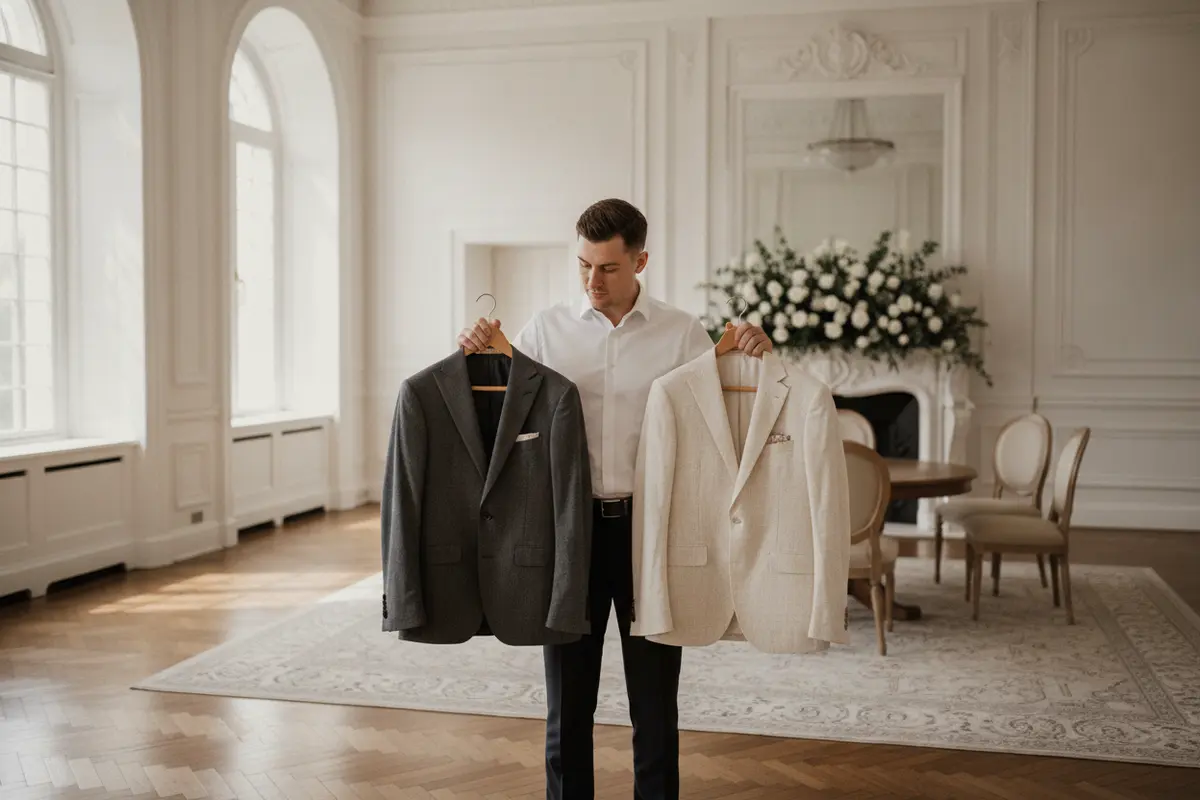
There is no single right category for every groom. A tuxedo gives a more formal impression and is a natural option when the event calls for black tie. A suit is versatile and can feel polished across a wider range of wedding settings. A jacket paired with different trousers can be a relaxed choice when the couple wants a less formal celebration. The key is to avoid dressing more casually or more formally than the event suggests without discussing it first.
Consider what you will do with the garment afterward. A dark, simply detailed suit may return to your wardrobe for work events, celebrations, or other occasions. A tuxedo may be the best choice when you value the specific formal look and expect to wear it again. Separates can extend the use of the jacket and trousers in different combinations. Choose based on likely use and what you enjoy wearing, not on an assumption that one option is automatically the better investment.
Custom does not mean every element needs to be dramatic. It can mean making the shoulders, sleeve length, trouser break, and proportions work for you, then selecting details that fit your taste. Explore custom tailoring options if you want to consider a garment made around your preferences. If you are deciding between a tuxedo and suit, compare their formality and design in this guide to dinner jackets and tuxedos.
Keep one question in view: does this outfit look like a more considered version of you, or like a costume you will spend the day adjusting? A groom should feel distinctive, but still at ease. The outfit should support the occasion rather than compete with it.
Explore wedding attire with a stylist
How should season and fabric influence the outfit?
Season matters because you will be wearing the clothes for hours, often moving between indoor and outdoor spaces. For a warm-weather ceremony, a breathable-feeling cloth and a lighter visual weight may be more comfortable. In cooler weather, a richer texture or heavier-feeling cloth can suit the mood and help the outfit feel appropriate. Ask to handle fabric swatches and consider the ceremony and reception conditions, not just the temperature at the time you place an order.
Think about the whole schedule. A groom may be outside for portraits, inside for the ceremony, and on a crowded dance floor later. Layers can be useful, but they should not become a burden. Decide whether you plan to keep your jacket on for most of the event, and make sure the shirt and trousers still look finished if you take it off. A shirt that works only under the jacket can make the later part of the day feel less polished.
Fabric texture also affects the character of the look. A smooth, dark cloth can feel formal and composed. A subtle weave or matte finish may feel more relaxed without looking casual. Color is similarly sensitive to light. A shade that looks restrained in a fitting room can look brighter outdoors or in photographs. View options in more than one kind of light when possible, and avoid selecting a fabric based only on a small digital image.
If you are considering a seasonal option, browse the ideas in the summer suit guide as a starting point. Then bring your actual venue and schedule into the conversation. There is no universal fabric rule that replaces the practical question of how the garment will feel and look on your particular day.
How can the groom coordinate with a partner and wedding party?
Coordination is not the same as matching every color exactly. Begin with your partner’s outfit and the overall palette. Ask which colors, materials, or design elements are important to them. You can echo one element, such as a color in a tie or pocket square, without copying the entire wedding-party look. A restrained connection often feels more personal than a full head-to-toe match.
Talk about visual balance. If your partner’s outfit has strong detail, a simpler suit may complement it. If both outfits are understated, a distinctive fabric or carefully chosen accessory can add interest. Share photographs of the options you are considering, but remember that camera settings and screens can change colors. Make the final choice using the garments and accessories themselves when practical.
Coordinate with the wedding party after your own direction is clear. The groom should be identifiable without looking like he belongs to a different event. You might wear the same general color family as the attendants but choose a different fabric, shirt, tie, or boutonniere. If everyone will wear the same suit, distinguish your look through fit and personal details rather than adding several competing accents.
For a wedding party with different needs, settle on a clear plan before asking everyone to purchase clothing. Decide what must match, what can vary, and when each person needs to be ready. A consistent color and formality target can allow people to choose garments that suit their bodies and budgets. For coordinated formalwear and planning help, see the wedding attire services page. For ideas that focus on the broader party, browse groomsmen suit ideas.
What does a good fit look and feel like?
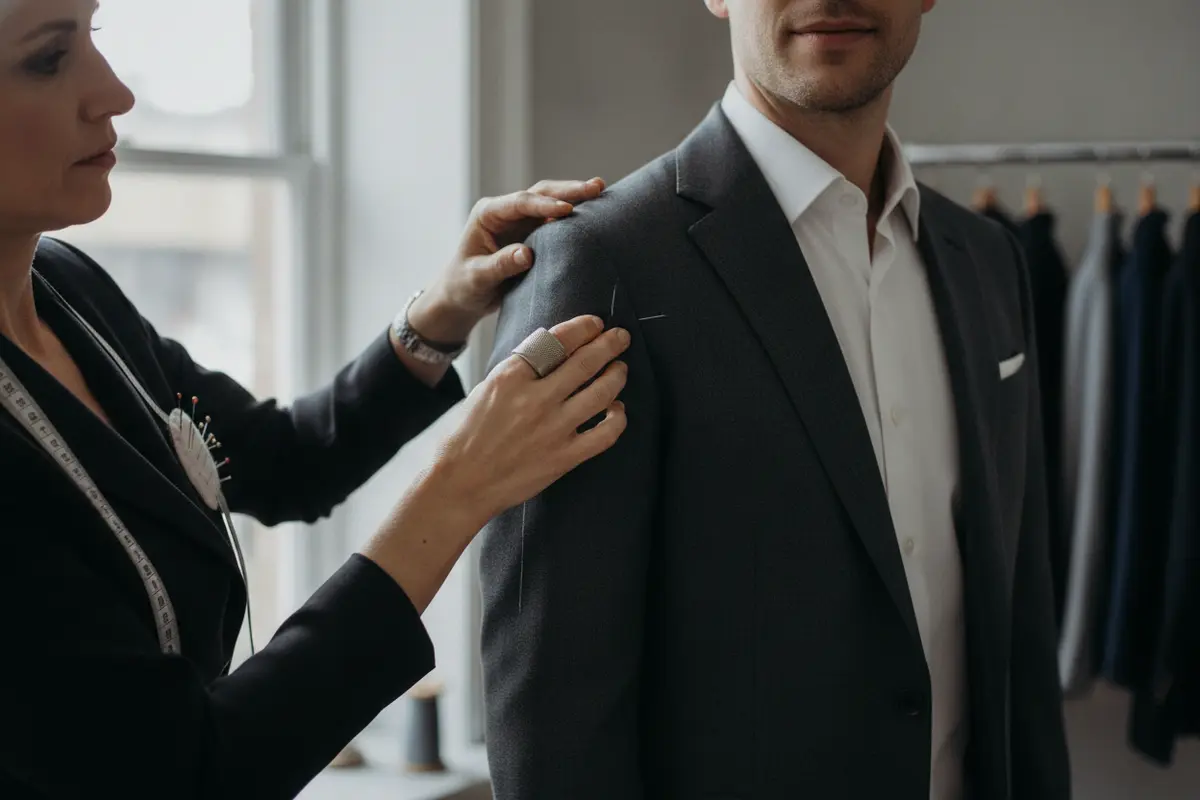
Fit is a practical issue, not just a matter of appearance. The jacket should sit comfortably across the shoulders, close without pulling when fastened, and allow you to move your arms. The sleeves should show an intentional amount of shirt cuff. Trousers should stay in place and allow comfortable sitting, walking, and dancing. Small adjustments can change how balanced the whole outfit looks.
Test the garment in motion. Sit down, reach forward, lift your arms, and take a few steps. Check whether the jacket shifts, the collar pulls away from the shirt, or the trousers bind. You will not stand still like a fitting-room mannequin on your wedding day. You will hug people, carry things, pose for photographs, and move through a full event. Comfort during those ordinary actions is part of looking composed.
Fit is also about proportion. Jacket length, lapel width, trouser rise, and shirt collar should work together and suit your build and preferences. Do not chase a trend that makes you feel self-conscious. A current silhouette can still be classic when the proportions are balanced and the garment is comfortable. For a closer look at construction choices, use this guide to bespoke suits to learn what to discuss.
A fitting is a conversation. Bring a shirt and shoes similar to what you plan to wear, explain where you feel restricted, and mention any part of the day that raises a comfort concern. Avoid waiting until the last minute to discover that the jacket feels tight when you sit or the trouser length does not work with your shoes. The goal is a confident fit that supports your movement, not an outfit you have to think about every few minutes.
Be specific about what you notice. Instead of saying only that a jacket feels wrong, explain whether it pulls across the chest, rides up when you reach, or feels tight when fastened. Tell the fitter if you usually carry a phone or wallet in a pocket, and whether you expect to wear a waistcoat. These details help make the fitting useful because the garment needs to work with the way you will actually wear it. If you have a reference photo, use it to describe the overall proportion, not as a demand for a copy that may not suit your build.
Comfort can be tested in a few minutes. Fasten the jacket, sit, stand, and reach forward as if greeting a guest. Walk at a natural pace and check that the trousers do not pull uncomfortably at the knee or waist. Raise your arms enough to imagine a hug. A little structure is normal in tailored clothing, but sharp pulling, restricted movement, or a collar that will not sit smoothly deserves attention. Bring up concerns during the fitting, when there is time to consider them.
Remember that fit and style reinforce each other. A modest lapel can look elegant when it suits the jacket’s proportions, while an oversized detail can distract from an otherwise simple outfit. The same is true of trouser length and jacket shape. Ask the fitter to explain the options in plain terms, then choose the version that makes you feel comfortable and recognizably yourself. You do not need to know tailoring vocabulary in advance to give useful feedback.
Which details make a groom’s look personal?
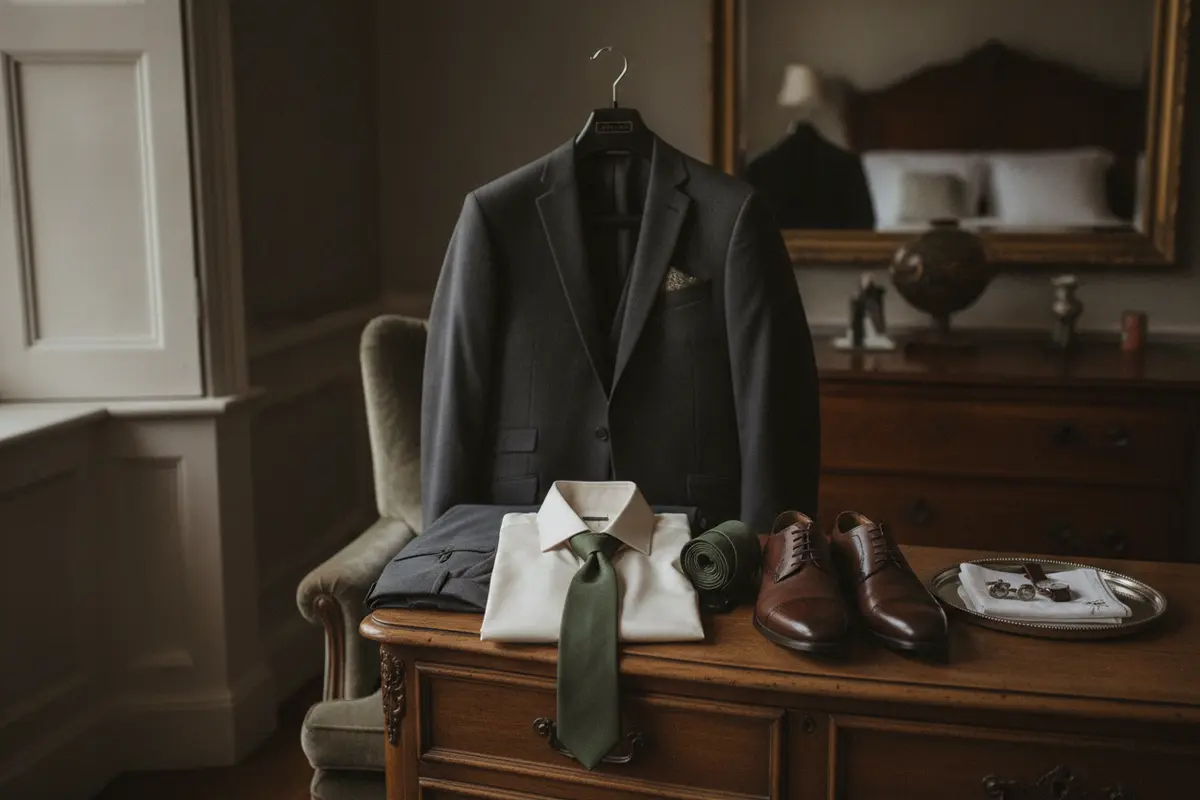
After you decide on the main garment, choose details with restraint. A shirt, tie or bow tie, pocket square, shoes, belt, and cuff links can each change the impression. You do not need to make every item a statement. Pick one or two elements to carry personality and let the rest support them.
A tie can introduce color or pattern. A pocket square can repeat a hue in a quieter way, but it does not need to match the tie exactly. Shoes should fit the formality and color of the outfit, and they should be comfortable enough for the day. A belt should work with the shoes when the trousers call for one. If the outfit includes a waistcoat or a formal jacket, ask how that affects the accessories and whether a belt is the right choice.
Personal details can also be meaningful without being conspicuous. You might wear a family keepsake, select a fabric with a texture you enjoy, or choose a shirt collar that suits your face and tie. Think about what will matter to you in photographs later. Avoid adding a novelty accessory just to make the outfit memorable; the day itself supplies the occasion.
For a formal look, explore custom tuxedo options. For the components that complete a suit, consider the selection of dress shoes and loafers. If you want a more relaxed direction, a considered sport coat or tailored jacket may suit the celebration better than formalwear.
When should you begin planning and fitting?
Start once you know the wedding date, the general level of formality, and the direction your partner prefers. Early planning gives you time to compare options and resolve questions before other wedding details become urgent. It also leaves room for fittings and alterations, especially when several people need coordinated clothing. Do not wait for every detail of the wedding to be final before beginning. You can start with the essentials and refine the choices as the plan takes shape.
For custom garments, ask about the process and expected delivery timeline when you meet. The customer information for Trevor Furbay Bespoke notes a three-to-five-week delivery timeline for custom tailoring through its Atelier Munro partnership, but your date, garment, and fitting needs should be discussed directly. Allow time beyond the stated production estimate for appointments and any needed refinements. A delivery estimate is not a reason to leave the first conversation until the last few weeks.
Here is a simple planning sequence:
- Set the direction. Confirm the dress code, venue, season, wedding-party plan, and any colors or details to coordinate.
- Choose the garment. Decide whether a suit, tuxedo, or separates fit the event and your priorities.
- Plan the fitting. Bring reference images, relevant clothing, and questions about movement, fabric, and use after the wedding.
- Check the complete outfit. Try the shirt, shoes, and accessories with the garment rather than judging each item alone.
- Leave time for finishing. Confirm that all components are ready before the wedding week, then try everything on together.
Bring your partner into decisions that affect coordination, but do not feel that every fitting must become a group project. Agree on the key constraints, then make the remaining choices in a way that feels natural to you. If wedding planning feels crowded, a style appointment can give the clothing decisions their own focused conversation.
How should you plan for the wedding day itself?
Before the wedding, try on the complete outfit at least once. Make sure the shirt is comfortable, the shoes are wearable, and the accessories work with the suit or tuxedo. Check the fit while standing and sitting. If you plan to change into a different pair of shoes or remove a jacket later, rehearse that version too. A small test now can prevent an outfit problem from becoming a distraction on the day.
Keep the clothes protected and know who will be responsible for them. Steam or press items as appropriate for the fabric, and follow garment care guidance rather than improvising with heat. Set aside any small essentials, such as cuff links or a tie bar, with the outfit. If you are traveling to the venue, transport the garments so they stay as clean and smooth as possible.
Plan for the weather without trying to control every possibility. For an outdoor event, ask whether there is a place to store a jacket or change shoes. For a long day, prioritize a comfortable shirt collar and shoes that have already been worn enough to feel familiar. A good look is one you can enjoy wearing, not simply one that looks right in a still photograph.
Finally, allow the outfit to serve the day. Once you have checked the details, stop adjusting and be present. The most memorable part of the look is not a perfectly arranged pocket square; it is how comfortably and confidently you wear it.
Talk through your wedding look with a stylist
Frequently Asked Questions
Does a groom have to wear a tuxedo?
No. A tuxedo is one option, especially when the dress code or the couple’s preference calls for a formal look. A suit or coordinated separates may be a better fit for another celebration. Follow the invitation and discuss the direction with your partner before choosing.
Should the groom match the groomsmen?
Not necessarily. The outfits can share a color family or level of formality while the groom’s look differs through fabric, fit, a vest, or selected accessories. Decide what should match and what can vary before the wedding party shops.
Can a groom wear a suit he already owns?
Possibly, if it suits the dress code and fits well. Try it with the intended shirt, shoes, and accessories, then check how it looks in the venue’s lighting and feels during movement. If the fit or formality is wrong, plan a different option rather than relying on last-minute changes.
How far ahead should a groom order custom attire?
Begin as soon as the date and general style direction are known. Ask the clothier about the garment’s expected timeline and fittings, and leave a buffer for adjustments. Custom tailoring timelines can vary by garment and circumstances, so confirm the details for your order directly.
Choose an outfit that feels like you
The strongest marriage attire for a groom balances the occasion with personal style. Start with the dress code and setting, then make decisions about garment, fabric, fit, and details in that order. Plan enough time to try the complete look, move in it, and make any needed refinements. When the clothing feels right and works with the day, you can focus on celebrating rather than managing your outfit.