
Coordinating a wedding party is less about putting everyone in identical clothing and more about creating a clear visual point of view. The venue, ceremony formality, wedding colors, fabrics, and the bride’s dress should guide the decisions. Each attendant still deserves clothing that fits his proportions and feels comfortable.
The best mens bridal party suits share a deliberate foundation, such as a complementary color, fabric family, or level of formality, without requiring every person to look exactly alike. Thoughtful adjustments to fit, accessories, and proportions create a polished group appearance that still feels personal.
Start by defining what belongs to everyone and where individual choices can add ease and character. From there, a structured consultation can bring the vision together and coordinate attendants who live in different cities. It can also keep fittings on track four to five months before the wedding.
What Should Mens Bridal Party Suits Have in Common?
The best-coordinated wedding parties share a point of view, not necessarily an identical outfit. Mens bridal party suits should feel connected through the level of formality, the overall color story, and the atmosphere the couple wants to create. Within that framework, each person can have thoughtful adjustments that respect his proportions, comfort, and personal style.
Begin with the venue. A formal ballroom, garden celebration, waterfront ceremony, and relaxed outdoor reception may call for very different interpretations of wedding attire. The setting helps establish whether the party should feel polished and traditional, quietly refined, or more relaxed and textural. From there, consider the formality of the ceremony and reception together. The groom’s look should feel intentional within that setting, while the attendants support the same visual language rather than competing with it.
The couple’s vision is the central reference point. A consultation can bring practical choices into focus by discussing the venue, formality, color scheme, and the bride’s dress. That last detail matters because the bridal party should look harmonious in photographs and in the room, without attempting to replicate the bride’s attire. It can also help to consider whether the wedding wardrobe needs to transition into a rehearsal-dinner look or another event during the celebration. Wedding suits and groomsmen attire are strongest when these decisions are made as one connected plan.
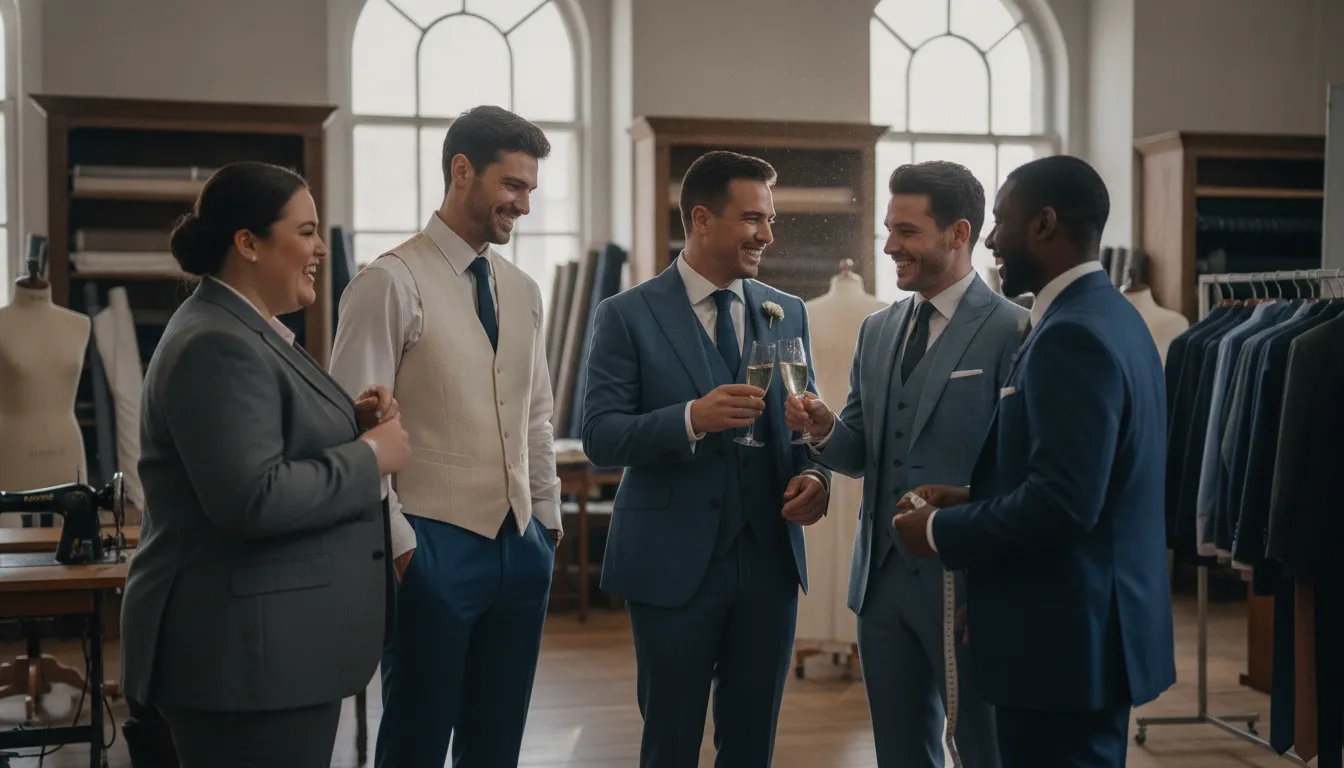
Coordination does not mean every attendant wears the same cut, detail, or accessory. A shared direction might come from a consistent level of formality, complementary colors, or a common approach to jackets and accessories. Individual adjustments can then account for shoulder angle, back shape, overall proportions, and personal comfort. This is especially valuable when the party includes men with different builds or style preferences. The result looks unified because the choices relate to one another, not because every garment is forced into the same formula.
This approach differs from a broad groomsmen guide that may focus mainly on what attendants wear. Here, the question is how the entire wedding wardrobe supports the couple’s vision, venue, and photographs while still allowing each person to look and feel like himself. A professional styling conversation creates room for that balance: a clear visual direction, considered details, and enough flexibility for the party to appear naturally well dressed.
How Do You Build a Cohesive Color and Fabric Direction?
| Decision. | What to align. | What can vary. |
|---|---|---|
| Formality. | Overall level for venue and ceremony. | Personal details that remain appropriate. |
| Color. | Shared palette or complementary tones. | Accent and accessory choices. |
| Fit. | Polished silhouette across the group. | Adjustments for proportions and comfort. |
Begin with the setting and the feeling you want the wedding party to create. A formal evening celebration may call for a more restrained direction, while a relaxed daytime event may invite a lighter, softer expression. The important point is not to apply a universal rule about what a wedding party must wear. It is to make decisions that feel consistent with the venue, the level of formality, the couple’s preferences, and the bride’s dress.
A wedding consultation can bring those elements into one conversation. Discuss the venue, formality, color scheme, and coordination with the bride’s dress before selecting individual garments. That sequence keeps color from becoming an isolated choice. A shade that looks appealing on a fabric swatch may feel different beside the dress, in the ceremony space, or under the lighting at the reception.
Use color as a shared visual direction
Coordination does not require every attendant to look identical. Instead, establish a clear visual direction, then allow appropriate adjustments for fit, proportions, and personal comfort. A consistent jacket color, complementary tones, or a repeated detail can create unity without making the group look uniform. Customization may include fabrics, jacket details, linings, buttons, and monogramming, so the final choices can reflect the overall celebration while leaving room for personal expression. Keep the strongest decisions anchored to the couple’s vision rather than adding details simply because they are available.
Choose fabric with the season and comfort in mind
Season matters, but fabric selection should be considered alongside the conditions the group will actually experience. Outdoor photographs, a warm ceremony, a cool evening, and hours of movement at the reception can all affect how comfortable an outfit feels. Textile research identifies air permeability, moisture management, thermal conductivity, water vapor permeability, and wicking as properties related to clothing comfort. Comfort itself is closely connected to how fabric transmits heat and moisture away from the body.
That does not mean one fiber or fabric is automatically right for every wedding. It means the fabric conversation should account for the season, venue, schedule, and the wearer’s comfort. A thoughtful stylist can help compare appropriate options while preserving the desired level of formality and visual cohesion. Trevor Furbay’s wedding suits and groomsmen attire experience is built around that collaborative process, bringing color, fabric, formality, and personal fit into the same plan.
How Can Every Attendant Get a Better Fit?
A wedding party rarely arrives with identical frames, posture, or preferences. That is not a problem to disguise. It is an opportunity to create a polished shared look while giving each attendant the attention needed for a comfortable, confident fit. Wedding planning often involves coordinating multiple people, different body types, fittings, deadlines, colors, and fabrics, so the process should be personal rather than reduced to a standard size chart.
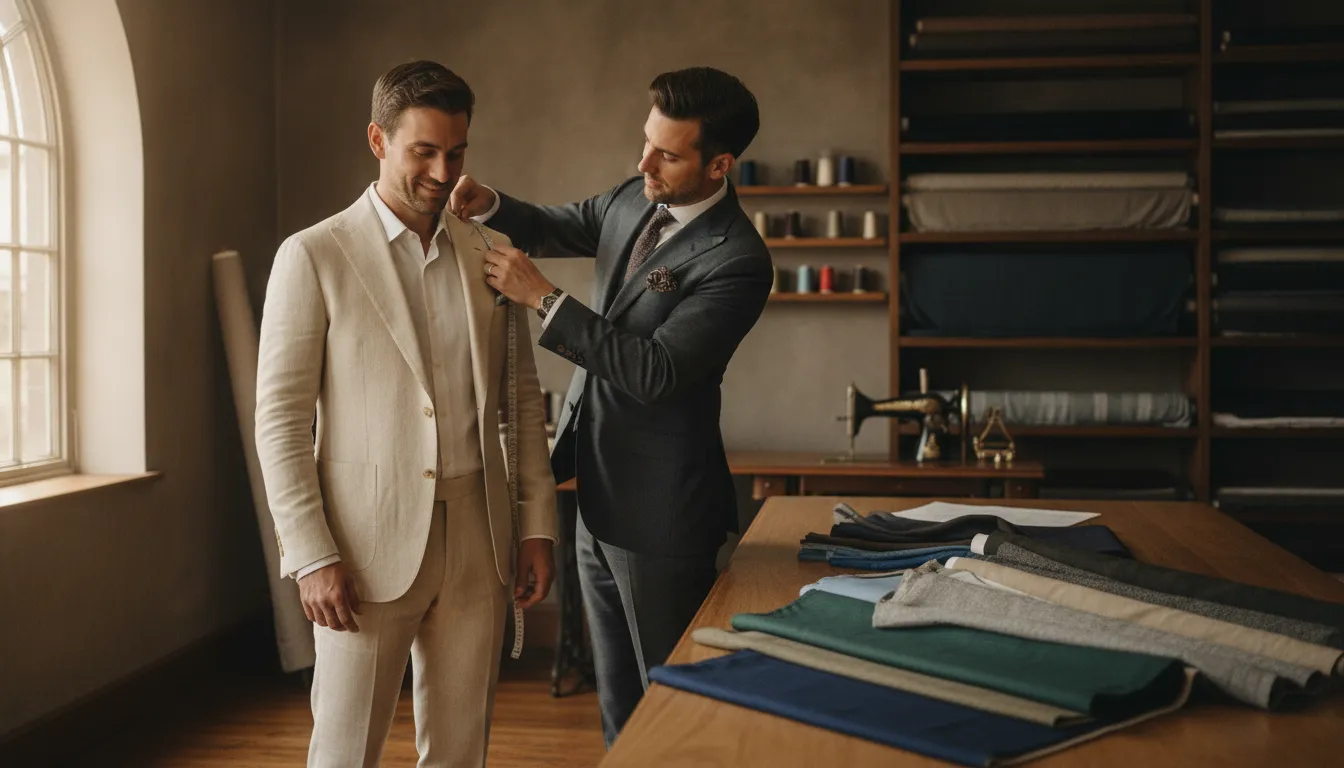
Professional fitting begins with details that a basic size label cannot capture. Shoulder angle affects how the jacket sits across the upper body. A pronounced or subtle back arch can change the way the fabric falls from the collar through the waist. Overall proportions influence jacket length, sleeve balance, trouser rise, and the relationship between each garment component. Custom fit considers these elements together instead of relying only on a standard size. Personalized custom styling gives the stylist room to assess those distinctions and guide the right choices.
Fit should support movement, not just photographs
Attendants need to stand for portraits, sit during the ceremony, greet guests, walk between venues, and celebrate comfortably afterward. A jacket that looks neat while standing still may feel restrictive when the wearer reaches, sits, or moves through a crowded reception. The fitting conversation should therefore include comfort and movement, not only appearance. Each person can explain where a garment feels tight, loose, heavy, or distracting, while the professional evaluates how those sensations relate to posture and proportion.
This attention matters visually as well as physically. An academic review notes that people are perceived with their entire outfit and body integrated into evaluation, rather than as isolated details. The research review supports a practical styling principle: the best coordinated party is one in which the clothing works with each person’s complete presentation.
Keep the direction consistent, then personalize the execution
Attendants do not need identical styling to look like part of the same celebration. The group can share a visual direction while allowing adjustments for fit, proportions, and personal comfort. One attendant may need a different jacket balance, another may benefit from a different trouser proportion, and another may prefer a detail that helps him feel at ease. Those refinements preserve cohesion without asking every body to conform to one template.
A thoughtful consultation makes these decisions calmly and collaboratively. The result is not simply a collection of matching garments. It is a wedding-party wardrobe in which each attendant can move naturally, feel represented, and stand comfortably beside the couple throughout the day.
Accessories That Unite the Party Without Making Everyone Match
Accessories are where a wedding party can feel connected without looking copied and pasted. A shared visual direction might begin with one common detail, such as a tie family, pocket-square tone, metal finish, or small monogramming element. The goal is not to make every attendant wear the exact same combination. It is to give the group a visual thread that feels intentional beside the couple and the setting.
Choose a shared detail, then let the rest breathe
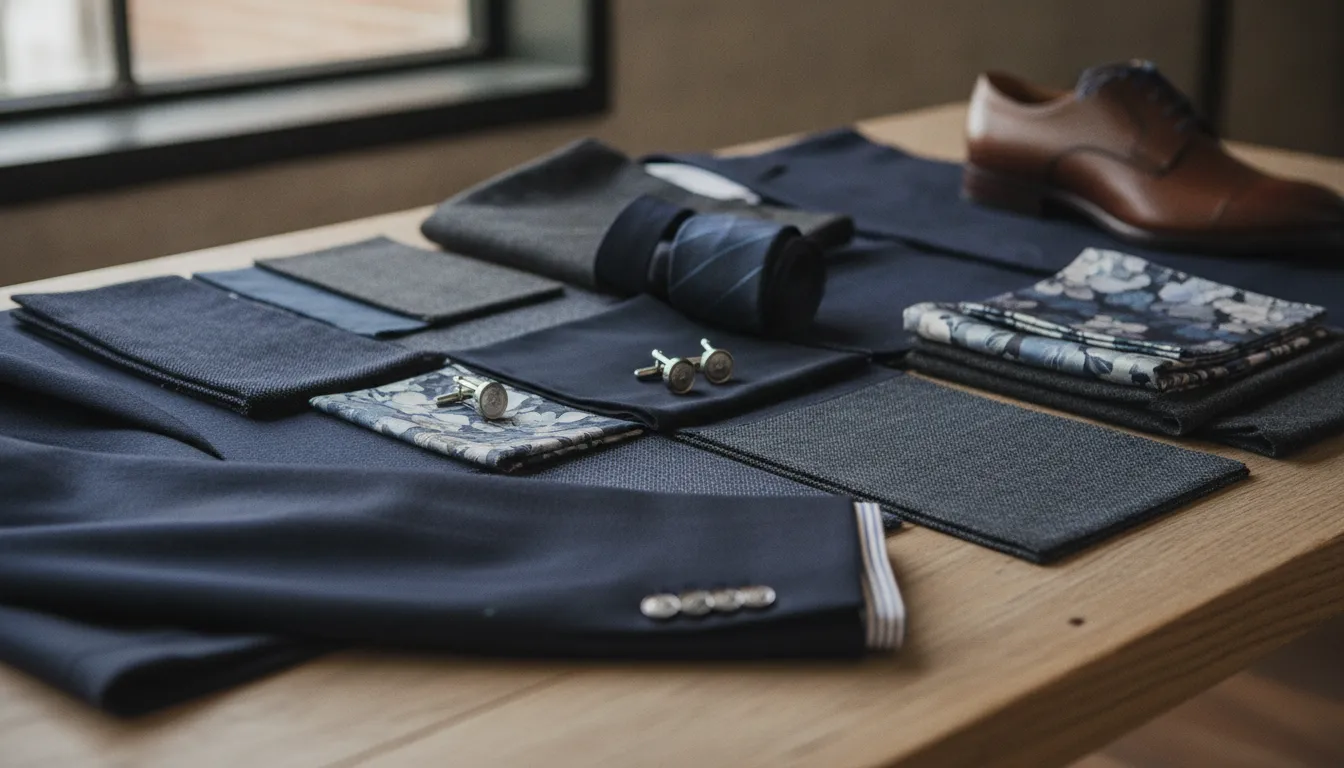
One repeated accessory can provide enough unity when the suits already share a color or level of formality. For example, the party might use the same pocket-square color while allowing each person to choose a fold that suits his jacket and proportions. Another group could share a button finish or a related lining detail, while varying ties or shirts within an agreed palette. Customization can include fabrics, jacket details, linings, buttons, and monogramming, so the shared element does not have to be conspicuous.
This approach also helps accessories support the wedding rather than compete with it. The couple’s vision, venue, and formality should guide the level of contrast. A formal evening celebration may call for restrained, consistent accessories. A less traditional setting may allow more variation in texture or color while keeping the overall direction clear. The key is deciding together which details are essential and which are open to personal choice.
Use proportion and comfort as part of the design
The same accessory can look different from one person to another. Tie width, knot size, lapel scale, collar shape, and pocket-square volume all affect the balance of an outfit. A detail that feels polished on one attendant may feel crowded or uncomfortable on another. A coordinated party does not require identical styling, and adjustments for fit, proportions, and personal comfort should be part of the plan.
That distinction matters in photographs and throughout the wedding day. When accessories are chosen with the individual wearer in mind, each attendant can move, sit, greet guests, and celebrate without constantly adjusting his clothing. The group still reads as one party because the visual direction is shared, not because every detail is mechanically identical.
During a wedding consultation, discuss which accessories should be consistent and where attendants can make personal choices. Trevor Furbay’s wedding styling service can help translate that direction into a polished group look that respects each person’s fit, proportions, and comfort.
A Stress-Free Group Fitting Plan for Different Cities and Body Types
Coordinating a wedding party becomes much easier when the plan accounts for real schedules, different locations, and individual proportions from the beginning. Attendants may not all be able to visit at the same time, and they should not be expected to fit into a single standard approach. A thoughtful process creates one shared visual direction while leaving room for personal comfort and the adjustments each person needs.
- Start four to five months before the wedding. This recommended planning window gives the couple time to discuss the venue, formality, color scheme, and coordination with the bride’s dress before decisions become urgent. It also creates room to organize attendants who live in different cities and identify the appointments or measurements each person will need. Starting early is particularly helpful when several people must align on one wedding-day look.
- Set the style direction before scheduling every fitting. Decide what should connect the group, such as the overall level of formality, color family, fabric direction, or selected jacket details. The goal is not identical styling for every person. A coordinated party can share a clear visual direction while allowing adjustments for fit, proportions, and personal comfort. This approach keeps the group polished without making individual attendants feel overlooked.
- Plan around locations and availability. A clear process helps when groomsmen or other attendants live outside the city where the wedding planning begins. Group fittings and style alignment can be organized as part of the wedding service, while appointments are available at the Cincinnati or Columbus locations. Share the wedding date, attendant list, and known travel constraints early so the fitting plan reflects the group’s actual logistics rather than an idealized schedule.
- Fit each person as an individual. Body type is not a problem to conceal. It is one of the details a skilled fitting process should address. Custom fit considers shoulder angle, back arch, and overall proportions rather than relying only on a standard size. Measurements and fitting decisions can therefore support a consistent silhouette while accounting for how each attendant stands, moves, and feels most comfortable. This is especially important when the group includes varied builds or people who need different adjustments.
- Work backward from the final fitting. The full wedding process generally takes three to six weeks from start to finish, with the final fitting occurring about four weeks after the consultation. Keep the wedding date and any travel plans visible when scheduling. The final fitting should not be treated as a last-minute checkpoint. It is the point at which the coordinated direction and each person’s fit are reviewed together, leaving the process organized rather than rushed.
For guidance on wedding suits and groomsmen attire, bring the wedding date, location details, and your group’s questions to a consultation. The right plan makes room for different cities and body types while keeping the celebration’s style cohesive.
The Four-Step Wedding Suit Process
A well-planned wedding wardrobe should feel considered from the first conversation through the final presentation. Trevor Furbay’s process gives the couple a clear path for choosing coordinated attire, refining each person’s fit, and keeping the experience relaxed. The full process generally takes three to six weeks from start to finish, so it is wise to begin planning four to five months before the wedding day.
-
Book Your Consultation: Discovery and Planning
The first step is a conversation about the wedding itself. During the consultation, the team considers the venue, desired formality, color scheme, and how the wedding wardrobe should complement the bride’s dress. You can also discuss rehearsal-dinner and wedding-day looks, along with the practical needs of a group whose members may live in different cities. This is where the overall direction for wedding suits and groomsmen attire begins. Cincinnati appointments take place at the flagship location, while Columbus/Dublin appointments are arranged by appointment.
-
Signature Style Session: Styling and Selection
Once the direction is clear, the Signature Style Session turns the plan into a wardrobe. The couple and wedding party can review fabric, jacket details, linings, buttons, and other personalized elements with guidance from an experienced clothier. The goal is a shared visual language, not identical styling for every person. Some attendants may need different proportions, details, or levels of formality to feel comfortable while still belonging to the same celebration. For a more formal wedding direction, the conversation can include custom tuxedos and dinner jackets.
-
Final Fitting: Measurements and Refinement
The fitting stage focuses on how each garment works with the individual wearer. Custom fit considers shoulder angle, back arch, and overall proportions rather than relying only on a standard size. That attention matters when a wedding party includes people with different builds and preferences. The final fitting generally occurs about four weeks after the consultation, giving the team time to refine the fit and maintain alignment across the group.
-
Bespoke Suit Presentation: Final Delivery
The process concludes with the Bespoke Suit Presentation, when the finished wedding wardrobe is presented and reviewed. It is the final opportunity to confirm that the garments, styling, and details support the couple’s vision before the celebration. Consultations take place in a hospitality-centered environment with a full in-house bar and kitchen refreshments, making the experience feel more like a thoughtful occasion than a rushed transaction. Couples can begin with a Cincinnati wedding appointment or explore a Columbus wedding appointment according to their needs.
Frequently Asked Questions
When should we start planning the bridal-party suits?
Begin about four to five months before the wedding. That gives your group time to align the vision, select fabrics and accessories, schedule fittings, and accommodate attendants who live in different cities. Trevor Furbay’s wedding process generally takes three to six weeks from start to finish, with a final fitting often occurring about four weeks after the consultation. See the wedding planning timeline.
Can the bride join the groom for the suit consultation?
Absolutely. The consultation can include the venue, formality, color scheme, and coordination with the bride’s dress. Bringing the couple together helps the wedding-party styling support one shared vision, while still leaving room for each person’s comfort and proportions.
Do all members of the bridal party need to wear identical suits?
No. A coordinated party can share a visual direction without identical styling. Matching the overall level of formality, color family, fabric character, or selected accessories can create cohesion, while thoughtful adjustments preserve individuality and comfort.
How can a group achieve a polished fit across different body types?
Use professional group fittings rather than relying on a standard size alone. Custom fit considers details such as shoulder angle, back arch, and overall proportions, helping each attendant look balanced in the same coordinated direction. The team can also manage fittings for groomsmen who are attending from different cities.
Book Your Style Consultation
Bring your wedding vision, preferred colors, and bridal-party questions to a thoughtful conversation about coordinated attire. Trevor Furbay can help your group move from inspiration to polished choices, with each person feeling comfortable and well represented. Book Your Style Consultation to begin planning your wedding suits and groomsmen attire.