
Buying one suit for several important settings takes more thought than choosing a color from a rack. The right mens suit should look composed at work, adapt to a wedding, and remain polished for a business-formal evening without feeling like a compromise. Start with the occasions, then judge the fabric, construction, fit, and finishing details as one connected decision.
For a versatile first suit, prioritize a restrained navy or charcoal wool, a clean shoulder line, comfortable movement, and details that can shift with the shirt, tie, and shoes. Ready-to-wear can be practical when the base proportions are close. Custom tailoring adds more control over measurements, fabric, and details when standard sizing does not deliver the right balance.
How to Choose a Mens Suit for Work and Weddings
Before considering lapels or fabric names, list the situations in which you expect to wear the suit. A client meeting, daily office, daytime wedding, evening reception, and business-formal dinner may all call for a polished suit, but they do not require identical styling. The most useful first suit is the one that can change character through its supporting pieces.
For work, the suit should feel dependable rather than attention-seeking. For a wedding, it can take on more personality through a textured tie, a lighter shirt, or a pocket square that reflects the setting. For a formal evening that is not black tie, a dark suit with a crisp shirt and polished shoes can look appropriately refined. A tuxedo or dinner jacket remains the correct choice when the invitation specifically says black tie. One versatile suit should not be asked to replace formalwear it was never designed to be.
Write down the dress code, season, venue, and likely frequency of wear for each occasion. This simple sequence prevents an attractive but overly casual cloth from becoming the wrong choice for the office. It also prevents an overly formal suit from feeling out of place at a daytime celebration. Bring this short list to a consultation so the recommendations respond to your calendar rather than a generic style rule.
Define the job before choosing the details
A first suit should solve a specific wardrobe problem. You may need a reliable option for presentations, a refined look for a wedding, or one garment that can travel between professional and social settings. Those goals lead to different choices than shopping for a statement suit that will be worn only a few times.
Think about how the suit will be seen at different distances. A solid or quietly textured cloth can look confident in a meeting and still provide enough interest for a celebration. A bold pattern may photograph beautifully but limit the shirts, ties, and shoes that work with it. The most useful purchase gives you several strong combinations without requiring a new wardrobe around it.
Choose a Flexible Color, Fabric, and Construction
A solid navy suit is often the most adaptable starting point because it works with white, pale blue, and patterned shirts and can move between professional and social settings. Charcoal provides a more restrained alternative, particularly when your calendar includes conservative business environments or evening events. The best color is the one that coordinates with the shoes and shirts you already own.
For a suit that needs to work across seasons and settings, begin by comparing wool fabrics by hand, weight, texture, and finish rather than relying only on a label. A smooth worsted cloth can read more formal and office-ready. A subtle texture can make the same color feel more relaxed at a wedding. A bold check or highly distinctive weave may be beautiful, but it can limit how often the suit feels fresh.
Construction affects the way a jacket holds its shape and moves. Fused construction can be a straightforward ready-to-wear option. Half-canvas construction supports the upper chest and lapel while balancing structure and comfort. Full-canvas construction provides more traditional shaping through the jacket front. None of these choices is automatically right for every wearer. Match the construction to the formality, expected wear, comfort preference, and fit conversation.
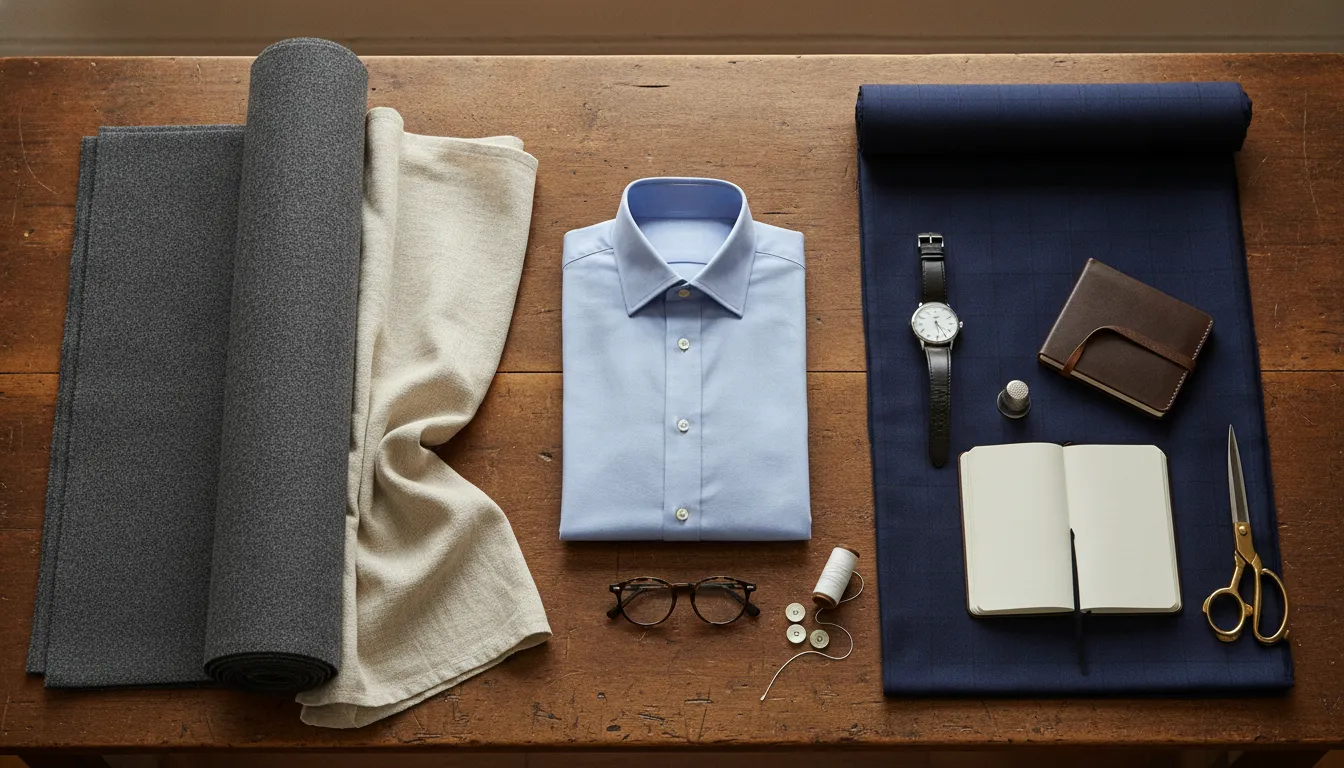
When you compare swatches, imagine the complete outfit rather than the cloth by itself. Ask whether the fabric works with your most useful shoes, whether the texture suits the ceremony or office, and whether the color supports the shirts you will actually wear. A versatile mens suit earns its place through repeated combinations, not through a dramatic first impression alone.
Use the fabric to balance formality and repeat wear
Fabric selection is a practical balance. A very lightweight cloth may feel comfortable in warm weather, but it may not provide the structure you want for frequent wear. A heavier cloth can feel substantial and formal, though it may be less comfortable at a summer ceremony. A subtle weave can soften a conservative color without turning the suit into an occasion-specific purchase.
Look at the cloth in the lighting where you expect to wear it. Store lighting can make a navy appear flatter or brighter than it will look outdoors. Ask how the fabric handles the season, how it coordinates with your existing shirts, and how its texture changes the impression of the same jacket. These questions help separate a useful first suit from a visually appealing garment that is difficult to repeat.
Judge Fit by Proportion and Movement
Fit is the decision that determines whether a suit can serve several occasions. Begin at the shoulders. The seam should follow the natural shoulder line without extending past it or pulling inward. The jacket should fall cleanly through the chest and back, and the closure should sit without a pronounced X-shaped pull or collapsing excess fabric.
Check the collar while standing naturally. It should rest close to the shirt collar at the back of the neck without a visible gap or bunching. If the collar pulls away, the cause may involve jacket balance, posture, or the relationship between the shoulders and back. A professional fitting can identify the cause instead of treating every wrinkle as a simple size problem.
Try the jacket while standing, sitting, walking, reaching forward, and letting your arms rest at your sides. The sleeves should end near the wrist, with a considered amount of shirt cuff visible. Trousers should sit securely at the waist and fall cleanly through the seat and thigh. At the hem, choose a break that works with the trouser width, shoe, height, and intended formality.
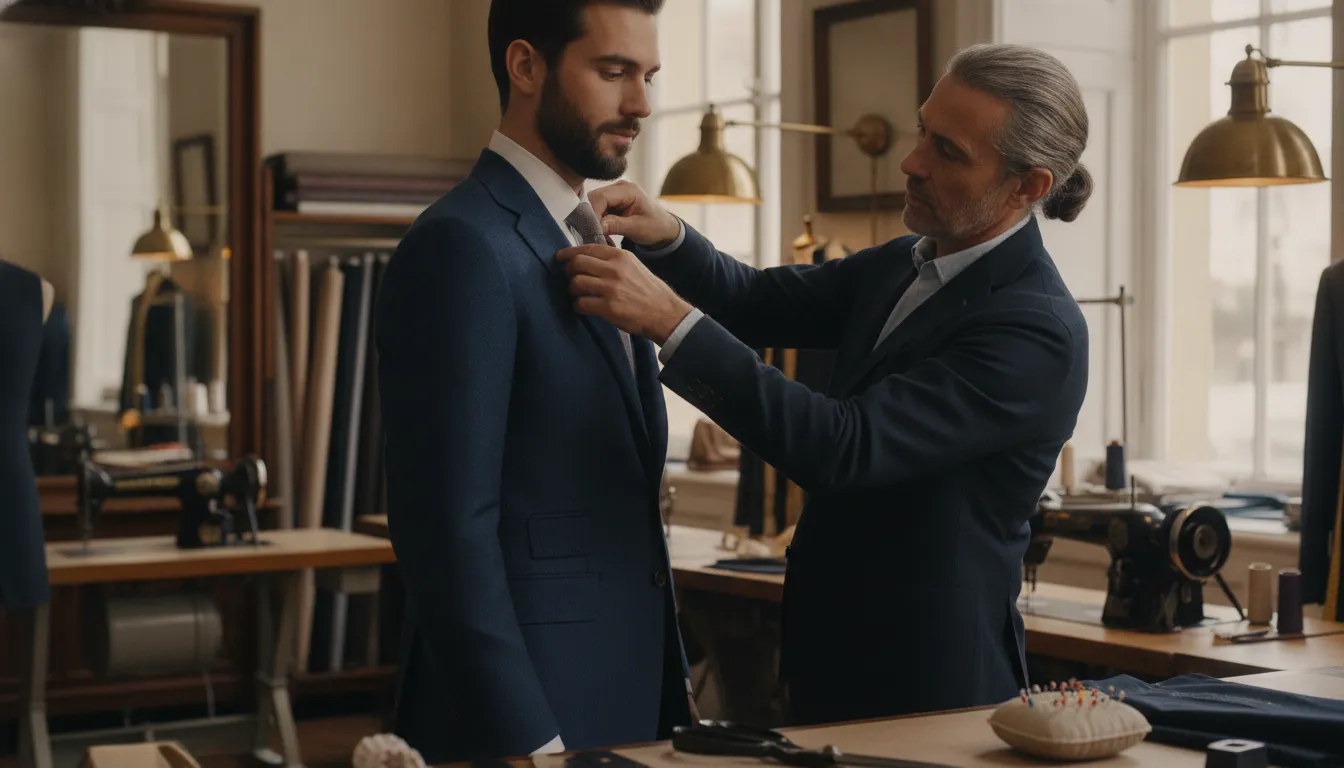
Movement matters because a suit used for work and events must remain comfortable beyond a mirror check. Trevor Furbay’s custom process considers shoulder angle, back arch, and overall proportions in addition to basic measurements. It then moves through selecting a look, finding the fit, refining details, and completing a final fitting. Explore custom suit styling when standard proportions repeatedly force you to choose between a jacket that fits your shoulders and one that fits your body.
Fit the jacket first, then refine the rest
The shoulders and collar deserve priority because they are difficult to change cleanly after purchase. A tailor can often adjust sleeves, trouser hems, waist suppression, and other details. A jacket with shoulders that are too broad or too narrow may never achieve the balanced line you want, even after several alterations.
Look at the jacket from the front, side, and back. The lapels should lie flat. The vents should hang cleanly. The seat of the trousers should not pull when you walk or sit. A mirror check is useful, but movement reveals whether the suit can support a full day of work followed by an event. Comfort is not separate from appearance. It helps the garment keep its shape and helps you carry it with ease.
Use Shirts and Accessories to Change the Setting
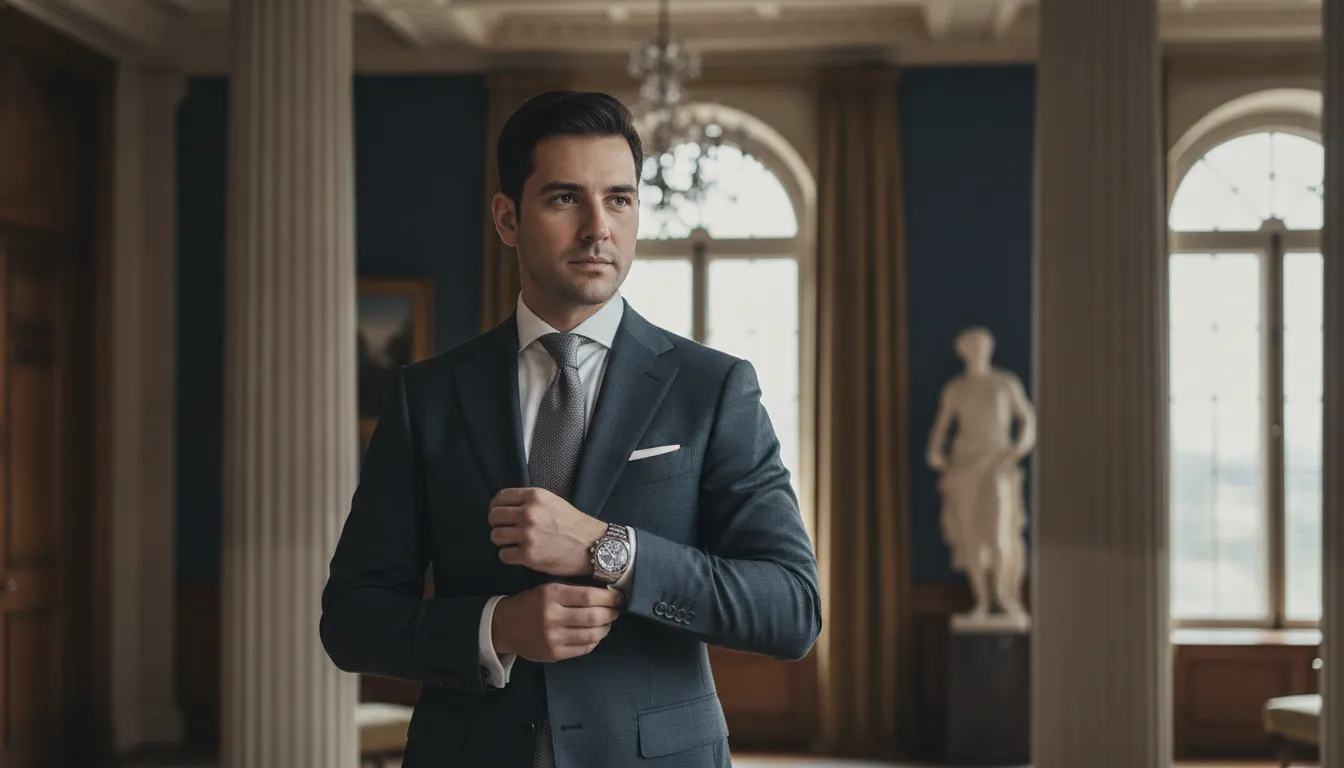
Once the suit itself is versatile, the supporting pieces determine how it reads. For work, pair navy or charcoal with a white or pale blue shirt, a restrained tie, and polished leather shoes. For a daytime wedding, retain the same suit but introduce a softer shirt, a more expressive tie, or a pocket square that relates to the wedding palette without matching it literally.
For an evening reception or business-formal dinner, a crisp shirt, darker tie, and polished shoes can make the suit feel more formal. Keep the combination deliberate. One controlled accent is usually more useful than several competing patterns. The shirt collar should sit neatly beneath the lapels, and the cuffs should extend modestly beyond the jacket sleeve.
Shoes and belt should relate in color and level of polish. The tie can add depth or controlled contrast, while the pocket square can echo a color or texture. If the event has a black-tie dress code, change the garment rather than trying to make a business suit perform as a tuxedo. Trevor Furbay’s wedding wardrobe consultations can help coordinate the suit, accessories, and setting.
This approach keeps the article focused on one purchase. The suit remains the stable foundation, while shirts, shoes, and accessories do the work of adjusting the level of formality. You do not need a separate style encyclopedia to make the decision. You need a clear understanding of the settings the garment must serve.
Build two or three reliable combinations
Before buying, picture at least three complete outfits. One can be a conservative work combination, one can suit a daytime wedding, and one can handle an evening dinner. If the jacket works with only one shirt or one pair of shoes, it is less versatile than it first appeared.
Accessories should support the suit rather than compete with it. A patterned tie can bring energy to a solid cloth. A textured pocket square can add depth without matching the tie exactly. Shoes influence the formality, so think about whether brown or black footwear gives you more useful options. The goal is not to collect every accessory. The goal is to make the same suit feel considered in each setting.
Choose Custom or Ready-to-Wear for This Purchase
Ready-to-wear is a sensible route when a jacket’s shoulders, chest, and length are close to your proportions and professional tailoring can refine the remaining details. It can also be the better answer when you need the suit quickly or prefer a defined collection. Review the available ready-to-wear options when convenience and a straightforward purchase matter most.
Custom tailoring is worth considering when standard sizes consistently create a tradeoff between the shoulders, chest, sleeve, and body. It also makes sense when you want the fabric, lining, buttons, or proportions to reflect several occasions rather than accepting a fixed combination. Trevor Furbay describes custom pricing through a consultation because the cost depends on the fabric and customization. There is no responsible fixed price to quote before those choices are discussed.
| Purchase path | Choose it when | What to examine |
|---|---|---|
| Ready-to-wear | The shoulders and chest are close, timing is important, and you want a defined collection. | Shoulder line, collar, jacket length, trouser balance, and the alterations available. |
| Custom tailoring | Standard sizes create repeated fit tradeoffs or individual fabric and detail choices matter. | Measurement process, fabric selection, customization options, fitting schedule, and final delivery. |
The custom process is also a timing decision. Custom-made items are generally delivered in three to five weeks, followed by a final fitting, so begin ahead of a wedding or major event. Use the custom tailoring service page to start that conversation. The choice should be based on a real fit or personalization need, not simply on the idea that one category is always superior.
When a consultation adds value
A consultation is useful when you know the settings but are unsure how to translate them into cloth, fit, and details. It can also help when your measurements vary across jackets, when posture affects the way clothing hangs, or when you want one purchase to work for a wedding and a professional calendar.
Bring the dress code, venue, season, and shoes you expect to wear. A clear brief makes it easier to compare ready-to-wear and custom options honestly. The right recommendation may be a ready-to-wear garment with professional adjustments. It may also be a custom order when individualized measurements create a more reliable result.
Follow a One-Suit Buying Sequence
- List the settings. Write down the work, wedding, and formal occasions the suit must cover, including season, venue, and dress code.
- Set the flexibility brief. Choose a restrained navy or charcoal direction and identify the shirts and shoes already in your wardrobe.
- Compare cloth and construction. Assess weight, texture, finish, and structure in relation to comfort and the way you expect to wear the suit.
- Test the garment in motion. Check the shoulders, collar, closure, sleeves, trousers, and trouser break while standing, sitting, walking, and reaching.
- Decide the purchase path. Choose ready-to-wear when the base proportions are close and time matters. Choose custom when individualized measurements or details solve a clear need.
- Plan the supporting pieces. Select the shirt, shoes, tie, and pocket square that will move the same suit from professional to social without fighting its color or texture.
This sequence keeps the purchase practical. It also gives you useful questions to bring to a consultation instead of asking a tailor to solve an undefined style problem. A strong mens suit is not the one with the most features. It is the one whose fit, cloth, construction, and supporting pieces remain useful across the occasions you named at the beginning.
Frequently Asked Questions
What color is most versatile for a first suit?
A solid navy or charcoal suit is usually the most flexible starting point. Navy can move easily between work, weddings, and business-formal evenings. Charcoal is especially useful when your settings are conservative or evening-focused. The best choice also depends on the shoes and shirts you already own.
Can one suit work for a wedding and the office?
Yes, when the color, fabric, and fit are restrained enough for professional settings. Change the shirt, tie, shoes, and pocket square to respond to the venue, season, and dress code. A black-tie invitation requires a tuxedo or dinner jacket rather than asking a business suit to serve a different role.
How should a suit fit when I move?
The shoulders should follow your natural line, the collar should remain close to the shirt collar, and the jacket should close without strain. Walk, sit, reach, and let your arms rest naturally. The jacket should not bind, and the trousers should remain balanced through the seat, thigh, and hem.
When should I choose custom tailoring?
Consider custom tailoring when standard sizing repeatedly creates a tradeoff between your shoulders, chest, sleeves, or body, or when fabric and detail choices are central to the purchase. A consultation can determine whether custom measurements solve a real need. Pricing depends on the fabric and customization, so it should be discussed during that consultation.
How far ahead should I order a custom suit for a wedding?
Begin four to five months before the wedding so the style, fabric, measurements, fittings, and final delivery have room in the schedule. Trevor Furbay’s wedding process begins with discovery and planning, then moves through styling, measurements and fitting, and final fitting and delivery.