
When the forecast turns warm, mens summer suits should feel as considered as they look. The right choice balances breathable cloth, a comfortable fit, and the formality of the occasion, whether you are headed to an outdoor wedding, a business meeting, or a summer evening event. This guide will help you compare fabrics, colors, fit details, and finishing touches before you make a decision.
What should you expect from a summer suit?
A summer suit is not simply a darker suit in a lighter color. Warm weather changes how a jacket feels through the day, how it layers over a shirt, and how its color reads in direct sunlight. Consider the full setting: temperature, humidity, time of day, indoor air conditioning, and the expected dress code.
For an event that moves between outdoors and indoors, a versatile cloth and a jacket that sits comfortably over a shirt can be more useful than choosing the lightest possible fabric. For a wedding, coordinate with the formality and palette without trying to duplicate the wedding party. For work, select a shade that fits your usual wardrobe and can be worn with shirts and shoes you already own.
It also helps to decide whether you want one complete suit or pieces that can work separately. A matching jacket and trouser combination gives you a polished foundation for formal occasions. A jacket with a different pair of tailored trousers can create more flexibility for dinners, travel, and business-casual settings. Start with the occasions you actually have on your calendar instead of buying for an abstract idea of summer.
Which fabrics work well in warm weather?
Fabric affects breathability, drape, texture, and how formal a suit appears. Lightweight wool can offer a clean, tailored look that works across business and social settings. Linen has a relaxed texture and an easy association with summer, though it naturally develops creases. Wool-linen blends can combine some of the crispness of wool with a more open, seasonal character. The best choice depends on your preference for structure and texture, not on a universal ranking.
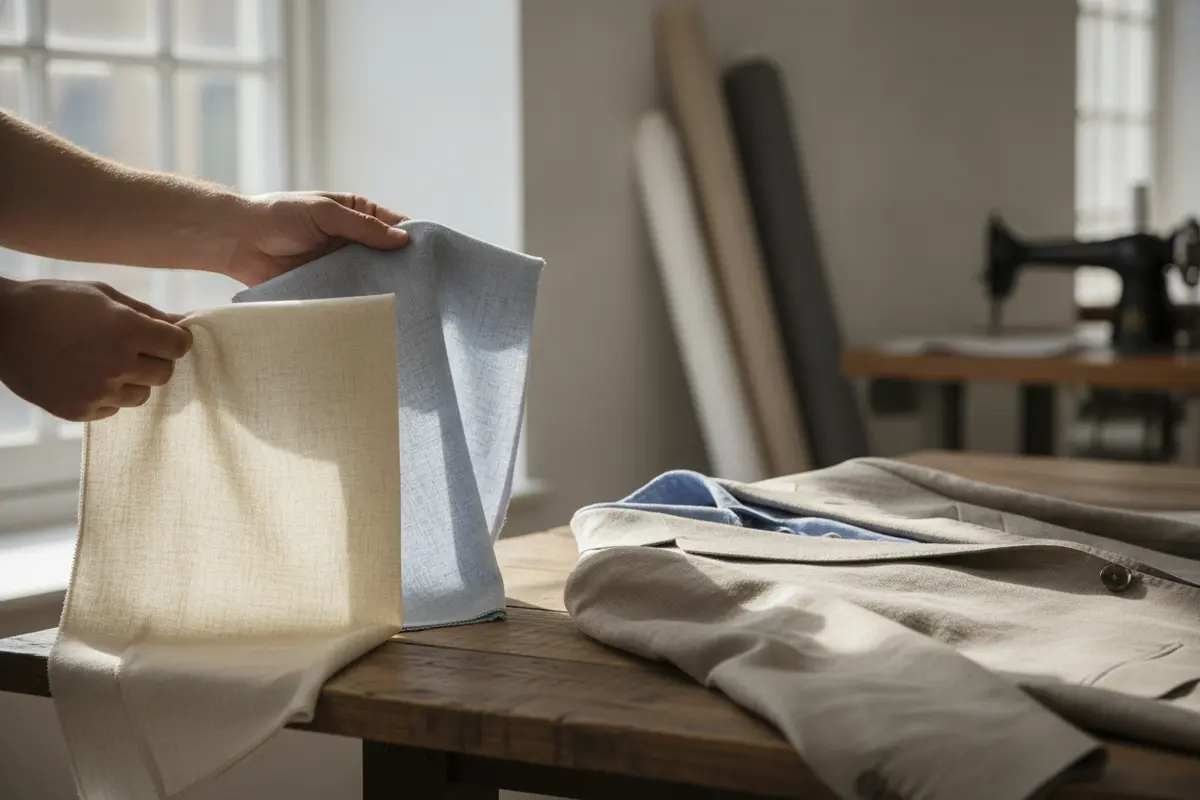
Ask to handle the cloth and see it in different light. A fabric that looks subtle indoors may appear brighter outside. Think about where you will wear the suit, how often, and whether you prefer a smooth finish or visible texture. Lightweight fabric alone does not guarantee comfort; fit, shirt choice, and the conditions of the day also matter.
Texture can also help define the mood. A smooth lightweight wool may read as more refined and business-ready, while linen or a textured blend may feel more relaxed for a daytime celebration. If you travel often, think about how comfortable you are with natural creasing and how much time you will have to hang and care for the garment. The right cloth is the one that supports the way you will use the suit.
Before choosing, compare fabrics in practical terms. Ask yourself how often the suit will be worn, whether it needs to move between professional and social settings, and how much texture you enjoy. If you are buying a first warm-weather suit, a moderate texture and versatile shade may be easier to coordinate than a highly distinctive cloth. If you already own a reliable navy suit, a lighter or more textured option may bring a different role to your wardrobe.
There is no need to choose by fiber name alone. Two fabrics with similar fiber content can feel and look different because of their weave, weight, finish, and construction. When possible, compare the actual swatches next to a shirt you expect to wear. Look at the cloth under indoor lighting and near a window, then consider how it will photograph in daylight. That small comparison can prevent a color or texture surprise on the event day.
| Fabric choice | Look and feel | Consider it for | Keep in mind |
|---|---|---|---|
| Lightweight wool | Clean drape and refined appearance | Work, weddings, and frequent wear | Choose weight and weave for your climate and use |
| Linen | Relaxed texture and easy summer character | Daytime events and less formal settings | Creasing is part of its natural look |
| Wool-linen blend | A mix of structure and texture | Events that call for a tailored but seasonal outfit | Feel the specific cloth; blends vary |
| Textured lightweight weave | Subtle visual interest with a seasonal feel | Separates, travel, and smart-casual occasions | Check how it works with the rest of your wardrobe |
How do you choose a summer suit color?
Navy remains a dependable option because it works in professional settings and can be styled for evening occasions. Mid-blue and lighter blue shades feel seasonal while still looking composed. Tan, stone, and other light neutrals suit daytime events and outdoor celebrations, especially when the dress code is not highly formal. A gray suit can also work in summer; the shade and cloth determine whether it feels light or more businesslike.
Use the event as your guide. A daytime garden wedding may welcome lighter colors and texture, while an evening reception or conservative business setting may call for navy or a deeper gray. Check the invitation and ask the couple or host if the dress code is unclear. Accessories can add contrast without making the outfit feel busy: a textured tie, a pocket square, or a shirt in a soft, complementary tone.
Consider your existing wardrobe before choosing a distinctive shade. Navy can pair with white, blue, pink, and patterned shirts, while a stone or tan suit may be most useful with shirts and shoes in your current rotation. If you want a summer suit to serve more than one purpose, bring photographs or examples of the pieces you already wear. A stylist can help you identify a color that earns regular use rather than sitting in the closet after one event.
Color also changes with setting. A pale suit can appear especially bright in direct sun, while a blue-gray may read more formal indoors. If the suit is for a wedding, consider the flowers, venue, and photographs, but do not let those details eclipse your own comfort. The aim is a harmonious outfit that feels appropriate in person, not a look built only for a picture.
For a useful test, plan at least two outfits around the color before you commit. Pair the jacket and trousers with a white or pale blue shirt, then try another shirt or tie combination you already own. If the suit works only with one exact accessory, it may be less versatile than you want. When shopping for a second suit, choose a color that offers a clear alternative to what is already hanging in your closet.
What fit details matter most when it is warm?
A summer suit should allow comfortable movement without looking oversized. The shoulder line should sit naturally, the jacket should close without pulling, and the sleeves should let the shirt cuff show in a balanced way. Trousers should sit securely and allow you to walk and sit comfortably. These details are easiest to judge while wearing the shirt and shoes you expect to pair with the suit.
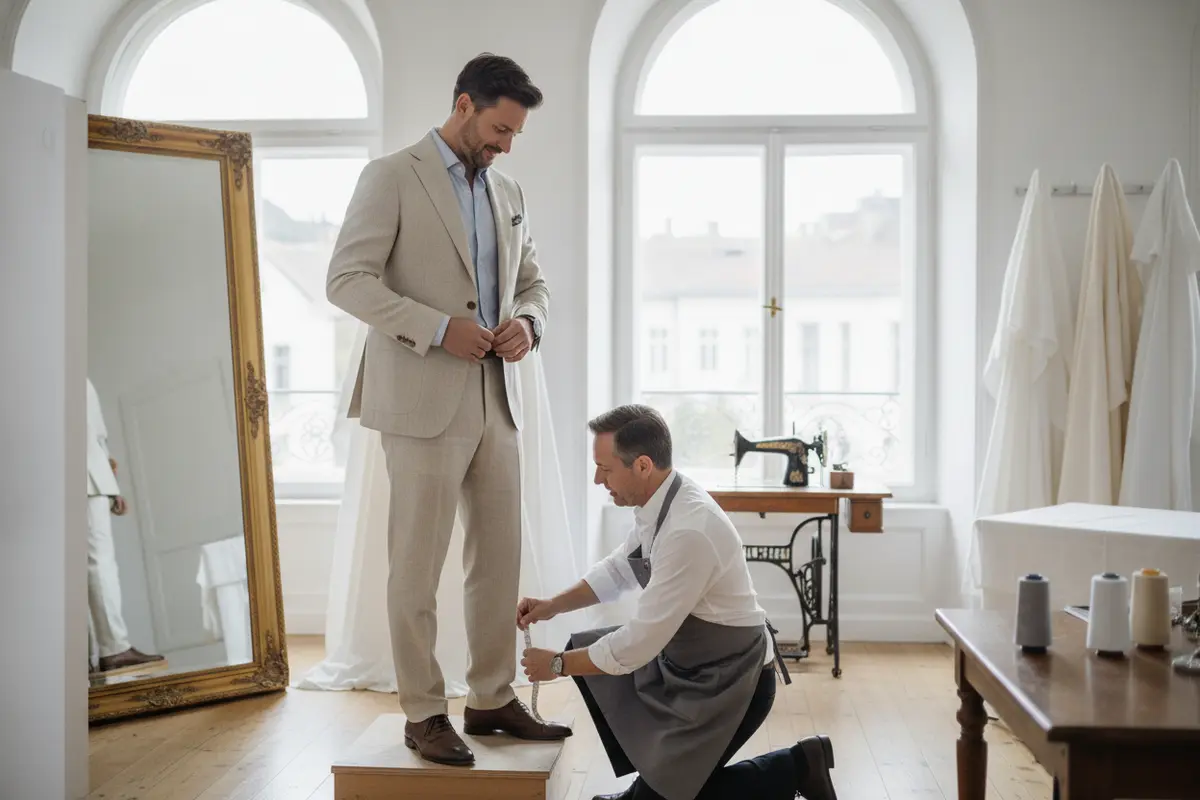
Do not assume that sizing up will make a suit cooler. Excess cloth can disrupt the line and may not improve comfort. Instead, assess the jacket and trousers as a complete outfit, then discuss adjustments with a professional. Custom tailoring can consider your proportions, preferred silhouette, cloth, and intended use. Custom pricing is consultation-based and depends on fabric and customization.
Pay attention to the details you notice while moving. Sit down, reach forward, walk a few steps, and check whether the trousers remain comfortable. Look at the jacket from the side and back, not only from the mirror-facing view. A good fitting conversation includes your preferences: some clients want a cleaner close-to-the-body line, while others prefer more ease for travel or long celebrations.
A fitting is also a chance to discuss how the jacket should behave when it is buttoned and unbuttoned. Check whether the lapels lie smoothly, whether the front pulls when you sit, and whether the back remains comfortable as you move your arms. A garment should not feel restrictive simply because it is tailored, and a relaxed fit should still look intentional. Describe what you do in a typical day so the fit conversation reflects more than a static pose.
Think about the trousers with the same care. The waistband should remain comfortable when seated, the rise should suit your proportions, and the hem should work with the shoes you plan to wear. If you expect to walk on grass or uneven ground at an outdoor wedding, test your stride in those shoes. Little details become noticeable during a long day, especially when you are standing, greeting guests, and moving between locations.
Explore custom suits and tailoring if you want a more personal fit, or review the options for custom styling and tailoring. For separate jackets and trousers, custom jackets and sport coats and custom trousers can help you think through the individual pieces.
How should you dress for a summer wedding?
Start with the invitation, ceremony time, and venue. A formal evening wedding generally calls for a more structured, darker outfit than a casual daytime celebration. Consider how much time you will spend outdoors and whether the schedule includes a change of setting. Keep the couple’s preferences in mind, and avoid assuming that every summer wedding is informal.
For a wedding party, coordinate the overall direction before selecting individual looks. A shared color family or consistent level of formality can create cohesion without requiring everyone to wear identical outfits. Grooms planning custom wedding attire should allow time for the process; begin four to five months before the wedding. The four-step approach starts with Discovery & Planning, moves through Styling & Selection, then Measurements & Fitting, and ends with Final Fitting & Delivery.

See the wedding attire process for more about planning a wedding look, or read guidance on choosing a suit as a wedding guest. A summer suit can also work for a less formal celebration; the cloth, shirt, and accessories help set the tone.
If you are part of a wedding party, agree on practical details early. Decide whether the group will share a color, fabric character, or accessory direction. Then account for individual fit preferences and the time needed for measurements and fittings. A coordinated result does not require every person to have the same body shape or wear exactly the same details.
Guests can avoid common dress-code mistakes by reading the invitation closely and checking with the host if terms such as cocktail or semi-formal are unfamiliar. Consider the ceremony and reception separately if the schedule changes venues. For an outdoor ceremony, plan for the surface and temperature; for an indoor evening reception, bring the layer you will want in air conditioning. A thoughtful choice respects the occasion and keeps you comfortable throughout it.
For a groom, start the attire conversation with the wedding’s overall direction, not just a fabric swatch. Discuss the venue, season, photographs, partner’s attire, and wedding-party palette together. Then identify which decisions need to be consistent across the group and where personal preferences can remain. This helps avoid late changes and gives everyone a clear sequence for selection and fittings.
What should you wear with a summer suit?
A breathable shirt and a comfortable pair of dress shoes make a difference over a long day. Cotton shirts are a familiar choice, while a lighter weave may feel preferable in heat. Choose a collar and tie based on the occasion. If you wear a tie, texture can add interest without relying on a bold print. For an outdoor event, consider whether your shoes are appropriate for grass, gravel, or uneven paths.
Think in complete outfits rather than choosing the suit in isolation. Try the jacket with the shirt, trousers, belt, and shoes you plan to wear. If you expect to remove the jacket, make sure the shirt and trousers still look intentional together. A separate summer jacket can also be useful with tailored trousers; browse custom casual attire for ideas beyond a matching suit.
Accessories should support the setting rather than compete with it. A simple leather belt and shoes can ground a light suit, while a textured pocket square can add dimension to a navy or gray look. If the event is outdoors, practical comfort matters: choose shoes you can wear confidently on the venue’s surface and avoid adding layers you will immediately want to remove.
A quick outfit rehearsal can clarify what is missing. Lay out the suit, shirt, shoes, belt, tie, and pocket square together, then try the whole combination on. Check that the shirt collar sits neatly under the jacket and that the belt and shoes feel like part of the same outfit. If a tie feels too formal for a daytime setting, the suit may still look complete with a well-chosen shirt and pocket square, depending on the invitation.
For travel, pack the outfit as a coordinated set and keep accessories together so that nothing is forgotten. Allow time to hang the jacket and trousers after arrival. If the event includes a long car ride, consider changing into the suit closer to the venue when practical. A little planning helps the garment arrive looking composed without turning the day into a complicated clothing routine.
How do you plan for comfort through the day?
For a long event, plan for changing temperatures. Indoor spaces may be cool even when the afternoon is hot, so a jacket can remain useful. Choose a shirt that feels comfortable against your skin and avoid adding unnecessary layers. If the schedule includes travel, allow time to arrive and settle before the event rather than wearing the jacket in a hot car for an extended period.
Care also shapes how a suit looks over time. Follow the garment’s care instructions and use professional cleaning and tailoring services when needed. Avoid home alteration or repair attempts; a qualified professional can assess the garment and recommend the appropriate service. For a wider wardrobe plan, build a versatile wardrobe with pieces that work across seasons and occasions.
After wearing the suit, give it time to air and rest before storing it. Use an appropriate hanger so the jacket can retain its shape, and keep the trousers with the suit when possible. Follow the care label rather than applying a one-size-fits-all routine. Professional care is especially useful when the garment has a stain, needs pressing, or requires an adjustment before an important event.
For an outdoor ceremony, make a simple comfort plan before the day. Check the schedule, estimate how long you will be outside, and decide whether you need a light layer for the evening. Choose shoes suited to the venue and bring only accessories you intend to wear. If the weather changes, the most reliable response is a composed, practical outfit rather than a last-minute collection of extra layers.
Keep expectations realistic: breathable cloth can help, but no suit can remove the effects of heat, humidity, or a long schedule. The shirt, fit, venue, and movement all contribute to how you feel. If you are choosing a suit for a full day of meetings or celebration, explain that use during the selection process so the final outfit is planned for the real conditions.
When does custom tailoring make sense?
Custom tailoring is worth considering when you want a specific fabric, have fit preferences that are difficult to find in ready-to-wear, or need a suit for an important occasion. A consultation helps define how the suit will be used, what silhouette you prefer, and which details matter. The experience is collaborative: bring examples of what you like, mention what has not worked in past suits, and be open about your daily needs.
Custom work can also be useful when you want one wardrobe piece to solve several needs. A versatile navy or blue suit can be planned for work, weddings, and evening events, while a textured jacket and separate trousers may support more relaxed occasions. Fabric, styling, and construction details should be discussed together because each affects how the finished garment performs and reads.
Trevor Furbay Bespoke offers hands-on styling and custom tailoring, with locations in Cincinnati, appointment-based service in Columbus/Dublin, and a seasonal Harbor Springs boutique. You can schedule an appointment to discuss your needs, or explore summer suit considerations as you narrow your choices.
A good consultation can begin with a few clear questions: Where will you wear the suit most? What do you want it to communicate? Which garments in your closet already work well, and what has been uncomfortable or difficult to style? Bring the answers, plus the event date if there is one. These details help shape a recommendation around actual use instead of a generic seasonal formula.
There are also practical decisions to settle. Do you want the jacket to pair with other trousers? Do you prefer a smooth cloth or one with visible texture? How formal should the lapel, pocket, and button details feel? Which shirt and shoes will anchor the outfit? Discussing these choices as a group helps keep the finished suit coherent and more useful across the calendar.
How can personal styling simplify the decision?
It is easy to focus on a single question, such as whether linen or lightweight wool is better, and miss the larger wardrobe decision. Personal styling brings the occasion, existing clothes, preferred colors, fit, and care expectations into one conversation. You can compare options in context instead of judging a fabric or shade on its own.
Bring the information that will shape the appointment: the invitation or dress code, the date, the venue, the shoes you expect to wear, and any fit issues from previous suits. If you are planning for a wedding, include the other colors or attire already selected. If you are building a work wardrobe, explain how often you travel and which shirts and trousers you reach for most often. These details make the final choice more useful.
For additional wardrobe guidance, explore professional clothiers and personal stylists or consider how a personalized StyleBox could support ongoing wardrobe discovery. A StyleBox has no styling fee, customers pay only for items they keep, and complimentary delivery and pickup apply in Cincinnati.
For a work wardrobe, think in terms of how a summer suit will interact with the rest of your week. Identify the shirts you wear regularly, the shoes that suit your commute, and whether your calendar includes client meetings or travel. A suit that works with existing pieces is easier to wear often. If you are selecting separates, make sure the jacket and trousers each have more than one natural pairing.
For a special event, bring visual references rather than relying on memory. A photograph of the venue or invitation can help clarify colors and formality. If you are coordinating with a partner or wedding party, share the palette and any decisions already made. A stylist can then help you consider cloth, fit, and accessories together while leaving room for individual expression.
Frequently Asked Questions
Are summer suits only for weddings?
No. A summer suit can work for business, celebrations, travel, and other events. Choose the cloth and color to suit the setting and level of formality.
Is linen always the coolest option?
Not necessarily. Linen has a relaxed feel and visible texture, but comfort depends on the specific cloth, fit, shirt, and conditions. Compare fabrics in person when possible.
Can I wear a summer suit to an evening event?
Yes. A darker shade such as navy or gray and a more formal shirt and accessories can make a seasonal suit appropriate for evening. Follow the invitation’s dress code first.
When should I begin planning a custom wedding suit?
Begin four to five months before the wedding. That gives you time for Discovery & Planning, Styling & Selection, Measurements & Fitting, and Final Fitting & Delivery.
Should I choose a suit or separate summer pieces?
Choose a complete suit when you need a coordinated look for formal work or events. Choose separates when flexibility for dinners, travel, and smart-casual occasions matters more. A consultation can help you decide which option will serve your wardrobe best.
The best summer suit is one that feels comfortable, suits the occasion, and fits naturally into the way you dress.