
Choosing mens tuxedos becomes easier when you treat the appointment as a conversation, not a test. You do not need to arrive knowing every lapel, fabric, or accessory term. Bring the occasion, the invitation, and the way you want to feel in the garment. A professional clothier can then help turn those details into a polished formal look that fits your proportions and your plans.
This guide focuses on how to prepare for a custom tuxedo consultation and what decisions you can expect to make. For broad black-tie etiquette and a complete overview of tuxedo components, read Trevor Furbay’s complete black-tie guide. The purpose here is narrower: help you arrive ready to make confident, personal decisions.
How to Choose Mens Tuxedos for a Custom Consultation
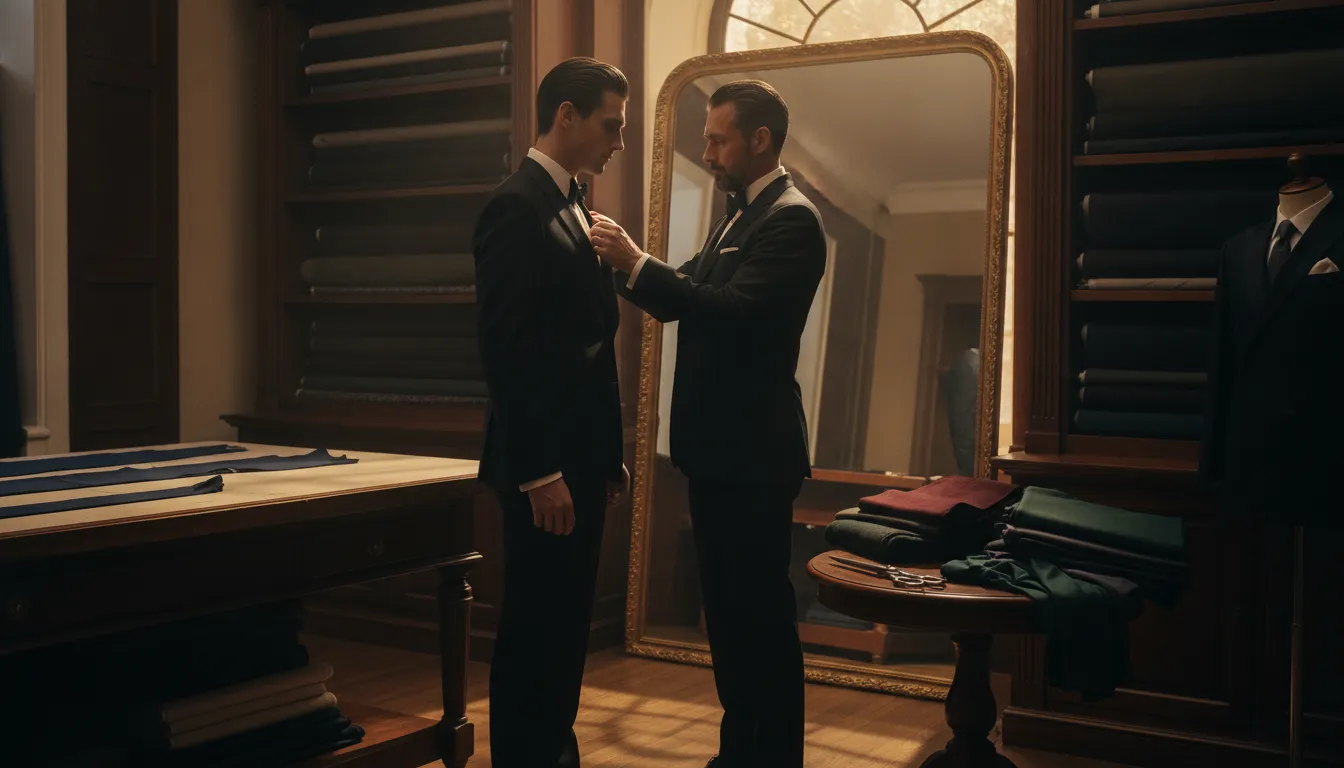
The invitation should shape the appointment. Save a clear photograph or bring the printed invitation, then note the exact dress-code wording, date, venue, start time. And your role. “Black tie,” “black tie optional,” “formal,” and a creative dress code can lead to different recommendations. The venue and time of day add useful context, but the host’s wording remains the primary reference.
For a wedding, also bring the venue, season, overall palette, wedding-party direction, and any information that helps coordinate with the couple’s vision. A groom may want one distinctive detail, while a wedding party may need a consistent foundation. Trevor Furbay recommends beginning wedding formalwear conversations four to five months before the wedding so there is time for discovery, styling, measurements, fittings, and final delivery. The wedding formalwear service provides additional planning context.
Know Which Decisions You Will Make
A consultation does not require a finished design. It gives you a structured way to make the decisions that matter most.
Silhouette and jacket configuration
Single-breasted jackets offer a clean, versatile starting point. Double-breasted jackets bring more structure and presence. The choice should reflect the event, your comfort, and the proportions of your frame. A clothier can evaluate the jacket’s button stance, length, shoulder line, and relationship to the trousers rather than treating “slim” or “regular” as a complete fit recommendation.
Lapel shape and facing
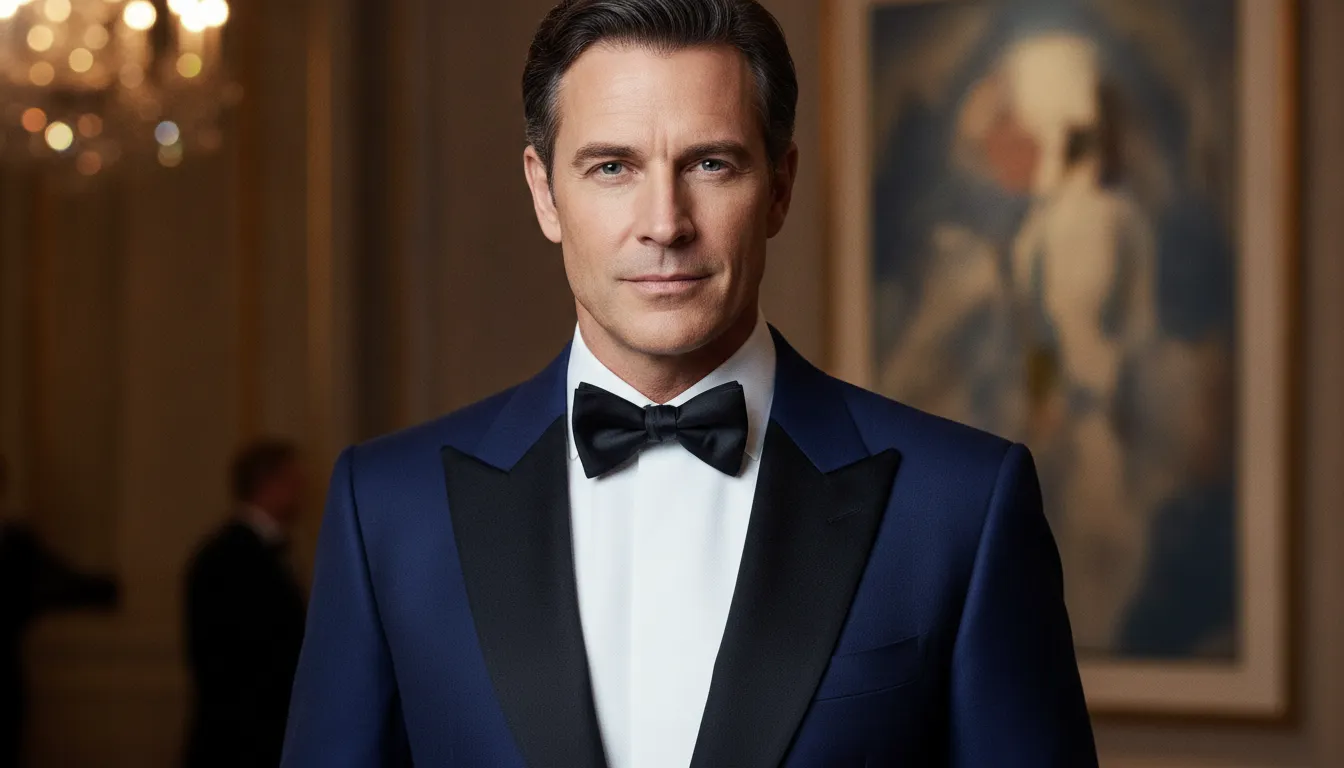
Peak lapels create a classic formal direction, while a shawl collar creates a smooth evening line. Notch lapels can support a more contemporary interpretation when the event allows it. Satin has a smooth, light-catching finish; grosgrain adds subtle texture and a controlled sheen. The best width and facing depend on the jacket, your proportions, and the level of tradition you want to convey.
Fabric, color, and repeat wear
Black remains the traditional anchor for classic black tie. Midnight blue can offer a deep evening alternative, while a white or ivory dinner jacket may suit a warm-weather or destination setting when the invitation supports it. Fabric selection should account for the season, venue, comfort, texture, and how often you expect to wear the garment. Do not choose a color or cloth only because it is striking in a swatch. Consider how it will look with the full formal system and in photographs.
When comparing mens tuxedos, think in terms of the complete outfit rather than one isolated feature. A dramatic lapel can look unbalanced if the shirt collar, bow tie, and trouser rise point in a different direction. Likewise, a distinctive color may be memorable but less useful if it limits the occasions on which you can wear the garment. A consultation helps you weigh expression, tradition, comfort, and repeat wear together.
| Decision | Traditional direction | Personalized question |
|---|---|---|
| Jacket | Single-breasted black tuxedo | Would a different configuration better suit my proportions and confidence? |
| Lapel | Peak or shawl with formal facing | Which shape creates the cleanest line with my shoulders and face? |
| Color | Black for classic evening formality | Would midnight blue or a dinner jacket suit this event and future wear? |
| Finishing details | White shirt, black bow tie, formal shoes | Which personal details add character without disrupting cohesion? |
Shirt, bow tie, and waist covering
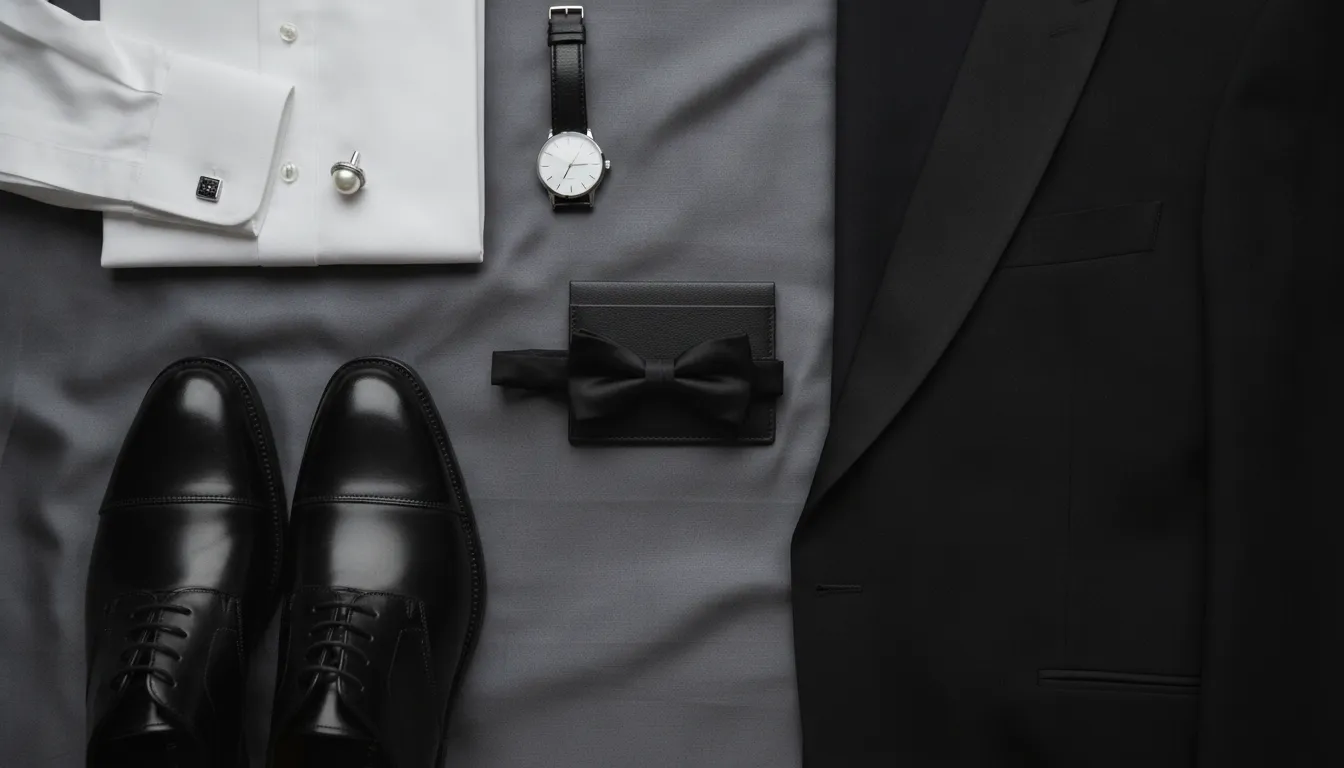
A formal white shirt and black bow tie are the clearest traditional foundation. The collar, shirt front, cuff treatment, studs, and cufflinks should work with the jacket rather than compete with it. A cummerbund, low-cut vest, or waistcoat can complete the waist treatment. Your clothier can help you choose a solution that suits the jacket configuration, your proportions, and your comfort.
Shoes and finishing details
Black formal shoes keep a traditional tuxedo cohesive. Bring the shoes you plan to wear if you already own them, or describe their shape and heel height so trouser length can be considered in context. Linings, buttons, and monograms offer personal expression without changing the formal character of the garment. The goal is not to maximize options. It is to select details that belong together.
Use the Fitting to Test Movement and Proportion
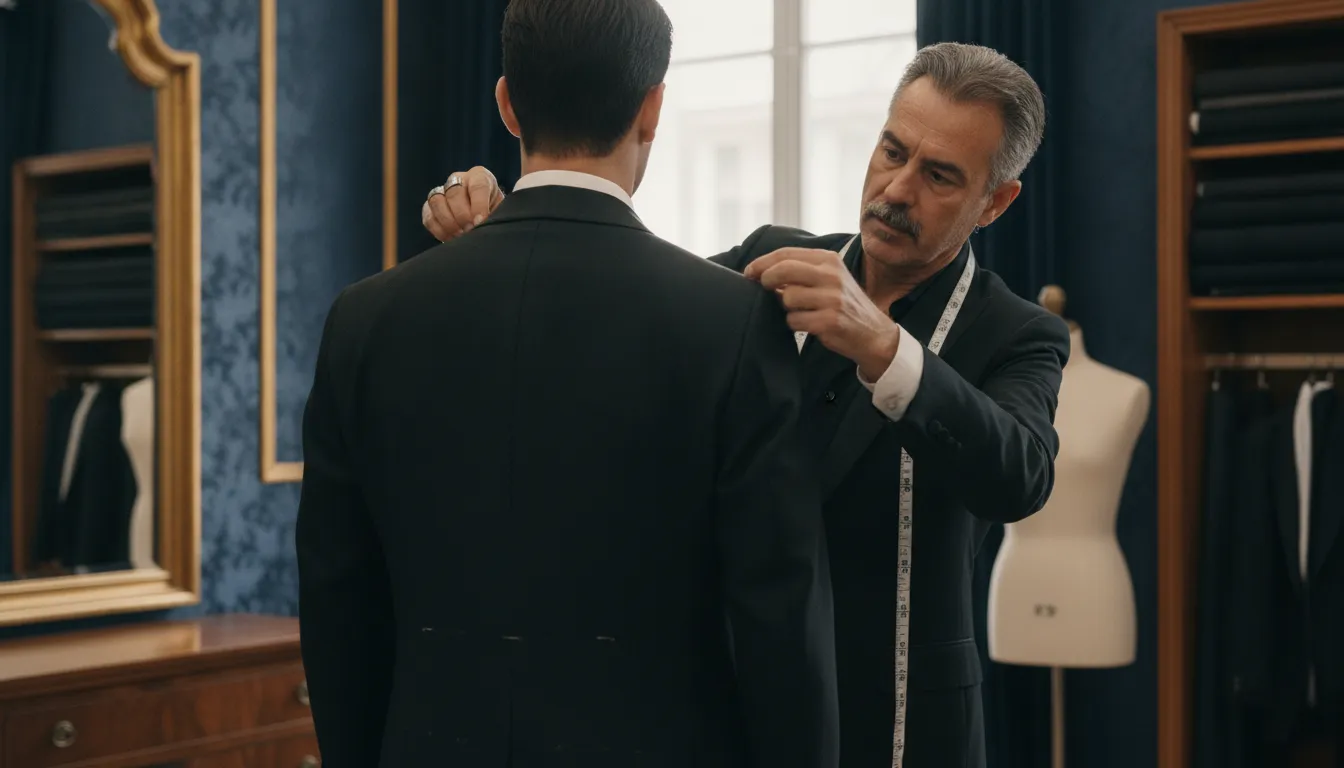
The goal of a fitting is not simply to make a jacket look close in a mirror. A tuxedo should remain composed while you sit, walk, greet guests, raise a glass, and move through the event. The shoulder seam should follow your natural shoulder, the collar should sit smoothly, and the jacket should close without pronounced pulling. Sleeves and trousers should create a balanced line without excessive pooling or an abruptly short appearance.
Individual shape matters. Shoulder angle, back arch, posture, chest, waist, jacket length, trouser rise, and the relationship between jacket and trousers all affect the result. Trevor Furbay’s custom measurement process considers those proportions instead of relying on a standard size label. During the appointment, describe recurring fit frustrations and how you expect to move in the garment. That information helps the clothier distinguish necessary ease from excess fabric.
Custom fitting also clarifies what can and cannot be adjusted later. Major structural problems are not automatically solved by alterations, so the starting fit and construction deserve attention. If a garment needs attention before an event, use a professional clothier rather than attempting home stitching, hemming, or repairs.
Use the fitting as a practical rehearsal. Sit as you would at dinner, walk a few steps, reach naturally, and notice whether the jacket stays comfortable. Check the collar after movement and look at the trouser break with the shoes you expect to wear. These observations give the clothier useful information that a still photograph cannot provide. The strongest result is not the smallest-looking garment. It is a formal silhouette that stays composed while you participate in the occasion.
What Happens During a Custom Tuxedo Process?
Trevor Furbay’s custom process is collaborative and organized around four practical stages:
- Choose your look: Discuss the event, formality, preferred direction, and how you want the tuxedo to serve your wardrobe.
- Find your fit: Take precise measurements with attention to shoulder angle, back arch, posture, and overall proportions.
- Customize the details: Review fabrics, lapel shape, buttons, lining, and finishing options such as monogramming.
- Complete the fitting: Assess the finished garment professionally and address appropriate finishing adjustments.
The Atelier Munro partnership supports custom-made suits and tuxedos with a broad fabric selection and personalized details. Visit the custom tailoring page to understand the design pathway before your appointment. Custom pricing is consultation-based and depends on the fabric and customization selected. There is no responsible universal price for every custom tuxedo.
For a documented custom garment window, the customer materials describe delivery in approximately three to five weeks followed by a final fitting. Lead times can vary by fabric, maker, season, and the number of fittings. The wedding recommendation of four to five months is a planning guideline, not a universal production guarantee.
Prepare Questions That Improve the Appointment
A useful consultation should leave you clearer about the event, the garment, and the process. Consider asking:
- Which silhouette and lapel scale best support my proportions?
- Would black, midnight blue, or another option respect the invitation and venue?
- Which facing, shirt, bow tie, and waist treatment create the most cohesive formal line?
- How will the garment be evaluated while I sit and move?
- Which fabric and customization decisions affect the final investment?
- What is the realistic timeline for ordering, fitting, and final delivery?
- How should I care for the tuxedo between formal occasions?
You can also bring examples of lapels, colors, shirts, or accessories you like. They do not need to form a complete outfit. A few references help your stylist understand whether you prefer a restrained classic look, a modern silhouette, or a more expressive interpretation of black tie.
It is also useful to name what you do not want. Perhaps you dislike a narrow jacket, a bright sheen, a close trouser break, or details that feel too traditional. Clear boundaries make the appointment more efficient. Your stylist can explain which preferences work together, which create tradeoffs, and where a small change will have the largest effect on the finished look.
Choose the Right Trevor Furbay Location
Trevor Furbay Bespoke serves clients through a location model built around personal guidance. The Cincinnati location is the flagship and offers the full service range. The Columbus/Dublin boutique is appointment-based, so schedule ahead rather than assuming walk-in availability. Harbor Springs is a seasonal boutique. Explore the Cincinnati location, Columbus location, or Harbor Springs boutique when deciding where to begin.
The in-store experience is relaxed and hospitality-led, but the practical value is the time and expertise devoted to fit, fabric, proportion, and formal context. If you are still uncertain about the design, that is precisely what the consultation is for.
Location choice can also shape the rhythm of the appointment. A flagship visit may be the right fit when you want broad service support, while an appointment-based boutique offers focused planning when you already know your schedule. Seasonal availability matters in Harbor Springs. Confirm the location details and appointment expectations before traveling, especially when the event date is close.
How Should You Care for a Finished Tuxedo?
Once your tuxedo is ready, preserve its shape by using broad hangers, giving it time to air after wear. And storing it in a breathable garment bag in a cool, dry closet. Follow the garment’s care instructions and use a professional cleaner experienced with formalwear when cleaning is needed. If the fit changes, return to a professional clothier for evaluation rather than attempting a home alteration.
Frequently Asked Questions About Mens Tuxedos
What should I bring to a tuxedo consultation?
Bring the invitation or a clear photograph of it, the event date and venue, dress-code wording, and details about your role. For a wedding, include the venue, season, palette, wedding-party direction, and any guidance from the couple. Bring your formal shoes if you already have them.
How far in advance should I order a custom tuxedo?
For a wedding, begin about four to five months before the event. For another formal occasion, start once you know the date and dress code. Custom garments may require ordering and a final fitting, and timing can vary by fabric, maker, season, and fitting needs.
How much do custom tuxedos cost?
Custom tuxedo pricing is consultation-based. The final investment depends on the fabric and customization selected, so a universal fixed price would be misleading. A consultation lets the clothier connect the options to your event and priorities.
How should a custom tuxedo fit?
The shoulders should align naturally, the collar should sit smoothly, the jacket should close without pronounced pulling, and the trousers should fall cleanly while allowing movement. A professional fitting accounts for shoulder angle, back arch, posture, and overall proportions.
Can I choose a midnight-blue tuxedo or a white dinner jacket?
Midnight blue can be an elegant evening alternative, while a white or ivory dinner jacket may suit a warm-weather or destination setting. The invitation, venue, season, and time of day should guide the choice. These options are not universal substitutes for a classic black tuxedo.
What makes a custom tuxedo different from a standard size?
Custom tailoring gives the consultation room to consider your proportions, fabric, lapel, lining, buttons, monogram, and fitting needs together. It is a guided process designed around the wearer and occasion rather than a single standard size.