
Choosing men’s wedding guest attire starts with more than picking a suit. The invitation, venue, season, ceremony time, and couple’s preferences all shape what feels appropriate. A useful outfit respects the occasion, fits comfortably through a long day, and still feels like you. Use this guide to make the decisions in a practical order, from dress code to the final details.
What should you learn from the invitation first?
Start with the stated dress code. It is the couple’s clearest direction, and it matters more than a guess based on the venue or season. If the invitation gives no dress code, look for clues: the time of day, location, wording, and any wedding website notes. When in doubt, ask a member of the wedding party or the couple’s point person rather than assuming the event is casual.
Dress codes are best treated as boundaries, not a demand to copy someone else’s exact outfit. Black tie points toward a tuxedo. Formal or black-tie optional usually calls for a dark, refined suit or tuxedo, depending on the couple’s guidance. Cocktail attire allows a suit with more room for personal color and styling. For a casual celebration, tailored separates may work, but casual does not mean careless. A clean, well-fitting jacket and trousers are safer than everyday clothing unless the couple says otherwise.
- Black tie: Choose a tuxedo and formal accessories, unless the invitation gives a different direction.
- Formal: Consider a dark suit, polished shirt, and restrained accessories. Check whether the couple expects tuxedos.
- Cocktail: A suit is a dependable choice. You can express personality through the tie, shirt, or pocket square.
- Casual or outdoor: Keep the outfit neat and intentional. Use the venue and weather to guide fabric and footwear.
For a closer look at formal options, compare this advice with the tuxedo style guide and the guide to suits and ties for formal occasions. If the dress code is unclear, do not use a guest outfit to test how far you can bend it. Err slightly more polished while leaving the couple and wedding party room to stand out.
How do venue and timing change the outfit?
The same suit can feel right at one wedding and out of place at another. A city hotel ballroom, garden ceremony, lakeside venue, and barn reception each create different expectations for formality, footwear, and comfort. Think through where you will spend the day, whether you will walk on grass or uneven ground, and whether the reception moves indoors.
Time of day offers another clue. Daytime celebrations often accommodate lighter colors and more relaxed styling, if the dress code allows. Evening events tend to look more polished in deeper shades and sharper accessories. A ceremony that begins outdoors and moves to a formal evening reception asks for a versatile outfit that can handle both settings.
Check the forecast close to the event, but do not build the entire outfit around a weather prediction weeks in advance. In warm weather, breathable cloth and a comfortable shirt can make a long celebration easier. In cooler conditions, consider a layer that works with the suit rather than an unrelated coat. For more guidance on tailoring to warmer days, see the page on summer suits. Venue and season should refine your choice, not outweigh a clear dress code.
Plan for the whole sequence, not only the ceremony
Picture the day from arrival through the last part of the reception. Will you be outside for an hour before the ceremony? Will there be a walk across a lawn, a shuttle between venues, or a long dinner indoors? These small details can influence fabric weight, shoe choice, and whether a jacket feels comfortable. For an outdoor ceremony followed by an indoor reception, choose a suit that still looks complete when you remove a coat or change layers. If you expect to carry an umbrella or travel bag, make sure your hands and outfit will not be occupied with extra pieces you do not need.
Destination weddings call for a little more planning. Pack the outfit so it arrives in wearable condition, and carry essential pieces such as the tie, shirt, and shoes together rather than assuming you can replace them easily at your destination. If the event involves several days, check whether any other gatherings have separate dress expectations. A welcome dinner may be less formal than the ceremony, but it is still part of the couple’s celebration. Avoid choosing one outfit for every event unless the schedule and dress code make that a sensible choice.
Which suit color is a dependable choice?
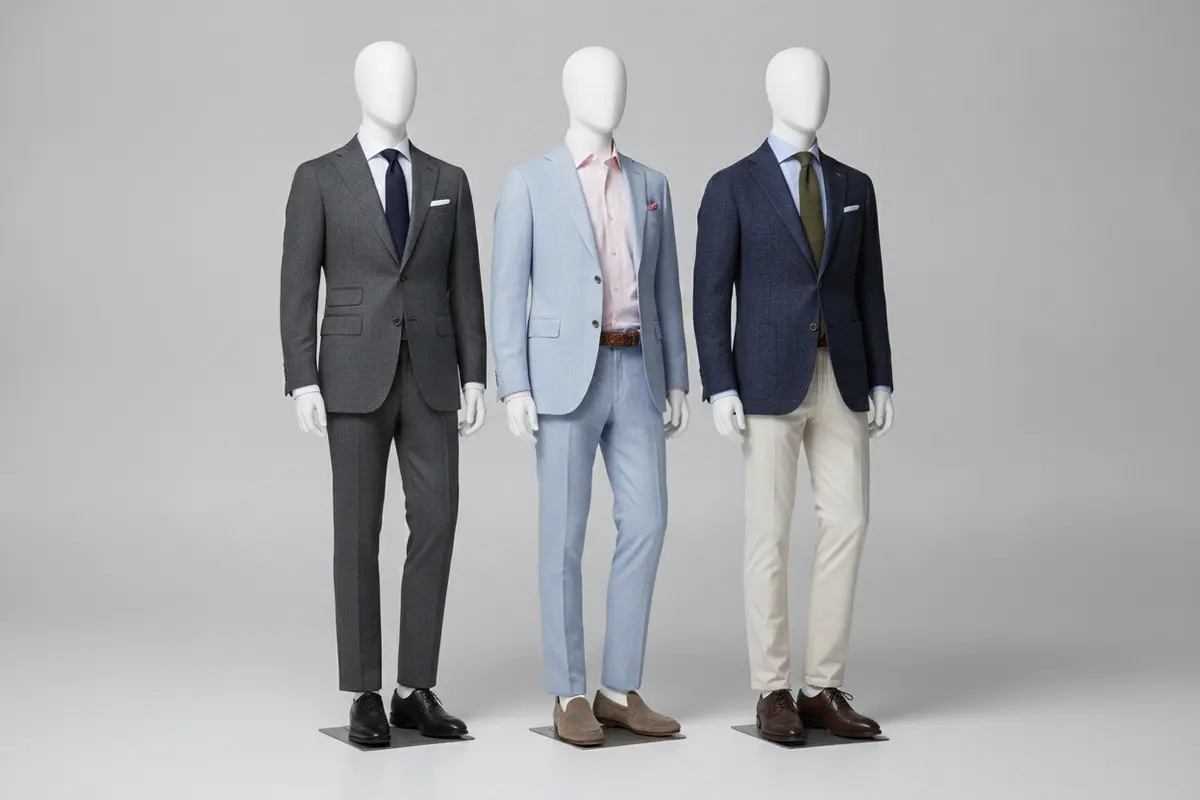
Navy and charcoal are reliable starting points because they are versatile, easy to coordinate, and appropriate for many celebrations. A mid-blue or lighter neutral can suit a daytime or warm-weather wedding where the dress code allows more ease. Brown and olive can also work well for some settings, especially when the overall styling remains polished. Let the invitation and wedding palette inform your decision, but you do not need to match the wedding party.
A practical way to choose is to compare the color against the event’s formality and the light in which you will wear it. A dark navy suit can move from a ceremony into an evening reception with little adjustment. A lighter shade may feel more at home in daylight and an open-air setting, but it may be less versatile for a formal evening. Charcoal gives a restrained alternative when navy feels too familiar. If you are deciding between two options, put on the shirt and shoes you plan to wear; colors can read differently when the full outfit is assembled.
Avoid wearing white or a shade that could be mistaken for the bride’s attire. Be cautious with very bright colors, loud patterns, or accessories that pull focus in formal settings. A wedding is a celebration, but the guest’s role is not to compete with the couple. If you want a distinctive detail, choose one element—such as a textured tie, a subtle pocket square, or a considered shirt color—and keep the rest balanced.
Before choosing a color, consider what you already own and whether the suit can serve beyond this occasion. A well-chosen dark suit may work for professional events, dinners, and future celebrations. A lighter or more expressive option may make sense if it fills a clear gap in your wardrobe. Explore the range of custom suits and tailoring or consider tailored casual clothing if the wedding calls for a less formal combination.
How should you choose a suit versus separates?
A matching suit is the most straightforward option for cocktail, formal, and many semi-formal weddings. It creates a coherent line and removes some guesswork from dressing. Separates—a jacket and trousers that are not part of the same suit—can suit a more relaxed event, but they need to look deliberately coordinated. A sport coat with tailored trousers can work for a daytime garden celebration, for example, when the invitation does not call for formal dress.
Do not split up a suit casually just because it is available. A suit jacket and separate trousers can differ in fabric, texture, and formality in ways that look accidental. If choosing separates, make the contrast clear enough to feel intentional and keep the palette harmonious. A tailored sport coat or jacket can provide a flexible foundation, while the right trousers help the outfit suit the occasion.
| Option | Works well when | What to check |
|---|---|---|
| Matching suit | The invitation says formal, cocktail, or semi-formal, or you want a dependable choice. | Confirm the suit is clean, fits comfortably, and suits the venue and time. |
| Tuxedo | The dress code says black tie or the couple specifically requests it. | Check the invitation for details and make sure formal accessories are appropriate. |
| Jacket and tailored trousers | The celebration is relaxed or daytime and separates fit the dress code. | Coordinate fabric weight, color, and formality so the pieces look intentional. |
| Custom or adjusted clothing | You need a considered fit, a specific look, or more versatility after the event. | Allow time for consultation, selection, measurements, and fittings. |
Three outfit examples to make the choice concrete
For an evening cocktail reception at a city venue, a navy or charcoal matching suit, crisp shirt, dark leather shoes, and a restrained tie form a dependable starting point. Keep the pocket square simple so the outfit feels polished without looking like a second version of the wedding party. This combination is also useful when the invitation gives a dress code but few other details.
For a daytime garden wedding with a relaxed dress code, a lighter suit or a distinct sport coat and tailored trousers can work. Choose shoes that feel secure on grass, and avoid fabrics or hems that make walking uncomfortable. A patterned tie or a softer shirt color can give the look some ease, while the jacket keeps it appropriate for photographs and the ceremony.
For a black-tie celebration, follow the stated dress code rather than trying to make a business suit look like formalwear. A tuxedo is the expected direction. Keep accessories aligned with the formality, and ask the couple or their representative if the invitation leaves a particular detail open. In each example, the central decision is not which outfit is most striking; it is which one meets the occasion while allowing you to feel at ease.
What fit details make the biggest difference?
Fit is often what makes an outfit look considered rather than simply expensive. The jacket should sit comfortably at the shoulders and close without pulling. Sleeves should allow the shirt cuff to show modestly, and the jacket length should feel balanced with your proportions. Trousers should sit securely and fall cleanly without excess pooling at the shoe. These are useful points to assess, not a reason to chase a rigid formula: bodies and garment designs differ.
Test the outfit in motion. Sit down, raise your arms, walk, and check that the waistband and shoulders remain comfortable. Weddings involve more than standing for photographs. You may sit through a ceremony, travel between locations, eat, and dance. The best fit lets you do all of that without constantly adjusting your clothing.
A useful fitting-room checklist
- Shoulders: Check that the jacket rests comfortably rather than buckling or sliding when you move your arms.
- Closure: Fasten the jacket and look for obvious pulling across the front. It should not feel restrictive when you sit or breathe normally.
- Sleeves: Wear the shirt you plan to use and check the relationship between the jacket sleeve and shirt cuff.
- Waist and seat: Sit, stand, and walk. Trousers should stay in place without pinching or requiring repeated adjustment.
- Hem and shoes: Try the actual shoes with the trousers. Check how the hem falls while standing and walking.
- Full movement: Reach forward, take a few steps, and sit for a moment. The outfit should work for the activities on your schedule.
Bring the shirt, shoes, belt, and any intended accessories when assessing the complete look. A jacket can seem right in isolation yet feel different once the tie or shirt collar is added. Check the outfit in a mirror from the front and side, and take a photograph if that helps you notice proportions you might miss in a quick glance. If you are attending more than one event during the weekend, try the pieces in each planned combination so you know they work together.
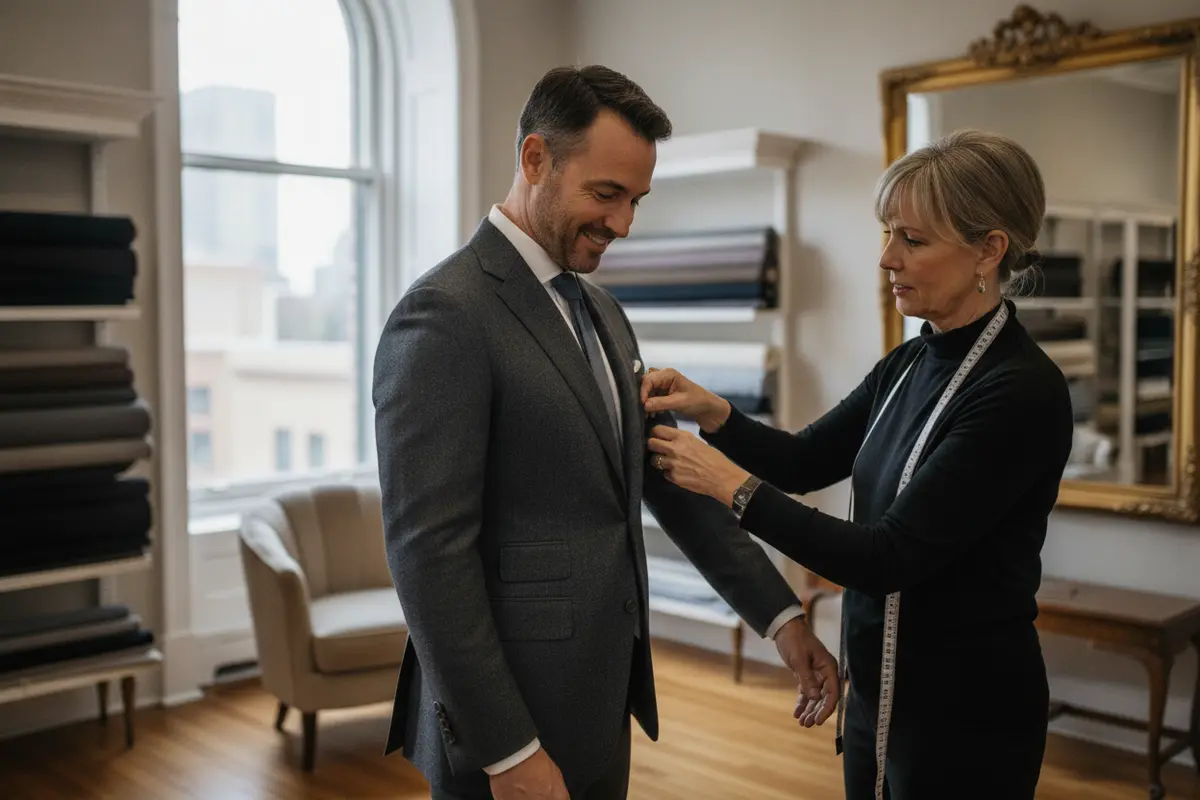
If a suit is close but not right, consult a professional clothier about what can be adjusted. Do not assume every issue can be corrected; the garment’s construction, fabric, and available allowance can affect what is possible. For an event that matters, begin early enough to discuss the fit rather than leaving the decision until the final days. Trevor Furbay’s custom styling and tailoring is consultation-based, with choices shaped by fabric and customization.
How can you coordinate without matching the wedding party?
If you are a guest rather than a groomsman, you generally do not need to match the wedding party’s exact suit color. A little awareness of the couple’s palette can help you avoid looking disconnected in group photos, but your outfit should remain your own. If the invitation includes a color direction, respect it. Otherwise, select a complementary neutral and let your shirt or accessory provide a subtle point of connection.
For guests attending with a partner, coordination can be as simple as choosing colors that sit comfortably together. You do not need identical shades or matching accessories. Consider the overall level of formality, then align one element such as tone or texture. If you are part of a wedding party, follow the couple’s instructions and coordinate with the group before buying anything.
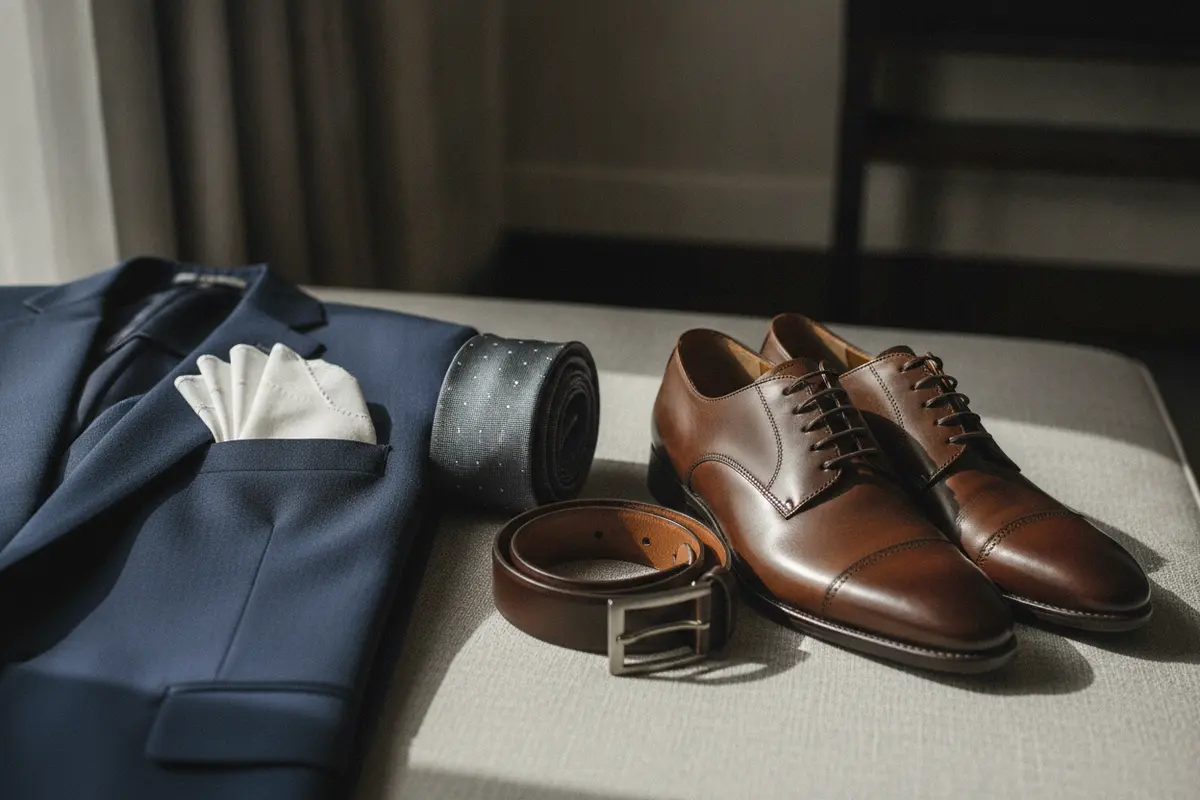
Keep accessories proportionate to the event. A tie is a natural choice for many suit-and-tie weddings, while a pocket square can add a small note of personality. Choose a belt and shoes that work together in both color and formality. Dress shoes are a safe choice for formal settings; for a relaxed outdoor event, footwear should still be clean and intentional. The dress shoe collection can help you consider options that complement a tailored outfit.
Think of accessories as a small set of decisions rather than a chance to add every favorite detail. Start with the shoes, belt, and shirt, then add a tie or pocket square only if it suits the dress code. If the suit has a strong texture or pattern, simpler accessories usually keep the whole look balanced. If the suit is plain, a single patterned detail can bring visual interest without making the outfit busy. Check that the tie knot sits neatly beneath the collar and that the pocket square does not dominate the jacket.
Practical comfort matters too. Make sure shoes are comfortable enough for standing and dancing, and avoid wearing a new pair for the first time at the ceremony. Carry only what you need, and choose accessories that will stay in place during movement. These checks take only a few minutes, but they can prevent distractions during a long day.
When should you plan your wedding guest outfit?
For an outfit already in your wardrobe, start several weeks ahead. That gives you time to try everything together, identify missing pieces, and arrange professional help if the fit needs attention. Do not wait until the day before to discover that the shirt, trousers, or shoes are uncomfortable.
If you are ordering custom clothing, begin earlier. Fabric selection, measurements, and fittings take planning, and timing depends on the choices and process. For wedding attire, starting four to five months before the event gives room for the planning and fitting stages. A consultation can clarify whether a custom piece, an adjusted existing suit, or a ready-to-wear option makes sense. The wedding wardrobe process can begin with a conversation about the event, venue, and timeline, then move through style selection, measurements, and a final fitting.
Make a simple checklist: confirm the dress code, settle on a suit or separates, try on the complete outfit, check fit and comfort, and prepare accessories and shoes. If you need help coordinating a look, learn about personal styling and wardrobe services. You can also browse the clothiers and personal stylists who provide hands-on guidance.
A four-stage preparation plan
- Confirm the brief: Read the invitation and wedding website, note the dress code, and ask a question if a key instruction is unclear.
- Choose the foundation: Decide whether your existing suit, a new suit, tuxedo, or separates best fit the dress code and setting. Choose color and fabric with the season and schedule in mind.
- Check the whole outfit: Try the full combination, including shoes and accessories. Test sitting, walking, and movement, then identify any fit issue that needs professional advice.
- Prepare before travel: Clean and press garments as appropriate, check that each item is ready, and pack the complete outfit together. Leave time for a final check before the event.
For a custom piece, use the early conversation to clarify how the garment will be worn and what level of formality is expected. Bring useful information, such as the date, venue, dress code, and any relevant wedding-party guidance. The goal is not to make every choice at once. It is to establish the direction early enough that fabric, fit, and finishing details can be considered without a last-minute rush.
Frequently Asked Questions
Can a man wear a black suit to a wedding?
Yes, a black suit can work for an evening or formal wedding when it fits the dress code. It is not the same as a tuxedo, so do not treat it as black-tie attire unless the couple’s instructions support that choice. For daytime or more relaxed celebrations, navy or charcoal may feel more versatile.
Is it acceptable to wear a suit without a tie?
That depends on the dress code and setting. A tie is a safe choice for formal and many cocktail weddings. At a relaxed daytime event, an open collar may be appropriate if the invitation and venue point in that direction. When uncertain, bring a tie so you can decide with the full outfit assembled.
Can wedding guests wear brown shoes with a navy suit?
Brown shoes can pair well with navy in many settings. Choose a shade and style that suit the formality of the event, and keep the belt coordinated. For a very formal evening celebration, darker, more restrained footwear may feel more appropriate.
How early should I get a suit for a wedding?
If you already own a suitable suit, try it on several weeks ahead so there is time to address any fit concerns professionally. If you want a custom suit, start the conversation four to five months before the wedding and confirm the schedule during your consultation. This gives you time to work through selection and fitting rather than making the decision at the last minute.
A considered wedding guest outfit follows the couple’s direction, feels comfortable in the setting, and fits well enough to let you focus on celebrating. When those pieces come together, the result is polished without taking attention away from the day. Thoughtful preparation makes it easier to enjoy the celebration and feel at ease in every photograph.