
A minimalist wardrobe for men is not a challenge to own as little as possible. It is a practical way to make more of the clothes you already value: pieces that fit, coordinate, and work for the occasions in your life. Start by identifying what you actually wear, then build a small set of dependable combinations around fit, color, and purpose. If you want help deciding what belongs in that system, book a style consultation.
What should a minimalist wardrobe do for you?
A useful wardrobe makes daily choices easier without making every outfit look the same. You should be able to get dressed for work, dinner, travel, and more casual plans using pieces that feel like you and suit the setting. That calls for intention, not a strict item count or a uniform borrowed from someone else.
Think of minimalism as a filter for decisions. Before keeping or buying something, ask whether it fits your body and your life, whether it works with other pieces, and whether you would choose to wear it again. A garment that answers all three questions has a clearer role than an impulse purchase that only works with one outfit.
Personal style still matters. If you like texture, a distinctive jacket, a patterned shirt, or a favorite color can give a restrained wardrobe character. The goal is to make those choices deliberate. A smaller, coordinated foundation can leave room for a few expressive pieces rather than a closet full of items competing for attention.
How do you decide what to keep?
Begin with observation instead of shopping. Look at the clothes you reach for during a normal month, including workdays and weekends. Notice which garments are comfortable, which combinations you repeat, and what you avoid. Your habits provide a better starting point than a generic checklist because a wardrobe should answer to your schedule.
Then sort what you own into three practical groups:
- Regular rotation: pieces you wear often and feel good in.
- Occasional use: formal, seasonal, or special-purpose clothes that still serve a clear need.
- Uncertain: items that do not fit well, have no natural outfit partners, or remain unworn without a reason.
Do not treat occasional wear as automatic clutter. A wedding suit or cold-weather coat may be essential even if you only use it at certain times. The useful question is whether you have a real occasion for it and whether the garment performs its role. Set aside uncertain pieces for a second review rather than replacing them immediately.
For each item, check fit, condition, comfort, and compatibility. Does the shoulder line sit where it should? Can you move comfortably? Is the length suitable for how you plan to wear it? Does it coordinate with several things you already own? A piece can be beautiful yet still be wrong for your needs. If tailoring or fit is the issue, consider professional guidance before deciding it has no place in your closet.

How can you turn a closet review into a workable plan?
After sorting, do not try to redesign everything at once. Choose one part of your week that feels difficult to dress for and solve that first. For example, if work outfits are repetitive, list the pieces you already use and identify what would create a different combination. If you struggle with events, note the dress codes and dates you expect rather than buying a formal outfit without a particular use in mind.
Make a short inventory of garments that already work well. Include the color, general formality, and what you like about the fit. Then write down gaps in concrete terms: “a jacket that works with these trousers” is more useful than “more clothes,” and “a comfortable option for a dinner” is clearer than “something stylish.” Specific needs make it easier to compare choices and to explain your preferences when asking for professional input.
Set a sensible order for filling gaps. Address an item that will support several outfits before one that only completes a single combination, unless an upcoming occasion makes that one-off need timely. Test whether an item you own can already do the job, and whether professional tailoring or styling advice could clarify the options. Avoid treating a capsule wardrobe checklist as a shopping list; your own schedule and existing clothes should decide what belongs.
As you add pieces, keep track of what they pair with and how often you wear them. If something repeatedly stays unworn, ask whether the fit, comfort, color, or occasion is the obstacle. That feedback helps improve future choices without assuming that the answer is always another purchase. A wardrobe becomes more efficient through a series of useful decisions, not a single dramatic cleanout.
Which colors make outfits easier to build?
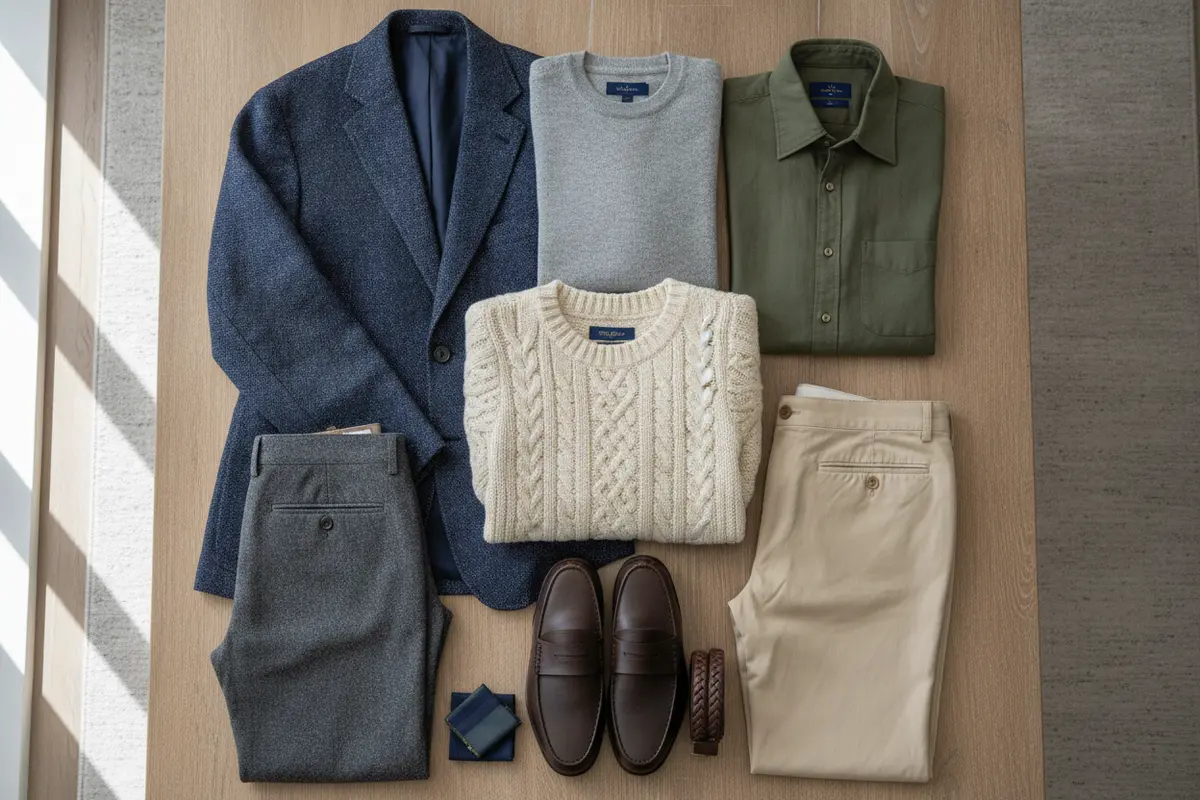
A restrained color palette makes it simpler to combine separates. Begin with colors you genuinely like and already wear. Many men find it useful to anchor outfits with familiar neutrals such as navy, gray, brown, olive, or cream, but there is no required set. Your complexion, work environment, preferred patterns, and existing clothes should shape the choices.
Choose two or three foundational colors that appear across multiple garments. Add lighter and darker versions where useful, then use accent colors or patterns selectively. For instance, a navy jacket can work with gray trousers, denim, or lighter chinos; a patterned shirt can add interest while still sharing a color with the jacket or trousers. These are starting points, not fixed rules.
When evaluating a new piece, picture at least three outfits you could make with items you own. If you cannot name any pairings, the piece may require more shopping to become useful. Look for shared colors, compatible levels of formality, and fabrics that make sense together. A simple palette is not the same as wearing only solid black or gray; texture and considered accents keep combinations personal.
Patterns can also belong in a compact wardrobe. Try one focal pattern at a time, such as a checked jacket with a quieter shirt, or a patterned shirt under a solid jacket. If you enjoy mixing patterns, vary their scale and keep a color relationship between them. When in doubt, simplify the combination and let one item take the lead.
How do fit and versatility shape the foundation?
Fit is the first filter because clothes that feel wrong rarely become reliable favorites. Pay attention to comfort while sitting, standing, and moving, as well as how a garment looks in a natural stance. Fit is not simply about choosing a smaller or larger size. Proportion, cut, and the intended silhouette all matter.
Build around the kinds of clothing you actually need. A professional who wears tailoring often may start with a well-fitting suit, versatile sport coats and jackets, and trousers that work across more than one setting. Someone with a relaxed dress code may get more use from polished casual layers and comfortable casual attire. A few well-chosen shirts can bridge the two, depending on their fabric, pattern, and formality.
Versatility does not mean every item must work for every occasion. A formal suit has a different job from a weekend overshirt. Instead, each purchase should have a defined role and connect to the rest of the wardrobe. If you wear tailoring regularly, explore how custom suits and bespoke tailoring can address the fit and details you want. For a more casual wardrobe, think about whether well-considered trousers can work with multiple jackets, shirts, or knit layers.
A professional can help assess proportion and options when you are unsure. Trevor Furbay Bespoke offers personal styling and wardrobe consulting, along with custom tailoring and curated ready-to-wear. The best starting point is a conversation about your routine, preferences, and the gaps you want to solve, not an assumption that every wardrobe needs the same garments.
What repeatable outfit formulas are worth keeping?
An outfit formula is a combination you can repeat with small changes. It lowers the effort of getting dressed while leaving room for different colors, textures, and occasions. Build formulas from clothes you own, and test them in your actual week.
- Polished workday: tailored jacket, shirt or fine-gauge knit, and trousers in a complementary color.
- Smart casual: sport coat or textured jacket, open-collar shirt, and chinos or dress trousers.
- Relaxed weekend: clean casual shirt or knit layer, comfortable trousers, and shoes suited to the plan.
- Event-ready: a suit or coordinated jacket and trousers, with shirt and accessories chosen to match the event’s formality.
These formulas are frameworks, not prescriptions. Swap a shirt for a knit, change the jacket, or adjust the formality to suit the occasion. Keep a note on your phone or photograph combinations you like. After several weeks, you will see which formulas earn a regular place and which need refinement.
A formula can also reveal a real wardrobe gap. If you have jackets but no trousers that work with them, the issue is not necessarily a shortage of clothes overall. If you repeatedly rely on the same shirt and wish you had an alternative, that is a more specific need than simply wanting something new. Solve the gap with a deliberate purchase instead of buying broadly.

How should your wardrobe work across different settings?
A versatile wardrobe has to reflect the places you go, not just look coordinated on a hanger. Write down the settings that shape your week: the office, client meetings, dinners, travel, outdoor plans, and formal occasions. Rank them by how often they come up. That gives more weight to everyday needs without forgetting the less frequent events that still require the right clothes.
For work, start with the actual dress expectations around you. A suit may be a regular uniform in one setting and too formal in another. If you wear tailoring only occasionally, separate the pieces you need for those days from your daily rotation. A jacket that works with several trousers can help make those outfits less repetitive, while a more relaxed work environment may call for polished separates instead of a full suit.
Seasonality also affects what earns space. Consider the climate where you live, how much time you spend outdoors, and whether you can store off-season clothing elsewhere. You do not need to keep every garment in immediate reach year-round. Keep a note of what you actually wore during a season before making a replacement purchase the next time it comes around.
Travel is a useful test of coordination. Before a trip, plan outfits around the purpose, length, and expected activities rather than packing individual items without combinations in mind. Choose pieces that can serve more than one appropriate setting, and check that shoes and layers work with the outfits you have planned. The goal is not to make every item interchangeable; it is to avoid packing pieces that have no clear use during the trip.
Finally, distinguish a genuine gap from a preference for novelty. If you already own several jackets but have no trousers that work with them, another jacket is unlikely to solve the problem. If a formal event is approaching, the need may be specific to that occasion. Keeping these categories separate helps you spend attention on the item that would make the biggest practical difference.
How can a simple table guide your next purchase?
Before buying, compare the need, the role a garment will fill, and what it must work with. This simple framework helps distinguish a useful addition from an attractive item that may stay on its hanger.
| Wardrobe need | Ask yourself | Useful next step |
|---|---|---|
| Everyday work clothes | What do I wear most days, and what level of formality is expected? | Identify a repeatable combination and check for a missing link, such as a jacket or trousers. |
| Fit or comfort issue | Is the problem the garment’s size, proportion, cut, or condition? | Get an informed fit assessment before replacing the piece. |
| Uncoordinated colors | Can I name three outfits this item could join? | Choose a piece that connects to the colors already in rotation. |
| Special occasion | What is the dress code, date, and expected use after the event? | Plan the outfit around the occasion and allow time for selection and fitting. |
| Personal expression | Does this reflect my taste while working with my foundation? | Choose one distinctive detail or accent rather than adding several competing pieces. |
For custom tailoring, pricing depends on fabric and customization, so treat the process as a consultation rather than expecting a universal fixed price. Bring a clear idea of the garments you need and the way you intend to wear them. A stylist can help compare options and consider the rest of your wardrobe. You can also browse the custom styling and tailoring options before your appointment.
How do you shop with more intention?
Make a short list of the wardrobe problems you can name. Separate replacement needs from additions, and give each potential purchase a job. Before committing, ask:
- Does it fit the way I want to wear it, or can a professional advise on adjustments?
- Can I build at least three outfits with clothes I already own?
- Does its formality suit the settings where I expect to wear it?
- Is it comfortable and appropriate for the season or use I have in mind?
- Would I choose it if I were not reacting to a sale, trend, or single event?
Quality is about how well a garment serves its intended role, not simply a label or a claim of luxury. Consider construction, fabric, comfort, care needs, and how often you expect to wear it. For tailored pieces, discuss the available options and how details affect the finished garment. A careful purchase can be more useful than several pieces that do not work together, but there is no need to discard serviceable clothes to pursue an idealized capsule wardrobe.
Give yourself room to learn. Wear new combinations in real situations, notice what feels natural, and revise the plan when your work or personal life changes. A minimalist approach should be flexible enough to accommodate a new role, a different climate, or changing preferences. It is a method for making better decisions, not a permanent limit on what you can own.
When can personal styling or wardrobe consulting help?
Outside perspective can be useful when you have a closet full of clothes but few outfits you like, are preparing for a new professional setting, or are uncertain which fit and colors suit your goals. Wardrobe consulting can help identify what already works, what needs attention, and where a carefully chosen addition could make a difference. Personal styling can also help translate a general preference into specific garments and combinations.
Bring the questions that matter to you. You might want a sharper work wardrobe, more ways to wear your existing jackets, or a comfortable approach to dressing for events. Explain how often you wear tailoring, what you avoid, and what you want to feel in your clothes. That context makes the conversation more useful than beginning with a list of supposed essentials.
At Trevor Furbay Bespoke, consultations are designed around personal service and hands-on expertise. Clients can explore custom clothing, ready-to-wear, and styling support in a hospitality-focused setting. If you are building a plan at home, the team and approach page offers more context, while the style journal has additional wardrobe inspiration.
Frequently Asked Questions
How many clothes should a minimalist wardrobe include?
There is no single right number. Your wardrobe depends on your work, climate, social calendar, laundry routine, and personal preferences. Focus on whether the clothes you own serve clear purposes and combine well, rather than pursuing a fixed count.
Do minimalist clothes have to be neutral?
No. Neutrals can make coordination easier, but color and pattern are part of personal style. Choose a few colors that work with what you own, then use accents or patterns intentionally so outfits feel distinctive without becoming difficult to combine.
Should I get rid of clothes I rarely wear?
Not automatically. Formalwear, seasonal pieces, and clothing for occasional events can be useful even when they are not worn often. Keep an item when it fits, has a clear purpose, and is likely to serve that purpose; reconsider pieces that have no role or no workable outfit partners.
Can tailoring help make a wardrobe more versatile?
A better fit can make a garment more comfortable and easier to wear, but the right solution depends on the item and the adjustments it allows. Ask a professional for an assessment instead of assuming a fit issue means you need to replace the garment.
How should I start if I feel overwhelmed?
Start with one category or one week of outfits. Set aside the clothes you wear regularly, note what makes those combinations work, and identify one specific gap. You can address that need before making broader changes.
A thoughtful minimalist wardrobe grows from clear choices, dependable fit, and combinations that make sense for your real life. Begin with what you wear, then make each next decision count.