
Personal styling services can make getting dressed simpler, more intentional, and more personal. The right kind of support depends on what you need: a wardrobe reset, a polished look for work, custom clothing for a wedding, or a thoughtful selection delivered to your home. The best experience does not begin with a trend. It begins with your life, your preferences, and the clothes that need to work harder for you.
What are personal styling services?
Personal styling services are one-to-one wardrobe guidance designed around a client rather than a standard product list. A stylist may help you define your preferences, identify useful additions, coordinate outfits, prepare for an event, or decide which pieces deserve tailoring. The scope can be a single appointment or an ongoing relationship.
That distinction matters. Personal styling is not simply shopping with someone else in the room. It is a process of translating your schedule, setting, comfort, proportions, and taste into clothing choices you can use. A strong stylist listens before making recommendations. They also explain why a garment works, where it can be worn, and how it can connect with what you already own.
At Trevor Furbay Bespoke, that support can connect curated ready-to-wear, custom clothing, wedding attire, and wardrobe consulting. The company brings more than 25 years of fashion-industry experience to a hands-on approach. Depending on the appointment, the experience may include fabric, fit, color, accessories, and the practical details that make a wardrobe feel complete.
Personal styling may also include closet cleaning and wardrobe consulting. Those services are useful when the main problem is not a lack of clothing but a lack of direction. You may own appropriate garments and still struggle to combine them, understand their level of formality, or decide what deserves a place in your regular rotation.
Which kind of wardrobe help do you need?
Before choosing among personal styling services, identify the decision in front of you. You may not need an entirely new wardrobe. You may need a clearer plan for a particular season, role, or event.
- You want a wardrobe edit. A stylist can help you identify what you wear often, what no longer serves you, and what gaps are creating repeated frustration. This is useful when a closet is full but outfits still feel limited.
- You need clothing for a new role. A change in leadership, workplace, or schedule can call for different levels of polish. Personal guidance can help you build a practical rotation rather than buy isolated pieces.
- You have a wedding or formal event ahead. The venue, time of day, dress code, wedding party, and season all influence the right direction. A consultation can bring those details together.
- You want better fit. A garment can have beautiful fabric and still feel wrong if the proportions do not suit you. Custom tailoring and professional alterations can address fit in a way that guessing online cannot.
- You want fewer, more useful purchases. Curated shopping can focus attention on pieces that coordinate with your current wardrobe instead of encouraging impulse buying.
- You want a more convenient process. A home-based StyleBox appointment can be useful when you prefer to try personalized selections in your own space rather than browse a store.
Start with the problem, not the label of the service. Someone preparing for a wedding needs a different process from someone building a work wardrobe. Someone who dislikes shopping may value an at-home option, while someone exploring custom clothing may want to feel fabric and compare details in person.
A useful exercise is to finish this sentence before an appointment: “I want my wardrobe to help me…” The ending might be “dress confidently for leadership meetings,” “create several outfits from what I own,” “look appropriate at my daughter’s wedding,” or “stop buying pieces that remain unworn.” That answer gives a stylist a practical starting point.
How do custom, curated, and at-home options compare?
These approaches can overlap, but they solve different wardrobe problems. Use the comparison below as a starting point, then ask what level of guidance and fitting your situation requires.
| Option | Best for | What the process includes | What to consider |
|---|---|---|---|
| Curated ready-to-wear | Refreshing a wardrobe or finding versatile pieces | Personal recommendations, outfit coordination, and selection from available collections | Fit may still need professional tailoring, and the final choice depends on the garments in the collection |
| Custom tailoring | Suits, jackets, trousers, shirts, and special occasions where fit and details matter | Consultation, fabric and design choices, measurements, fittings, and finishing adjustments | Pricing is consultation-based and depends on fabric and customization; allow time for the process |
| Wedding styling | Grooms, wedding parties, and guests coordinating formal attire | Discovery, styling and selection, measurements and fitting, then final fitting and delivery | Begin four to five months before the wedding so decisions and fittings have room to develop |
| At-home StyleBox | Clients who prefer personalized selections delivered to the home | Personalized clothing choices, complimentary delivery and pickup in Cincinnati, and a three-day try-on period | There is no styling fee, and you pay only for the items you keep |
There is no universal winner in this comparison. A client may begin with curated clothing, add a custom styling appointment for a jacket, and use StyleBox for future wardrobe additions. A wedding client may need a coordinated formalwear plan rather than an everyday closet edit. The useful question is whether the service matches the decision you need to make.
Consider the cost of indecision as well as the cost of the garment. A less expensive item that does not coordinate with anything may be less useful than one carefully selected piece that works across several settings. Conversely, not every everyday purchase needs a custom process. Personal guidance is most valuable when it reduces uncertainty and gives an item a clear role.

When is custom tailoring the better choice?
Custom tailoring is especially useful when you want a garment to reflect your proportions, preferences, and intended use. It can also be the right choice when ready-to-wear clothing repeatedly creates the same fit problem. A custom consultation gives you a chance to consider silhouette, fabric, construction, pockets, buttons, lapel shape, trouser details, and the way the garment will function in your wardrobe.
That does not mean every item needs to be custom. A thoughtful stylist can help decide where customization has the most value. A jacket worn weekly may justify careful design and fit. A seasonal shirt may be better selected from a curated collection. The goal is not maximum complexity. It is a wardrobe where the important pieces feel right and the supporting pieces work with them.
Explore custom suits and tailoring when you want to understand how a suit can be developed around your needs. You can also consider custom jackets and sport coats for a more flexible garment that works across professional and social settings. For a coordinated foundation, custom trousers can complete the outfit without requiring a full suit purchase.
Pricing for custom clothing should be discussed during a consultation. It depends on the fabric, design decisions, and level of customization, so a fixed price would not describe every project accurately. It is also worth discussing the intended frequency of wear. The more settings a garment needs to serve, the more useful it is to decide its color, texture, and styling details with those settings in mind.
Ask how the garment will coordinate with your current wardrobe, what decisions must be made at the first appointment, and how fittings are scheduled. These questions help you understand the process without reducing a personal project to a single number. They also allow the stylist to recommend whether a custom garment, a tailored ready-to-wear piece, or a combination is most sensible.
How can curated clothing improve a wardrobe?
Curated clothing is useful when you want expert direction without making every garment from the beginning. A stylist can narrow the field, compare colors and textures, and show how a new piece will work with clothing you already own. That can be particularly helpful for clients who know what they like but do not have time to search for it.
A good curated wardrobe has relationships between its pieces. A sport coat should have shirts and trousers that support it. Shoes should suit the formality of the outfit. A casual layer should make sense with the rest of the week, not only look appealing on a hanger. These connections make a smaller wardrobe feel more capable.
Personal styling can also help you move between levels of formality. A custom casual wardrobe may include relaxed tailoring, refined knitwear, and versatile trousers. A work wardrobe may call for a more structured foundation. A social wardrobe may benefit from distinctive color or texture. The best recommendations account for the settings in which you actually dress.
For example, imagine a client who owns two jackets, several shirts, and multiple pairs of trousers but reaches for the same combination every week. The problem may not be a shortage of clothes. It may be that the colors, proportions, or levels of formality do not connect. A stylist can identify one or two additions that create new combinations, then explain how to use them. That is different from simply adding more items.
Another client may be starting a new position and need clothing for presentations, regular office days, travel, and informal dinners. A useful plan separates those settings, identifies overlap, and prioritizes pieces that can move between them. The result is a wardrobe plan rather than a collection of disconnected purchases.
Could StyleBox be the right personal styling service?
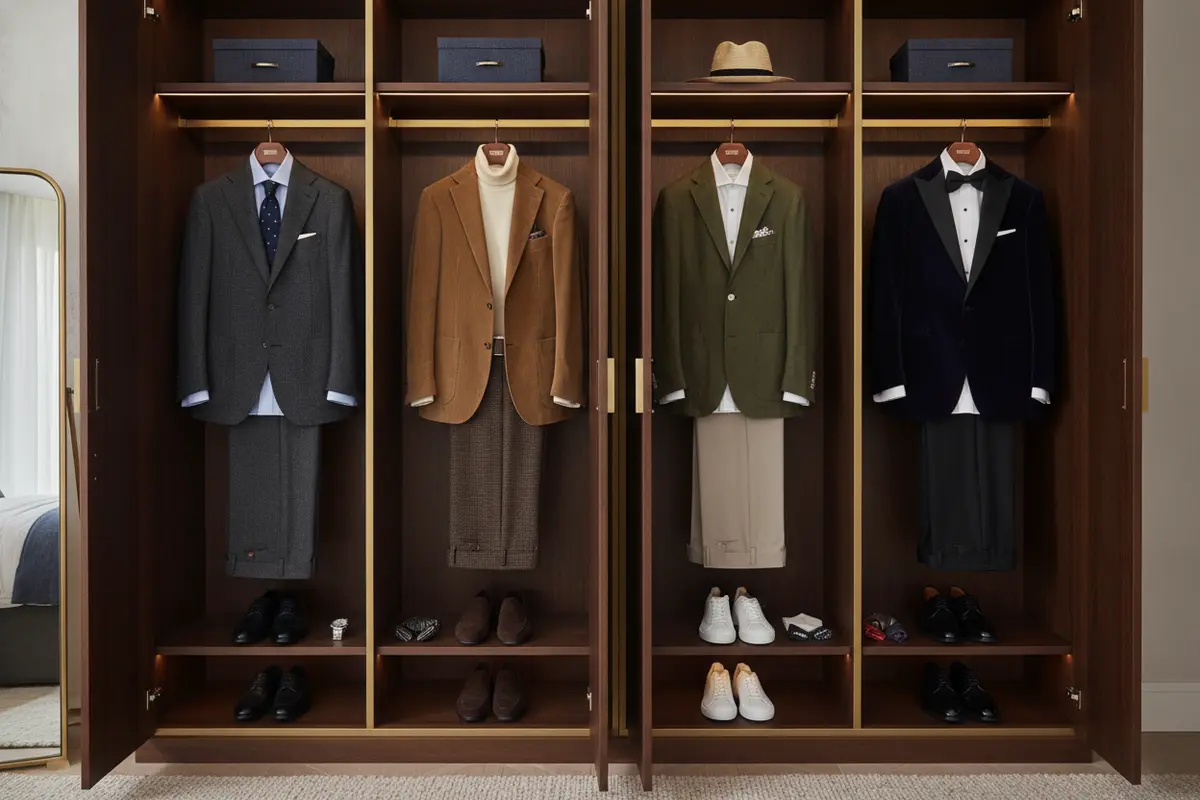
StyleBox is designed for clients who want personalized selections without spending an afternoon browsing a store. The service connects styling guidance with delivery to the home. There is no styling fee, customers pay only for the items they keep, and complimentary delivery and pickup apply in Cincinnati. Customers also have a three-day try-on period.
This format can work well when convenience matters but generic online recommendations do not feel personal enough. Your stylist can use your preferences and needs to guide the selection, while you evaluate the pieces in the setting where you will wear them. The home try-on period also makes it easier to consider how a garment works with your existing shoes, trousers, jackets, and accessories.
Learn more about personalized StyleBox styling if you want an at-home approach. StyleBox is not a substitute for every type of appointment. A wedding, a major fit concern, or a custom suit project may be better served by an in-person consultation. The point is to choose the format that makes good decisions easier.
To make a StyleBox selection more useful, describe the settings you dress for and the pieces you already rely on. Mention fit preferences, colors you enjoy, fabrics you avoid, and any upcoming event. When the selections arrive, try each item with more than one combination. A jacket that looks good alone may become more valuable when it works with two pairs of trousers and several shirts.
How should wedding clients use personal styling services?
Wedding attire involves more than choosing a color. The outfit needs to suit the venue, season, ceremony, reception, dress code, and the visual direction of the couple. It also needs to coordinate with the wedding party without making every person look indistinguishable.
Trevor Furbay Bespoke recommends beginning four to five months before the wedding. That timing gives the process room for conversation, selection, measurements, fittings, and final decisions. The wedding wardrobe process follows four steps:
- Discovery and planning: Discuss the wedding theme, venue, schedule, priorities, and timeline.
- Styling and selection: Review fabrics, silhouettes, accessories, and the level of formality that fits the celebration.
- Measurements and fitting: Take measurements and make precision tailoring adjustments as the clothing develops.
- Final fitting and delivery: Confirm that the complete outfit fits properly and is ready before the wedding day.
For a groom or wedding party, a custom wedding suit and tuxedo consultation can bring individual preferences into one coherent plan. You can also review guidance on coordinating the bride and groom’s formalwear before your appointment. If you are attending rather than participating in the ceremony, a guide to choosing a suit for a wedding guest can help you balance respect for the dress code with your own style.
Begin by gathering the details that affect the outfit: the invitation wording, venue, ceremony and reception schedule, season, wedding-party colors, and your role. If other members of the wedding party are selecting clothing separately, clarify which elements should coordinate and which can vary. This prevents late changes caused by assumptions about color, formality, or accessories.
Wedding styling is also a useful example of why timing matters. A consultation that begins early leaves room to reconsider a fabric or silhouette, schedule fittings, coordinate the group, and confirm the complete look. Waiting until the final weeks can turn reasonable decisions into rushed decisions.
What happens during a personal styling appointment?
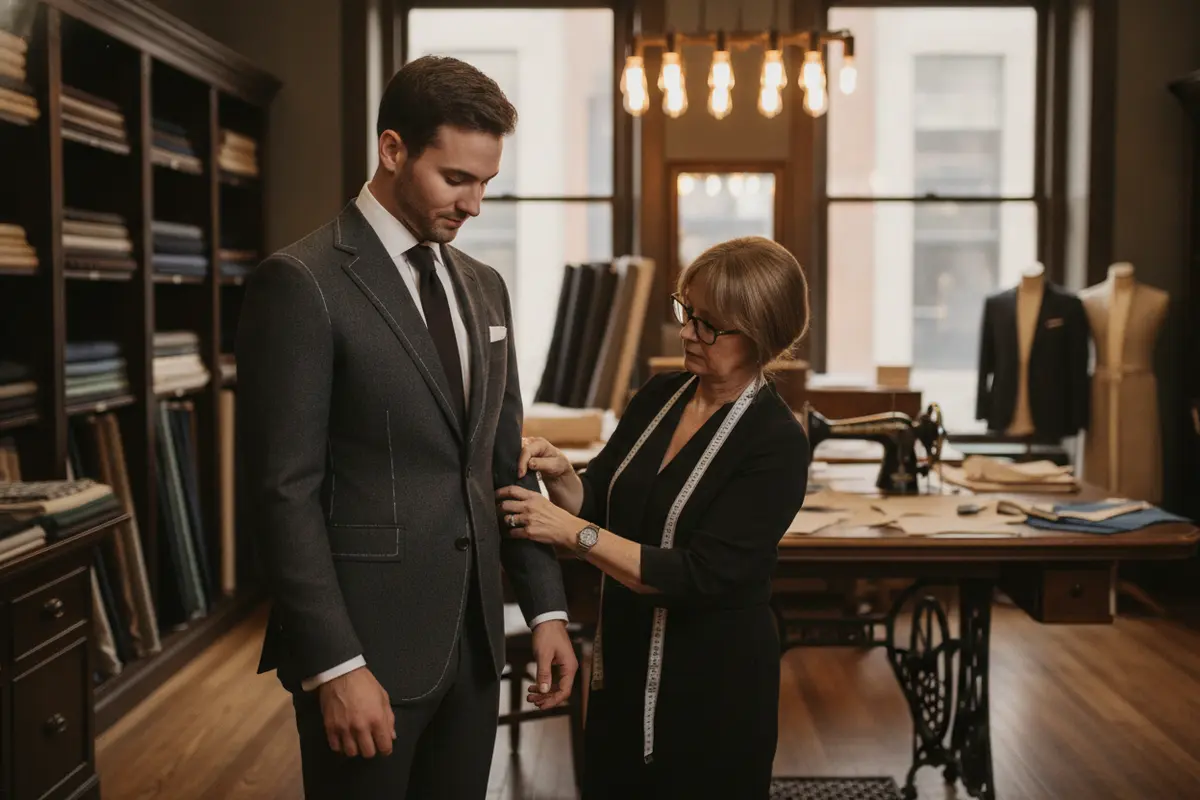
The first appointment should feel like a conversation, not a test. Be ready to describe where you spend time, what you reach for most often, what you avoid, and what has not worked in the past. If you have a specific event, bring the invitation details or explain the dress code, venue, date, and role you will have.
A stylist may ask questions such as:
- Which outfits make you feel most comfortable and confident?
- What parts of your current wardrobe do you wear repeatedly?
- Where do fit problems usually appear?
- What settings do you need clothing for during a typical month?
- Are there colors, fabrics, or silhouettes you already know you prefer?
- Do you want a focused purchase, a complete outfit, or a longer wardrobe plan?
- How much time do you want to spend shopping and maintaining the wardrobe?
From there, the appointment may include fabric and garment selection, fitting observations, outfit combinations, or a review of what to prioritize next. The process should leave you with a clear reason for each recommendation. That clarity is more valuable than a long list of items.
A useful appointment has both creative and practical parts. You may compare a few directions for color or silhouette, then narrow them according to comfort, schedule, and existing pieces. You may discuss whether a garment needs professional alterations, whether it can serve more than one setting, and what should be selected next. The goal is a plan you can use after leaving the appointment.
Because the experience is personal, hospitality matters too. A relaxed consultation, refreshments, and space to compare options can make it easier to think carefully. Trevor Furbay Bespoke’s locations include in-house bars and kitchens, supporting a welcoming, relationship-based approach to shopping.
How do you prepare for a better styling experience?
A little preparation helps your stylist make recommendations that fit your real life. Start by writing down the occasions you dress for most often. Separate weekly needs from occasional needs, such as weddings, travel, presentations, dinners, or seasonal events.
Next, review your current wardrobe. You do not need to photograph every item, but notice which pieces are worn, which are difficult to coordinate, and which no longer fit your preferences or body comfortably. If fit is the issue, bring a garment that demonstrates the problem or describe where it feels restrictive or loose.
Finally, set a priority for the appointment. You may want one versatile jacket, a complete wedding look, several work outfits, or advice about what to stop buying. A clear priority does not limit the conversation. It gives the conversation a useful starting point.
Use this short preparation list:
- Write down three settings where you need clothing.
- Choose two or three garments you wear often and identify why they work.
- Note recurring fit problems rather than trying to solve them yourself.
- Bring event information, including dress code and date, when relevant.
- Decide whether your priority is fit, coordination, convenience, an event, or a broader plan.
- Prepare questions about timing, fabrics, tailoring, delivery, and next steps.
Clients who want broader wardrobe support can learn about professional clothiers and personal stylists before scheduling. If you prefer an appointment-based visit in a particular market, the Columbus location is available by appointment, while Cincinnati is the flagship location. Harbor Springs is a seasonal boutique open from Memorial Day through Labor Day.
Location can shape the appointment format. Cincinnati clients may consider the full flagship experience and local StyleBox delivery. Columbus and Dublin clients should plan around an appointment-based visit. Harbor Springs clients should account for the seasonal schedule. Choosing the right timing and location is part of preparing well.
How can you build a wardrobe plan instead of a shopping list?
A shopping list names items. A wardrobe plan explains what each item needs to do. That difference helps prevent purchases that look attractive in isolation but do not solve a real problem.
Start with your most frequent settings. For each one, identify the level of formality, the number of outfits you need, and the pieces that can overlap. A jacket might support work meetings, dinners, and travel. A pair of trousers might work with a sport coat on one day and a more relaxed shirt on another. These connections are more valuable than a wardrobe organized around single occasions.
Next, separate foundation pieces from statement pieces. Foundation pieces carry regular outfits and should coordinate easily. Statement pieces add personality through color, pattern, texture, or distinctive design. A stylist can help determine the right balance for your preferences instead of treating every purchase as equally important.
Then set an order of operations. Address a repeated fit problem before adding another version of the same garment. Add a versatile layer before buying accessories that only work with one outfit. For a wedding, settle the main formalwear direction before finalizing the smaller details. Sequencing decisions reduces rework.
This approach is also useful when working with a limited amount of time. A client who has one appointment can leave with a priority list: what to select now, what can be tailored, what should be revisited later, and what not to purchase. A longer relationship can then build on that foundation without starting over each time.
How can you tell whether the service is working?
Effective personal styling services should make future decisions easier, not create dependence on constant purchasing. After an appointment, you should understand how to wear the pieces you selected, what they coordinate with, and what your next priority should be.
Look for practical signs of progress. You may be able to build more outfits from fewer pieces. You may stop buying garments that remain unworn. You may feel more comfortable dressing for an important meeting or event. You may also notice that fit concerns are being addressed by the right professional rather than ignored.
It is reasonable to ask how recommendations connect with your existing wardrobe, how custom clothing is priced, what the fitting timeline looks like, and which pieces can be tailored. A strong consultation welcomes those questions. It should make the path forward feel considered and manageable.
Evaluate the result after you have worn the clothing in real settings. Did you know what to pair with it? Did it suit the schedule and climate you described? Did the fit remain comfortable through the day? Did the selected pieces solve the original problem? These questions help you decide whether the next step should be another purchase, a fitting adjustment, a wardrobe edit, or simply time to use what you have.
Frequently Asked Questions
Are personal styling services only for men?
No. Personal styling can support women and men who want help with workwear, casual clothing, formal events, weddings, or a broader wardrobe plan. The recommendations should reflect the client’s life and preferences rather than a fixed category.
Do I need a completely new wardrobe before meeting a stylist?
No. A stylist can work with what you already own and identify the most useful next step. In many cases, the best result comes from improving coordination, addressing fit, and adding only the pieces that fill real gaps.
Is custom tailoring more useful than ready-to-wear clothing?
It depends on the garment and your goal. Custom tailoring can be valuable for an important suit, jacket, shirt, or trousers when fit and design details matter. Curated ready-to-wear can be an efficient choice for wardrobe additions and everyday pieces. A stylist can help determine where each approach makes sense.
When should I begin styling for a wedding?
Begin four to five months before the wedding. That allows time for discovery and planning, styling and selection, measurements and fitting, and the final fitting and delivery.
How does StyleBox work?
StyleBox provides personalized selections for you to try at home. It has no styling fee, you pay only for the items you keep, and complimentary delivery and pickup apply in Cincinnati. The try-on period is three days.
The right personal styling service should leave you with clothing that feels considered, useful, and genuinely your own.