
Smoking suits for men occupy a distinctive place in eveningwear: polished enough for a formal celebration, yet expressive enough to feel personal. The phrase can mean a tuxedo-style dinner suit in contemporary conversation, but it can also evoke the traditional smoking jacket, a different garment altogether. Knowing which look you want makes it easier to choose the right lapels, fabric, shirt, fit and occasion—and to arrive looking intentional rather than overdressed or uncertain.
What does “smoking suit” mean?
There is no single universal definition in everyday use. Many people use “smoking suit” to describe a formal dark suit with the satin or silk-like facing traditionally associated with black tie. In that sense, it is close to what is commonly called a tuxedo or dinner suit. The words can vary by region, retailer and personal preference, so it is useful to describe the details you have in mind rather than relying on the label alone.
A smoking jacket, by contrast, is a relaxed, often richly textured jacket historically associated with changing into a comfortable garment after dinner. It is not automatically a black-tie substitute. If an invitation specifies black tie, a velvet lounge jacket or robe-like smoking jacket may not meet the dress code. When in doubt, ask the host or event organizer what they expect.
For a formal evening look, think of the modern smoking suit as a coordinated outfit: a dark or deliberately chosen evening jacket, matching or complementary trousers, a formal shirt, and considered accessories. A classic tuxedo is one interpretation. Details such as lapel shape, color, fabric and the event’s dress code determine how traditional or distinctive the final result feels. Explore the options in our tuxedo style guide and guide to notch, peak and shawl lapels.
Smoking suit versus tuxedo: how to choose
Rather than treating “smoking suit” and “tuxedo” as two rigidly separate categories, consider how the outfit will be worn and what the occasion calls for. A tuxedo is a recognized black-tie option, usually marked by formal trim on the jacket and trousers. “Smoking suit” is less precise; someone using the phrase may mean a tuxedo-inspired suit, a fashion-forward evening suit, or even a smoking jacket. Confirming the intended dress code is the first step.
| Choice | Typical character | Best suited to | What to confirm |
|---|---|---|---|
| Classic tuxedo / dinner suit | Formal dark tailoring with distinctive facings and evening accessories | Black-tie weddings, galas and formal evening events | Whether the invitation specifies black tie, and whether the event has a preferred level of formality |
| Smoking-suit-inspired evening suit | A tailored suit with a more individual color, texture or lapel treatment | Celebrations where expressive formalwear is welcome | Whether the host expects a conventional tuxedo or allows creative interpretation |
| Smoking jacket | A distinctive, often plush or patterned lounge jacket | Private entertaining or an event explicitly inviting relaxed evening dress | Whether the jacket is appropriate for the event’s dress code; do not assume it replaces black tie |
The table is a starting point, not a substitute for the invitation. A creative dress code can make room for personality; a strict black-tie event calls for a more conventional approach. If you are attending a wedding, ask the couple or planner whether they want a traditional tuxedo, a specific palette, or a coordinated wedding-party look. Trevor Furbay’s custom wedding tuxedo service is one place to explore formal options with a clothier.
Choose lapels that suit the occasion and your proportions
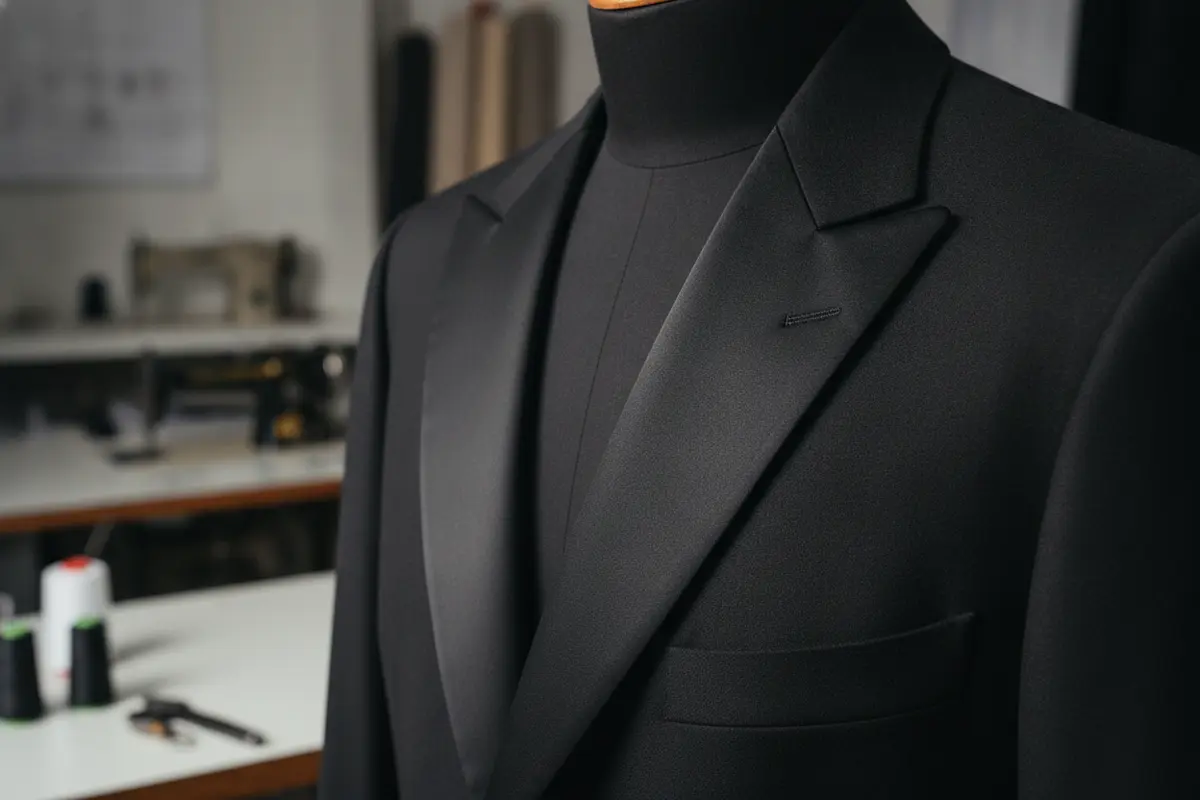
Lapel shape is one of the clearest visual signals on an evening jacket. A peak lapel points upward and outward, giving the jacket a strong, formal line. A shawl lapel has a continuous rounded edge and reads as a classic evening detail. A notch lapel is familiar from many business suits; it can work for less traditional interpretations, but it is not the most conventional choice for a black-tie tuxedo.
There is no one lapel width that flatters every wearer. The lapel should feel balanced with the jacket’s proportions, your frame, and the width of the shirt collar and tie. Very narrow lapels can look disconnected from a broader frame, while an unusually wide lapel may overwhelm a smaller silhouette. Try the jacket on while standing naturally, then look at the whole front—not just the lapel in isolation. Our guide to suit lapel styles offers a closer look at how the shapes differ.
Fabric, color and finish
Fabric changes how a smoking suit looks under evening light, how it feels while worn, and how formal it appears. A smooth, dark cloth is a versatile foundation; a subtle texture can add depth without competing with the rest of the outfit. Velvet can make a jacket feel more expressive and seasonal, but the dress code and venue should guide whether it is appropriate. Consider the event’s climate, indoor temperature, expected movement and how often you expect to wear the garment.
Black is an established formal choice, while midnight blue offers a dark alternative that can appear richly colored under certain lighting. Other colors, patterns and contrasting facings can be stylish when the event welcomes individual expression. For a conservative black-tie invitation, keep the overall palette restrained and prioritize the expected formal details. If you are choosing an outfit for a wedding, coordinate thoughtfully with the couple’s palette without trying to match it exactly unless that is requested.
For a custom garment, price depends on the fabric and the customizations selected, so it is consultation-based rather than a fixed amount. A conversation lets you compare cloth, construction details and intended use before deciding what is right for you. You can also explore custom jackets and sport coats to see how a separate jacket differs from a complete formal outfit.
Fit: the foundation of a polished evening look
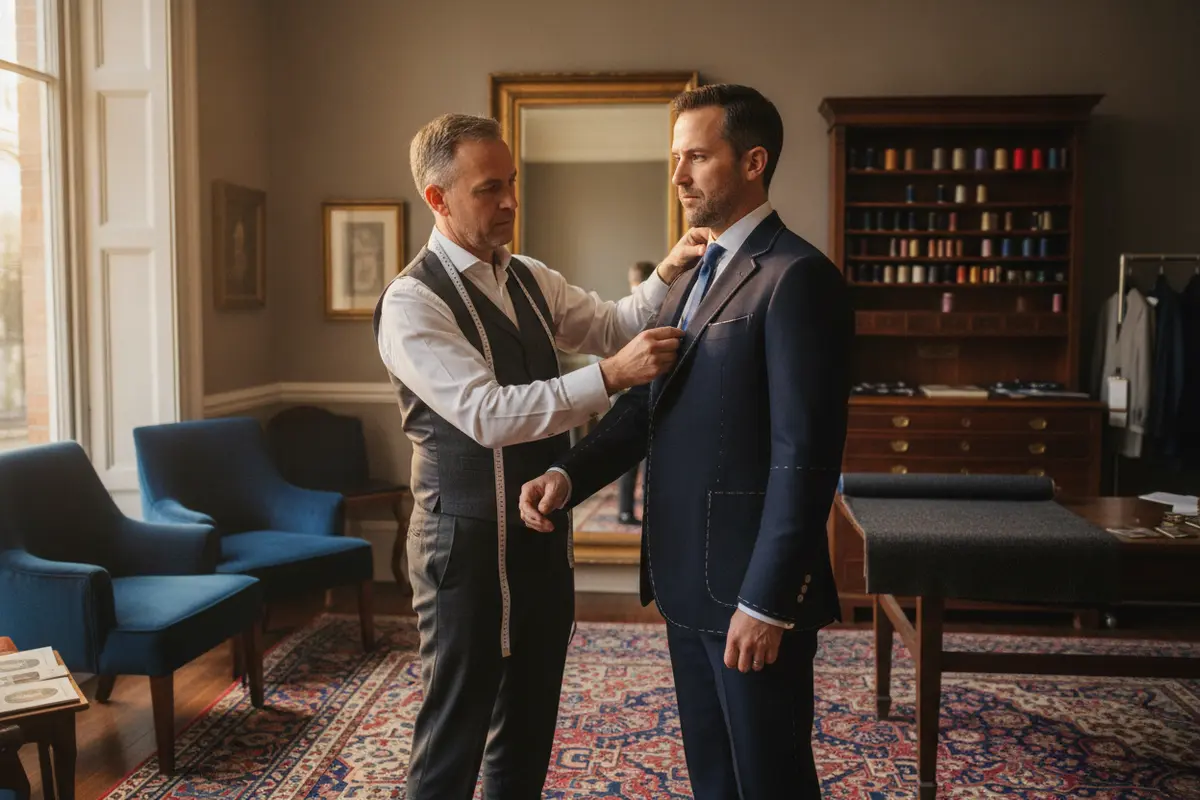
Formalwear has fewer casual details to distract the eye, which makes proportion and fit especially noticeable. The jacket should sit cleanly across the shoulders, close comfortably when fastened, and allow you to move without pulling. The collar should rest neatly against the shirt collar. Sleeves should show an intentional amount of shirt cuff, and the jacket length should look balanced with your torso and trousers.
Trousers should sit securely at the waist and fall cleanly through the leg. The hem can be finished to your preferred break, but it should not bunch heavily over the shoes. Check the full silhouette in motion as well as in a mirror: sit, stand, reach forward and walk a few steps. A fit that looks composed only when you are standing still may not serve you through a long reception or evening event.
Off-the-rack sizing can be a useful starting point, but people have different proportions, posture and preferences. Custom tailoring provides an opportunity to discuss those needs, select details and refine how a garment sits on you. If you are considering a custom look, review custom tailoring options and bring the shoes and shirt you expect to wear, if available, so the overall proportions can be considered together.
Shirt, bow tie and finishing details
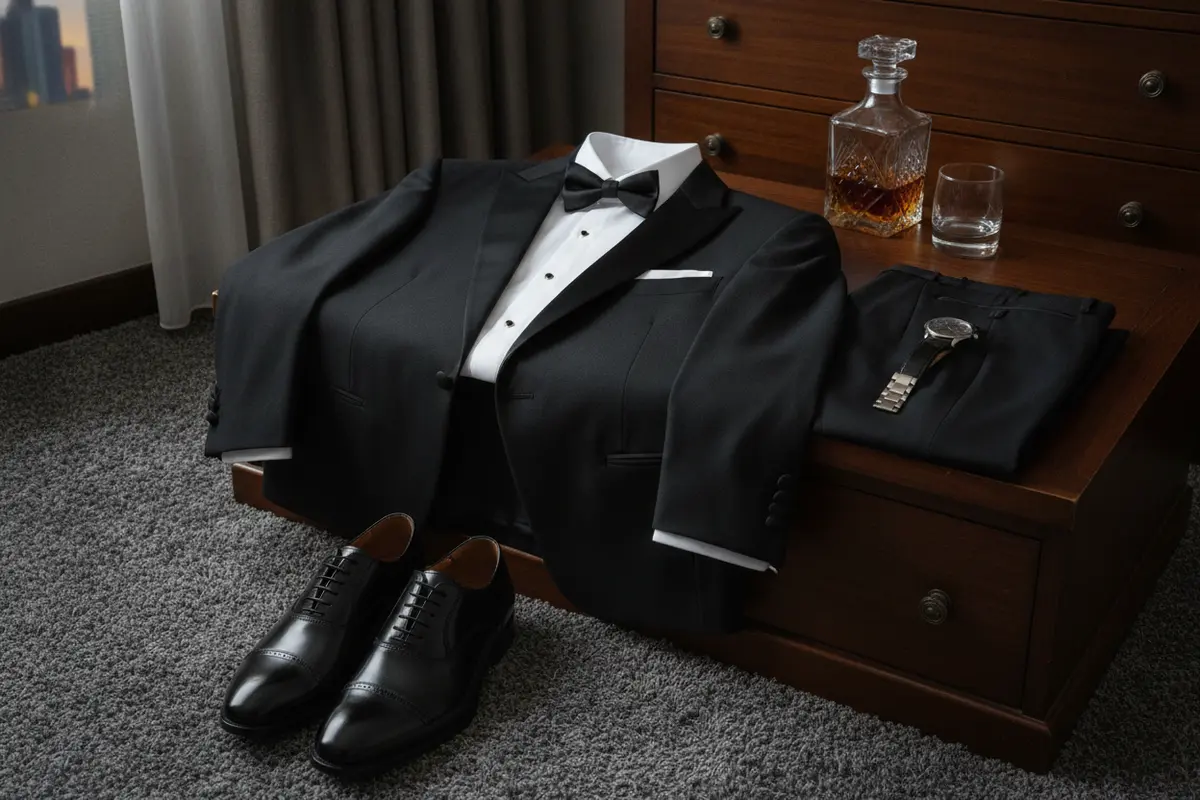
A crisp white formal shirt is a reliable companion to a traditional tuxedo. Depending on the dress code and the jacket, a pleated or textured front can add formality, while a clean, understated front keeps the look modern. Choose a collar that works with your face, jacket lapels and bow tie. A shirt should sit smoothly under the jacket without pulling or ballooning at the waist.
A black bow tie is the classic black-tie choice. A self-tie version has a character that a pre-tied tie cannot quite duplicate, but the important thing is a neat, proportional finish. If you select a colored or patterned bow tie, make sure it suits the event and does not make the outfit feel like a costume. Coordinate the shirt studs, cuff links, pocket square and other accessories rather than letting every item compete for attention.
Footwear should be clean, formal and appropriate to the event. Dark, polished dress shoes are a dependable choice with a classic tuxedo. Belts are usually not the first choice with formal trousers designed for eveningwear; follow the garment’s intended details and ask a clothier if you are unsure. Small finishing decisions matter most when they support the overall line instead of drawing attention away from it. Browse custom shirt options if you want a shirt considered alongside a tailored outfit.
When should you wear a smoking suit?
A tuxedo-style smoking suit is at home at a black-tie wedding, formal gala, or evening celebration where the invitation calls for black tie. It can also suit a wedding reception or special dinner with an explicitly formal dress code. Follow the host’s guidance first, and remember that “formal” does not always mean “black tie.” If the invitation says cocktail attire, a tuxedo may be more formal than expected; if it says black tie optional, a dark suit may be acceptable, but the choice depends on the event and your role.
For a groom, a custom formal outfit can be planned around the venue, season, ceremony time, wedding-party attire and personal style. Begin the process four to five months before the wedding so there is time for discovery and planning, styling and selection, measurements and fitting, and a final fitting and delivery. The right choice is the one that respects the couple’s vision and lets the groom feel comfortable throughout the day. Read more about planning a wedding suit timeline.
At Trevor Furbay Bespoke, wedding attire is approached through consultation and a four-step process: discuss the event and timeline; select fabrics, styles and accessories; take measurements and make fitting adjustments; and complete a final fitting before delivery. For location details and appointment planning, visit the appointment page. Cincinnati is the flagship location, Columbus/Dublin is appointment-based, and Harbor Springs is seasonal.
A practical checklist before you commit
- Confirm the dress code. Ask whether the event calls for black tie, encourages a tuxedo, or welcomes a more expressive evening suit.
- Clarify the garment. Say whether you mean a tuxedo-style suit or a smoking jacket, since the two are not interchangeable in every setting.
- Consider the whole outfit. Plan the jacket, trousers, shirt, tie, shoes and accessories together instead of treating each as a separate decision.
- Prioritize comfort and movement. Sit, walk and raise your arms during a fitting to see how the garment behaves beyond a static pose.
- Allow time for tailoring. Wedding customers should begin four to five months ahead; for other events, ask about the expected process and timeline when booking.
- Choose details you will wear well. A restrained, versatile formal suit may get more use than an unusually specific statement piece, depending on your wardrobe and calendar.
Book Your Style Consultation for Wedding Formalwear
Frequently asked questions
Are smoking suits and tuxedos the same thing?
People sometimes use “smoking suit” to mean a tuxedo or tuxedo-inspired evening suit, but the phrase is not precise everywhere. A smoking jacket is a different, generally more relaxed garment. For a formal event, confirm the dress code and describe the look you want in terms of jacket, lapel, fabric and accessories.
Can I wear a smoking suit to a wedding?
Yes, when it suits the invitation and the couple’s expectations. A tuxedo is appropriate for many black-tie weddings, while a less formal or daytime celebration may call for a different outfit. Grooms and wedding parties should coordinate with the couple and begin planning four to five months before the wedding.
Which lapel is most appropriate for a tuxedo?
Peak and shawl lapels are both classic formal choices. A notch lapel is more commonly associated with business suits and can read as less traditional on a tuxedo. The best option depends on your preferred style, proportions and the formality of the event.
How much does a custom smoking suit cost?
Custom tailoring is consultation-based, and pricing depends on the fabric and customization choices. There is no single price that applies to every garment. A consultation is the right place to discuss the desired look, options and budget before making a decision.
How far ahead should I plan a custom wedding outfit?
Wedding customers should begin four to five months before the wedding. That allows time to discuss the occasion, choose the outfit, take measurements, attend fittings and complete final delivery. If your event is approaching sooner, contact a clothier to discuss the available timeline.