
A spring wedding gives a groom more room to choose color and texture than a strict winter black-tie celebration, but the best look still begins with the setting and dress code. A spring wedding suit for groom should feel appropriate for the ceremony, comfortable through the reception, and coordinated with the wedding party without looking like a uniform. Start with the venue, formality, and season, then choose fabric, color, and details that support all three.
What should guide your spring wedding suit?
Think of the suit as one part of the wedding setting. A garden ceremony, a historic venue, a church, and a formal evening reception each create a different visual context. The right choice should complement that context without sacrificing fit or personal style.
Before looking at colors, confirm the dress code and ask what the wedding party will wear. If the invitation calls for black tie, a traditional tuxedo is the clearest fit; a light-colored suit is not a substitute. For cocktail, semi-formal, or dressy daytime celebrations, a suit can offer more flexibility. If the invitation is unclear, ask the couple or planner rather than guessing.
Next, consider the time of day and the full schedule. An outdoor ceremony may have bright afternoon light, while the reception may continue indoors after sunset. A suit should look intentional in both settings. Choose a color and fabric that remain polished in photographs and feel comfortable when you are standing, greeting guests, and dancing.
- Venue: Let the setting help define whether the look should feel relaxed, classic, or especially formal.
- Dress code: Use it as the boundary for the level of formality, not as a suggestion to ignore.
- Wedding palette: Coordinate with the overall colors without matching every attendant exactly.
- Personal style: Add individuality through fit, texture, and considered accessories rather than several competing statement pieces.
A useful first step is to write down the event details before shopping or choosing cloth. Note the ceremony and reception locations, start time, expected weather, dress code, wedding-party colors, and whether you will change outfits. This simple brief helps separate essential decisions from optional flourishes. For example, an outdoor afternoon ceremony followed by an indoor dinner may call for a breathable cloth and a shade that still looks suitably polished after dark.
For a broader look at how a wedding outfit comes together, see this guide to wedding attire and custom wedding styling. If you are still deciding between a suit and a tuxedo, the tuxedo style guide can help clarify the formality difference.
Which fabrics work well for a spring wedding?
Spring weather can shift during the day, and venues vary. Instead of choosing a fabric by season label alone, consider the event’s formality, the feel you want, and how the suit will move and wear. A lightweight wool is a versatile starting point for a groom who wants a tailored appearance that can work across ceremony and reception. A wool blend with a more open or textured finish can also create a lighter visual impression.
Linen and linen blends bring a relaxed, tactile character that can suit a daytime or outdoor celebration. Linen naturally creases with wear. That texture may feel at home in an informal setting, but it may not be the right choice for a groom who wants a crisp, smooth look throughout a formal evening. A blend can temper the rumpled appearance while preserving some of linen’s visual ease.
For a more structured or formal effect, choose a refined suiting cloth with enough body to hold a clean line. The best option depends on the specific fabric and construction; weight alone does not tell the whole story. During a consultation, handle swatches, compare their drape, and consider how each one looks beside the wedding colors.
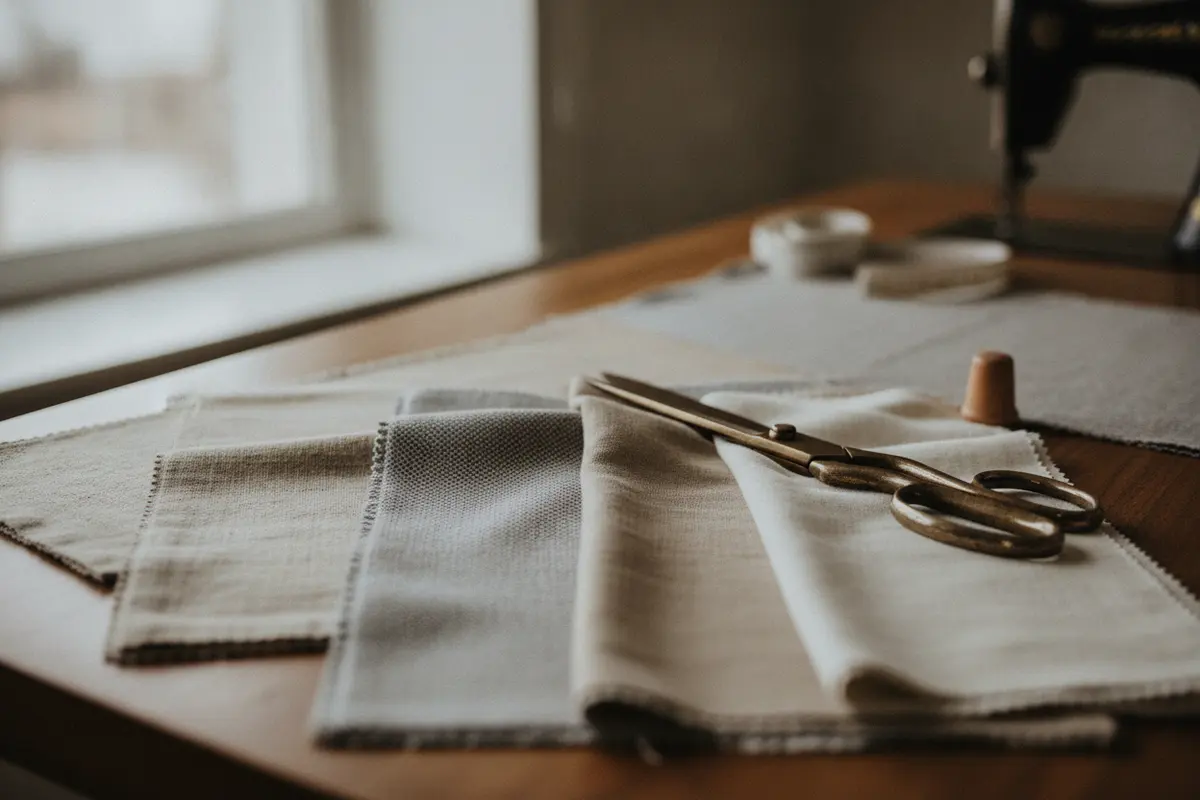
When comparing cloth, ask practical questions. Will the suit be worn for a long day? Is the ceremony outdoors? Does the groom prefer a smooth finish or visible texture? Will the outfit be used again for work or other occasions? These answers make the fabric choice more useful than simply following a seasonal trend.
It helps to compare cloth in more than one way. First, feel the surface and notice whether it looks smooth, dry, or visibly textured. Next, hold a swatch against the shirt and any color references, then view it near a window and under indoor light. Finally, move the cloth gently to see how it drapes. A fabric that looks appealing on a small sample should also suit the formality and overall silhouette you have in mind.
Think through the day’s comfort needs, too. A groom who expects to spend much of the reception outdoors may prioritize breathability and ease of movement. A celebration centered in a cool indoor venue may allow a more substantial cloth or a waistcoat. There is no single spring fabric that works for every date; the schedule and setting help identify the most sensible balance.
How can you choose a spring color that feels personal?
Spring palettes often invite lighter and softer colors, but a spring groom does not have to wear a pastel suit. Navy, mid-blue, and charcoal remain dependable choices when the celebration calls for a classic, formal look. They can be balanced with a lighter shirt, a tonal tie, or a pocket square that picks up a subtle wedding color.
For a daytime event, consider mid-blue, lighter gray, or a warm neutral such as tan. These shades can feel fresh without competing with the wedding party. A muted green or another restrained color can work when it supports the couple’s palette and suits the venue. Keep the overall combination deliberate: one distinctive color is often more effective than several bold elements at once.
Use the wedding party’s attire as a coordination point, not a template. The groom can stand apart through a different shade within the same color family, a waistcoat, a distinctive tie, or a more formal fabric. If attendants wear navy, for example, the groom might choose a deeper or more textured blue and reserve a coordinated accessory for the group. The aim is visual connection with a clear focal point.
Color also changes with light. A fabric that looks pale indoors may appear brighter in direct sun. Compare swatches near a window and alongside the shirt and accessories you expect to wear. When possible, bring a reference to the wedding colors to the appointment so the choices can be considered together.
Make the decision by comparing complete combinations instead of judging the suit color alone. Lay out a swatch with the shirt, tie, pocket square, and a reference to the partner’s attire or wedding palette. If the accessories introduce several unrelated colors, simplify them until one detail becomes the accent. This is especially helpful for a light suit, where a vivid tie or boutonniere can quickly dominate photographs.
Consider how much contrast you want. A dark navy suit with a white shirt creates a clear, classic outline. A lighter gray suit with a pale blue shirt feels softer and more tonal. A tan suit can pair naturally with earthy accents, while a muted green may be strongest when the rest of the outfit stays quiet. These are starting points, not strict formulas; the full outfit should reflect the groom’s taste and the formality of the event.
How do venue and dress code change the decision?
The venue offers useful clues, but it does not overrule the invitation. A garden or vineyard can support a softer palette and more visible texture, while a formal ballroom may call for a deeper color and cleaner finish. A historic building may suit a classic silhouette, and a relaxed outdoor reception may allow more room for a linen blend or lighter shade.
For a daytime ceremony, lighter colors and understated patterns can feel natural. For an evening event, darker tones or a more formal cloth usually create a stronger sense of occasion. If the day includes both an outdoor ceremony and an evening reception, choose a look that bridges them. A versatile suit with carefully selected accessories can transition more easily than a highly casual outfit.
A wedding suit also needs to work in photographs beside the partner’s attire. Discuss the overall level of formality and whether there are colors or styles to avoid. The goal is not to duplicate another outfit. It is to create a balanced pair and a coherent wedding party.
When the venue and dress code seem to point in different directions, give priority to the dress code and use the setting to refine the details. A garden venue can still host a formal wedding, and an elegant indoor room does not automatically require black tie. Clarify the invitation first, then adjust color, texture, and accessories. If a ceremony includes a change of location, think about whether the chosen shoes and fabric will be practical in both spaces.
Explore options such as custom suits and bespoke tailoring, or consider the range of custom jackets and sport coats if the event calls for a less traditional combination. For a groom who wants to understand how suit details work together, the guide to suit lapel styles is a helpful next read.
What should the groom coordinate with the wedding party?
Coordination works best when everyone understands the level of formality and the broad color direction. Share the dress code, the wedding palette, and any agreed-upon details with the wedding party early. Avoid asking every person to find an identical shade without offering a clear reference; colors can vary between materials and lighting.
The groom can be distinguished with a subtle change in tone, a different lapel or waistcoat, or a tie and pocket square selected for the occasion. Keep the shirt simple enough to support the suit. A white or pale blue shirt is a reliable foundation for many spring combinations, while accessories can introduce a controlled accent.
Shoes should fit the formality and the suit color. A darker suit generally pairs naturally with darker footwear, while a warm neutral suit may work with brown leather. Consider the venue, too: a garden or lawn may call for a practical sole and a shoe that remains comfortable throughout the day. If the event is formal, avoid letting casual footwear undercut the rest of the outfit.
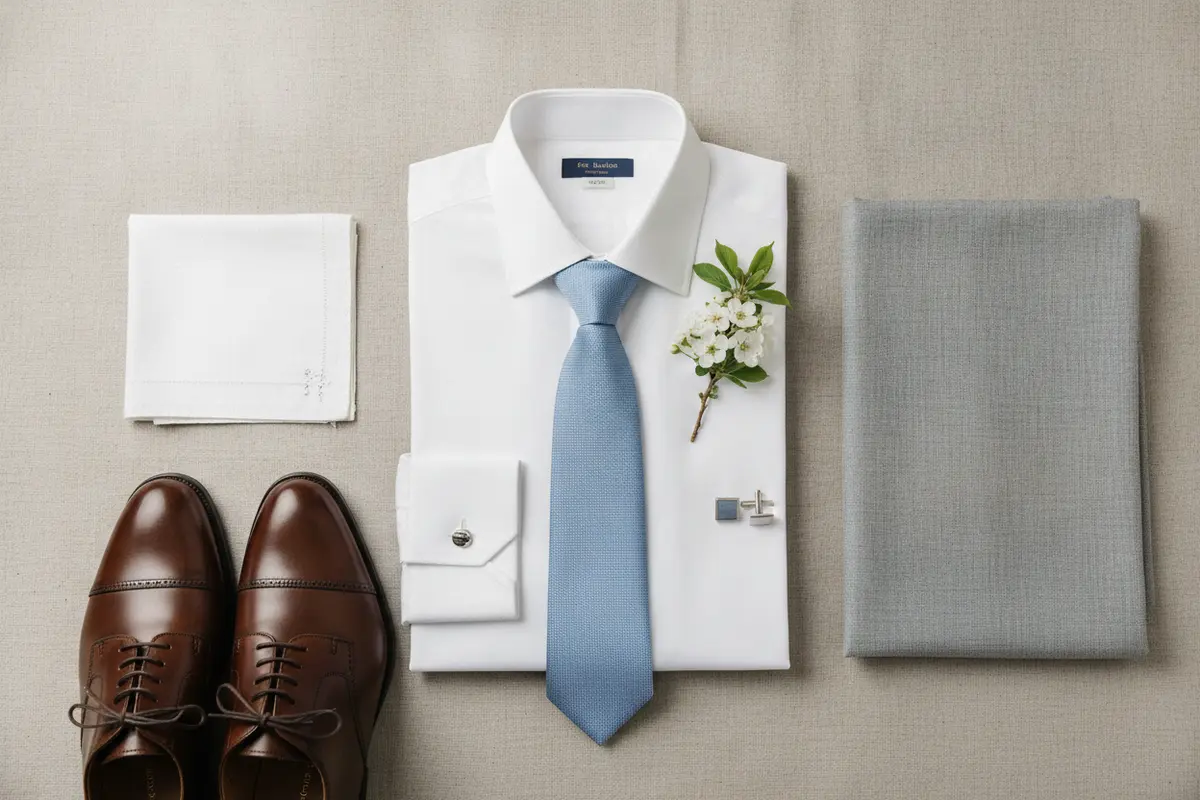
Accessories should feel connected, not identical. A tie, pocket square, and boutonniere can share a color family without repeating the same print or shade. The suit should remain the anchor. For more ideas on balancing individual style with a wedding look, browse groom wedding suit ideas and wedding tuxedo styles.
Make coordination easy for the group by sharing a short, specific guide rather than a vague color request. Include the dress code, a photo or swatch of the preferred color family, the expected level of formality, and any details that should match, such as tie color. Leave room for variation in exact shades unless identical garments are part of the plan. This keeps the group visually connected while allowing each person to wear a suit that fits.
Plan the accessories as a set, but choose them one at a time. Start with the suit and shirt, select the tie or other neckwear, and then add a pocket square only if it improves the balance. The boutonniere already adds a strong detail near the lapel, so repeating its exact color and pattern elsewhere can feel overly matched. A restrained combination usually looks composed in person and in photographs.
How should you compare spring suit options?
Use the table as a starting point, not a rigid rule. The wedding’s dress code takes priority, and the specific fabric and fit matter as much as the broad category.
| Suit direction | Works well for | What to consider |
|---|---|---|
| Lightweight wool in navy or mid-blue | Classic daytime or evening weddings | Versatile formality and a clean appearance; compare the cloth’s weight, texture, and drape. |
| Light gray or warm neutral | Daytime celebrations and softer palettes | Check how the shade looks in natural light and beside the wedding colors. |
| Linen or linen blend | Relaxed outdoor or destination-style settings | Expect a more textured, relaxed look; pure linen creases as it is worn. |
| Dark suit or tuxedo | Formal evening celebrations | Follow the dress code; choose a tuxedo when the invitation specifies black tie. |
| Textured or patterned cloth | Grooms seeking subtle individuality | Keep the shirt and accessories restrained so the overall look remains balanced. |
To use the comparison well, identify the non-negotiables first. If the invitation specifies black tie, remove casual suit directions from consideration. If the wedding is outdoors and relaxed, decide whether a naturally textured look appeals to you and whether you are comfortable with linen’s tendency to crease. Then narrow the remaining options by palette and how often you expect to wear the suit afterward.
Ask to see the fabric beside a shirt and accessory rather than relying on a description such as “light” or “formal.” Those words can mean different things to different people. A mid-blue cloth may look restrained in one weave and vivid in another; the surface and drape influence the overall impression. Choosing from a real combination makes the decision more concrete.
When should you start planning and fitting?
For a wedding, begin planning four to five months before the date. This gives time to discuss the venue, wedding theme, schedule, and preferred formality before settling on a design. It also leaves room for fabric selection, measurements, fittings, and final coordination rather than forcing every decision into the last few weeks.
A custom wedding wardrobe process can be approached in four clear stages:
- Discovery and planning: Discuss the wedding’s theme, venue, and timeline. Bring the invitation details, color references, and any dress-code guidance.
- Styling and selection: Compare fabrics, styles, and accessories. Decide what will make the groom distinctive while keeping the wedding party cohesive.
- Measurements and fitting: Take precise measurements and assess how the garment sits and moves. Share any comfort or fit concerns during the fitting.
- Final fitting and delivery: Review the finished look and confirm that the suit is ready well before the wedding day.
At each stage, keep the practical details visible: the wedding date, travel plans, ceremony location, and any change of outfit. If multiple events are planned, explain which one the suit is for and whether it should work for more than one occasion. For a closer look at the process, read about what happens during a bespoke tailoring process and what to wear to a custom suit fitting.
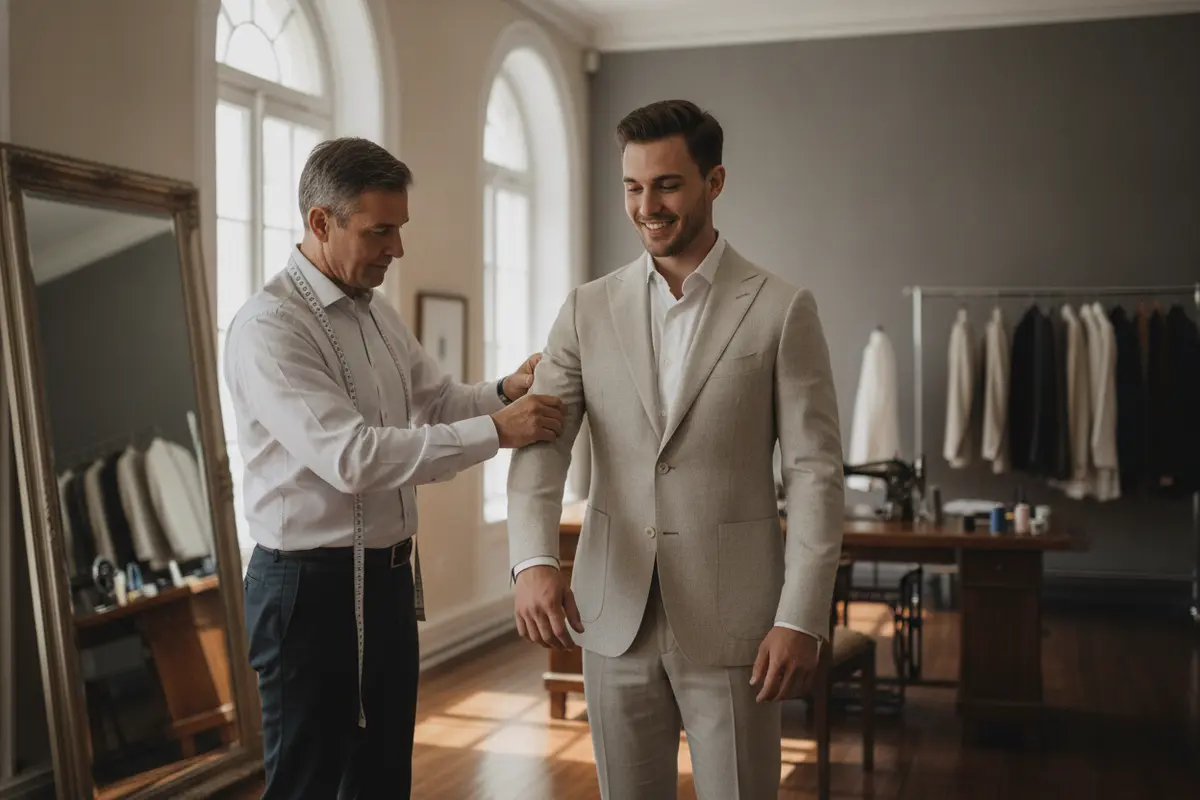
Custom tailoring is consultation-based, with the final cost depending on the fabric and customization. Discuss the options and timeline during the consultation rather than relying on a generic price or assumed delivery schedule. For an overview of the available custom tailoring services, or to explore custom tuxedo options, review the relevant service pages.
Give the process a clear decision order to avoid revisiting the same choices. First agree on the dress code and overall look with the couple or planner. Next choose the suit direction and fabric, then settle the shirt, shoes, and accessories. Finally, try the complete combination at a fitting. Seeing the jacket, trousers, shirt, and shoes together can reveal small balance issues that are hard to spot when each item is considered separately.
Use fitting appointments to assess movement as well as appearance. Sit, stand, reach forward, and walk naturally in the jacket and trousers. Notice whether the shoulders feel comfortable, the sleeves sit as intended, and the trousers remain easy to move in. Share specific concerns with the clothier instead of waiting until the wedding week. The goal is an outfit that looks composed and feels workable through a full day.
Bring useful references to the first discussion: the invitation or dress-code wording, venue and schedule, wedding palette, and any images that show the general mood. If the partner’s outfit has already been selected, a description or reference can help the groom’s look feel connected without matching it exactly. Mention travel or other events that affect when the suit must be ready, and ask how the proposed timeline accommodates fittings.
How can the suit work beyond the wedding?
A wedding suit can become a useful part of a broader wardrobe when its color and details suit more than one setting. A navy or mid-blue suit can often be worn for professional occasions, celebrations, and formal dinners. A light neutral suit may be more specific to warm-weather events, but can still work for other daytime occasions when the dress code allows.
Think about how the jacket and trousers can be worn separately, but do not assume every suit is designed for that purpose. Ask whether the fabric and construction make the pieces versatile on their own. Consider a shirt and tie combination for work, then a more relaxed shirt or knit for a less formal event. A restrained pattern and classic details can make future styling easier.
Before deciding on a distinctive color or detail, name two or three occasions where you might wear the suit again. A navy suit may have a clear role at work and formal dinners, while a light tan suit may be more useful for seasonal celebrations. This does not mean the wedding outfit must be plain. It means choosing a statement detail that can be changed or set aside after the event, such as a tie, pocket square, or waistcoat.
Separate-wear options depend on the cloth, cut, and design. A jacket intended to be worn as a sport coat may combine more easily with other trousers than a highly formal matching suit jacket. Likewise, suit trousers may not work with every casual top. Ask about these uses while selecting the outfit so the choice reflects how you actually plan to dress, not only a theoretical number of combinations.
If you want guidance beyond the wedding outfit, explore building a versatile wardrobe or consider working with professional clothiers and personal stylists. The best investment is a suit that feels distinctly appropriate for the wedding and still has a clear place in your wardrobe afterward.
Frequently Asked Questions
Can a groom wear a light suit to a spring wedding?
Yes, when the dress code and setting support it. Light gray, tan, and some mid-tone colors can suit a daytime or outdoor celebration. For black tie or a very formal evening event, follow the dress code and choose a more formal option.
Is linen a good choice for a spring groom suit?
Linen can be a good fit for a relaxed daytime or outdoor wedding, especially when a naturally textured look is welcome. It creases with wear, so consider a linen blend or another cloth if you prefer a smoother appearance.
How can the groom stand out without matching every groomsman?
Keep the overall palette coordinated, then distinguish the groom through a different shade, fabric, waistcoat, or accessory. A clear shared color direction helps the party look connected without making every outfit identical.
How far in advance should the groom plan a custom wedding suit?
Begin four to five months before the wedding. That allows time for discovery and planning, fabric and style selection, measurements, fittings, and final review before the celebration.
What should a groom bring to a wedding suit consultation?
Bring the wedding date, dress-code information, venue details, color references, and any notes about the wedding party’s attire. If you have a particular fabric, fit, or styling preference, share that too so the choices can be discussed in context.
A thoughtful spring wedding suit begins with the occasion, then brings fabric, color, fit, and personal details into one polished look. With enough time to plan and refine the outfit, you can feel at ease from the ceremony through the final celebration.