
Summer suits should feel lighter without looking careless. The best summer suits balance breathable cloth, a considered color, and enough structure to look polished through a warm workday, a trip, or an outdoor celebration. Start with the setting and how you will wear the suit, then choose fabric and fit to match. A few deliberate choices can make the difference between a suit that stays comfortable and one that feels heavy before the day is half over.
What Makes a Suit Work in Summer?
A summer suit is not defined by one fabric or one pale shade. It is a tailored outfit designed for warmer conditions and the demands of a particular occasion. The cloth can be more breathable, the lining and construction may be lighter, and the color can feel seasonally appropriate. The right combination still needs to fit the dress code. A linen suit at a beach gathering and a lightweight navy suit in a cool office are both summer options, but they serve different purposes.
Think about the complete outfit, not only the jacket. A closely woven shirt, heavy tie, and lined trousers can make an otherwise airy suit feel warm. Conversely, a jacket that is too soft or too relaxed may not look right at a formal event. You are aiming for ease, not a loss of intention.
- For professional settings: Choose a refined weave, a versatile color, and a clean shoulder line.
- For travel: Favor a cloth that recovers well from movement and a color that works with more than one shirt.
- For outdoor events: Consider the time of day, venue, and dress code before choosing a lighter shade or more casual texture.
Which Fabrics Are Best for Summer Suits?
Fabric affects airflow, drape, texture, and how formal a suit appears. There is no single best summer cloth for every person. A frequent commuter may prioritize a neat appearance and versatility, while someone dressing for an outdoor wedding may welcome visible texture and a softer hand. At a consultation, compare the cloth in person and consider how the whole garment will be made.
Lightweight wool
Lightweight wool is a useful starting point when you need a suit to look professional in several settings. It can drape cleanly and has a smoother appearance than many open-weave or slubby cloths. A breathable weave may make it more comfortable than a heavier, tightly constructed option, though the specific fabric and jacket construction matter. Ask to see and feel the actual cloth rather than relying on a label alone.
Linen and linen blends
Linen has an unmistakable relaxed texture and suits warm-weather occasions where a little natural rumpling feels appropriate. Pure linen can crease noticeably as you move and sit. That character is part of its appeal, but it may not be the first choice for a conservative office or a long day of back-to-back meetings. A blend can change the hand and behavior of the fabric, so assess the particular cloth rather than assuming all linen blends perform alike.
Cotton and textured blends
Cotton often gives a suit a more casual, approachable look. It can work well for a sport coat and trouser combination, creative workplaces, or daytime plans. Textured blends can add visual interest without relying on a bright color. Consider how the cloth creases, how it feels against your skin, and whether it coordinates with the shirts and shoes you already own.
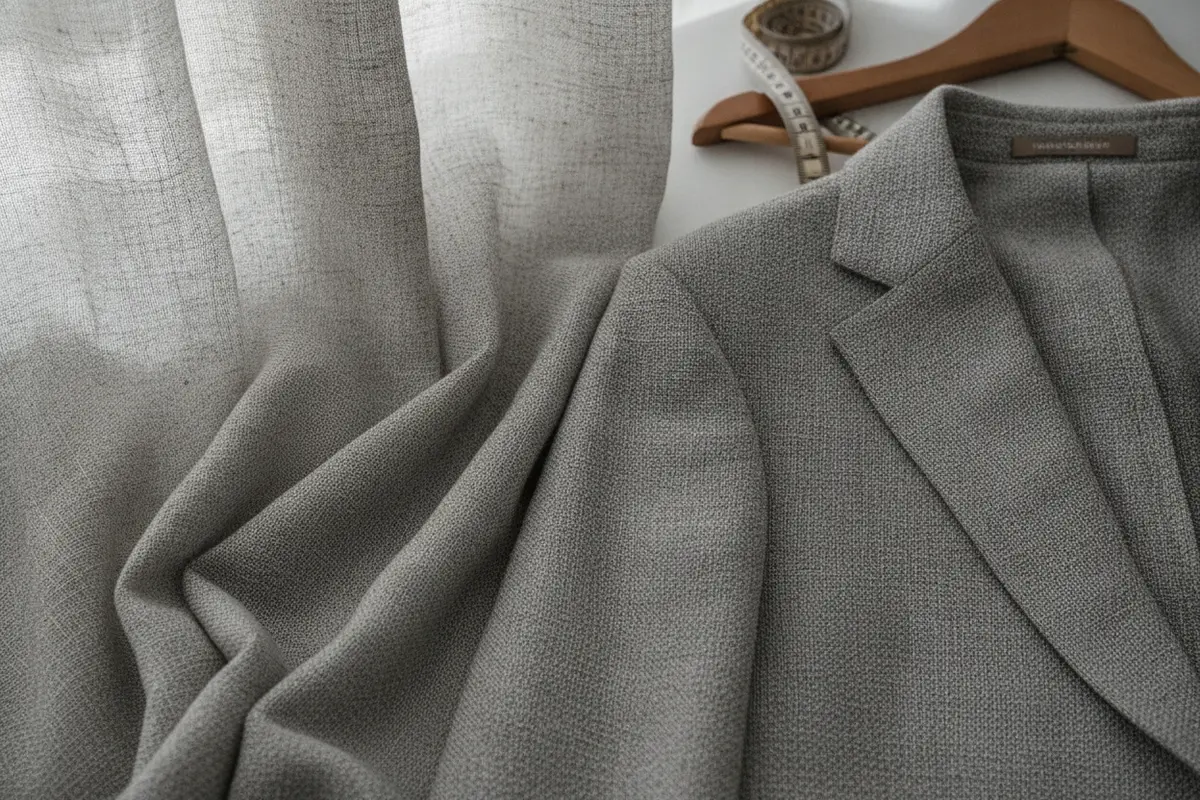
When you compare fabrics, ask practical questions: Will you wear the suit often? Will you sit for long stretches or travel in it? Do you want a crisp surface or a relaxed texture? Is the suit intended for a single event or for repeated use? A stylist can help narrow the choice by connecting those answers to the occasion and your wardrobe. Explore custom suits and bespoke tailoring to see how a tailored suit can be shaped around your preferences.
How Should You Choose a Summer Suit Color?
Color should be guided by where the suit will go, how formal it needs to feel, and what else you plan to wear with it. Navy remains a practical choice for professional settings because it pairs easily with white, pale blue, and patterned shirts. A medium or lighter blue can feel less formal and more seasonal while retaining a tailored appearance.
Light gray, tan, and stone can be excellent warm-weather choices for daytime events and less formal offices. They look especially cohesive with brown shoes, but the shade should complement your complexion and coordinate with the rest of your outfit. Cream and very pale shades create a distinctly summery effect. They are best when the event, venue, and care demands make sense for a light garment.
- Navy: A reliable option for business, dinners, and occasions where versatility matters.
- Blue: A fresh alternative that can work for both weekday wear and celebrations.
- Gray: A flexible choice; lighter gray reads more relaxed than charcoal.
- Tan or stone: A natural fit for daytime and outdoor settings, particularly with understated accessories.
- Cream or ivory: A statement choice that needs thoughtful coordination and care.
Use accessories to set the level of formality. A white shirt, restrained tie, and polished leather shoes make a light suit feel more formal. An open-collar shirt and loafers move it toward relaxed. If you are choosing a suit for a wedding, confirm whether the couple has a dress code or palette in mind before settling on a bold color or a very pale suit.
What Fit Feels Comfortable Without Looking Casual?
Warm weather can make a close, restrictive fit feel even less comfortable, but sizing up is not the solution. A jacket should sit cleanly across the shoulders, close without pulling, and allow you to reach forward and sit naturally. Sleeves should finish in a way that works with the shirt cuff. Trousers should give you comfortable movement through the seat and thigh while maintaining a clean line.
Pay attention to how the suit moves. Button the jacket and sit down. Walk, raise your arms, and reach forward as you would during a normal day. Check whether the lapels lie flat, the jacket rides up, or the trousers pull. These small trials reveal more than a quick standing mirror check. The goal is ease through the day while preserving the shape and proportion that make tailoring look sharp.
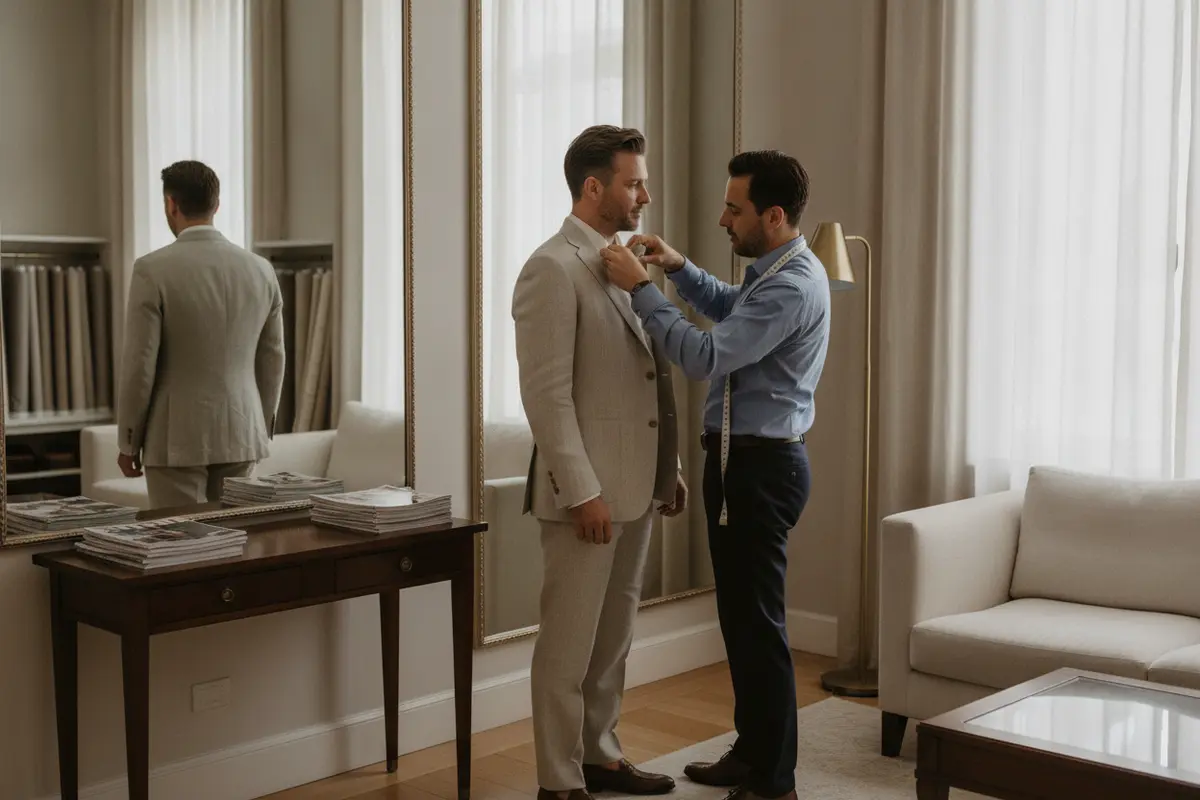
Construction and lining affect how a jacket feels, but details vary from garment to garment. Ask what is appropriate for the particular cloth and intended use rather than assuming every summer jacket is made the same way. A light, soft jacket may suit a relaxed setting; a more structured option may better support a formal or professional look. A custom styling and tailoring consultation can help you discuss those tradeoffs and refine the proportions around your preferences.
How Do You Style Summer Suits for Work?
For an office, begin with your workplace’s expectations. In a formal environment, a lightweight navy or blue suit with a crisp shirt and a restrained tie stays composed without relying on heavy cloth. If the dress code is business casual, a textured jacket and tailored trousers may feel more appropriate than a full matching suit. A subtle pattern can add character, but keep the overall contrast controlled when you want the outfit to read as professional.
Choose shirts that feel comfortable under the jacket and have a collar that suits whether you will wear a tie. A lightweight cotton shirt is a dependable pairing. If you skip the tie, make sure the collar holds its shape and the shirt still feels intentional. Complete the look with leather shoes and a belt in a compatible color. A jacket and trousers do not need to match exactly to look coordinated, but differences in shade and texture should appear deliberate.
For a versatile work wardrobe, consider a suit that separates well. Wear the jacket with tailored trousers on one day, then pair the trousers with a different sport coat on another. That approach can extend the usefulness of a suit, provided the fabric and formality of the pieces work together. Browse custom jackets and sport coats if you want to consider a separate tailored layer alongside a suit.
How Can You Wear a Summer Suit While Traveling?
Travel calls for a balance of comfort, appearance, and practicality. A versatile mid-tone suit is often easier to coordinate than a very pale one, especially when you have limited room for extra shoes and shirts. If you expect to wear the jacket separately, choose a color and texture that pair with trousers you already own. A simple shirt and shoe palette gives you more combinations with fewer items.
Before traveling, check whether the suit can be carried in a garment bag and whether your schedule allows time to hang it after arrival. If you pack it in a case, place it carefully and avoid compressing it under heavy items. Once you reach your destination, hang the garment and let it settle. For a long flight or drive, consider traveling in comfortable clothes and changing when you arrive if the schedule permits. That can help you feel fresher without asking a tailored outfit to do everything.
Think through the complete itinerary. A suit for a business presentation needs a more formal shirt and shoes than a jacket intended for dinner after sightseeing. If the same suit must do both, select a middle-ground color, keep accessories interchangeable, and plan for the setting where you most need to look polished. A well-chosen pair of custom trousers can also help create additional warm-weather combinations when coordinated with separate jackets.
How Should You Style Summer Suits for Events?
Event attire depends on the invitation, time, venue, and role you have at the gathering. For an outdoor daytime celebration, a lighter blue, gray, or tan suit can feel seasonally appropriate. For an evening event, a darker suit may look more at home, especially when the dress code is formal. Do not assume that warm weather means every occasion calls for linen or an open collar; use the invitation as your guide.
For a wedding, confirm whether the couple has requested specific colors or levels of formality. A groom’s outfit also needs to coordinate with the wedding party and photography setting. If you are part of the wedding party, begin planning early enough to discuss the overall look, fabric, and fitting schedule. For wedding attire, Trevor Furbay recommends beginning four to five months before the wedding. The process can include discovery and planning, styling and selection, measurements and fitting, and a final fitting before delivery. Learn more about custom wedding tuxedos and tailored formal options when the dress code calls for them.

Accessories can bridge the gap between seasonal and formal. A pocket square adds a small point of color; a knit tie can feel more relaxed than a glossy formal tie. A clean white shirt and polished shoes keep a light suit from looking unfinished. Choose one or two details that support the outfit rather than adding competing patterns throughout.
Summer Suit Options at a Glance
Use this comparison to identify a starting point, then evaluate the actual cloth, fit, and dress code before making a decision.
| Option | Look and feel | Good starting point for | Consider before choosing |
|---|---|---|---|
| Lightweight wool | Clean drape and refined appearance | Work, travel, and repeat wear | Weave, weight, lining, and intended formality vary by garment |
| Linen | Airy, textured, naturally relaxed | Daytime events and casual summer settings | Visible creasing is part of its character |
| Cotton | Casual, substantial texture | Business-casual settings and separates | Check how the specific cloth moves and creases |
| Textured blend | Distinctive surface and adaptable styling | Events or wardrobes seeking visual interest | Assess the blend’s hand, drape, and compatibility with your other clothes |
What Should You Ask at a Custom Suit Consultation?
A consultation is an opportunity to describe what you need the suit to do, not simply select a color. Bring a clear picture of the settings where you expect to wear it and mention any comfort preferences. If you already own a suit that feels too warm, too formal, or difficult to coordinate, explain what is not working. Those details help guide a more useful conversation.
- Which fabrics suit my intended occasions and how often I plan to wear the suit?
- How does this cloth feel and drape compared with the alternatives?
- What jacket construction and lining are appropriate for this specific garment?
- Can I wear the jacket or trousers separately with pieces I already own?
- What colors and accessories will work with my current shirts and shoes?
- What is the expected fitting and delivery timeline for my selected options?
Custom tailoring pricing is consultation-based and depends on fabric and customization. There is no one price that applies to every cloth or design choice. If you are deciding between a full suit and a separate jacket, ask to compare the uses and tradeoffs before choosing. You can also review custom casual attire for ideas that sit between formal suiting and everyday clothing.
How Can You Keep a Summer Suit Looking Sharp?
Wear and care habits make a difference, particularly with lighter colors and textured cloths. After wearing a suit, let it air out before returning it to a closet. Use a suitable hanger that supports the shoulders, and give the garment room rather than crowding it among other clothes. Brush away surface dust with an appropriate garment brush. Avoid wearing the same jacket every day when you can rotate it, allowing the fabric time to recover between wears.
Follow the garment’s care instructions and use a professional cleaner when cleaning is needed. Frequent unnecessary cleaning can be hard on garments, so address spills and marks promptly by consulting a qualified professional rather than experimenting with home treatments. For fit changes or repairs, rely on a professional tailor; do not try to alter or mend a tailored garment yourself. Read the custom suit care guide for more on maintaining tailored clothing.
A light-colored suit may show marks more readily than a darker one, so consider the setting before wearing it. If you are traveling, use a garment bag and allow the suit to hang when you arrive. These simple routines help you enjoy the suit while keeping it ready for the next occasion.
Frequently Asked Questions
Are summer suits always made from linen?
No. Lightweight wool, cotton, linen, and blends can all work for warm-weather tailoring. The best choice depends on how formal the occasion is, the texture you like, and how the cloth behaves when worn.
Can I wear a navy suit in summer?
Yes. Navy remains versatile in warm weather, particularly for work, evening occasions, and settings where a light-colored suit would feel too casual. Choose an appropriate lightweight cloth and pair it with a seasonally comfortable shirt.
Is a linen suit appropriate for work?
It can be, depending on your workplace. Linen’s relaxed texture and natural creasing may suit a creative or business-casual environment, but a more refined lightweight wool can be a safer choice when your office expects a crisp, formal appearance.
Should a summer suit fit looser than a winter suit?
Not necessarily. A comfortable suit should allow you to move and sit without pulling, but it should still follow your proportions. The fabric and construction can influence comfort; simply sizing up can leave the suit looking untidy.
When should I begin planning a wedding suit?
For wedding attire, begin four to five months before the wedding so there is time to discuss the setting, select the look, complete measurements and fittings, and confirm the final garment before the event.
The right summer suit keeps you comfortable while respecting the moment, whether that means a refined navy for work or a relaxed, textured look for an outdoor celebration.