
A summer wedding asks a groom to balance two things: looking composed in photographs and staying comfortable through a warm ceremony, reception, and long day of celebration. The right summer wedding suit for groom style is not simply the lightest garment available. It is a considered combination of breathable cloth, appropriate structure, a fitting color, and details that suit the venue and dress code.
Start by clarifying the formality and setting. A garden ceremony at midday, a formal evening reception, and a coastal celebration may all call for different choices. Once you know the dress code, venue, and likely conditions, you can choose a suit that feels intentional rather than merely seasonal.
What should a groom decide before choosing a summer suit?
Before you look at fabric swatches, gather the decisions that shape the outfit. Ask the couple or planner about the dress code, ceremony time, venue, and whether the wedding party will follow a coordinated palette. Consider the full day, too. A groom may move from an outdoor ceremony to an air-conditioned dinner, so the suit should work across both environments.
- Formality: Is the invitation black tie, formal, cocktail, or more relaxed? A suit should respect the stated dress code rather than compete with it.
- Setting: A lawn, historic venue, beachside setting, and city ballroom each create a different visual context.
- Timing: Midday sun can feel very different from an evening reception. Note whether you will be outdoors for portraits or the ceremony.
- Wedding-party palette: Find out which colors the attendants will wear. The groom can coordinate without matching everyone exactly.
- Personal wardrobe: Decide whether you want a wedding-specific look or a suit you can wear again for work and other occasions.
These decisions help narrow the options before you consider individual details. If you are comparing a suit with more casual separates, explore the range of custom casual attire for a sense of how relaxed styling differs from a coordinated suit. For a classic tailored foundation, review custom suits and bespoke tailoring.
It helps to create a short event brief before an appointment. Write down the ceremony and reception locations, whether you will change clothes, the expected time outdoors, and any dress-code language from the invitation. Add the colors already confirmed for the wedding party. These details make it easier to compare a soft neutral with a darker blue, or a textured cloth with a smoother one, in the context of the actual celebration.
Also consider your role in the day. A groom who will greet guests, move between indoor and outdoor spaces, and appear in many photographs needs a suit that remains presentable through varied activities. If the wedding includes a rehearsal dinner or another event, decide whether one suit can serve more than one occasion or whether you want two distinct looks. This is a useful early decision because it affects color, fabric, and how formal the overall outfit should feel.
Which fabrics feel right for a summer wedding?
Fabric affects the way a suit feels, moves, and holds its shape. In warm weather, many grooms consider linen, cotton, wool, and blends. There is no single best fabric for every summer wedding. The right choice depends on the formality of the event, how much structure you prefer, and whether you value a crisp appearance or a more relaxed texture.
| Fabric direction | Look and feel | Works well when | Consider |
|---|---|---|---|
| Linen | Airy, textured, and naturally relaxed | The setting is informal, outdoors, or destination-inspired | Its natural creasing is part of the look; choose a cut and styling that make that ease feel deliberate. |
| Cotton | Clean and versatile, with a more casual character than many formal suitings | You want a polished daytime outfit with a little less ceremony | Check how the cloth drapes and holds its shape for your preferred silhouette. |
| Lightweight wool | Refined drape and a more traditional tailored appearance | The dress code is formal or you want a suit with broad future use | Ask to handle the cloth and discuss its weight and structure rather than choosing by fiber name alone. |
| Blended cloth | Can balance texture, drape, and practical wear | You have a specific combination of comfort and appearance in mind | Assess the actual fabric and construction; blends vary, so the label alone does not settle the choice. |
Do not assume that a fabric described as lightweight will automatically feel comfortable in every situation. The cut, lining, shirt, and time spent in direct sun matter as well. A fitting consultation lets you compare the hand and drape of available cloths and consider how each will behave through the day. Custom tailoring is consultation-based, with the final choice and cost depending on the fabric and customization you select.
When comparing swatches, ask to see how the cloth looks both flat and in a finished jacket. A small swatch cannot show the full effect of a lapel, shoulder, or trouser crease, but it can help you compare texture and color. Ask whether the fabric feels crisp or soft in the hand, how much structure it seems to hold, and whether its character suits the formality you have in mind. These questions are more useful than choosing from a label alone.
Think about the whole outfit when assessing warmth. A lined jacket, shirt, tie, and undershirt all add layers. The ceremony may also involve standing in the sun while portraits are taken, followed by a cooler indoor reception. If you expect a long outdoor stretch, discuss the jacket’s structure and lining with the clothier. If you will spend most of the day indoors, a slightly more structured cloth may make more sense than choosing solely for the temperature at the ceremony.
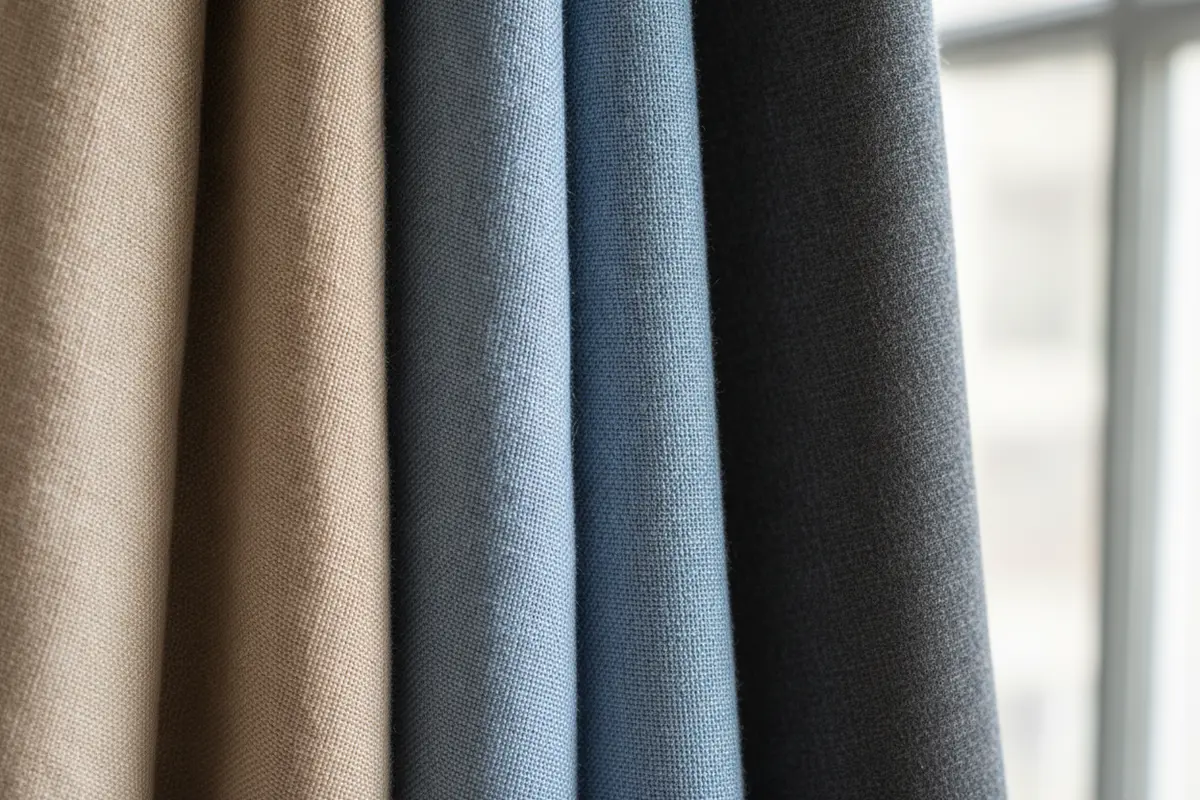
For a groom considering a separate jacket for another event or future wear, compare the options in custom jackets and sport coats. The details of a jacket can be adjusted to the occasion, but the fabric and overall balance should still feel connected to the rest of your wedding outfit.
How should you choose a summer wedding suit color?
Color is most successful when it responds to the setting instead of following a rule about what a groom should wear in summer. Light neutrals can feel at ease in a daytime outdoor setting. Mid-tone blue and gray offer a versatile, tailored look. Deeper colors can bring a more formal presence, especially for evening celebrations or venues with a traditional atmosphere.
Use these starting points as a conversation, not a rigid formula:
- Garden or daytime wedding: Consider a light or mid-tone neutral, blue, or soft green if it works with the wedding palette and your complexion.
- Formal evening celebration: A darker suit can create a more defined, dressy appearance while still feeling suitable for the season.
- Beach or destination setting: A relaxed color and texture may suit the surroundings, but check the dress code before choosing a casual-looking cloth.
- One-suit versatility: If you hope to wear the garment after the wedding, choose a color that fits your existing shirts, shoes, and wardrobe.
Bring a photo of the venue or color palette to the appointment if you have one. Think about how your suit will look beside the wedding party, but do not try to copy every attendant’s outfit. A coordinated tie, pocket square, or shirt can connect the looks while allowing the groom’s suit to have its own character.
Color also depends on fit and finish. A pale suit with an overly casual cut may not suit a formal evening, while a darker suit with a lightweight cloth and thoughtful details can work well in summer. Explore custom styling and tailoring to consider the complete outfit rather than choosing color in isolation.
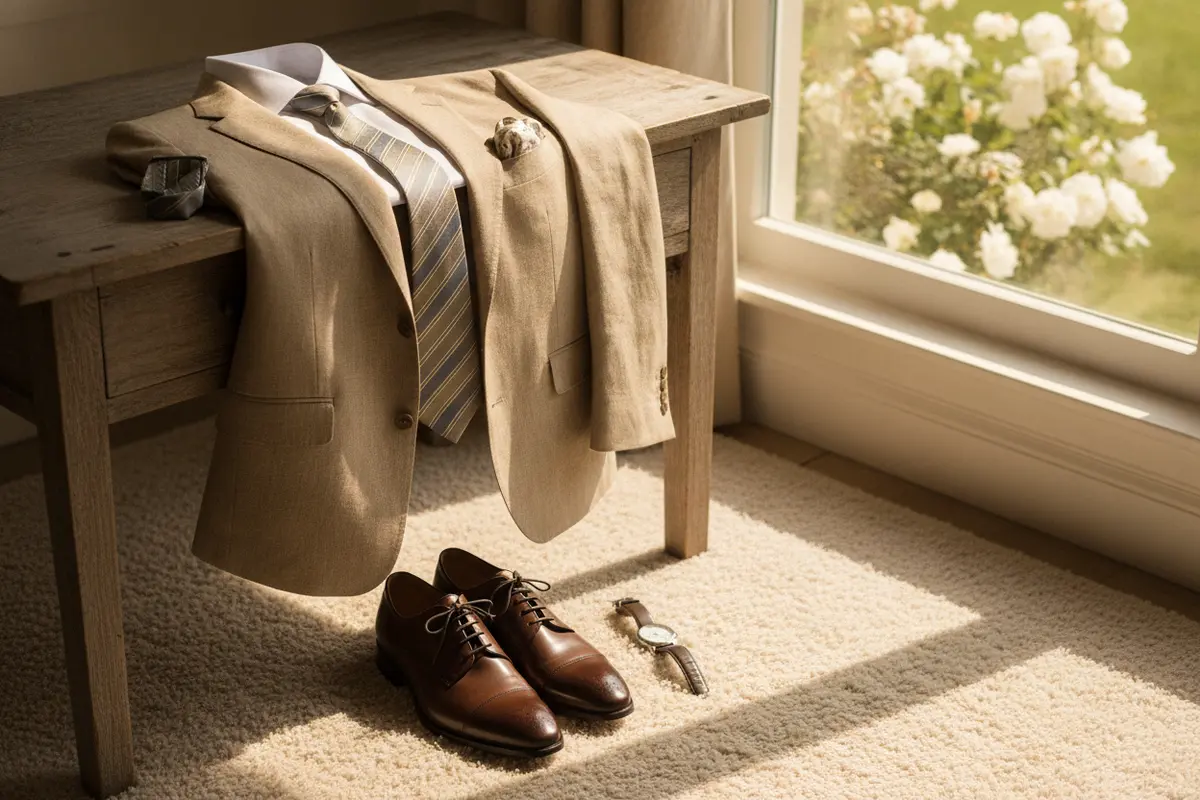
To narrow the palette, compare the suit color with the clothes you will wear beside it. A white or pale shirt creates a different contrast from a blue or patterned shirt. Shoes matter, too: a lighter suit may look balanced with brown footwear in a daytime setting, while darker shoes can make the outfit feel more formal. Lay out the actual shirt, tie, and shoes together if possible, then view them in daylight. A color that looks appealing under indoor lighting may read differently outside.
For wedding-party coordination, aim for harmony rather than identical outfits. The groom can stand apart through a distinct suit color, a different tie texture, or a more formal jacket while still picking up a shared accent. Ask whether attendants will wear matching suits or simply follow a palette. That answer helps avoid a clash and prevents the groom’s outfit from becoming indistinguishable from the group in photographs.
What fit and construction details matter in warm weather?
A suit should allow you to sit, walk, greet guests, and move naturally. A close fit is not the same as a comfortable fit. The shoulder line, jacket length, sleeve, waist, trouser rise, and leg shape all influence how the garment looks and feels. At a fitting, describe the movements you expect to make, not only how you want the suit to look while standing still.
Pay attention to these practical points:
- Shoulders: The jacket should sit cleanly at the shoulder without restricting your reach or creating excess collapse.
- Chest and waist: The jacket should close comfortably and maintain a flattering line when you stand and sit.
- Sleeves and shirt cuffs: Check the relationship between the jacket sleeve and shirt cuff with the shirt you plan to wear.
- Trousers: Test the rise, waistband, seat, and leg shape while walking and sitting. A trouser should feel secure without pulling.
- Jacket structure: Construction varies by garment. Discuss how much shape and structure you want, and how that choice fits the formality of the wedding.
Warm-weather comfort is a system. A breathable shirt, a suitable undershirt if you wear one, and shoes that work for the venue can make a difference alongside the suit itself. Choose accessories that let you feel at ease throughout the day. If you want trousers made as part of a coordinated look, see custom trousers tailored to your measurements.
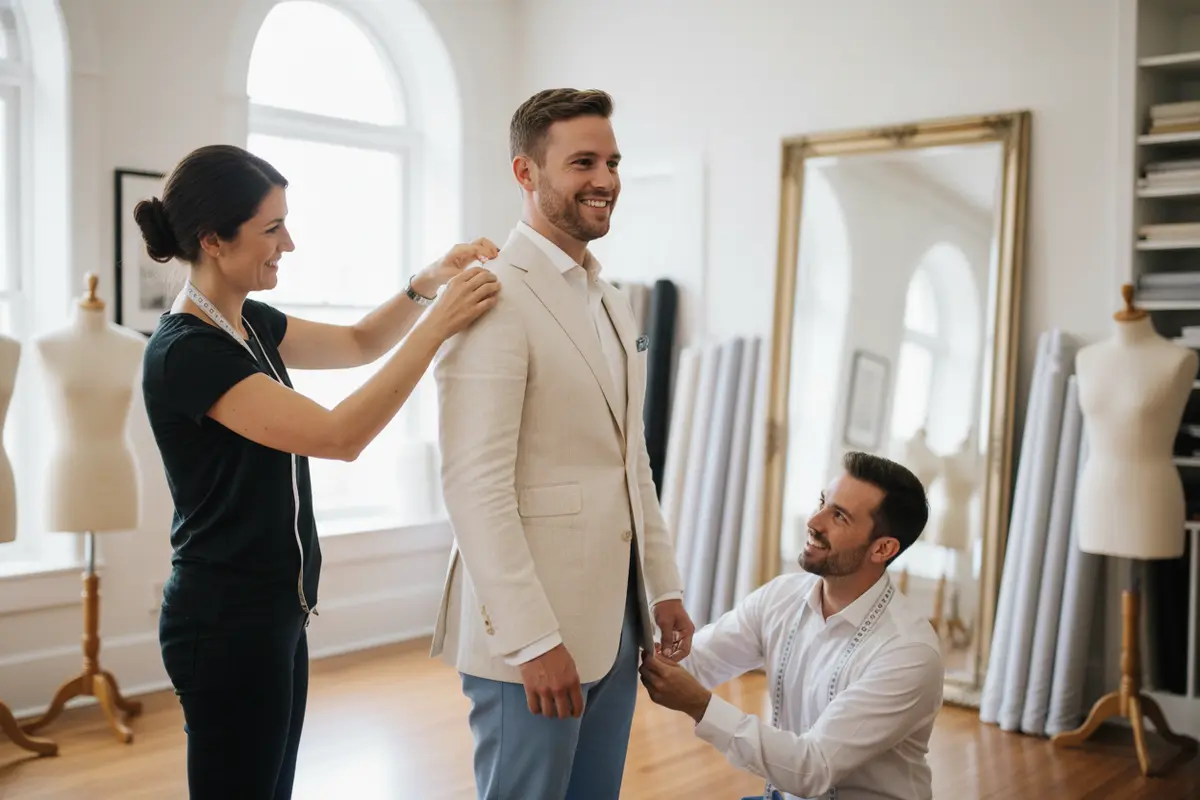
Use the fitting to test more than the static silhouette. Reach forward as if greeting someone, sit as you might during dinner, and walk a few steps. Check whether the jacket pulls across the back or buttons uncomfortably when seated. Notice whether the trousers stay comfortable at the waist and through the seat. You will repeat these movements throughout the wedding day, so a suit should accommodate them without looking loose or strained.
Bring the shirt and shoes you expect to wear, or close alternatives, to a fitting. The shirt collar, cuff, and sleeve length influence how the jacket looks. Shoes can affect trouser length and the overall line. If you plan to wear a vest, mention it early because the complete outfit should be assessed as a whole. For a wedding with a long outdoor ceremony, tell the tailor about the schedule and what you find comfortable; small decisions about proportion and layering are easier to discuss before final details are settled.
How can you make the suit feel personal without overdoing it?
Personal details can make a groom’s suit feel distinctive while keeping the overall outfit polished. Begin with the suit’s purpose and the wedding’s tone. Then select a few details that matter to you, rather than adding every available option.
- Shirt: A crisp white shirt is a dependable choice, while a subtle color or texture can soften the look when the dress code allows.
- Neckwear: A tie can make the outfit feel more formal. An open collar may suit a relaxed wedding only when the invitation and wedding-party styling support it.
- Pocket square: Choose a color or pattern that connects to the palette without exactly duplicating the tie.
- Buttons and lapel details: Small choices can shift the character of the suit. Keep them consistent with the venue and the level of formality.
- Shoes and belt: Consider the ground you will walk on as well as the visual finish. Review men’s dress shoes and loafers for options that suit a tailored outfit.
Accessories should complement the suit, not create a second focal point. A meaningful family item, a subtle pattern, or a carefully chosen lining can provide a personal note. If you are uncertain, set out the complete outfit together and look at it in natural light. That gives you a better sense of how the colors and textures work as a group.
One practical way to edit the details is to choose a focal point. If the fabric has a pronounced texture, keep the shirt and tie comparatively simple. If the suit is a solid neutral, a patterned tie or pocket square can add interest. A family heirloom or personal accessory can be the focal point instead. Limiting the outfit to one or two noticeable accents helps the suit remain cohesive and keeps attention on the groom rather than on a collection of competing details.
When should you begin planning a summer wedding suit?
For wedding attire, begin four to five months before the wedding. That gives you room to discuss the event, select a direction, attend fittings, and complete final adjustments before the day. Waiting until the last weeks can limit the time available for thoughtful choices and a calm final fitting.
The wedding wardrobe process follows four steps:
- Discovery and planning: Discuss the wedding theme, venue, dress code, and timeline. Bring any useful details about the wedding party’s palette or the events surrounding the ceremony.
- Styling and selection: Review fabrics, suit styles, and accessories. Compare options in the context of your event, not as isolated swatches.
- Measurements and fitting: Measurements and fitting appointments help shape the garment to your proportions and reveal adjustments that support comfort and appearance.
- Final fitting and delivery: Confirm the finished fit and details before the wedding. Try the complete outfit together, including the shirt and shoes you intend to wear.
If your celebration is in Ohio, the wedding attire service page offers a place to learn about planning wedding clothing. Grooms in central Ohio can also find information on custom suits in Columbus, while Cincinnati custom suit details can help local clients explore their options.
Do not wait for every wedding detail to be final before starting. You can begin with the confirmed date, setting, and level of formality, then refine accessories and color as the rest of the event comes together. The consultation is also a useful time to discuss how often you expect to wear the suit after the wedding.
A simple planning checklist keeps the process manageable. Four to five months out, confirm the date, venue, dress code, and wedding-party palette, then discuss the suit direction. At the styling stage, settle on cloth, color, and the major design choices. At fittings, test movement and coordinate the shirt, trousers, and shoes. In the final weeks, try on the complete outfit, including any accessories, and confirm that it remains comfortable. If your weight or preferred underlayers change, mention that during the fitting rather than waiting until the wedding week.
If several people in the wedding party need coordinated clothing, decide who will communicate the shared details. A single reference for suit color, shirt, and tie expectations can prevent last-minute mismatches. The groom’s outfit can then be planned with room for a distinct detail while still fitting the group. Start early enough that each person knows what is expected and has time to arrange the right fit.
How do you choose between a wedding-only suit and a versatile one?
A wedding-only look can be a good choice when you want a distinctive color, a special fabric, or a design closely tied to the ceremony. A versatile suit makes sense when future wear is important. Neither choice is automatically better; the best decision is the one that reflects your priorities and fits your budget without relying on a made-up price expectation.
For a more versatile garment, consider a color and pattern that already works with your wardrobe. Think about whether you could wear the jacket with separate trousers or pair the trousers with a different jacket. For a more event-specific suit, decide which detail makes it feel special, then keep the remaining choices balanced. A custom suit’s price depends on the fabric and customization selected, so discuss the options during a consultation rather than assuming a fixed amount.
Clients who want help building a broader wardrobe can also explore professional clothiers and personal stylists. A hands-on conversation can help connect the wedding outfit to the way you dress for work, travel, and other occasions.
To test a suit’s potential for repeat wear, picture three situations beyond the ceremony: a work event, a dinner, and another formal celebration. Ask whether the color, pattern, and level of shine feel appropriate in each. If the jacket could work with different trousers, consider whether its fabric and details support that combination. If the suit is intended mainly for the wedding, it can be more expressive, but retain a clear relationship between its statement details and the event’s tone.
The choice also affects how you prioritize customization. For a suit you expect to wear often, focus on a balanced color, comfortable fit, and details that work with more than one shirt and shoe combination. For a wedding-specific look, a meaningful lining, distinctive button choice, or less common color may be worthwhile if it feels true to your style. In either case, discuss the fabric and custom options in a consultation, since the cost depends on the choices you make.
Frequently Asked Questions
Can a groom wear a light-colored suit to a formal summer wedding?
It can work when the dress code, time of day, and venue support it. Check the invitation and coordinate with the couple or planner. A formal cut and considered accessories can make a light color feel polished, but a dark suit may be more appropriate for a traditional evening event.
Is linen the best choice for every summer wedding suit?
No. Linen has an airy, relaxed character and naturally creases. That may suit an outdoor or informal celebration, but a groom seeking a crisp, more formal appearance may prefer another cloth. Compare actual fabrics and consider the wedding’s setting and schedule.
How early should a groom arrange a custom wedding suit?
Begin four to five months before the wedding. This allows time for planning, selection, measurements, fittings, and final delivery without compressing the process into the final weeks.
What should a groom bring to a suit consultation?
Bring the wedding date, dress code, venue details, and any confirmed wedding-party colors. Photos of the setting or outfit references can help explain your preferences. If you already own shoes or a shirt you plan to wear, bring or describe them so the full look can be considered together.
A well-chosen summer wedding suit should feel like you, suit the celebration, and let you focus on the people and moments that brought everyone together.