
Searching for a tuxedo for sale is about more than finding a black jacket in your size. The right choice should suit the event, feel comfortable through a long evening, and work with the rest of your formal wardrobe. Start with the occasion and fit, then compare construction, fabric, and details before deciding whether ready-to-wear or custom is the better route.
What should you decide before buying a tuxedo?
First, identify the events you expect to attend. A tuxedo for a black-tie wedding may also suit an awards dinner or formal charity event, while a very distinctive design may be perfect for one occasion but harder to rewear. Consider the dress code, venue, season, and time of day. If the invitation gives a specific dress code, follow it; if it does not, ask the host or wedding couple rather than guessing.
Next, decide how traditional or expressive you want the look to be. A classic black tuxedo with a satin-faced lapel is a dependable starting point. Midnight blue is another formal option that can read as dark and polished in evening settings. The choice between a notch, peak, or shawl lapel changes the jacket’s character. For a closer look at those distinctions, explore our guide to suit lapel styles.
Think about the complete outfit, not just the jacket. A tuxedo is usually worn with formal trousers, a dress shirt, a bow tie, and appropriate shoes. A waist covering, such as a cummerbund or waistcoat, can help complete the traditional silhouette. The event’s dress code and the cut of the jacket will guide which pieces make sense together.
It also helps to write down the practical requirements before you shop. Note the event date, dress code, location, and whether you will be standing, sitting, or moving between indoor and outdoor spaces. If a wedding party is involved, find out whether there is a shared palette or a specific level of formality. Bring those details to the appointment so the conversation stays focused on choices that fit the occasion.
How do you compare tuxedo options?
Use the table below to narrow the decision. It is not a price list: custom tailoring is consultation-based, and the final cost depends on fabric and customization. Instead, compare the practical trade-offs that affect how the tuxedo will serve you.
| Option | Best suited to | What to consider | Planning note |
|---|---|---|---|
| Ready-to-wear tuxedo | A wearer whose size and proportions align well with available garments | Check shoulder fit, jacket length, trouser rise, sleeve length, and whether professional alterations can refine the fit | Allow time to find the right starting fit and complete any tailoring |
| Custom tuxedo | A wearer seeking personal guidance on fit, fabric, and design details | Discuss the event, preferred silhouette, fabric, lapel, and finishing details together | Begin early enough for consultation, creation, and fittings |
| Tuxedo rental | A one-time event or a wearer who prefers not to keep formalwear | Confirm the fit, included pieces, collection or return process, and event deadline | Follow the provider’s ordering and fitting schedule |
Ready-to-wear can be a sensible option when the base fit is already close and you want to shop from existing designs. Custom tailoring offers a more guided way to make decisions about proportion and details. Renting may suit someone who expects to wear formalwear rarely. There is no universal right answer: frequency of use, comfort, timing, and the importance of personal fit all matter.
Try comparing the three routes against the same questions rather than focusing only on the first impression. How soon do you need the outfit? Does the available fit feel balanced before alterations? Will you want to wear it again, and do you have the right pieces to complete the look? For a custom garment, ask what the consultation and fitting stages involve. For a rental, confirm what is included and how the provider handles fit adjustments and returns. These answers make the options easier to compare on practical grounds.
A useful way to think about the decision is to separate the garment from the full outfit. A lower initial commitment may not solve the problem if you still need to source a shirt, bow tie, shoes, and waist covering. Conversely, an owned tuxedo is not automatically the better choice if it is uncomfortable or unsuitable for the occasions you attend. Focus on fit, usefulness, and a workable timeline as a complete package.
Which fit details matter most in a tuxedo?
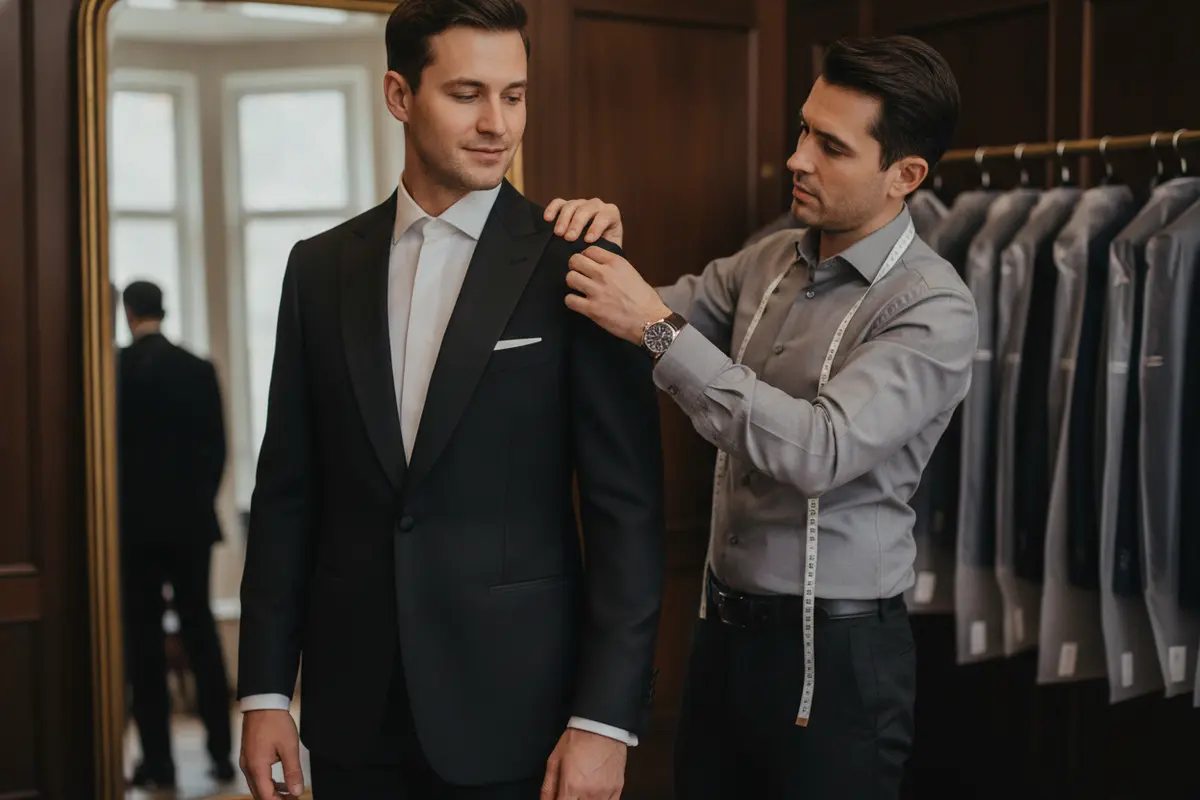
Fit is the first thing people notice, even when they cannot name the specific detail. The jacket should sit cleanly across the shoulders without pulling or collapsing. When buttoned, it should close comfortably rather than strain across the chest or hang with excess fabric. Jacket length and sleeve length affect the overall proportions, while the trouser rise and break influence how the outfit looks when standing and sitting.
Movement matters as much as a mirror check. Sit down, reach forward, and walk in the garment. A formal evening often includes hours of conversation, dining, and photographs. You should be able to move without feeling restricted, and the jacket should return to a composed shape when you stand.
Check the outfit from more than one angle. Look at the shoulder line from the front and back, then notice whether the collar rests neatly against the shirt. Button the jacket and see whether the lapels lie smoothly. With the trousers on, check the waistband, seat, and length while standing naturally. A single dramatic pose can hide a problem that becomes obvious when you relax, so ask to see the complete outfit in an ordinary stance.
Bring the shirt and shoes you plan to wear when possible, or ask what to use during a fitting. Sleeve length, shirt cuffs, trouser break, and shoe shape relate to one another. Testing them together gives a clearer picture than evaluating each piece separately. If the final event includes a long dinner or ceremony, spend a few minutes sitting and standing in the outfit. Small discomforts become more noticeable over several hours.
Do not judge fit from a single measurement or a single pose. Posture, shoulder slope, and the relationship between jacket and trouser proportions all shape the result. If you are considering a custom option, our custom tailoring page explains the kind of personalized service to explore. For a broader overview of what to expect, read the bespoke tailoring process guide.
What fabric and construction should you look for?
Fabric influences how a tuxedo drapes, feels, and performs over the course of an event. Consider the season and setting: a lighter-feeling cloth may be welcome in warmer conditions, while a more substantial fabric can have a different presence in cooler weather. Ask to handle the cloth and see how it moves. The best choice is one that feels appropriate for your plans rather than one selected only by a label.
Think about how the garment will be worn as well as how it looks under store lighting. A fabric that feels comfortable during a brief try-on should also work with the season and the length of the event. Ask how the cloth behaves when the jacket is buttoned and when you move. If you are choosing between samples, compare them in the same light and against the shirt and formal facing you expect to wear.
Look closely at the jacket’s finishing and how the garment is put together, but avoid assuming that every tuxedo uses the same construction. Methods vary by garment and maker. A knowledgeable clothier can explain the construction of the particular piece in front of you and how it may affect structure, drape, and wear.
For tailored separates or a less formal wardrobe that complements a tuxedo, you can also explore custom jackets and sport coats and custom trousers. These are not substitutes for black-tie dress, but they can help you build a considered wardrobe for occasions with different levels of formality.
Which details make a tuxedo feel personal?
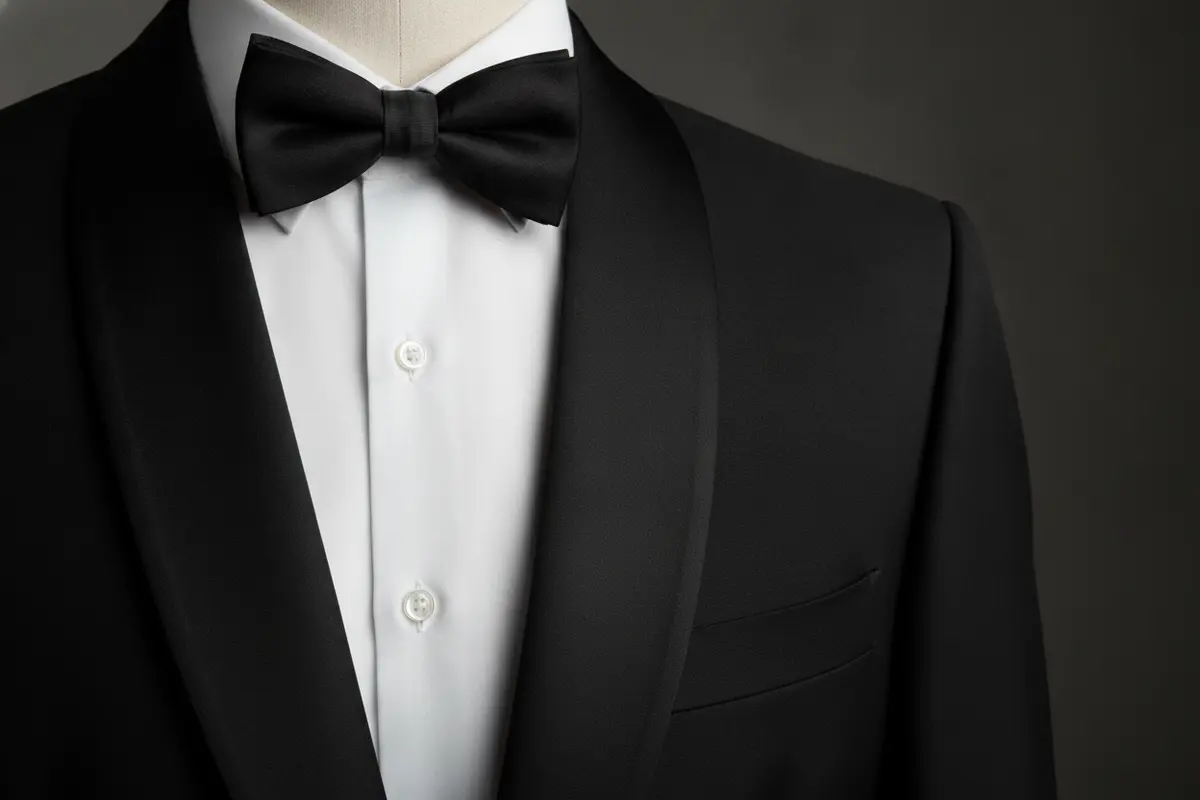
Formalwear details are most successful when they support the event and the person wearing them. Lapel shape is one of the most visible choices. Peak lapels have a sharper, more directional look; shawl lapels create a smooth curve; notch lapels feel closer to a conventional suit. The lapel’s satin or other formal facing should relate to the jacket cloth and the intended level of formality.
Then consider the shirt, bow tie, pocket square, waist covering, and shoes as a coordinated set. A crisp white shirt is a classic companion to black tie. A self-tie bow tie adds a traditional touch, while accessories can introduce personality without making every element compete for attention. If the event has a wedding palette, coordinate thoughtfully with the couple or wedding party rather than matching every color exactly.
Start with one focal choice, such as the lapel shape or a restrained accessory, and let the other elements support it. If the jacket has a strong design feature, keep the shirt and accessories comparatively quiet. If the tuxedo is classic and simple, a subtle personal detail can make it feel individual without changing the overall formality. This approach also makes it easier to reuse the core garment for another event.
Pay attention to proportion when selecting accessories. A bow tie should look balanced with the collar and lapels rather than appearing oversized or lost. The shirt front, cuffs, and collar should suit the jacket and the formality of the invitation. Shoes should be formal enough for the occasion and comfortable for the time you will spend standing. Think through the complete outfit before adding a pocket square or other accent; more decoration does not necessarily make the ensemble more polished.
For more formalwear context, see our tuxedo style guide and the article on dinner jackets versus tuxedos. If you are weighing a tuxedo against a suit for a wedding, our guide to custom wedding suits and tuxedos offers a useful starting point.
Should you buy a tuxedo or have one made?
Buying an existing tuxedo can work well when its proportions suit you and the garment needs only appropriate professional tailoring. It also makes sense if you have found a design that matches your taste and the event. Before committing, ask what adjustments are possible, how long they will take, and whether the finished fit will remain comfortable when you move.
During a try-on, make a short checklist instead of relying on an impression. Does the shoulder sit well? Can you button the jacket without pulling? Are the sleeves and trousers in a range that can be refined? Does the jacket still look balanced when you sit? If several core proportions feel wrong, ask whether the piece is a good starting point rather than assuming every issue can be corrected. Professional guidance can clarify which adjustments are appropriate for that specific garment.
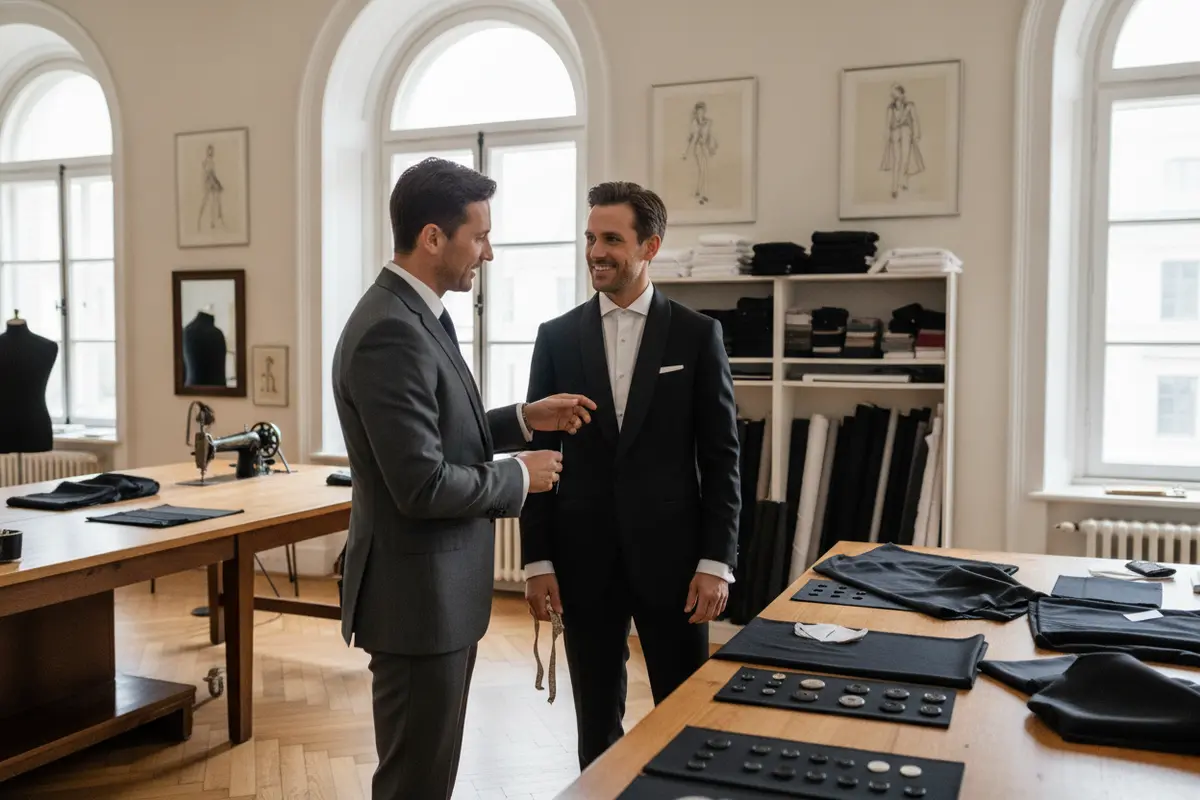
A custom tuxedo is worth considering when you want a more individual fit or need help bringing the full look together. A consultation can make it easier to discuss the event, fabric, silhouette, and accessories as one coordinated decision. Trevor Furbay Bespoke offers custom tuxedos for grooms and wedding parties; learn more about custom tuxedo styling. Custom tailoring is consultation-based, with pricing dependent on the fabric and customization you choose.
Neither route guarantees a better result on its own. The important question is whether the starting fit, schedule, and level of personalization suit your needs. A stylist can help you compare options in person, consider the event’s dress code, and build a complete outfit rather than choosing a jacket in isolation.
When weighing ownership against a one-time rental, consider where the garment will live after the event. Think about upcoming invitations, the possibility of attending another formal occasion, and whether you value having a familiar, personally fitted outfit ready. If your plans are uncertain, it can help to compare the full time and cost involved without assuming that one path is right for everyone. Ask questions about the total outfit and schedule, then choose the route that fits your actual needs.
When should you begin planning a wedding tuxedo?
For a wedding, begin planning four to five months before the date. That gives you time to discuss the wedding’s style and venue, choose garments and accessories, complete measurements and fittings, and address any fit adjustments before the final weeks. Earlier planning is especially helpful when several people need coordinated attire.
A practical process includes four stages:
- Discovery and planning: Discuss the wedding’s theme, venue, dress code, and timeline.
- Styling and selection: Review fabrics, silhouettes, and accessories that suit the occasion.
- Measurements and fitting: Establish fit and make professional tailoring adjustments.
- Final fitting and delivery: Check the complete look and confirm that the garments are ready for the wedding.
At the discovery stage, gather the details that influence formality: ceremony time, venue, season, and any dress-code wording on the invitation. Decide what matters most to you, such as a traditional black look, a particular lapel, or a coordinated appearance with the wedding party. You do not need every detail settled before the first conversation. A clear list of questions and preferences is enough to make the consultation productive.
During selection, think about how the groom’s outfit relates to the group without making everyone identical. A shared color or level of formality can create cohesion, while differences in lapel, waist covering, or accessories can distinguish the groom. Keep the plan easy for the wedding party to understand: share the garment expectations, any color guidance, and the date by which decisions should be made.
Keep the groom’s outfit and wedding-party attire in view together, but do not assume everyone needs to wear identical pieces. The groom can stand apart through a distinct jacket, shirt, or accessory while the broader group remains coordinated. For inspiration, see our guide to groomsmen attire ideas and our advice on coordinating a bride and groom’s formalwear.
Build in room for communication as well as fittings. Members of a wedding party may have different schedules, and late decisions can make coordination harder. Share the wedding date and expectations early, confirm who needs to attend a fitting, and keep track of any outstanding questions. At the final fitting, review the entire outfit together, including the shirt, trousers, waist covering, and shoes when available. That last full-look check helps reveal mismatches in color, proportion, or formality before the event day.
How can you get more wear from a tuxedo?
Choose a design that fits the events you actually attend. A classic color and restrained details can make it easier to wear the tuxedo again, while a distinctive accent can still make the outfit feel personal. Before buying, picture at least two occasions where the complete look would be appropriate. If you struggle to identify a realistic second use, a rental or another formalwear option may be more practical.
Make a quick repeat-wear plan before you commit. Consider whether the same jacket and trousers can serve the events you have in mind, or whether your idea depends on buying additional pieces. Think about the formality of those occasions and whether the outfit would still feel appropriate. A garment that suits several realistic invitations may be a more useful purchase than one selected for an imagined future event.
Think about the rest of your wardrobe, too. Shoes and formal accessories should be suitable for the occasions you have in mind. Store the garment according to its care instructions, and seek professional advice for cleaning or tailoring needs. Avoid attempting home alterations; a formal jacket’s balance and finish require experienced handling.
If you are still deciding whether formalwear belongs in your wider wardrobe, a personal styling appointment can help you assess what you own and what would serve you well. Trevor Furbay Bespoke also offers personal styling expertise and appointment-based service in Columbus, as well as a flagship location in Cincinnati. Location details and availability can vary, so confirm when arranging an appointment.
For an appointment, bring the event information and any pieces you already plan to wear. You can also bring photos that help explain the silhouette or details you like. A useful consultation is a conversation about the occasion, comfort, and your preferences, not simply a choice of color. If you are buying for a wedding, bring any guidance from the couple or planner so the formalwear complements the wider plan.
Frequently Asked Questions
Is a tuxedo a good purchase if I wear formalwear only occasionally?
It depends on how often you expect to attend black-tie events and whether you value having a personally fitted garment available. If you expect only one use, compare buying with renting and consider the complete cost and effort of each option. If you attend formal events regularly, ownership may be more useful.
Can I wear a tuxedo to a wedding?
Yes, when the invitation’s dress code and the couple’s preferences support black tie. Ask if the dress code is unclear. For your own wedding, plan the groom’s look with the venue, ceremony timing, and wedding-party attire in mind.
How early should I order a custom wedding tuxedo?
Begin four to five months before the wedding when possible. That allows time for the consultation, selection, measurements, fittings, and final checks. If the event is closer, contact a clothier promptly to discuss what the timeline can accommodate.
What should I bring to a tuxedo consultation?
Bring the event date, venue, dress code, and any wedding palette or coordination guidance. Photos of looks you like can help communicate preferences, but be ready to discuss what feels comfortable and appropriate for the occasion. If you already own formal shoes or accessories, mention those as well.
A well-chosen tuxedo balances the event’s formality with a fit and design you will feel at ease wearing, whether you buy an existing piece or explore custom tailoring.