
A tuxedo can be beautifully cut and still look unfinished if the shirt and bow tie fight each other. The shirt sets the collar line, the studs, and the cuff, while the bow tie sets the width and the finish at the neck. Get those two right and the rest of the evening reads as one outfit, rather than a pile of separate formal pieces.
A tuxedo shirt and bow tie are the formal layer that turns a black or midnight jacket into black tie. The shirt is usually white, with a stiff or semi-stiff front, and it closes with studs rather than ordinary buttons. The bow tie matches the lapel facing in color and texture. Width, collar, and waist covering then decide whether the look feels classic, modern, or slightly off.
What a Tuxedo Shirt and Bow Tie Actually Do
Think of the shirt and bow tie as one unit, rather than as two separate shopping errands. The shirt frames the face and covers the chest that shows between the lapels. The bow tie sits in that frame and should look like it belongs to the same cloth family as the lapel.
A business dress shirt will not do this job well. It has a softer front, a button placket, and a collar that was cut to sit under a necktie. On a tuxedo, those details read as daytime clothing worn underneath evening cloth. The formal shirt is built to stay smooth under open lapels and to close with studs that sit flat against the cloth.
The bow tie has a matching job at the neck. It replaces the long necktie, which would hang over the studs and break the clean vertical line of the shirt front. A well-proportioned bow also echoes the lapel. A wide shawl lapel wants a slightly fuller bow, and a narrow peak lapel wants a smaller one. That relationship is the whole point of treating them as a pair.
If you are still deciding whether the event calls for a tuxedo at all, start with the complete black-tie guide. This page picks up after that choice and builds only the shirt, the tie, and the small pieces that finish them.
Choose the Shirt Front Before the Collar
The front of the shirt is the part guests actually see. Two finishes cover almost every black-tie invitation you will see.
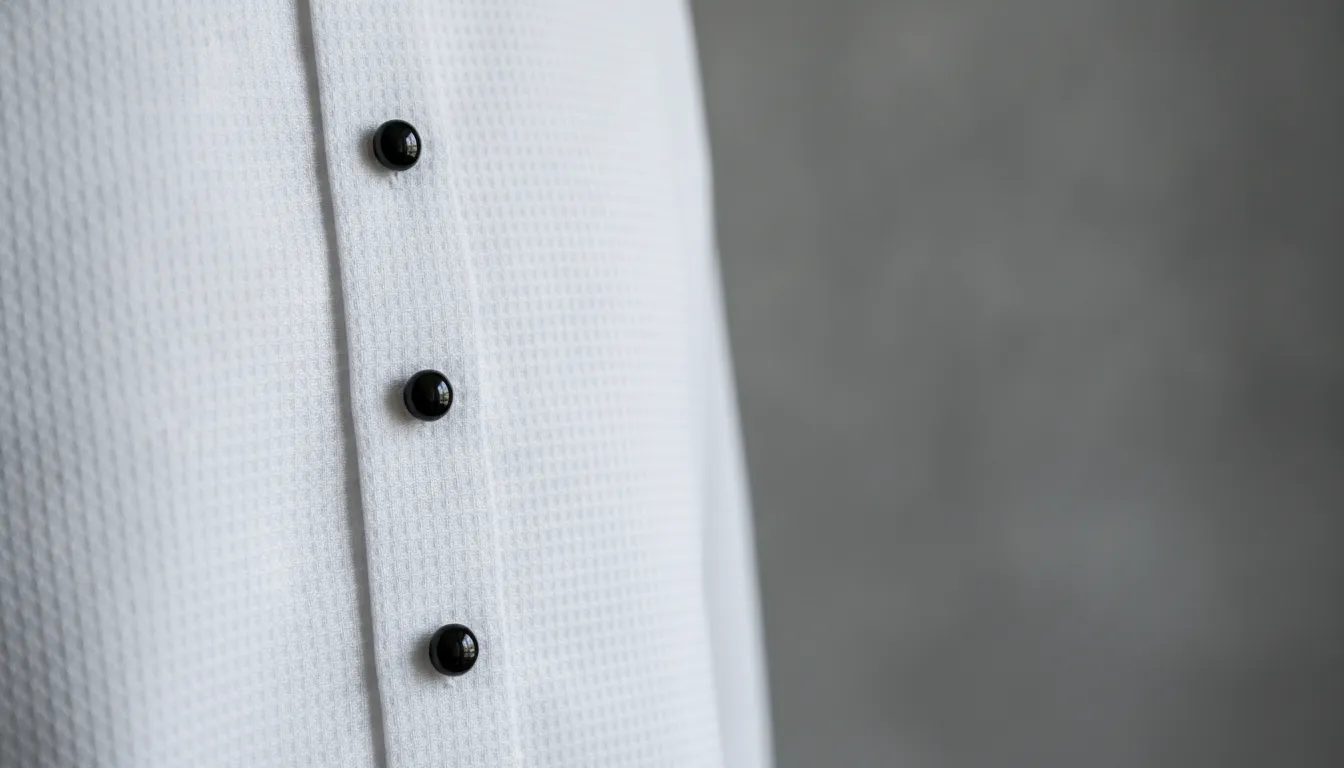
- Marcella, or pique. A textured cotton with a fine honeycomb surface. It is the traditional front for black tie. It holds studs well, stays crisp through a long reception, and looks correct under both peak and shawl lapels.
- Pleated. Narrow vertical pleats running down the bib. Pleats feel a little softer and a little more vintage. They suit a classic peak lapel paired with a silk bow. Keep the pleats narrow. Wide pleats can look costume-like under a modern jacket.
Plain poplin fronts exist on some contemporary shirts. They can work with a very clean, minimal tuxedo, but they lose the texture that separates black tie from a dark suit. If the invitation says black tie, marcella is the safer front. Day-shirt rules are a different job, and the dress shirt buying guide stays with business shirts.
Color stays white for a traditional evening event. Ivory can work with an ivory or off-white dinner jacket in warm weather, which is a different garment from a black tuxedo. The off-white dinner jacket guide covers that seasonal choice. For a black or midnight jacket, stay with white so the studs and bow read clearly.
Wing Collar or Turndown Collar
The collar is the second decision, and it should follow the bow rather than the other way around.
A wing collar has small points that stand away from the neck and leave the bow fully visible. It is the most formal option, and it belongs with a self-tie bow at a gala or an evening wedding. The wings should sit just outside the bow, not poke into it. If the wings collapse or curl, the collar is too soft or the neck size is off by enough to show.
A turndown collar looks closer to a dress-shirt collar, but it is still cut for a bow tie. The points are a bit shorter and the band is shaped so the bow sits high and centered. A turndown collar is the better choice when you want black tie that feels modern rather than ceremonial, and it is easier to wear for a long night.
Match stiffness to the event. A very stiff wing collar looks right at a seated dinner and can feel rigid on a dance floor. A semi-stiff turndown collar moves more easily and still reads as formal if the front is marcella and the studs are correct. Neither collar should gap at the neck. A gap means the shirt was cut for a necktie, or the size is wrong.
Studs and Cufflinks Are Part of the Shirt
Formal shirts close with studs on the front and cufflinks at the wrist. Ordinary buttons belong on a day shirt, not here. Using them on a tuxedo front is one of the fastest ways to make black tie look borrowed rather than finished.
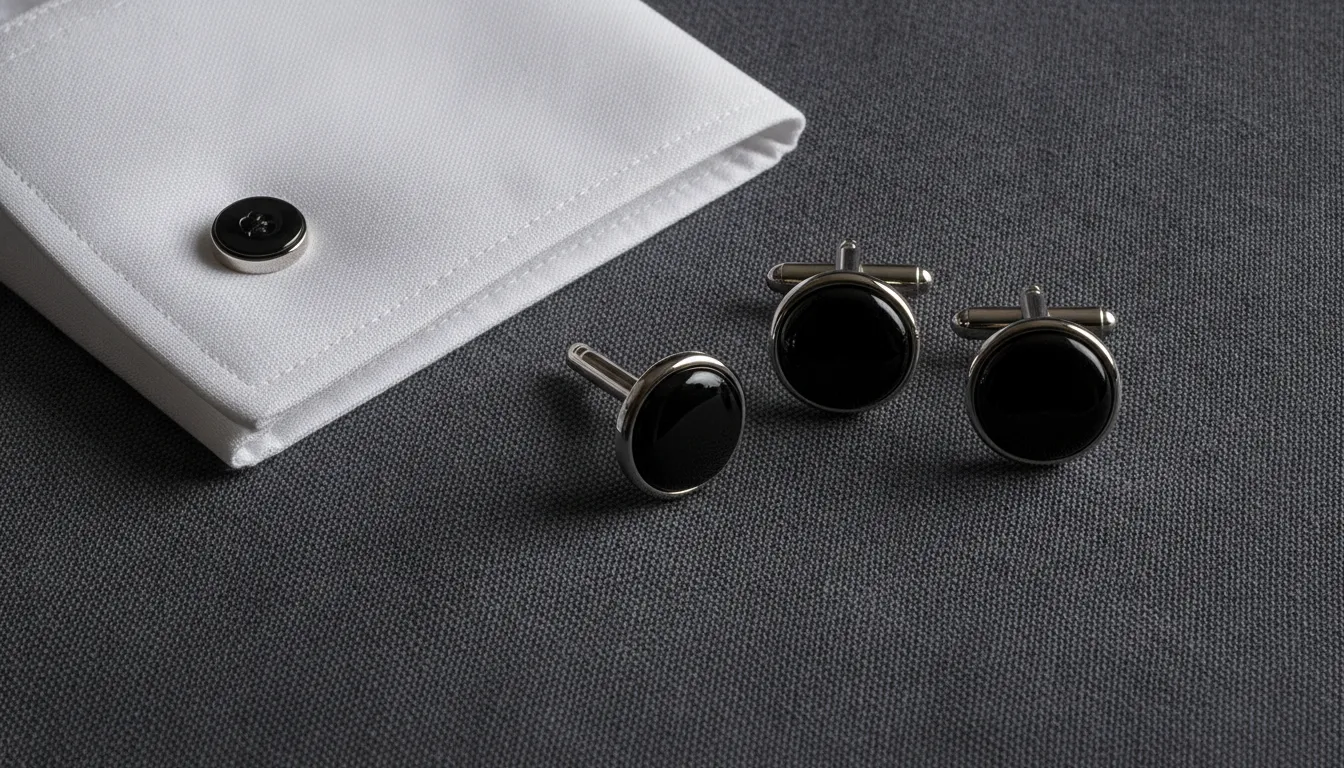
Studs are small and flat. Black onyx, mother of pearl, or a simple silver or gold disc are the usual choices. They should match the cufflinks in both metal and finish. Three or four studs are typical, spaced so the front stays closed without pulling at the cloth. If the placket gaps between studs, you need one more stud or a better fit through the chest, not a bigger stud.
Cufflinks replace the buttons on a French cuff. The cuff should show about a half inch beyond the jacket sleeve, which is the same rule as a good suit. That sliver is where the cufflink is seen. Keep the face of the cufflink small. A large novelty link disappears under the sleeve or, worse, catches on it.
Keep to one metal and one finish. If the studs are silver-tone, the cufflinks are silver-tone. Mixing gold studs with silver links looks accidental, even when both pieces are expensive. Fabric-covered or silk-knot studs are a quieter option when you want no shine at all.
How the Bow Tie Should Relate to the Lapel
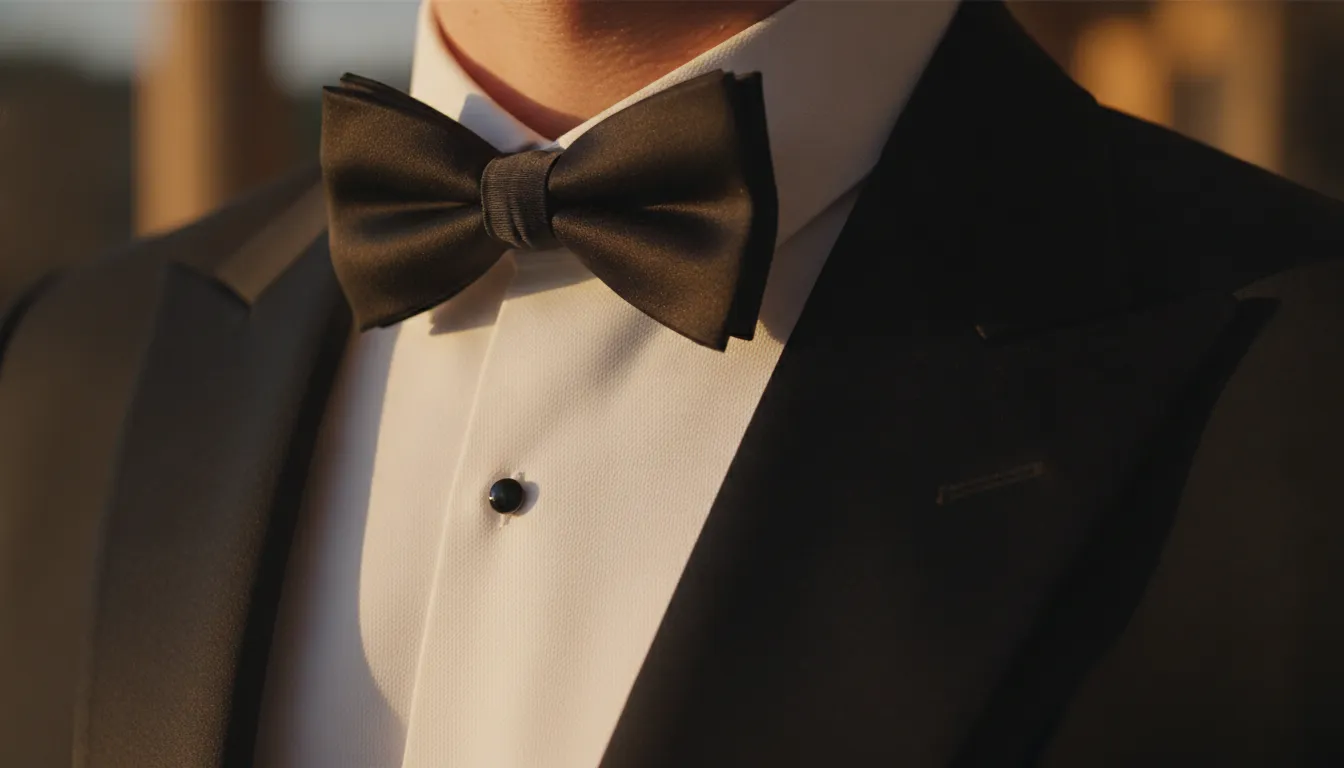
The bow tie should be made from the same family of cloth as the lapel facing. Satin lapels pair with a satin bow. Grosgrain lapels pair with a grosgrain or ribbed bow. That match is what makes the outfit look planned. A shiny bow on a dull lapel, or the reverse, is the detail people notice without knowing why.
Shape and size come next. A classic butterfly bow has a bit of spread, and it suits most faces and most peak lapels. A narrower, straighter bow suits a slim shawl lapel and a smaller face more cleanly. The bow should be wider than the collar points and roughly in proportion to the lapel at the gorge. If the bow is wider than the lapel is deep, it looks oversized.
Color follows the lapel too. Black with a black tuxedo. Midnight with a midnight jacket. A deep burgundy or a quiet pattern can work for a wedding that is black-tie optional and already has color in the party, but it should still be silk and still be small. Loud prints read as novelty rather than as proper black tie.
Self-tie versus pre-tied is a real choice, not a character test, and both can look correct. A self-tie has a softer, slightly uneven shape that looks handmade, which is the point. A pre-tied bow is symmetrical and faster, and a good one in the right silk is perfectly acceptable. The failure mode is a cheap pre-tied bow in polyester, with a plastic clip that sits away from the collar. If you use a pre-tied bow, choose one with an adjustable band that sits flush, in the same cloth as the lapel.
The lapel styles guide explains peak, shawl, and notch in more depth. For this outfit, the rule is simple: let the lapel you already own set the bow’s width and cloth.
Cummerbund or Waistcoat, Then Stop
The shirt front should not be fully exposed from collar to waistband. Black tie covers that lower opening with either a cummerbund or a waistcoat. Pick one of them, because wearing both is too much for black tie.
A cummerbund is a pleated silk band worn with the pleats opening upward. The upward pleats are traditional because they were meant to hold theater tickets, and they also keep the waistline tidy. Match the cummerbund to the bow tie in color and texture. It sits above the trouser waistband, never below it, and the shirt stays tucked so that no shirttail shows.
A waistcoat, also called a vest, is the more formal cover. It is cut low so the shirt studs still show, and it usually matches the jacket cloth. Choose a waistcoat when the invitation is strictly black tie, when the room is a seated dinner, or when you prefer a cleaner line than a pleated band. The suit vest guide is useful for daytime waistcoats, but a tuxedo waistcoat is cut lower and should not be a regular suit vest in black.
Suspenders, properly called braces, hold the trousers without a belt. A belt adds a buckle and a visual break that black tie does not want. Braces are adjusted so the trouser sits at the natural waist, underneath the cummerbund or the waistcoat. If you like the look of a colored brace with a navy evening jacket, the navy tuxedo and suspenders note shows where that choice still works and where it does not.
A Simple Order for Getting Dressed
Assembly is easier when the pieces go on in a fixed, repeatable order. Rushing the collar and the bow is what makes an otherwise good outfit look askew in the photographs.
- Put the shirt on and fasten the studs from the bottom up, so the front lies flat before the collar is closed.
- Add cufflinks, then the trousers and braces. Check that the shirt stays tucked and the cuff shows a half inch past where the jacket sleeve will end.
- Close the collar and tie the bow, or set the pre-tied band so it sits against the collar band with no gap.
- Put on the cummerbund or waistcoat. Pleats up on a cummerbund. The waistcoat should cover the trouser waistband and leave the studs visible.
- Jacket last. Confirm the bow is level, the wings or collar points are even, and no shirt front balloons between the studs.
Stand, sit, and lift your arms once before you leave. If the collar gaps when you turn your head, or the bow twists, fix it now. A mirror at chest height tells the truth better than a phone held overhead.
Where Custom Construction Helps
Ready-to-wear formal shirts come in standard neck sizes and in a limited set of collar styles. That range is enough for many men. It is not enough when your neck size and sleeve length never land on the same stock shirt, or when a wing collar gaps no matter which brand you try.
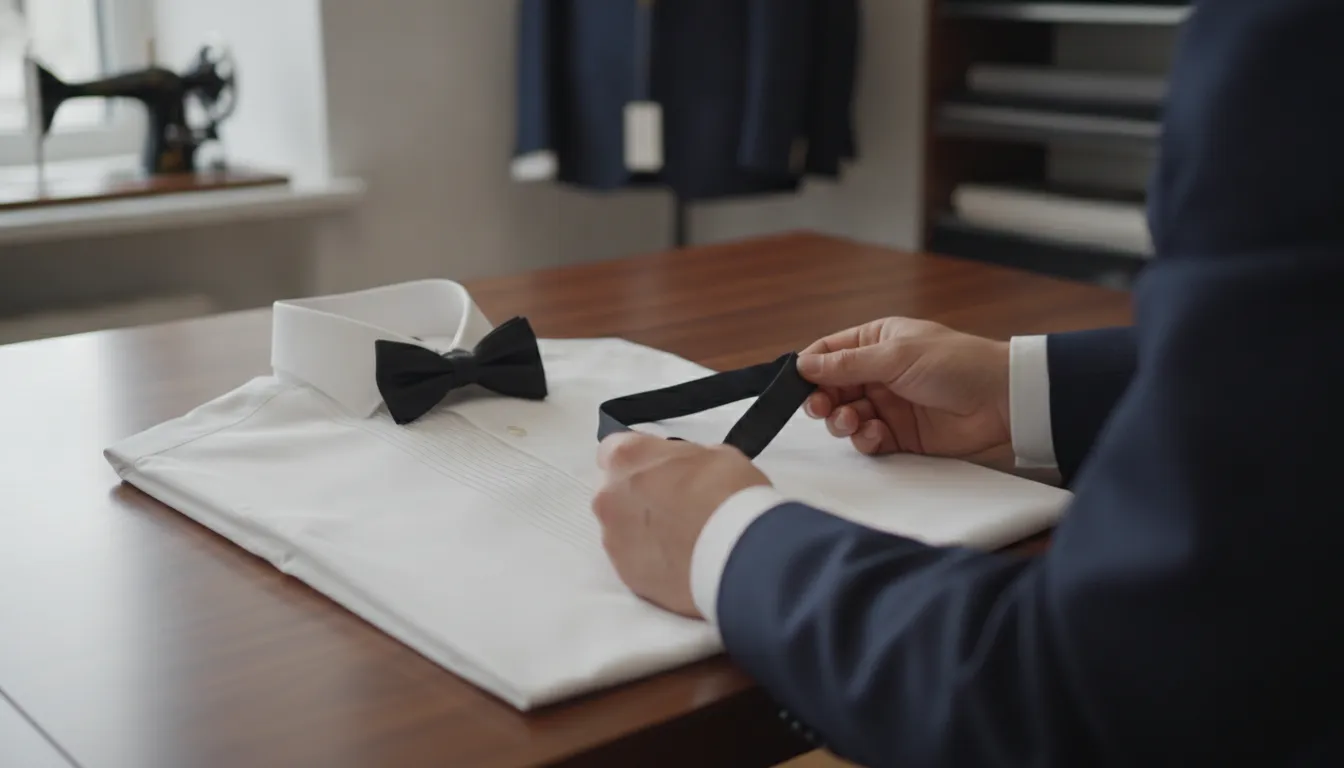
A custom shirt is cut to your neck, your sleeve, and the pitch of your shoulders, so the cuff lands in the right place and the collar stays closed. The front can be marcella or pleated, the collar can be a true wing or a turndown shaped for a bow, and the stud spacing can match your chest rather than a standard placket. Trevor Furbay builds that shirt alongside the tuxedo. Custom pieces are delivered in about three to five weeks, with one final fitting.
The same appointment is where the bow tie, studs, and waist covering get chosen against the actual jacket, not against a photograph. A monogram, a custom lining, and a button choice are jacket options, not features of the shirt. The cloth, the lapel facing, and the bow can be compared in the same light. The custom shirt fitting process shows how the neck, sleeve, and shoulder are measured before a stud front and a bow collar are cut. Pricing depends on the cloth and on the amount of customization, so it is set in consultation rather than taken from a fixed menu. The custom dress shirt experience describes how that fitting works for day shirts. The formal version uses the same measurements and a stricter front and collar.
Wedding parties should start earlier. Four to five months before the wedding leaves room for the consultation, the cloth decision, and the final fitting without compressing the shirt order. The wedding tuxedo guide covers the groom and the party. Bring the shirt and bow questions to that same visit so the group matches without looking uniform for its own sake.
Cincinnati is the flagship studio. Columbus and Dublin appointments are available by scheduling, and Harbor Springs is seasonal. The shirt is ordered through the custom shirt service, and the jacket through the custom tuxedo service. A consultation there includes the full in-house bar and kitchen, so the fitting itself is unhurried. You can compare a wing collar and a turndown, and a satin bow against a grosgrain one, without deciding from a screen.
Tuxedo Shirt and Bow Tie Choices at a Glance
Use this when you are editing a rental package or checking a custom order before the final fitting.
| Piece | Classic black tie | Choose this instead when |
|---|---|---|
| Shirt front. | White marcella. | Choose narrow pleats for a softer, slightly vintage line. |
| Collar. | Wing collar. | Choose a turndown collar for easier movement and a modern line. |
| Closure. | Studs and French cuffs. | Never use ordinary buttons on a black-tie shirt. |
| Bow tie. | Black silk to match the lapel. | With a midnight jacket, match the jacket rather than a black bow by habit. |
| Tie construction. | Self-tie butterfly. | Choose a silk pre-tied bow with a real band for speed and symmetry. |
| Waist. | Cummerbund matching the bow. | Choose a low-cut waistcoat for a seated dinner or strict black tie. |
One more check belongs on every row of the table. The visible metals match, the bow cloth matches the lapel, and the shirt stays white unless you are in an ivory dinner jacket. If those three are true, small differences in bow shape will not undo the outfit.
Frequently Asked Questions
Can I wear a regular white dress shirt with a tuxedo?
A regular dress shirt is built for a necktie and for a button front. Under tuxedo lapels it looks unfinished, and the softer front wrinkles in the space between the lapels. Use a formal shirt with a marcella or pleated front and studs.
Do the studs have to match the cufflinks?
Yes. Match the metal and the finish across both. Black onyx, mother of pearl, or a plain metal disc all work. Mixing gold and silver, or dressy studs with novelty cufflinks, breaks the line of an otherwise correct shirt.
Is a pre-tied bow tie acceptable for black tie?
A silk pre-tied bow with an adjustable band is acceptable, especially when it matches the lapel cloth. Skip plastic clip-ons and polyester bows entirely. A self-tie looks softer and slightly imperfect, which many people prefer, but it is not a requirement.
Should I wear a cummerbund or a waistcoat?
Wear one of them, and not both together. A cummerbund cut from the same silk as the bow tie is the usual choice. A low-cut waistcoat that matches the jacket is the more formal choice for a seated dinner. Leave the shirt front covered at the waist either way you choose.
How early should I order a custom formal shirt?
Custom pieces from Trevor Furbay are delivered in about three to five weeks, plus a final fitting. For a wedding, begin the consultation four to five months ahead so the shirt, bow tie, and jacket are decided together rather than in separate orders.