
Choosing a wardrobe stylist in Columbus is about finding a thoughtful partner who can help you make clothing decisions that suit your real life. A wardrobe stylist Columbus shoppers can trust should listen before recommending anything, whether you need a more useful work wardrobe, help with fit, or clothing for a wedding. Start with your goals, understand how the process works, and compare the service options before you book.
What can a wardrobe stylist help you accomplish?
A wardrobe stylist can help you take stock of what you wear, clarify what is missing, and make choices with a purpose. The starting point is not a prescribed look. It is your schedule, your preferences, and the settings where you need to feel comfortable and appropriately dressed. For one person, the priority may be clothing for client meetings. For another, it may be a few versatile pieces, a wedding outfit, or a better understanding of fit.
Styling can also help when a closet contains plenty of clothing but few combinations feel right. You may have jackets that do not work with your trousers, shirts that rarely leave the hanger, or outfits that feel too formal for one setting and too casual for another. A useful conversation connects these everyday frustrations to a manageable next step rather than turning them into a reason to replace everything.
Before you compare services, write down two or three outcomes you want. Instead of saying, “I need a new wardrobe,” you might say, “I want two polished outfits for presentations, a jacket that works for dinners, and advice on what to keep.” Specific aims help a stylist understand your priorities and help you judge whether the recommendations are practical. If fit is the main issue, explain where garments feel uncomfortable or out of proportion. If shopping feels overwhelming, describe what makes it difficult: too many choices, uncertainty about combinations, or not knowing what suits your routine.

How should you choose a wardrobe stylist in Columbus?
Look for a process that begins with questions and leaves room for your point of view. A stylist should want to understand when and where you wear your clothes, what you already reach for, what you avoid, and what you want to change. You should be able to say that a cut feels restrictive, a color does not feel like you, or a garment is too formal for your day. Good guidance helps you express your own taste more clearly; it does not ask you to set it aside.
As you evaluate a stylist, use the following checklist. You do not need every service, and the right choice depends on the problem you are trying to solve.
- Service fit: Ask whether the appointment centers on custom clothing, curated ready-to-wear, wardrobe planning, or a combination. Do not assume that every stylist offers the same mix.
- Personal attention: Find out how the stylist learns your preferences and adapts recommendations to your daily life.
- Fit discussion: If fit is a recurring concern, ask how measurements, garment construction, alterations, and custom options are handled. Clarify which of these are part of the service.
- Shopping format: Decide whether you want to meet in person, explore selected clothing in a retail setting, or consider an at-home option such as StyleBox.
- Expectations: Ask what happens after the first conversation, including whether there are selections, fittings, additional appointments, or decisions for you to make.
- Comfort and pace: Notice whether you feel free to ask questions and take time to consider recommendations. A personal service should feel like a conversation, not a rushed test.
Location and appointment details matter too. Trevor Furbay Bespoke’s Columbus/Dublin location is appointment-based. You can review Columbus custom tailoring information and schedule an appointment with a stylist. If you are comparing services, take note of what each appointment is designed to cover rather than assuming that a location page describes every available service.
How do custom, curated, and at-home options compare?
Different approaches solve different wardrobe problems. Custom tailoring begins with a consultation and gives you choices about a garment, including fabric and customization. Curated ready-to-wear means considering available garments selected for your needs. An at-home styling service can give you a way to consider chosen pieces in your own surroundings. A wardrobe consultation, meanwhile, can help you clarify priorities before deciding what to add. The most suitable option depends on what you need, how you like to shop, and how much of the existing wardrobe you want to use.
| Option | Useful when | Questions to ask | What to clarify |
|---|---|---|---|
| Custom tailoring | You want a garment shaped through personal choices and fit discussions. | How do consultation, fabric selection, measurements, and fitting work? | Pricing depends on fabric and customization; ask for details about the garment you have in mind. |
| Curated ready-to-wear | You want to consider finished garments and build outfits from available pieces. | Can selections coordinate with clothing I already own? | What options are available and how can I assess fit and versatility? |
| StyleBox at-home service | You prefer to review selected pieces at home before deciding what to keep. | How do selection, try-on, delivery, and pickup work for my location? | There is no styling fee; customers pay only for items they keep. Complimentary delivery and pickup apply in Cincinnati. |
| Wardrobe consultation | You need help prioritizing clothing needs or making a plan. | Can we discuss my routine, current pieces, fit concerns, and next steps? | Confirm what the appointment includes and whether any follow-up is part of the process. |
For custom options, you can explore custom tailoring and styling, bespoke suits, and custom jackets and sport coats. If the wardrobe question is not limited to suiting, review custom casual attire as another category to discuss. These pages can help you put a name to the kind of garment you are considering, but your consultation is the place to discuss what makes sense for your needs.
What should you prepare before a styling appointment?
A little preparation makes the appointment more specific without turning it into homework. Think about your typical week, upcoming events, and the clothes you wear most often. Consider which pieces feel comfortable and which ones you avoid. If you do not know how to describe a style preference, a photograph of an outfit you like can be more useful than trying to find the right fashion vocabulary.
- Choose one main priority. Decide whether your first appointment is mainly about workwear, everyday outfits, fit, an upcoming event, or a broader wardrobe review. You can mention other interests, but a clear priority gives the conversation a useful starting point.
- Describe the situation, not just the garment. Explain where you will wear the clothing, how often, and what the setting requires. “I need a jacket” is less informative than “I need a jacket for client meetings that can also work at dinner.”
- Set practical boundaries. Share your preferences around comfort, formality, color, and how you want to shop. For custom clothing, explain the intended use and ask how fabric and customization choices affect the consultation and price.
- Bring examples. A few photos or garments you like can show preferred proportions, colors, and details. Bring examples of what does not work too, especially if the issue is hard to describe.
- List your questions. Write down anything you want clarified about fittings, timing, follow-up, or the options available. This helps you leave with a clear understanding of the next step.
For example, imagine that you are a professional who wears a suit several days a week but also attends informal dinners. Before the appointment, note whether your current jackets feel comfortable through a full workday, which trousers and shirts you wear most, and how often you need a more relaxed alternative. The stylist can then consider whether your immediate need is a custom piece, a ready-to-wear addition, or a more deliberate way to combine existing garments. The answer should follow from your actual use, not from a general rule that every professional needs the same wardrobe.
A consultation is also a chance to understand the relationship and the pace. Ask the stylist to explain unfamiliar terms and to separate immediate needs from optional ideas. You should leave knowing what was discussed, what choices remain, and what happens if you want to continue. If something feels unclear, ask for it to be explained before making a decision.

How can a stylist help you build a more versatile wardrobe?
Versatility is not a matter of owning the largest number of garments. It comes from choosing pieces that work in more than one setting and feel appropriate when you wear them. Start by looking at your calendar. A client-facing professional may need polished combinations for meetings, while someone in a more relaxed workplace may need refined separates that still feel comfortable. Your wardrobe plan should answer the demands of your own week.
Try a simple outfit audit before adding anything. Choose a garment you wear often and list the pieces you already combine with it. Then identify one situation where you would like to wear it but do not currently have a suitable pairing. This shows whether the gap is a missing garment, a fit issue, or simply a combination you have not tried. For instance, if a jacket works with tailored trousers but feels too formal for dinner, ask whether it could be worn with a more relaxed pair of pants you already own. If it cannot, describe why before deciding what to add.
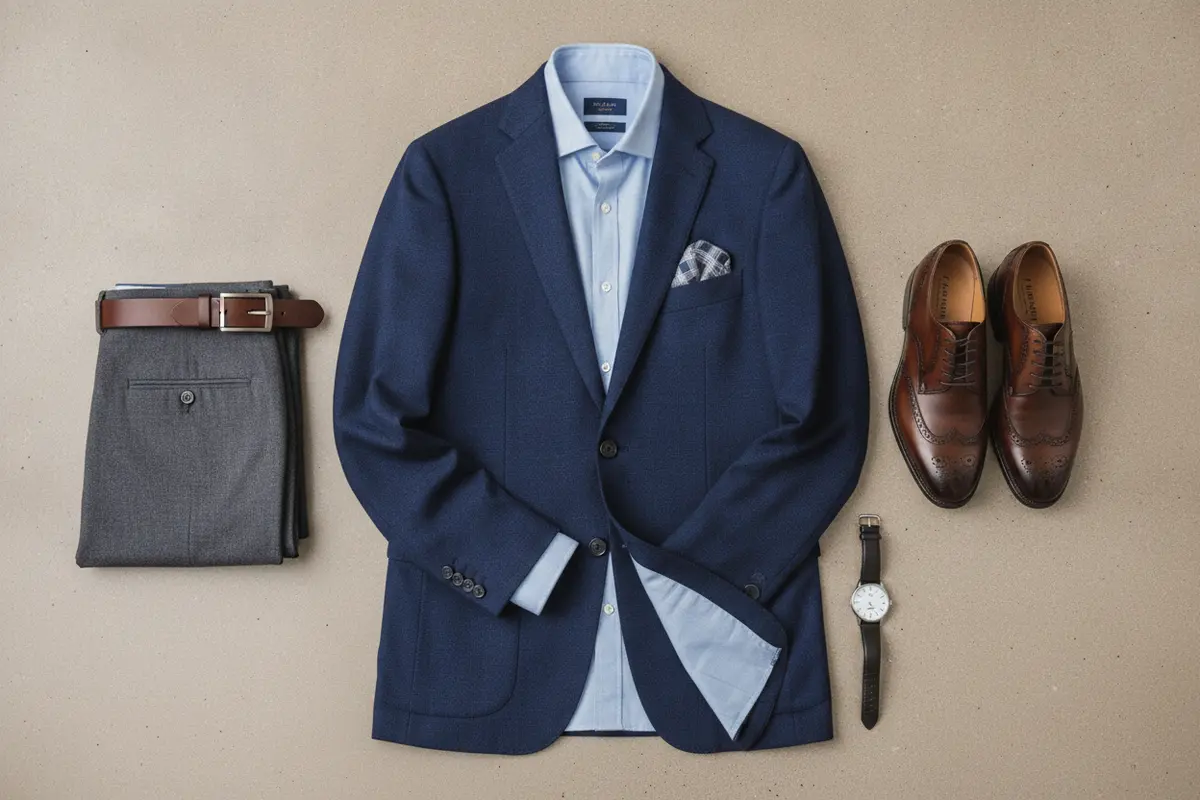
A well-fitting jacket might suit a formal workday with tailored trousers and a less formal dinner with more relaxed pants. That example is not a universal formula; it is a way to ask whether one item earns its place in your particular wardrobe. Similarly, a shirt that works under a jacket and on its own can have more uses than one reserved for a single event. A stylist can help you consider these combinations and identify when custom tailoring would address a fit concern versus when an available garment is enough. See custom trousers and custom shirts as examples of categories to discuss if you have specific fit or styling needs.
It helps to distinguish a true wardrobe gap from an impulse to buy. Before adding a piece, ask: What will I wear it with? Where will I wear it? Does it solve a fit or comfort problem? Will it serve an upcoming need, or is it only appealing in the moment? If you cannot answer, pause and revisit the choice after considering your existing clothes. That small check keeps a plan grounded in use rather than in a list of attractive items.
When does wedding styling need a different approach?
Wedding attire involves a date, a venue, the formality of the event, and often more than one person’s clothing. If you are the groom or helping coordinate a wedding party, begin four to five months before the wedding. That timing allows room to discuss the event, select garments, complete measurements and fittings, and arrange the final fitting and delivery ahead of the day.
A wedding wardrobe process can be organized in four useful stages. First, discovery and planning establish the theme, venue, and timeline. Second, styling and selection are used to consider fabrics, styles, and accessories. Third, measurements and fitting allow for precision tailoring adjustments. Fourth, the final fitting and delivery help ensure the clothing is ready before the wedding. Starting early makes it easier to discuss decisions and keep the clothing aligned with the event instead of leaving every choice to the last moment.
When comparing stylists for a wedding, ask how they will consider the venue, time of day, wedding-party coordination, and the level of formality you want. Bring reference images if you have them, but distinguish between a look you admire and what will work for the actual event. A groom’s outfit should make sense beside the wedding party and the setting, while still feeling like something he is comfortable wearing. Browse wedding attire services or review custom tuxedos for grooms and wedding parties before an appointment.
What questions should you ask before choosing?
Useful questions uncover how the service works and whether it suits your needs. You do not need to know technical clothing terms. Explain the outcome you want, then ask for a clear description of the practical steps. You can use this list during a first conversation:
- How do you learn about my lifestyle, clothing preferences, and current wardrobe?
- Can we consider garments I already own when discussing new pieces?
- Which parts of the process involve custom clothing, and which involve available ready-to-wear?
- How do measurements, fittings, and follow-up appointments work?
- For custom garments, how do fabric and customization choices shape the process and price?
- What should I bring or prepare for the appointment?
- What is the next step if I decide to move forward?
Notice whether answers are specific, understandable, and relevant to your situation. A thoughtful stylist should explain options without making you feel pressed to choose a certain garment or service. You can learn more about wardrobe styling services and the clothier and stylist team before you schedule. For a direct discussion of an outfit or fit concern, the custom suit styling service is another relevant point of reference.
How do you turn recommendations into a wardrobe plan?
After the appointment, capture the recommendations in a short, practical list. Separate what you need soon from ideas that can wait. For each potential addition, note the situation it serves, what it should work with, and whether the next step is a selection, fitting, or another conversation. This gives you a plan rather than a shopping list without context.
One useful format has three columns: “need,” “why it matters,” and “next step.” For example, under need you might write “jacket for work and dinner.” Under why it matters, note that your current jacket feels too formal for the second setting. Under next step, write “discuss fabrics, fit, and combinations at consultation.” If a need is not urgent, place it in a later column instead of treating it as an immediate purchase. This helps you compare priorities and keep choices in proportion to your actual schedule.
Once you wear a new garment in real situations, review how it performs. Did it feel comfortable for a full day? Did it work with the clothing you expected? Was it suitable for the settings you had in mind? If the answer differs from what you expected, record the reason. You may learn that the garment itself was not the problem, or that a different fit, fabric, or combination would serve you better. These observations make future decisions more precise.
There is no need to overhaul a closet at once. A wardrobe plan can develop as your work, social life, and preferences change. Keep the focus on useful choices you understand and want to wear. A personal styling conversation should leave you better equipped to choose, whether your next step is custom tailoring, a curated piece, an at-home option, or simply a clearer idea of what you already own.
How can you assess whether a recommendation is right for you?
A recommendation is only useful if it works after you leave the appointment. Before you say yes to a garment or a new direction, connect it to an actual moment in your life. Name the occasion, the people or setting involved, and the level of comfort you need. A piece that looks convincing in a fitting room may still be a poor choice if you cannot picture when you will wear it or how it will work with anything else you own.
Use a short decision check. First, ask whether the garment serves a priority you already identified. Second, consider how often that need comes up and whether you have a suitable option now. Third, identify at least two combinations or settings where the piece could be used, if versatility is important to you. Finally, confirm any remaining practical details, such as fit follow-up, timing, fabric choices, or the next step in the process. If one of those answers is unclear, ask for clarification rather than making a decision based on pressure or uncertainty.
For example, a client who needs clothing for presentations might compare a custom jacket with a ready-to-wear option. The decision is not simply which one looks best on a hanger. They can consider whether the fit concern is specific, whether available clothing works with existing trousers and shirts, and whether a custom consultation offers choices that matter to them. Custom pricing depends on fabric and customization, so it is sensible to discuss those choices before deciding. If an available piece meets the need and combines easily with other garments, custom work may not be necessary for that particular gap.
Personal preferences are part of the evaluation, not an obstacle to it. If you dislike a color, rarely wear a certain kind of garment, or need clothes that feel comfortable through a long day, say so. A thoughtful plan can make room for those constraints. You can also distinguish between a new idea worth exploring and a change you actually want to make. There is no requirement to adopt every recommendation or to replace pieces that still serve you well.
After you decide, keep a brief note about what influenced the choice. Later, when you wear the garment, compare your expectations with what happened. Did it suit the occasion? Was the fit comfortable? Did the combinations you imagined work in practice? This feedback helps you refine future decisions and makes the next appointment more focused. It also keeps a wardrobe plan connected to experience instead of assumptions.
How do different wardrobe needs shape the first conversation?
The same starting questions can lead to very different plans, because clothing needs depend on a person’s calendar and priorities. If workwear is the concern, describe the settings where you meet colleagues or clients, how formal those settings are, and whether you need garments that transition to evenings. If the issue is a closet that feels disconnected, bring examples of pieces you wear and explain what is difficult to combine. If you are preparing for a specific event, start with the date, venue, and expected formality. These details help the stylist understand the use case before discussing individual garments.
A professional who has recently moved into a more client-facing role might want a few polished outfits without replacing every item. They could identify what already fits well, which combinations feel suitable, and where a single missing piece would make several outfits more useful. A person whose work is casual but who attends occasional formal events might have a different priority: one or two garments with clear uses rather than a new rotation of office clothing. Neither situation calls for a universal checklist of required items. The point is to match the conversation to the actual occasions ahead.
Fit concerns also benefit from concrete examples. Rather than saying only that jackets never fit, explain whether the shoulders, sleeves, body, or overall comfort are the problem, and describe when you notice it. If several garments share the same issue, mention that pattern. A stylist can then discuss the options that apply to the garment and the service, including whether custom clothing should be considered. Keep the conversation descriptive rather than assuming there is one solution for every fit challenge.
For an upcoming wedding, take account of the group as well as your own outfit. The groom may need a look that feels personal and aligns with the event, while a member of the wedding party may need to coordinate without matching every detail. Share any guidance you already have from the couple and ask what choices remain open. Beginning four to five months ahead gives room to discuss the plan and fit process with less last-minute pressure.
These examples show why a good consultation starts with listening. A stylist cannot make a useful recommendation from a garment category alone. The more clearly you explain the occasion, the fit issue, and your preferences, the easier it is to evaluate whether custom tailoring, curated ready-to-wear, StyleBox, or a wardrobe-planning conversation is the appropriate next step.
Frequently Asked Questions
How do I find a wardrobe stylist in Columbus?
Start by identifying the clothing problem you want to solve, then compare services by process, fit discussion, shopping format, and follow-through. Ask how the stylist learns your preferences and how recommendations can work with your existing wardrobe. For Columbus/Dublin, confirm the appointment details before you go because the location is appointment-based.
Should I choose custom tailoring or ready-to-wear?
It depends on the garment and your priorities. Custom tailoring involves a consultation and choices about fabric and customization. Ready-to-wear may be suitable when an available garment meets your needs. Discuss fit, intended use, and preferences before deciding; custom pricing depends on the fabric and customization selected.
What should I bring to a wardrobe styling consultation?
Bring a clear description of your goals, upcoming clothing needs, and examples of outfits you like. Photos or a few garments that fit well can help explain your preferences. It is also useful to mention what you avoid wearing and why.
When should a groom begin planning wedding attire?
Begin four to five months before the wedding. That allows time for planning, selection, measurements, fittings, and final delivery before the event.
How does StyleBox work for someone who prefers shopping at home?
StyleBox is a personalized at-home styling option. There is no styling fee, and customers pay only for items they keep. Complimentary delivery and pickup apply in Cincinnati; ask about the details for your location before getting started. You can learn about StyleBox to decide whether the format suits you.
The right wardrobe stylist helps you make choices that fit your life, your preferences, and the occasions ahead; begin with a focused conversation about what you want clothing to do for you.