
A wardrobe stylist can help you make more of the clothes you own and make thoughtful decisions about what to add. Whether you are dressing for a demanding workweek, preparing for a wedding, or refining your everyday style, the right support should begin with your life and preferences—not a pile of trends. A practical wardrobe plan connects fit, color, occasion, and comfort so getting dressed feels easier.
What does a wardrobe stylist help you do?
A wardrobe stylist helps you assess what you wear, identify useful gaps, and create combinations that make sense for your routine. That can include reviewing fit and condition, planning outfits for work or events, choosing colors and silhouettes, and deciding where custom tailoring or a new garment would add value. The goal is not to replace your taste. It is to give it a clearer direction.
Good styling also recognizes that wardrobes serve different purposes. A professional may need reliable options for client meetings, travel, and dinners, while a wedding customer needs a look that fits the event and its schedule. Someone who already owns quality pieces may need help combining them, not buying more. A stylist should ask about those distinctions before suggesting a plan.
The work can be highly focused. You might need one custom jacket, a set of outfits for a new position, or guidance on what to take on a business trip. It can also be broader, such as a closet review that separates dependable foundations from items that need professional attention. Defining the scope early helps make the appointment more useful.
When can a wardrobe stylist be useful?
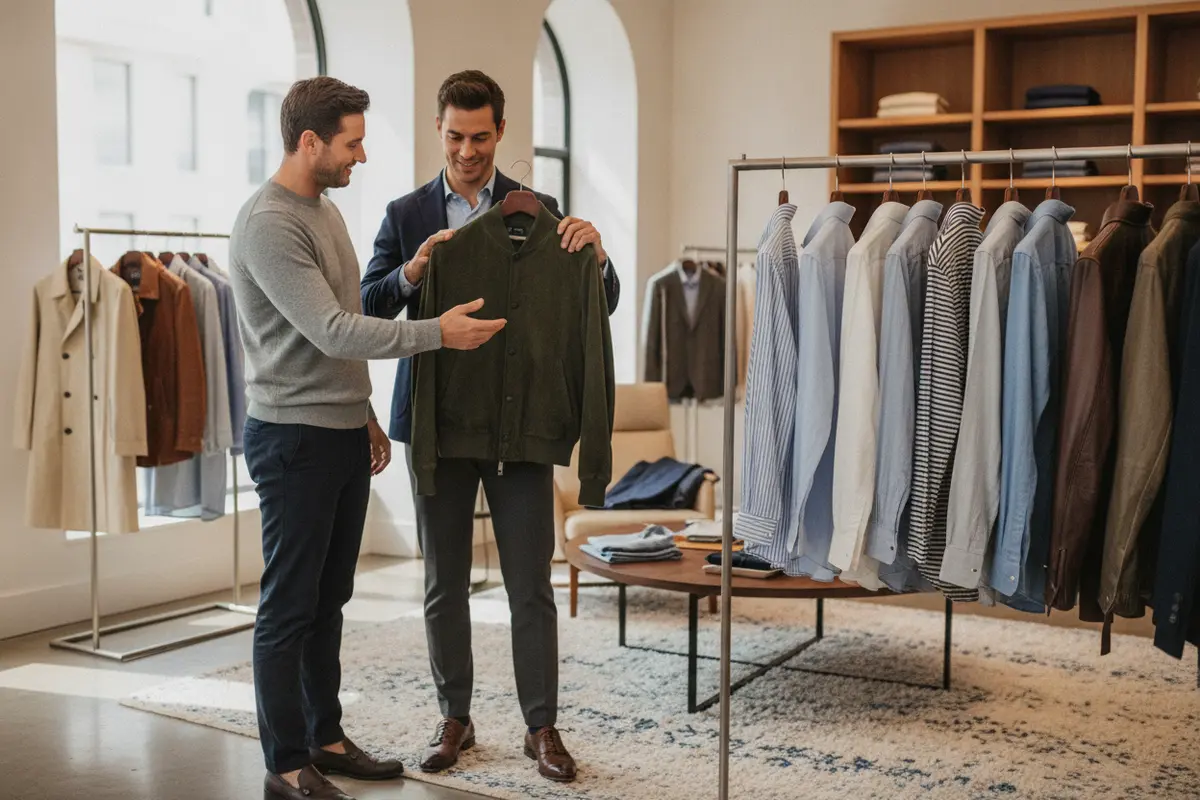
Consider a consultation when your closet is full but outfits still feel difficult, when a job or lifestyle has changed, or when you have an important occasion on the calendar. A stylist can help you identify why pieces are not working together. Perhaps a jacket is too formal for your daily routine, a shirt does not fit comfortably, or a versatile trouser would connect several tops you already own.
A consultation can also help when your calendar has become more varied. Hybrid work may call for clothes that move between a desk, a dinner, and an event. Frequent travel may make wrinkle resistance, layering, and versatility more important. A wedding may require a coordinated look that feels personal rather than identical to everyone else’s. Each situation calls for different questions.
It is useful when you want to make fewer, more considered purchases. Bring the stylist back to your real week: how often you travel, what settings you move between, which garments you reach for, and what you avoid. That context makes recommendations more useful than a generic list of wardrobe essentials.
How should you prepare for a consultation?
Before meeting, note the occasions you dress for most often and any upcoming milestones. Gather a few examples of outfits you like, along with pieces you rarely wear. If you are comfortable, bring photos of combinations you have tried. Be ready to explain what feels right or wrong: the fit, color, formality, fabric, care needs, or simply how you feel wearing it.
- List your priorities. Decide whether you want help with workwear, everyday casual outfits, a wedding, travel, or a broader closet reset.
- Set practical boundaries. Identify what you want to keep, what you are open to changing, and the level of investment you are considering. Custom pricing is consultation-based and depends on fabric and customization.
- Bring relevant garments. A favorite jacket, a shirt that never seems to work, or a pair of trousers you wear often can make the conversation concrete.
- Share your calendar. Dates matter when you need custom clothing, a final fitting, or an event-ready outfit.
- Describe your comfort preferences. Mention movement, temperature, texture, and fit concerns so recommendations reflect how you actually live.
Do not feel that every garment must be perfectly organized before you arrive. The purpose of the appointment is to create clarity. A few representative pieces and honest observations are more valuable than bringing everything without a plan.
For custom tailoring, a consultation is the right place to discuss fabric, construction, details, timeline, and investment. If you are exploring custom clothing and tailoring, bring a clear sense of where and how often you expect to wear the garment.
How can you make recommendations work with your existing wardrobe?
Start with pieces you wear often and build combinations around them. A jacket should work with more than one shirt or trouser if versatility is the goal. Likewise, a new shirt should fit your preferred level of formality and work with pieces already in rotation. A wardrobe stylist can help you sort items into reliable foundations, occasion-specific garments, and pieces that need attention.
Think in outfits rather than isolated purchases. A navy jacket, for example, should be considered alongside the trousers, shirts, knitwear, and shoes you already use. The question is not only whether the jacket looks good on its own. It is whether it gives you several credible combinations for the settings on your calendar.
Color coordination does not require every item to match. It requires enough connection for the wardrobe to feel intentional. A stylist can help you notice repeated colors, useful neutrals, and places where texture or contrast adds interest. This approach is particularly helpful when you want to dress with personality while keeping mornings simple.
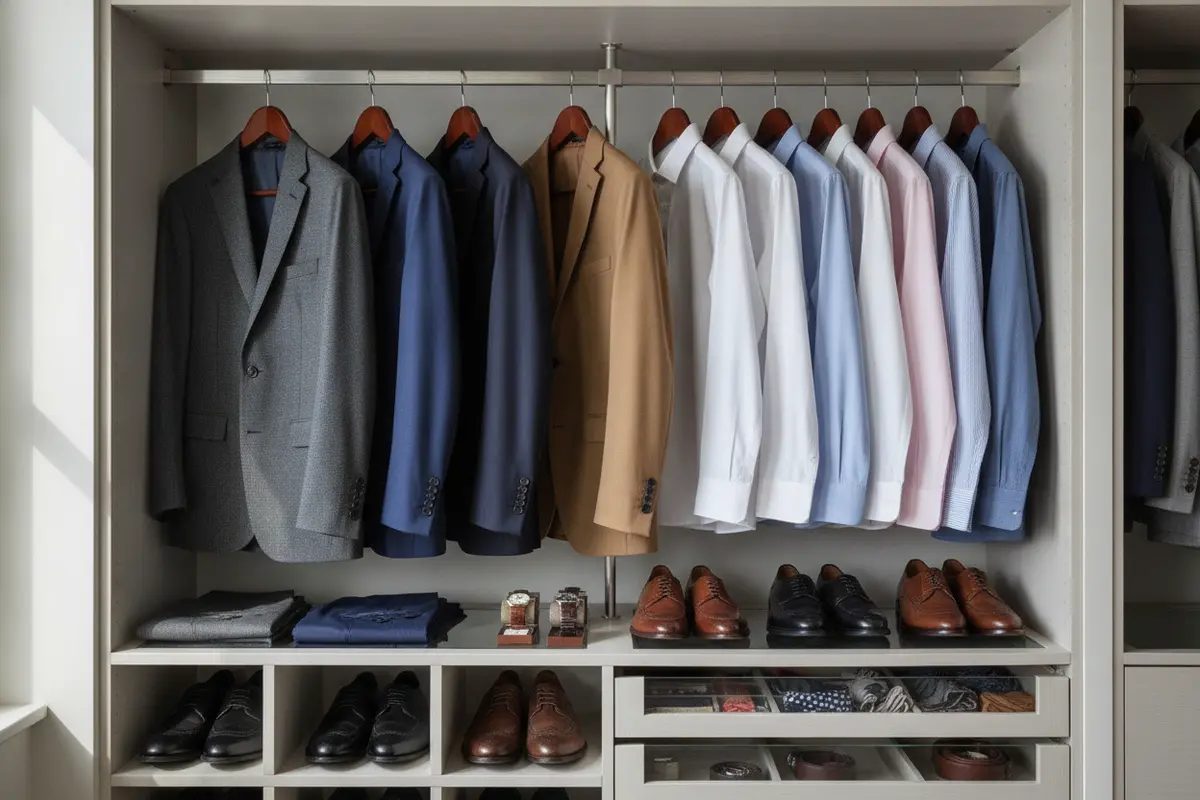
Keep a simple record of successful outfits. A phone photo can help you remember combinations for travel or busy mornings. Notice what you actually wear over several weeks. If a garment remains untouched, ask whether the fit, care needs, comfort, or styling is the obstacle before buying something similar.
What should you review before adding a new garment?
Before purchasing or commissioning a piece, ask what job it will perform. Will it serve meetings, dinners, travel, celebrations, or several of those occasions? How often will you wear it? Does it connect with at least two or three items you already own? These questions help separate a useful addition from an attractive garment that stays in the closet.
Review fit first. Shoulder placement, sleeve length, trouser rise, leg line, and ease through the body all affect how a garment feels and looks. Some adjustments can be addressed through professional tailoring, while others are better handled by selecting a different size, cut, or garment. A consultation can clarify that distinction without turning the decision into guesswork.
Then consider fabric and maintenance. A piece intended for frequent travel may need different characteristics from one reserved for formal occasions. Season, texture, breathability, drape, and the way a garment coordinates with existing pieces all matter. The best choice is the one that suits both the occasion and the way you will care for and wear it.
When should you choose custom tailoring, ready-to-wear, or StyleBox?
These options solve different problems. Custom tailoring is useful when you want to select fabric and details and have a garment made around your measurements. Curated ready-to-wear can be a practical route when you find a piece that suits your fit and needs. StyleBox offers a way to try personalized selections at home. There is no styling fee, you pay only for items you keep, and complimentary delivery and pickup apply in Cincinnati.
| Option | Best suited to | What to consider |
|---|---|---|
| Custom tailoring | A specific fit, fabric, or design preference | Allow time for consultation, garment creation, and fitting; cost depends on choices. |
| Curated ready-to-wear | Adding a useful piece without commissioning a garment | Assess fit, versatility, fabric, and how the piece works with your existing clothes. |
| StyleBox | Trying personalized selections at home | There is no styling fee; you pay only for what you keep. Cincinnati delivery and pickup are complimentary. |
| Focused wardrobe consultation | Clarifying combinations, gaps, or event needs | Bring your priorities and representative garments so advice can be specific. |
Custom tailoring may be the better route when a garment has to perform a particular role or when fit and details are central to the decision. Explore custom suits, custom casual attire, and custom jackets and sport coats as examples of garments that can be discussed through a personalized process.
Ready-to-wear may make sense when you need something quickly or when an existing cut already suits your proportions. In that case, styling still matters. The right recommendation considers what the garment will be worn with, not only how it appears on a rack.
StyleBox is useful for someone who wants personalized selections delivered to the home. To learn more, review the personalized StyleBox service. The most appropriate option depends on the garment, your schedule, and the kind of help you want.
How can a wardrobe stylist plan clothing for work?
Begin with the settings you move through during a typical week. A professional wardrobe may need to cover presentations, client meetings, office days, travel, lunches, and evening events. Instead of building separate wardrobes for every setting, look for pieces that can shift in formality through changes in shirts, knitwear, shoes, and accessories.
Make a short list of dependable outfit formulas. One might combine a tailored jacket, a shirt, versatile trousers, and polished shoes. Another might use a more relaxed jacket, knitwear, and casual trousers. The formula is not a uniform. It is a starting point that reduces decision fatigue while leaving room for color and texture.
Pay attention to what your workday requires physically. If you spend time seated, walking, or traveling, movement and comfort should be part of the fit conversation. If you move between indoor and outdoor settings, layers may be more useful than a single heavy garment. A wardrobe stylist can turn those observations into a practical rotation.
For additional ideas, browse the practical guide to finding your style and the minimalist wardrobe guide. Use them as prompts for your own lifestyle rather than rules that every closet must follow.
How can you plan a wardrobe for a wedding?
For wedding attire, begin four to five months before the wedding. That gives you time to talk through the event, explore styles and fabrics, complete measurements and fittings, and confirm the final look before the day. The process should account for the venue, season, ceremony, and the couple’s preferences rather than treating every wedding alike.
A useful sequence is discovery and planning, styling and selection, measurements and fitting, then final fitting and delivery. During discovery, discuss the theme, venue, schedule, and how formal the celebration will feel. During styling and selection, compare fabrics, silhouettes, accessories, and the relationship between the groom, wedding party, and partner’s attire.
Measurements and fitting are the point at which the garment is evaluated on the person who will wear it. Discuss movement, comfort, proportions, and any adjustments that may be appropriate. At the final fitting, confirm that the complete look works together and that the clothing is ready for the day. This four-step process is outlined through custom wedding attire services.
Wedding party coordination does not always mean identical clothing. Consistent levels of formality, related colors, and complementary details can create a polished group while leaving room for individual fit and preference. If the event calls for black tie or a more formal direction, explore custom tuxedos for grooms and wedding parties early enough to allow for the complete process.
How do fit and fabric shape a useful wardrobe?
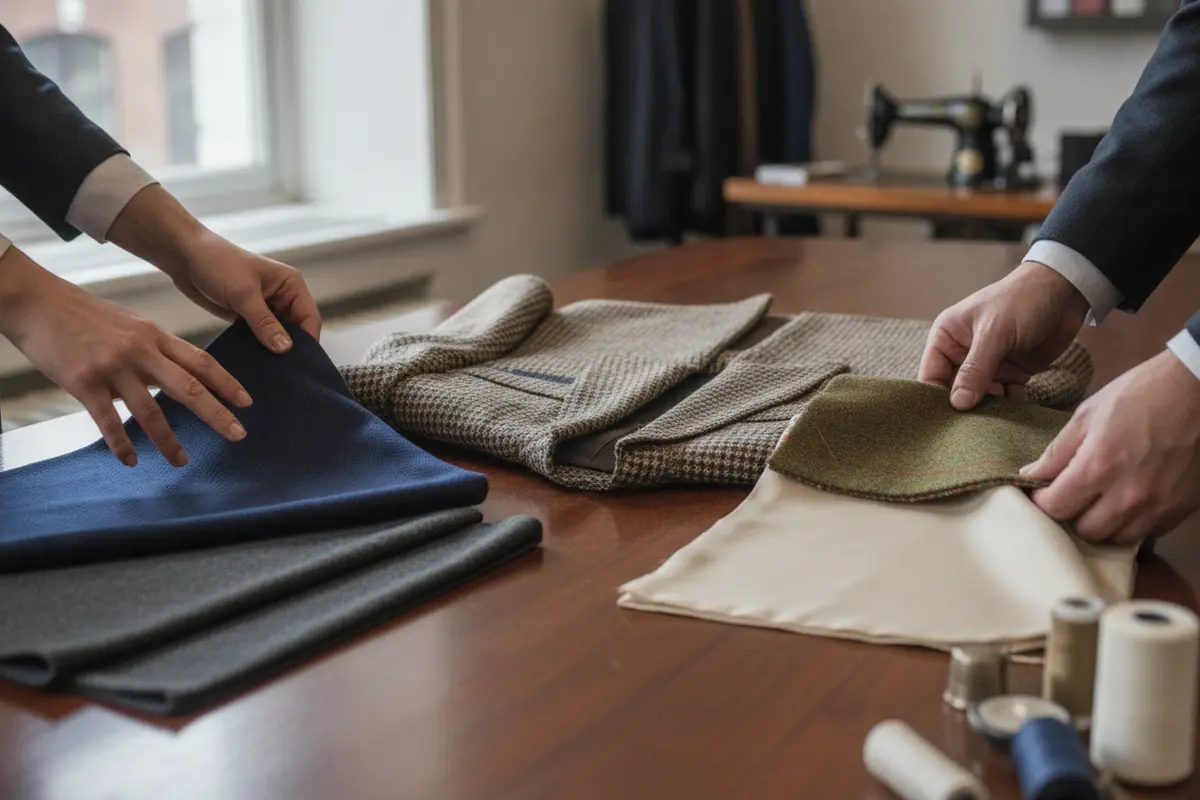
Fit affects how comfortable a garment feels and how polished it looks. Pay attention to shoulder placement, sleeve length, trouser break, and whether you can move easily while seated and standing. The right adjustments depend on the garment and your proportions. A professional can explain what is possible and what is better addressed by choosing a different cut.
Construction should be described carefully because methods vary by garment. Ask how the particular jacket is made, how it is intended to feel, and which details support the way you plan to wear it. A thoughtful conversation is more helpful than assuming one construction method is right for every person or purpose.
Fabric should suit the garment’s purpose and how you intend to wear it. Consider season, setting, texture, and how a piece coordinates with your current wardrobe. During a jacket or sport coat consultation, compare options in person and talk through the occasions the garment must serve. For trousers, see the custom trouser options.
Lining is another detail worth discussing in context. Bemberg, for example, is a cupro fiber used for lining. It should be considered as one part of the garment’s overall construction and intended use, not treated as a universal answer for every wardrobe.
How can hospitality improve the styling experience?
Clothing decisions are easier when the appointment leaves room for conversation. A relaxed, hands-on setting gives you time to explain what you wear, what you avoid, and what you want to communicate. At Trevor Furbay Bespoke, the shopping experience includes hospitality with in-house bars and kitchens, refreshments, and an emphasis on personal relationships.
That environment is not a substitute for technical expertise. It complements the practical work of reviewing proportions, comparing fabrics, taking measurements, and planning outfits. You should leave with a clearer understanding of the choices in front of you and the next step for your wardrobe.
What should you ask before choosing a wardrobe stylist?
Ask how the appointment will be tailored to your goals, what you should bring, and how recommendations will account for garments you already own. If you are commissioning clothing, ask how selection, measurements, and fittings fit into your timeline. If you are considering at-home selections, ask how preferences are gathered and how the service works in your area.
- What will we focus on during the first appointment?
- Can we work with pieces I already own?
- How will you distinguish a tailoring need from a need for a different garment?
- What timeline should I allow for a custom or wedding look?
- How will fabric, fit, and intended use shape the recommendation?
- Which next step is appropriate if I need only a few targeted additions?
A strong consultation should help you understand trade-offs and next steps, not pressure you into buying a particular item. Personal styling can extend beyond a single outfit. Wardrobe consulting or closet cleaning may help you understand what to keep, what to wear together, and what gaps deserve attention. You can review the available professional clothier and personal styling services or read about the bespoke tailoring process.
How do you evaluate a wardrobe plan after the appointment?
Give the plan time to work in real life. Over the next few weeks, note which combinations you repeat, which garments remain untouched, and where you still feel uncertain. This is not a test of whether you followed every recommendation. It is information that can make a later appointment more precise.
Review the plan against your calendar. Are there enough options for your most common work settings? Can one jacket or trouser serve more than one occasion? Do the clothes feel comfortable for the full day? Are there upcoming events that need a separate decision? These questions show whether the wardrobe supports your life rather than simply looking organized.
If you discover that one piece needs professional adjustment, schedule that conversation rather than attempting alterations at home. If the issue is a missing foundation, identify the garment category and the combinations it should create before you shop. Small, clear decisions usually produce a more useful wardrobe than a sudden overhaul.
Schedule Your Wardrobe Consultation
Frequently Asked Questions
Is a wardrobe stylist only for people who need a complete closet overhaul?
No. You can seek help with a single event, a work wardrobe, outfit combinations, a few targeted additions, or a focused decision about what to commission. Explain the scope you want before the consultation.
Should I buy new clothes before meeting a stylist?
Usually, it is helpful to review what you already own first. Bring a few important pieces or photos and let the conversation identify genuine gaps before you shop.
How far ahead should I plan custom wedding attire?
Begin four to five months before the wedding. Early planning leaves room for discovery and planning, styling and selection, measurements and fitting, and final fitting and delivery.
Can I get personalized clothing recommendations at home?
StyleBox provides a personalized selection to try at home. There is no styling fee, you pay only for the items you keep, and complimentary delivery and pickup apply in Cincinnati.
Is custom tailoring priced the same for every customer?
No. Custom pricing is discussed through a consultation and depends on the fabric and customization selected. The appointment is the appropriate place to review those choices and the related timeline.
A thoughtful wardrobe begins with the way you live and the clothes you genuinely enjoy wearing. With a clear plan, the right fit, and considered additions, each piece can earn its place in your closet.