
If you are deciding what color suit for wedding attire, start with the dress code, your role, and the setting—not with a trend. Navy and charcoal are dependable choices for many ceremonies, while lighter gray, tan, or muted colors can feel right for daytime and outdoor celebrations. The best option looks appropriate in the room, complements the wedding palette without matching it too closely, and feels like you.
How do you choose a wedding suit color?
Use this order: check the invitation, clarify whether you are a guest or part of the wedding party, consider the venue and time, then choose a color. This prevents a common mistake: selecting a suit that looks good on its own but feels too casual, too formal, or too close to the wedding party’s look.
- Follow the dress code. A formal evening wedding usually calls for darker, more restrained colors. A daytime garden celebration may allow lighter shades, depending on the invitation.
- Respect your role. A groom may want a distinct look; a groomsman should coordinate with the couple’s plan; a guest should look polished without appearing to be part of the wedding party.
- Read the setting. A ballroom, a historic venue, a church, and an outdoor celebration each create a different context for color and formality.
- Choose a color you can wear again. If versatility matters, a classic navy or gray suit can work beyond the wedding with different shirts and accessories.
If you are attending as a guest, the practical examples in this guide to choosing a suit for a wedding guest can help you balance the invitation with your own style.
Which suit colors work for different wedding settings?
There is no single correct color for every wedding. Think of the colors below as starting points. The invitation, the couple’s preferences, and the formality of the event should lead your decision.
| Color | Often suits | What to consider |
|---|---|---|
| Navy | Day or evening; city, garden, and many indoor venues | Versatile and easy to pair with a white or pale blue shirt. |
| Charcoal | Formal ceremonies, evening receptions, and cooler seasons | Reads more formal than many mid-gray options; keep the shirt and accessories crisp. |
| Medium or light gray | Daytime weddings and settings with a lighter, relaxed feel | Check the fabric and overall styling so it does not look too casual for the dress code. |
| Tan or light brown | Outdoor, daytime, and warm-weather celebrations | Best when the invitation allows a relaxed feel; choose a refined fabric and clean fit. |
| Black | Some formal evening settings | Can feel severe or resemble business attire; a tuxedo may be more appropriate for black-tie. |
The table is a guide, not a dress-code substitute. When the invitation specifies black tie, do not assume a standard business suit is interchangeable with formal eveningwear. Explore the distinctions in this overview of wedding tuxedo styles, or review the options for custom wedding tuxedos.
Is navy or charcoal better for a wedding?
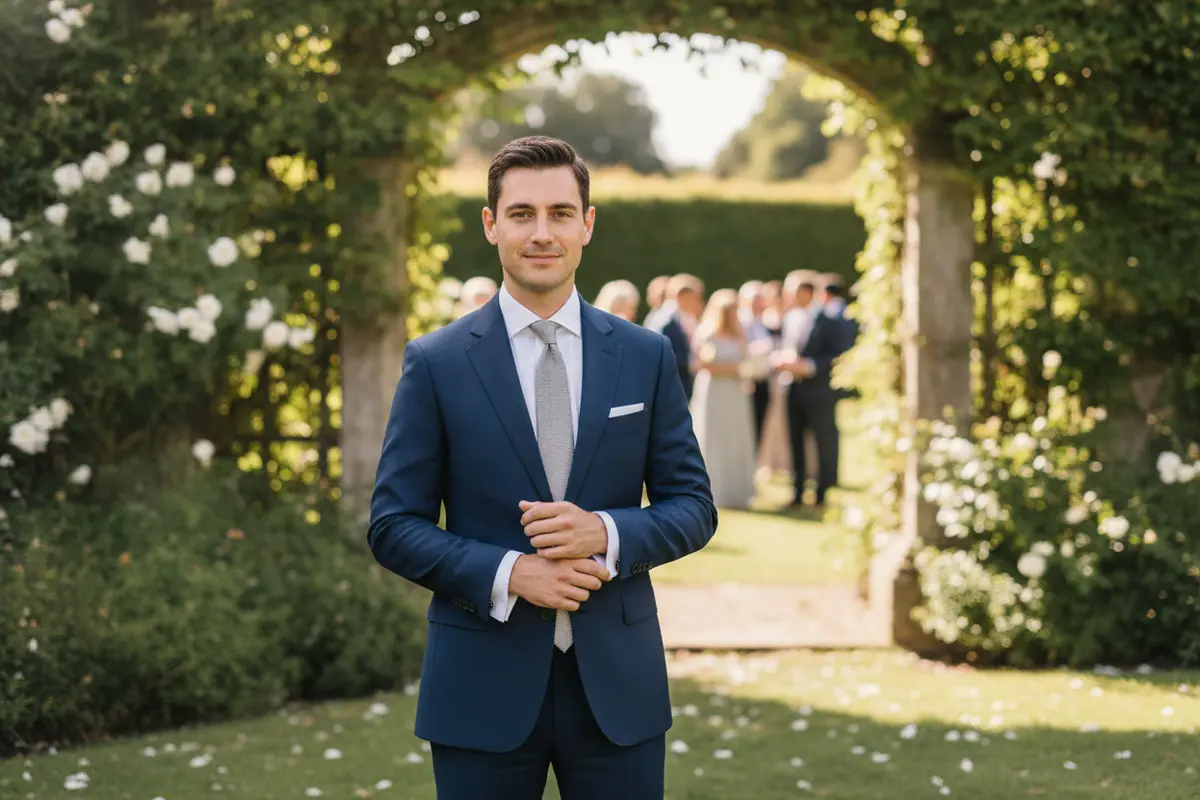
Choose navy when you want a flexible, approachable suit that can move between daytime and evening settings. It pairs naturally with white, pale blue, and many patterned shirts. It also offers a useful middle ground: more distinctive than a basic black suit, while remaining classic enough for a formal celebration.
Choose charcoal when the event is more formal, takes place in the evening, or calls for a darker look. Charcoal is a strong choice for a groom or wedding guest who wants understated formality. A very dark suit can look nearly black indoors, so consider how the venue’s lighting may affect the final appearance.
Both colors can be appropriate. If you already own a well-fitting navy or charcoal suit, first check whether its fabric and construction feel right for the event. A polished fit and thoughtful styling often matter more than choosing a less familiar color. See custom suits and tailoring for options when you are considering a suit made around your preferences.
When do lighter wedding suit colors make sense?
Light and mid-gray, tan, and warm brown can work especially well for daytime ceremonies, garden venues, and celebrations in warmer months. They bring a softer quality to the outfit and can complement natural surroundings. A light suit is not automatically casual, but fabric, shirt, shoes, and the invitation all influence how formal it feels.
For an outdoor event, consider the practical setting as well as the photographs. A very pale shade can show marks more readily, and a highly textured or relaxed fabric may feel out of place at a formal evening reception. A mid-tone gray can be a useful compromise when you want something lighter than charcoal without moving into a distinctly casual look.
Season can guide, but should not dictate, your choice. A warm-weather wedding does not require a tan suit, and a winter ceremony does not rule out navy. If comfort in summer is part of the decision, compare the fabric and design options on the summer suits page. For a coordinated look beyond traditional suiting, explore custom casual attire where the invitation allows it.
Should the groom, groomsmen, and guests choose different colors?
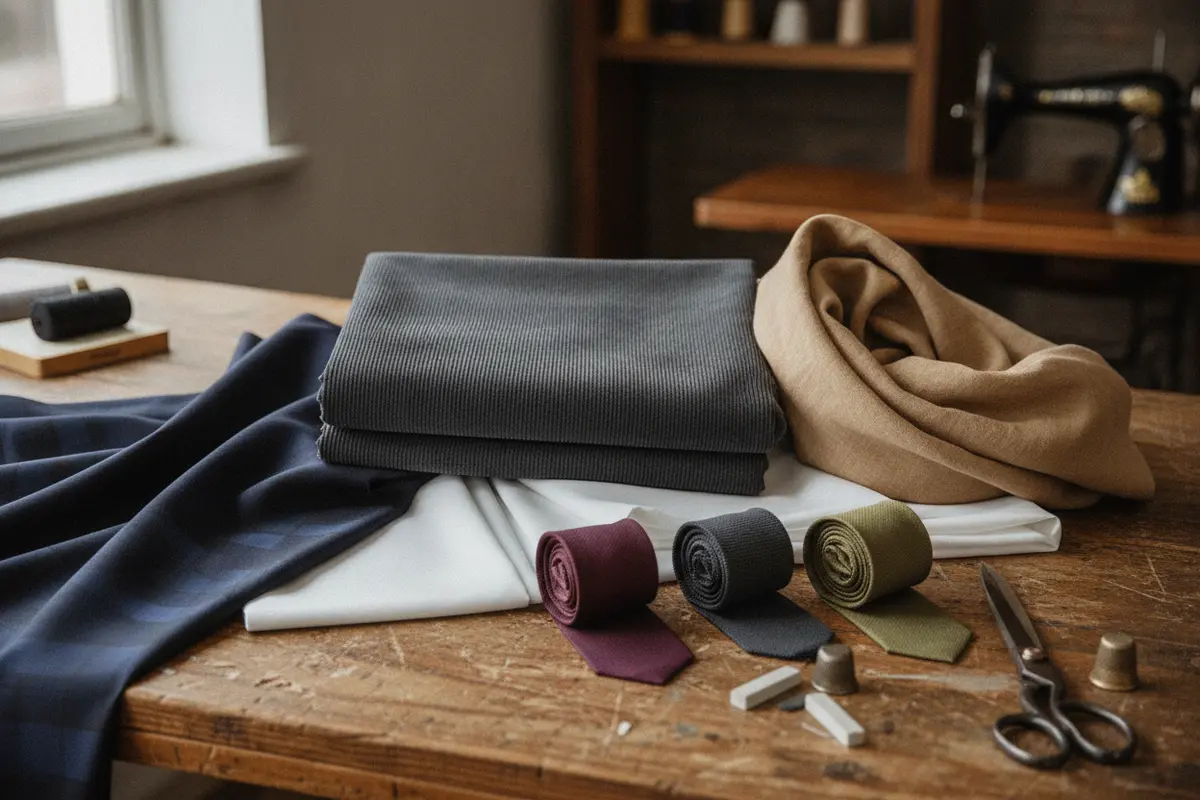
Different roles call for different decisions. The groom should begin with the overall vision for the day, including the venue, wedding palette, and formality. He may choose a distinct shade or texture that sets him apart, or wear a coordinated look with a detail that makes his outfit feel personal. The choice should be agreed with the couple rather than made in isolation.
Groomsmen should follow the couple’s direction. That may mean wearing the same color, coordinating within a palette, or using matching accessories while choosing from a limited set of suit shades. Ask about the exact color, shirt, tie, and shoes before purchasing or arranging attire. Small differences in shade can show in group photographs, especially when one person chooses a much lighter or darker suit.
Guests have more room to choose, but should avoid deliberately copying the wedding party or wearing a color that draws attention away from the couple. If the invitation or couple gives guidance, follow it. A guest looking for a more expressive approach can consider a subtle patterned tie or pocket square rather than making the suit itself the focal point. The ideas in this guide to groom wedding suit ideas are useful for thinking through the groom’s role, while this groomsmen suit guide can help a wedding party coordinate.
How should dress code and time of day affect color?
The invitation takes priority over general rules. For black tie, wear the expected formal attire rather than treating a dark business suit as an equivalent. For a formal or black-tie-optional event, a dark, well-finished suit may be a suitable choice when the invitation permits it. For cocktail attire, navy, charcoal, and medium gray are reliable; use accessories to set the level of formality.
Daytime weddings often leave more room for medium and lighter colors, particularly in outdoor or relaxed settings. Evening celebrations tend to favor deeper shades and a more polished finish. These are useful defaults, not strict laws. A daytime formal ceremony can call for a dark suit, while an evening event with a relaxed dress code may allow more flexibility.
If the wording is unclear, ask the couple or wedding planner what guests should wear. It is better to clarify than to rely on a guess based only on the venue. A men’s suit guide can also help you think through the cut and styling details that support the occasion.
How can you coordinate a suit without matching the wedding party?
Use the wedding palette as context, not a uniform. If the attendants are wearing a particular shade of blue, for example, a guest can choose navy, gray, or another complementary neutral rather than trying to match their exact color. If the couple has requested a specific color or asked guests to avoid one, follow that direction.
Keep the rest of the outfit considered. A white or pale blue shirt is a versatile base for navy and gray. A tie can pick up a color from the wedding without repeating it from head to toe. Shoes and belt should look intentional together, and a pocket square can add a small note of color without competing with the tie. The aim is a coherent outfit, not a perfect color match to the flowers or table settings.
Pay attention to the suit’s details as well. Lapel shape, shirt collar, tie width, and the level of shine in the cloth all affect the overall impression. The guide to suit lapel styles explains how a jacket detail can shift the look without changing the suit color.
How do the venue and season change the best choice?
A venue is a helpful clue, but it does not replace the dress code. For a garden ceremony in daylight, medium gray or tan can feel at home in the setting. Choose a clean, tailored look and let the invitation determine how formal the accessories should be. If the reception moves indoors in the evening, a darker suit can still work just as well; you do not need to change outfits simply because the light changes.
For a city hotel or formal indoor venue, navy and charcoal are easy to adapt. Navy works when you want a classic look that feels a little less solemn, while charcoal can add a more formal note. If the wedding is in a historic building or a traditional place of worship, take the stated dress code seriously and keep the color and accessories composed.
At a beach or destination celebration, start by asking what the couple expects. A relaxed location does not always mean casual clothing. If the invitation allows a lighter look, tan, light gray, or a softer shade of blue may fit; if it calls for formal attire, choose a color and fabric that still meet that expectation. Comfort matters, but a warm climate alone should not determine the dress code.
Season can influence the mood of an outfit, too. Deep colors often feel natural in fall and winter, while lighter shades can feel fresh in spring and summer. You can also use a seasonal accessory rather than changing the suit color. A muted tie or a textured pocket square can bring a little warmth to a navy suit without making the outfit feel themed. Let the overall balance—not a rule about which colors belong to which month—guide the final choice.
What should you consider before choosing a custom wedding suit?
Think beyond the color swatch. Consider the wedding date, expected setting, how often you will wear the suit afterward, and whether it needs to work with pieces already in your wardrobe. Bring the invitation and any palette guidance to a consultation. If you are part of the wedding party, bring the couple’s instructions so the clothier can help you interpret them.
Custom tailoring is consultation-based, and the cost depends on fabric and customization. The process also gives you a chance to weigh color alongside fit, cloth, and details rather than making the decision from a screen. You can explore custom styling and tailoring or review the appointment options to discuss what you need.
For a wedding, start planning early enough to allow time for selection and fittings. The right timeline depends on the garment and event details, so share the wedding date when booking. A relaxed appointment makes room to compare colors in person and consider how the suit will look with your shirt and accessories.
Which color combinations make the suit feel intentional?
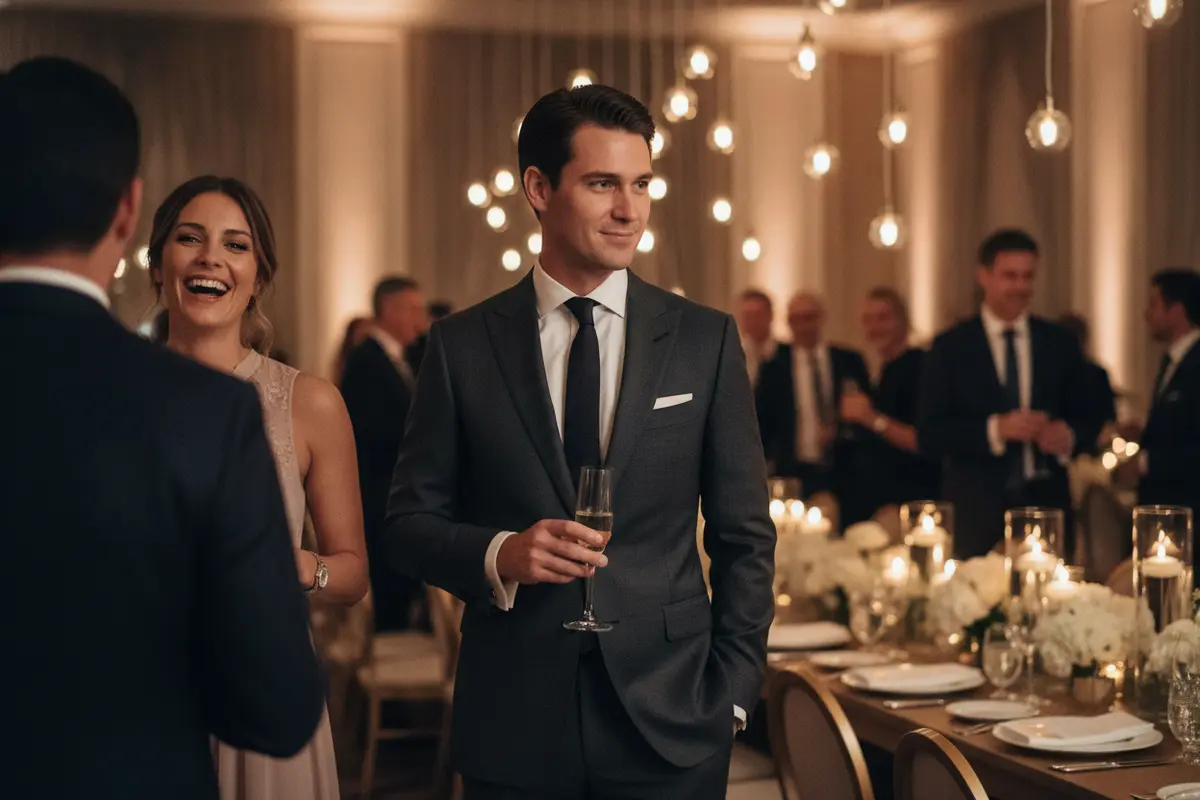
Once you have chosen the suit, keep the shirt and accessories in proportion to the occasion. A navy suit with a white shirt and a restrained tie is a reliable formal combination. A pale blue shirt softens the contrast and works well when the event is polished but not strictly formal. If you choose a patterned tie, keep its colors compatible with the suit rather than trying to repeat every shade in the wedding palette.
With charcoal, a crisp white shirt creates a classic, higher-contrast effect. A pale blue or subtle stripe can make the look feel less severe, provided the invitation allows a little more personality. For a gray or tan suit at a daytime wedding, an understated shirt and tie can keep the outfit elevated. Avoid making every element light; a darker shoe or tie can give the overall look definition.
Think about how the outfit will appear in photographs as well as in person. Strong contrast can read clearly in group pictures, while a suit and shirt in nearly identical shades may look flat. The wedding party’s palette can offer a cue for one accessory, but you do not have to copy it exactly. Choose one detail to coordinate, then let the rest of the outfit support the suit.
Finally, check the entire combination under the kind of lighting you expect when possible. A deep navy may look almost black in a dim room, and a light gray may appear brighter outdoors. Seeing the cloth alongside your shirt and accessory options makes it easier to judge the balance than choosing each piece separately.
Frequently Asked Questions
What is the safest suit color for a wedding guest?
Navy is a dependable option for many weddings because it is versatile and works across a range of settings. Charcoal can be a better fit for a more formal or evening event. Always check the dress code and any guidance from the couple before choosing.
Can I wear a black suit to a wedding?
A black suit can work for some formal evening weddings, but it is not the right answer for every invitation. For black tie, follow the expected formalwear guidance. If you are unsure whether a black suit is appropriate, ask the couple or planner.
Can a wedding guest wear a light-colored suit?
Yes, when it fits the dress code and setting. Light or medium gray and tan can suit many daytime or outdoor celebrations. Choose a refined overall look, and avoid a shade or styling choice that the couple has asked guests not to wear.
Should a wedding suit match the wedding colors?
Not necessarily. Guests can coordinate with the general palette through a tie or pocket square without matching the wedding party. Groomsmen should follow the couple’s specific instructions.
The right wedding suit color is the one that respects the invitation, suits your role, and feels natural in the setting. When those pieces are clear, choosing a polished outfit becomes much easier.