
If you are asking when to order a wedding suit, start planning about four to five months before the wedding. That window gives you time to discuss the setting, choose a look, take measurements, and allow for fittings without turning every decision into a last-minute rush. A custom wedding wardrobe is personal, so the right schedule leaves room for both careful choices and practical changes.
How far in advance should you order a wedding suit?
For a custom wedding suit, begin the process four to five months before the wedding. This is the recommended planning window for wedding attire at Trevor Furbay Bespoke. Starting early allows you to make decisions in a considered order: first the wedding’s overall direction, then the suit and accessories, then the fit and final adjustments.
Four to five months is a useful starting point, not a reason to delay if the date is closer. A wedding happening sooner still merits a conversation as soon as possible. The available options and timing depend on what you need, the chosen garments, and the fitting schedule. A clothier can help you understand which path is realistic once you discuss the date and your priorities.
Custom clothing is not an instant purchase. The company’s Atelier Munro custom tailoring offering has a typical delivery timeline of three to five weeks, and that is only one part of planning a complete wedding look. Selection, measurements, fitting adjustments, and the final check also need room on the calendar. For an overview of the options, explore custom wedding attire and custom tailoring services.
Why does an early start make wedding attire easier?
Ordering early is not about adding unnecessary steps. It helps protect the parts of the experience that matter: choosing a look that belongs at your wedding, coordinating with other people, and making sure the clothes feel right when you wear them. The schedule can also absorb the small changes that naturally appear as plans become more definite.
- You can make choices in the right order. The venue, season, dress code, and wedding-party palette inform the suit. You can consider those details before settling on cloth, color, and accessories.
- You have time to compare options thoughtfully. Fabric and customization choices are easier to evaluate when you are not working against a near deadline.
- Measurements and fittings have a place on the calendar. A first fitting is not the same as a final check. Allowing time for both helps you address fit questions before the event.
- Your wedding party can coordinate more calmly. If other people need attire guidance, sharing a clear direction early makes it easier for everyone to understand the plan.
- You can respond to changes. Wedding details, travel plans, and personal preferences may shift. A generous lead time gives you more room to revisit choices.
Beginning early also makes the consultation more useful. Rather than asking for a single quick recommendation, you can talk through what you want the clothing to communicate and how you expect to wear it. For background on the options, browse the custom suit guide.

What should your wedding suit timeline look like?
A useful schedule follows the decisions themselves rather than treating ordering as one isolated task. The exact dates vary by wedding and garment, but this four-stage outline helps you see what to handle and when.
| Timing | Focus | What to do |
|---|---|---|
| Four to five months before | Discovery and planning | Discuss the wedding date, venue, theme, dress code, and who needs attire. Set the direction before choosing details. |
| After the initial plan | Styling and selection | Review fabrics, suit or tuxedo styles, and accessories. Consider how the look works with the wedding and your personal style. |
| As the clothing is arranged | Measurements and fitting | Have measurements taken and assess the garment in a fitting. Identify any adjustments that may be needed. |
| Before the wedding | Final fitting and delivery | Check the complete look, confirm that the fit and details are right, and make sure the garments are ready for the event. |
This sequence reflects the four-step wedding wardrobe process: Discovery & Planning, Styling & Selection, Measurements & Fitting, and Final Fitting & Delivery. The stages create a simple way to keep decisions moving while giving each one appropriate attention. The aim is not to add ceremony to the process; it is to make sure the suit is considered as a whole, rather than as a jacket selected without regard to the day.
How can you make each stage useful?
At Discovery & Planning, bring the facts you already know and list the ones that remain uncertain. In Styling & Selection, compare choices against the event instead of treating each swatch or accessory as a standalone decision. At Measurements & Fitting, explain how you expect to move and wear the clothes, not only how you want them to look while standing still. At Final Fitting & Delivery, review the full outfit and confirm what still needs attention. That sequence helps prevent an early preference from becoming a rushed final decision.
Keep a simple record after each conversation. Note what has been decided, what needs another opinion, and when the next action should happen. For example, if you are waiting for the venue to confirm its dress code, record that as an open item instead of letting it disappear among other wedding plans. Once resolved, pass along the update so the clothing choices can follow it.
What should you decide at the first consultation?
The first appointment is a chance to bring the wedding context into the clothing decision. You do not need to arrive with every detail solved. Bring the information you have and use the conversation to identify what still needs an answer.
- Date and location: Share the wedding date, venue, and whether the ceremony or reception will be indoors or outdoors. These details help frame the formality and practical needs of the look.
- Dress code and atmosphere: Explain whether the event is formal, relaxed, traditional, or a blend. If you have a mood board or examples, bring them to show the direction you have in mind.
- Wedding-party plan: Say who needs clothing, whether everyone should match closely or coordinate more loosely, and who will make the final decisions.
- Personal preferences: Mention what you already know about color, silhouette, comfort, and how you like clothes to feel. Also bring up anything you do not want to wear.
- How you will use the suit afterward: If you hope to wear it beyond the wedding, say so. That can shape decisions about versatility, color, and details.
These points do not lock you into one choice. They give your clothier a clearer picture of what would work. The wedding tuxedo styles guide can help you think through formal options, while the groom wedding suit ideas guide offers another starting point for the overall look.
What should you bring or prepare?
A short, practical checklist can make the first appointment more productive. Bring the wedding date and venue, any written dress-code guidance, and reference images that show the mood you like. Images can be useful even when you cannot name a particular fabric or silhouette; they give you and the clothier something concrete to discuss. Include examples you dislike as well, because knowing what feels wrong can narrow the field just as efficiently.
If the wedding party is involved, bring a rough headcount and clarify whether you are exploring attire for the groom alone or for a larger group. You do not need final measurements for everyone at the initial conversation. You do need to identify who is expected to wear coordinated clothing and whether those people can attend fittings locally or need a plan around travel.
It can also help to decide who has a say in the final look. A partner may want the suit to relate to the wedding palette; a planner may have details about the ceremony; the groom may have clear preferences about comfort and rewearing the suit. Gathering those perspectives before selection makes it easier to choose without reopening every decision later.
When should you order if your wedding is closer than four months away?
If your wedding is less than four months away, contact a clothier now rather than assuming it is too late or assuming every option will fit the schedule. Bring the wedding date and be clear about what you need. A professional can discuss the available choices, how the process could fit the calendar, and whether a custom route or another suitable option makes more sense.
Prioritize the decisions that affect everything else: the dress code, the groom’s outfit, and whether groomsmen or family members need coordinated attire. Avoid waiting for every wedding detail to become final before beginning. You can make progress on the suit while confirming smaller elements with your planner or wedding party.
If the wedding is only a few weeks away, be especially direct about timing. Ask what can be completed responsibly and what alternatives are available. Do not assume that a standard delivery estimate includes every fitting or adjustment. The appropriate plan depends on the garments and the time remaining.
For tailored options, you can review custom suits or custom tuxedos before speaking with a stylist. If the event calls for a more versatile jacket-and-trouser combination, the custom jacket and sport coat page can help you explore that direction.
How should you adjust the plan when time is short?
Make the first conversation decision-focused. State the wedding date, the number of people who need attire, and what is already selected. Ask which garments and service routes fit the remaining schedule, how many fittings can be arranged, and what date you should treat as the final decision point. These questions help you distinguish between an option that sounds possible and one that can be completed with time for a proper check.
Then simplify where you can. If the wedding palette is still evolving, choose a direction that works with the confirmed details rather than waiting for every floral or table setting choice. If the wedding party is large, identify the groom’s look first and ask how group coordination can be handled around it. Keep any changes or constraints in one message for everyone involved so no one is acting on an outdated plan.
Remember that the three-to-five-week typical delivery timeline for an Atelier Munro custom garment is not the whole wedding schedule. It does not remove the need to discuss selection, measurements, fitting, and final readiness. Treat the delivery estimate as one planning detail to confirm, not as a reason to postpone the initial appointment.
How should you plan for groomsmen and other wedding-party attire?
Wedding-party coordination can take longer than choosing one outfit because it involves more people, schedules, and preferences. Bring up the group at the first consultation, even if you are not ready to decide every detail. Establish whether the party will wear identical suits, complementary colors, or a shared accessory with more individual choice.
Choose one person to communicate the clothing plan and the relevant dates. Share clear instructions about what is being coordinated, what is flexible, and when each person needs to act. Keep the direction specific enough to be useful, but do not require everyone to make a personal style choice without guidance.
Think through the full group, not only the groom and groomsmen. Parents, attendants, or other important family members may have a role in the photographs or ceremony. If their attire needs to relate to the main look, decide how closely it should coordinate. This is especially helpful when the wedding has a defined palette or a formal dress code.
A coordinated look does not have to mean identical clothing. A shared palette, similar level of formality, or consistent accessory can create a unified impression while leaving room for differences in fit and personal preference. Discuss which details matter most before asking the group to order anything.
What coordination approach fits your group?
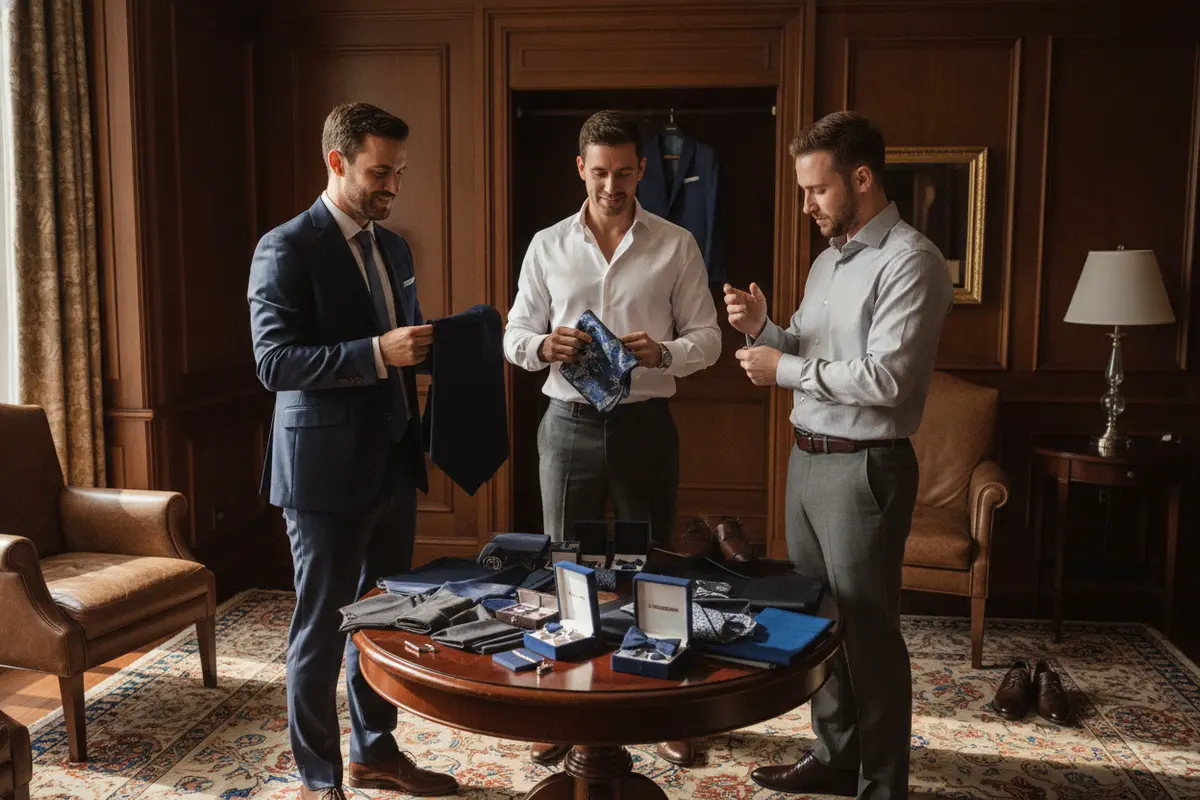
Think of coordination as a range rather than an all-or-nothing choice. One end is a closely matched group with the same general suit direction and consistent accessories. At the other end, each person wears an individual outfit that follows the event’s formality. Between those options, the groom might set the main color and level of formality while allowing the wedding party to choose details within that framework.
For a group with different schedules or personal preferences, a shared palette can be easier to communicate than a long list of identical specifications. For a highly formal ceremony, consistent garments may create a more unified appearance. Decide what matters most in photographs and during the ceremony, then let the clothier help translate that priority into choices the group can follow.
Give each person a clear action and date. Tell them whether they need to attend an appointment, provide measurements, choose from a defined set of options, or simply confirm the outfit they already own. If someone is traveling, has limited availability, or is unsure what the dress code means, identify that early. A single organizer can collect questions and share answers with the group, which reduces crossed messages.
What happens at measurements and fittings?
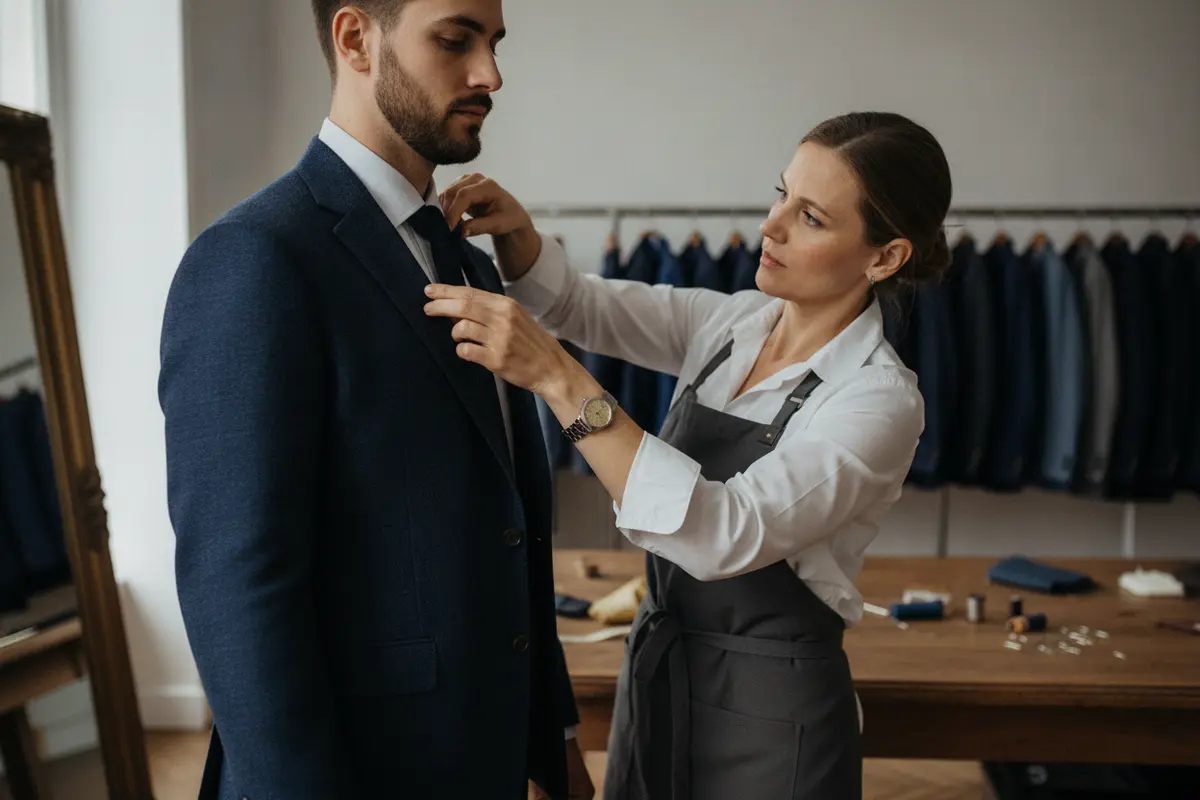
Measurements and fittings turn the plan into a garment that works for your body. During the process, pay attention to how the suit feels while you stand, sit, and move naturally. A wedding day may include a ceremony, photographs, dinner, and time on the dance floor, so comfort matters alongside appearance.
Wear or bring the shoes and shirt you expect to use when practical, and tell the clothier about any elements that are not yet selected. The more complete the picture, the easier it is to evaluate proportion and balance. Mention how you expect to wear the jacket and trousers, including whether you plan to keep the jacket on for much of the event.
Use the fitting to raise questions rather than trying to diagnose every issue yourself. A professional can assess the garment and explain what can be adjusted. Do not attempt home alterations or repairs. If something feels wrong, point it out to the clothier and ask about the appropriate tailoring solution.
How can you assess comfort and movement?
Try the actions you are likely to repeat on the wedding day. Sit as you would during dinner, stand and turn, walk several steps, and raise your arms naturally. Notice whether the garment feels restrictive or shifts in a way that distracts you. Describe the sensation clearly to the clothier instead of simply saying that something looks off. Specific feedback, such as where you feel pulling when you sit, gives the professional a useful starting point.
Review the suit with the shirt and shoes you intend to wear whenever you can. Different layers and footwear can change how the outfit feels and looks together. If an accessory or garment is not yet available, explain what you plan to use so the fitting conversation can account for it. Ask what the next fitting is meant to confirm and what decisions should be completed before then.
Which details deserve attention before the final fitting?
The final check is a good time to consider the complete outfit, not just the suit in isolation. Confirm that the fit feels comfortable, that the separate pieces work together, and that the choices still match the wedding’s formality and setting.
- Jacket and trouser proportions: Look at the overall balance and how the garments feel when you move.
- Shirt and neckwear: Check that the shirt collar and chosen neckwear work with the jacket and event.
- Shoes and accessories: Review the pieces you plan to wear together, including any vest, pocket square, or other finishing detail.
- Practical readiness: Confirm what is included in the finished outfit and when you will have everything in hand.
- Wedding-party consistency: If other people are coordinating, make sure everyone understands any remaining decisions and timing.
Accessories should support the whole look rather than compete for attention. If you are choosing a tuxedo, review the tuxedo style guide for details on fit and features. For a suit-based look, the suit fit and style guide can help you prepare questions for your appointment.
What should you confirm before taking the outfit home?
Use a short final checklist so the last appointment is not spent trying to remember unresolved questions. Confirm that the garment is comfortable in ordinary movement, the planned shirt and shoes work with it, and the accessories are available. Ask whether any further adjustments are outstanding and when the complete outfit will be ready. If more than one person is part of the plan, confirm that each person knows their own next step.
Also make a practical plan for wedding-day transport and storage. Keep the garments protected and allow enough time to dress without rushing. If the clothing is being carried to another city or venue, ask the clothier for appropriate handling guidance rather than improvising at the last minute. These simple preparations let you focus on the event instead of searching for a missing detail.
How do you keep the process on schedule?
A few simple habits can keep wedding attire from becoming a last-minute task. Put the first consultation on the calendar as soon as the date and broad vision are known. Keep a shared note with the decisions made, open questions, and people who still need to respond. When an important wedding detail changes, tell the clothier rather than assuming the original plan still applies.
Set internal deadlines ahead of the wedding date. Ask your clothier what dates matter for selection, measurements, fittings, and final delivery, then record those dates in the same place as other wedding plans. If a member of the wedding party is traveling or has limited availability, include that constraint early.
It also helps to separate essential decisions from optional refinements. The essential choices establish the garment and fit. Additional details can be considered once the main direction is clear. This prevents the search for a perfect accessory or the arrival of one more inspiration photo from delaying decisions that affect the entire outfit.
For a personal, hands-on appointment, you can schedule a style consultation. If you are comparing a custom suit with other wardrobe possibilities, the custom styling and tailoring services page outlines another place to start.
One helpful way to keep momentum is to end each wedding-attire conversation with three clear notes: what has been decided, who owns the next action, and when that action is due. For example, the groom may choose the suit direction while a designated party organizer confirms how many people need coordinated attire. When a decision depends on another person, set a date to check back rather than leaving the item open indefinitely.
Build a little flexibility into the plan. If a venue change or a shift in the wedding-party list affects the clothing, revisit the decisions that depend on it. Do not assume every detail needs to be reopened. A clear record helps distinguish changes that affect the suit itself from details that can remain as planned.
Frequently Asked Questions
Is four to five months always necessary?
It is the recommended starting window for wedding attire, not a guarantee that every wedding requires the same schedule. The best timing depends on the garment, the wedding-party needs, and the time available for fittings. Start early when possible, and contact a clothier promptly if your date is closer.
Can I order a wedding suit before every wedding detail is finalized?
Yes. You can begin with the confirmed information, such as the date, venue, and general level of formality. Share the details that are still open and revisit them as they become clear. Waiting for every small decision can leave too little time for the clothing itself.
How early should groomsmen start?
Bring the wedding-party plan into the first consultation and give the group clear instructions as soon as you know the direction. Each person’s schedule and clothing needs may differ, so the organizer should set expectations and ask the clothier what timing will work for the group.
What if I already own a suit that might work?
Bring it up during a consultation and explain the dress code and how you want to look. A professional can help assess whether it suits the occasion and whether any tailoring is appropriate. Avoid attempting alterations yourself, particularly when the wedding date is fixed.
Should I choose a suit or a tuxedo?
Use the invitation, venue, time of day, and desired formality to guide the choice. If the dress code is unclear, ask the couple or planner before making a decision. You can then compare suit and tuxedo options with a clothier who can help connect the outfit to the event.
With an early plan and clear conversations, you can arrive at the wedding in a suit that feels considered, comfortable, and right for the occasion.